

Making their way in sports: four stories of LGBT+ people
February 19th is the International Day Against LGBT Hate in Sports. We share the experiences of some athletes in Mexico.


Share

MEXICO CITY, Mexico. For thirteen years, February 19th has been commemorated as the International Day Against LGBT-Hate in Sports. At Presentes, we seek to remember this date by speaking with LGBTQ+ individuals in Mexico who participate in sports and, moreover, create teams where being part of the LGBTQ+ community is celebrated.
The International Day Against LGBT-Hate in Sport was established in honor of Justin Fashanu, an English and Black footballer who publicly came out as gay in 1990. After coming out, Fashanu was subjected to harassment and died by suicide eight years later.
Sports practice, which is considered a human right, is permeated by sexism, stereotypes of hegemonic masculinity and femininity, racism, and LGBT-hate.
Currently, 18 state laws in the United States prohibit transgender students from participating in sports and competitions according to their gender identity. These policies put girls, young women, and women (both transgender and cisgender) at greater risk.
At the Olympic level, some sports federations, such as World Athletics, classify women with high testosterone levels and intersex women as "ineligible." These regulations have historically been applied primarily to athletes of color .
In this context, LGBT+ people and gender non-conforming individuals fought to gain a foothold in the sports disciplines they are passionate about, from physical education classes in schools to amateur and professional levels.
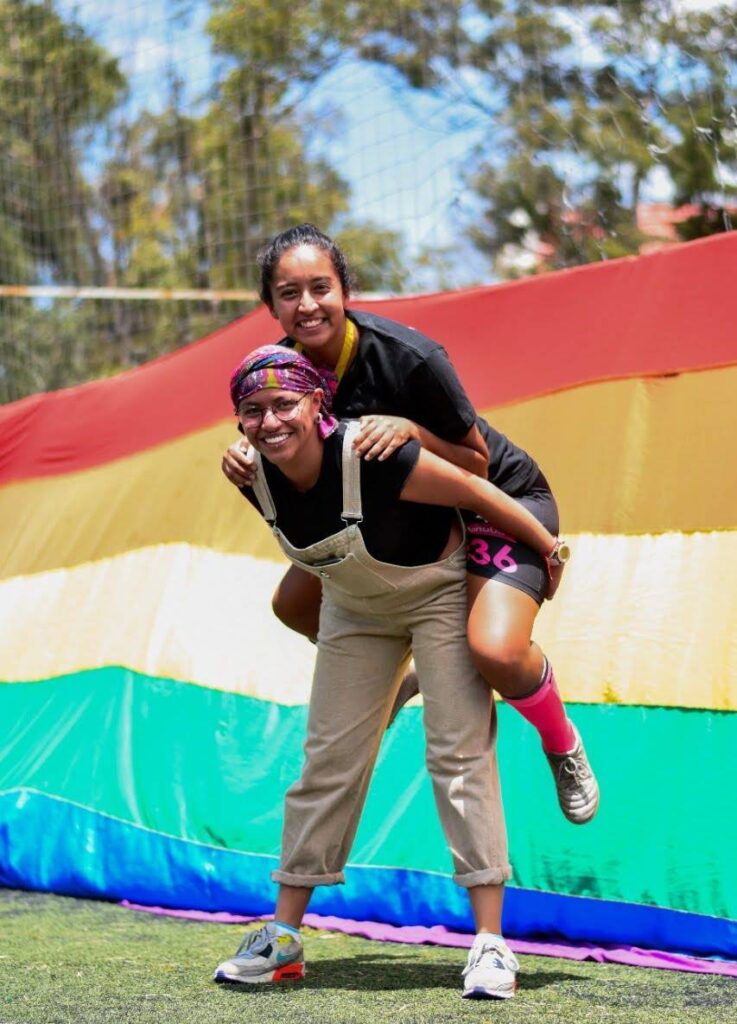
Presentes spoke with Jaz (football player), Christian (weightlifter), Joaco Veneno (martial artist) and Fay (swimmer) to learn about their experiences in the sports they love and the power of being themselves without hiding and creating community.
The first acts of violence were simply for playing football, for running.
Jaz, Christian, and Fay discovered the stigma related to being LGBT+ during their childhood and adolescence at school and in the spaces where they began to practice sports.
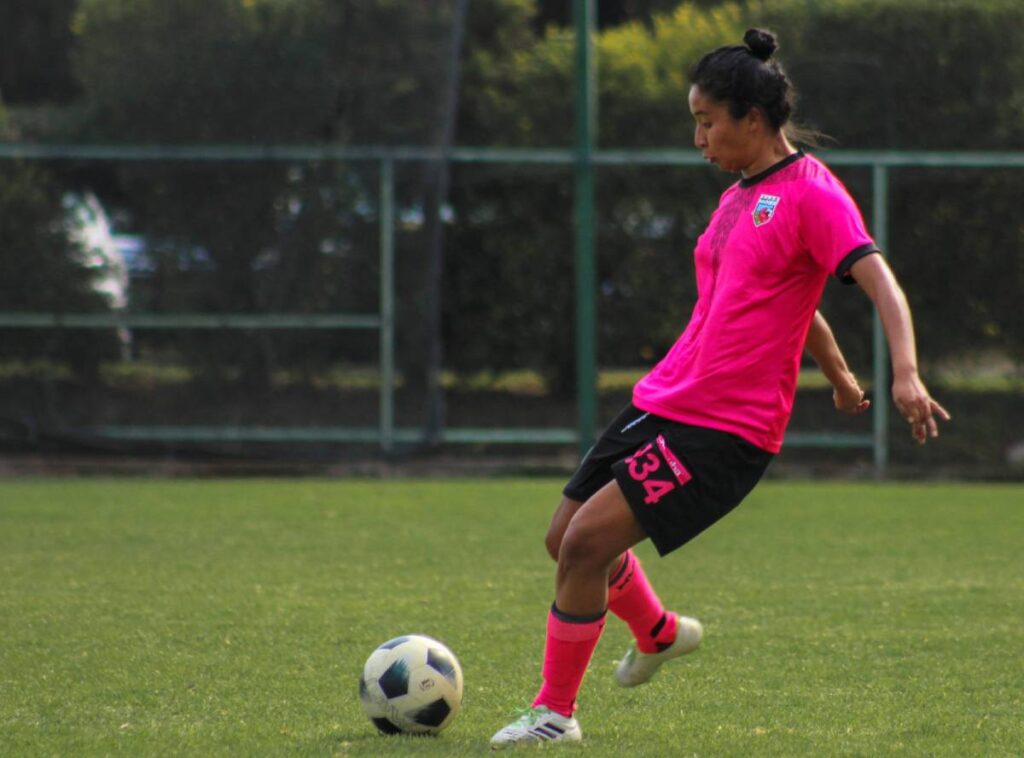
It was as a child that Jaz first felt the stigma simply for playing soccer. “If you play soccer, you’re a tomboy, a butch, not a woman,” she recalls. In her teens, she experienced lesbophobia on the field through comments from fans and the coaching staff where she played, especially on boys’ teams—where many girls and young women have had to develop.
“Lesbophobia is almost always symbolic, rarely explicit. But it’s always there. And although I never felt exposed, I also never felt completely safe,” she adds.
Christian received those same words and ways in which lesbophobia is embodied in school sports environments when he was a child.
“I remember when I started playing and they would tell me, ‘Play like a man.’ My expression was always masculine, but I started receiving increasingly offensive insults because of that, because of my gender identity; nicknames and the usual one: tomboy. In high school, I started hiding who I was, and because of the pressure from all those insults, I changed my gender expression and stopped playing soccer,” he says.
For Fay it wasn't so different. She stopped running and would have loved to train more and compete.
“When I was in high school, they yelled all sorts of things at me; that I moved my body too much, my hands too much. I really liked running. I think that if it hadn't been for those bad experiences, I would have liked to train more, to compete. I don't know if I would have been a champion or anything, but I definitely think I would have liked to be more involved in sports,” he recalls.
In Latin America, we lack data on the perceptions and experiences of LGBT children and youth in sports. However, the United States survey on the mental health of LGBTQ youth, conducted by The Trevor Project, reveals that fear of discrimination based on sexual orientation, gender identity, and gender expression limits the participation of LGBTQ+ individuals in sports.
In that survey, almost one in three LGBTQ youth reported participating in sports, and half of them had heard a negative comment about sexual diversity from a coach.
“Every fight for me has a symbolic and emotional weight”
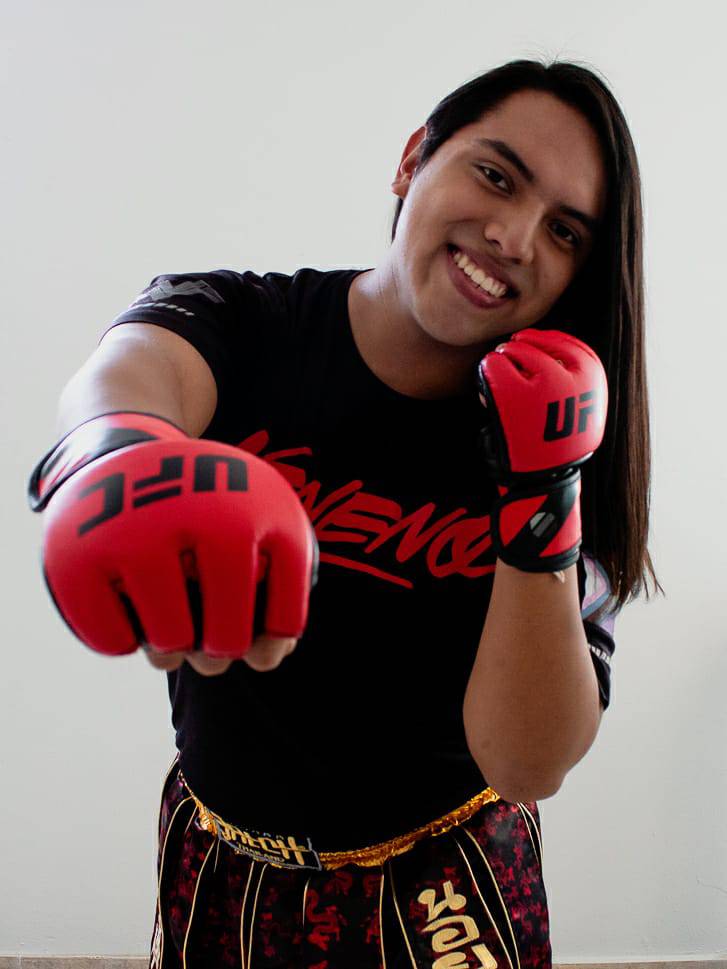
Joaco Veneno is 23 years old, a queer person, and a martial artist. As a child, he practiced taekwondo and jiu-jitsu, and for almost three years he has been practicing MMA (mixed martial arts) at an academy in the State of Mexico where he feels supported.
“My introduction to mixed martial arts was circumstantial; I wasn’t looking for it, but it’s something I’m infinitely grateful for every day. I’ve found very different ways to experience my body, celebrate it, understand its capabilities, and have tools to defend myself because where I live, LGBT expressions of celebration are met with skepticism,” she says.
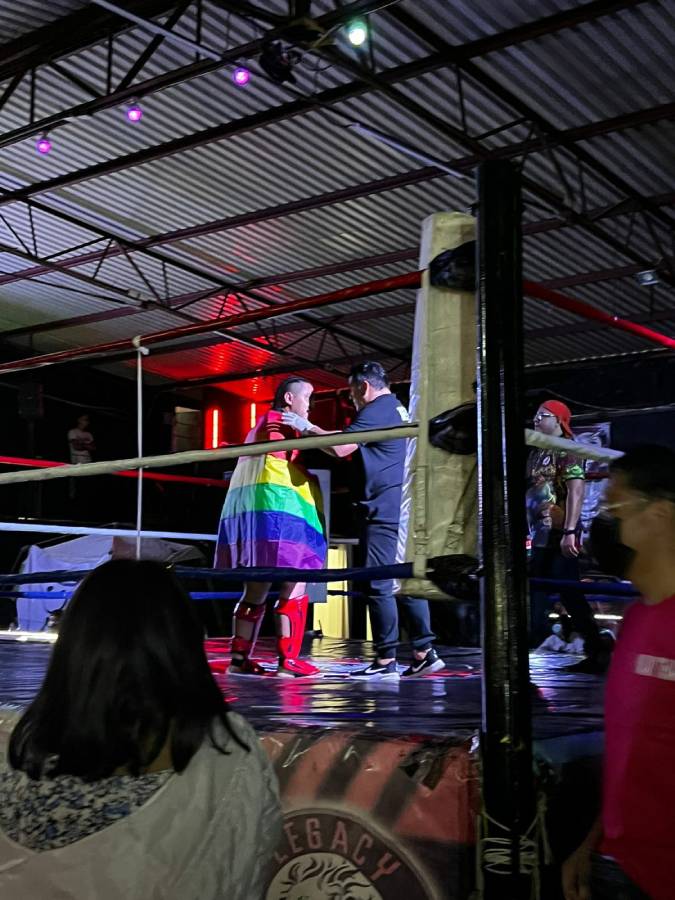
His ring name is Veneno. He chose it in honor of Cristina Ortiz, La Veneno. “It’s very important for me to honor her memory and recognize what other LGBTQ+ people who came before us have done so that we can have it a little easier. La Veneno gives me strength, confidence, and inspires me,” he says.
The first time he fought, his sister gave him his first rainbow flag. Joaco went out to fight using the flag as a superhero cape.
“Since I started doing MMA, I’ve never had such a deep understanding of myself and my identity. Every fight carries a symbolic and emotional weight for me. Beyond fighting another person, it’s also about fighting against everything I was told I couldn’t be, that didn’t belong to me because I’m female or far from the standards of being a man or a fighter. LGBT people, gender non-conforming people, belong in sports.”
“I discovered that you can be a lesbian, be a cleaning lady in football and be happy”
“Football gave me everything. It gave me a life I wasn't supposed to have. I like to politicize the sport because I truly believe it's a privilege. I believe this because for me it was a vehicle for opportunities, for accessing experiences, travel, strong support networks, and education. In adolescence, when I was trying to understand myself and find my identity, those support networks saved my life. It was my safe space to discover, to experiment, to know that the way I wanted and felt wasn't wrong. It was there that I discovered my role models, my friends. They showed me that you can be a lesbian, be amazing at football, at school, and be happy.”
Jaz is 26 years old and has been playing soccer since she was four. She plays as a defensive midfielder or forward, she's a playmaker and therefore enjoys assisting goals more than scoring them.
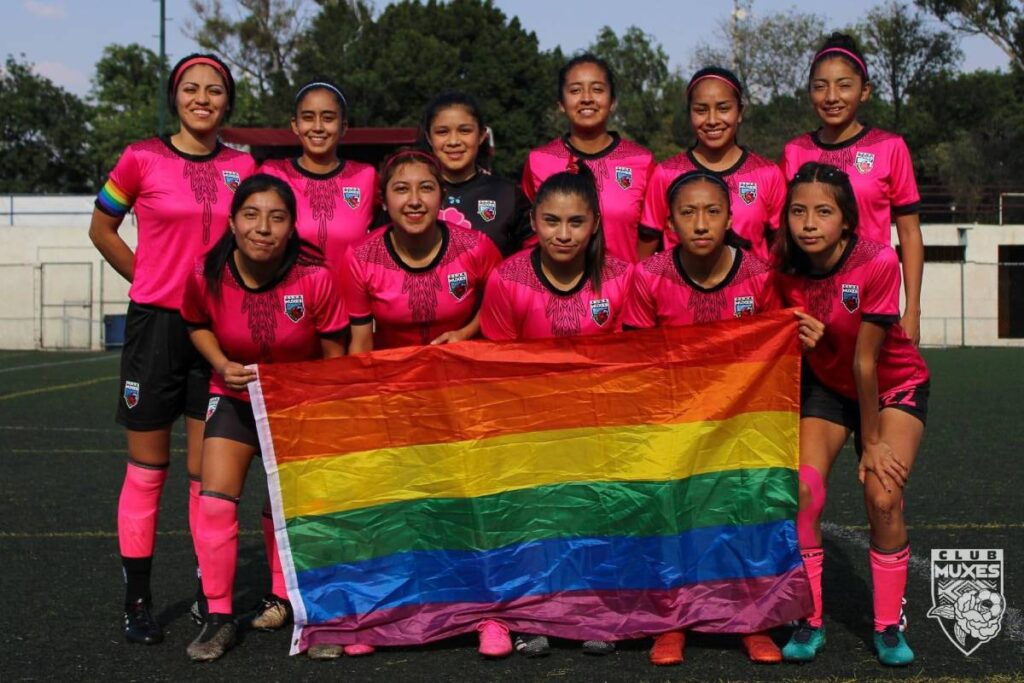
In 2017 she had an opportunity with the national team, received a sports scholarship at Tec de Monterrey, in 2020 she played professionally for Cruz Azul in the women's league and for almost two years she has started the women's division project of Club Deportivo Muxes .
Club Deportivo Muxes was founded in 2018 by gay men who wanted to play football outside the homophobia and machismo prevalent in the sport. Today, Muxes is a leading team at the national level, providing a safe space for LGBT+ people who want to play football. Its core values are contributing to the fight against discrimination and homophobia; Muxes responds to LGBT-hate with goals and football.
“Weightlifting literally saved my life.”
After soccer came taekwondo, a martial art that helped Christian find peace when he felt most confused about his gender identity. But it wasn't enough.
The situation changed when he met Ariel, a trans man like himself. “I began to recognize myself as a trans man. It was like traveling through my own history, seeing myself as a child and recognizing that I behaved that way because it was always inside me, I was a child,” he recalls.
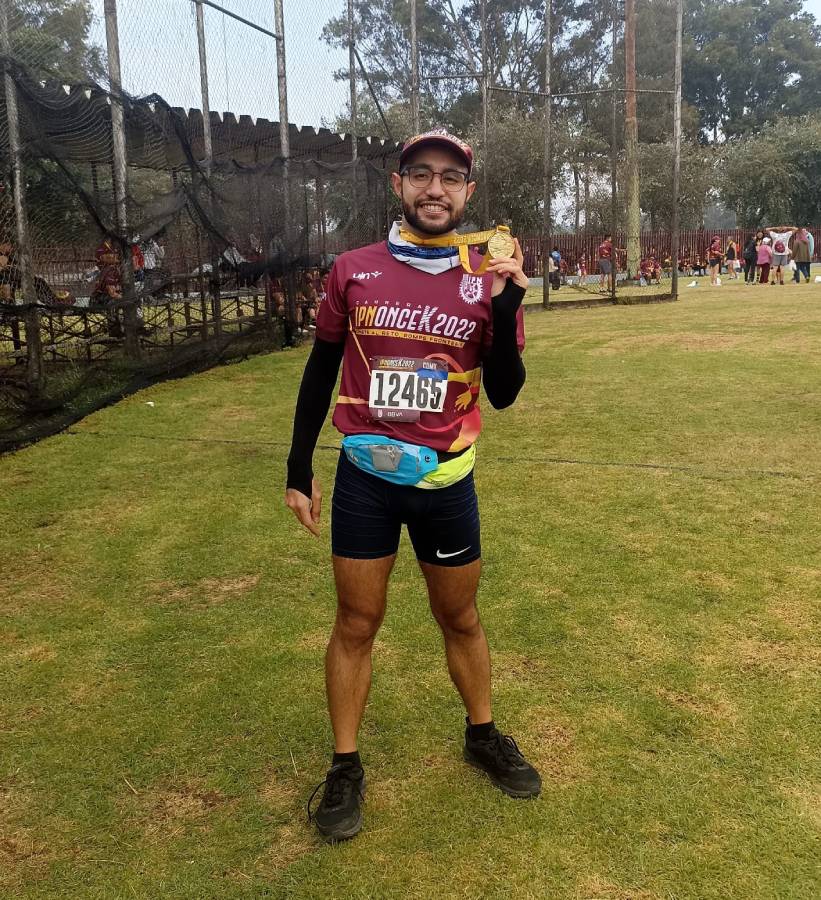
Christian's life has revolved around sports. He studied sports science, is a personal trainer, and coordinates the Arco Force Training powerlifting for the past two years .
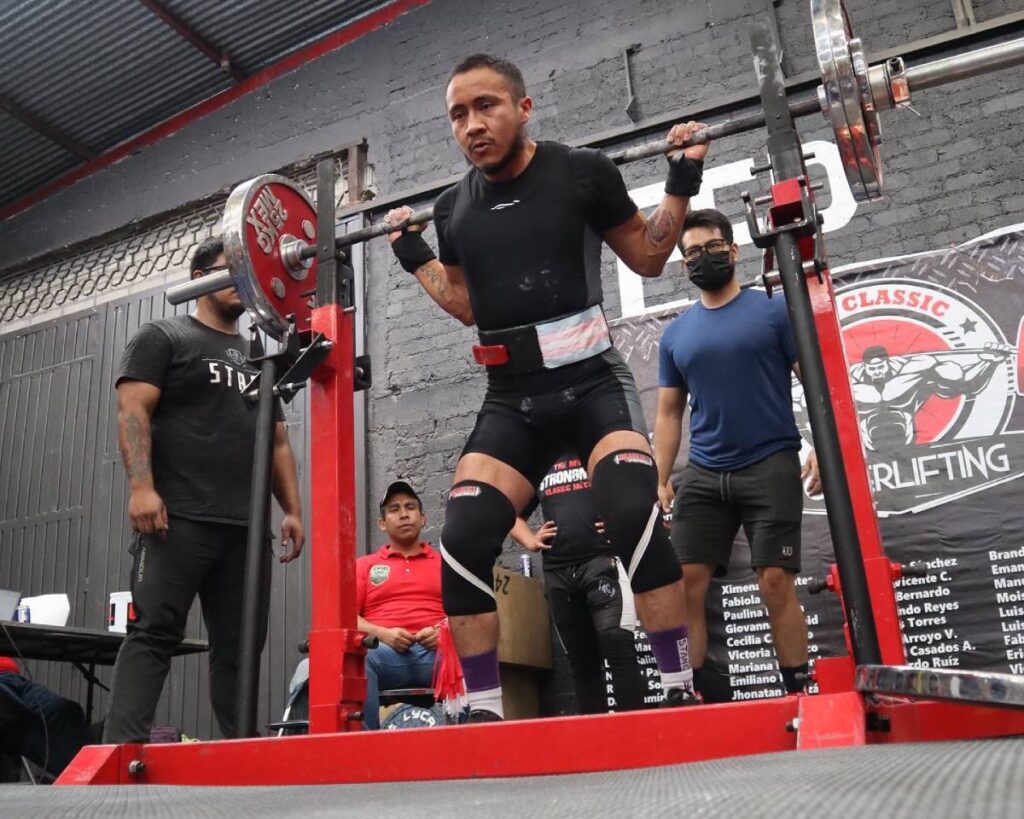
“Weightlifting is very important to me; it literally saved my life. After I had COVID, I had to stop my hormone treatment. That led to hormonal changes, and psychologically, my period returned, and I fell into a major depression. I went back to exercising, started training with weights, and along with my antidepressants, I gradually began to get out of my shell. Lifting weights became my space for meditation. Little by little, I felt happy and satisfied. I was so close to death that it was then I realized that exercise changed my life. It has taken a lot of work to rebuild myself, and I don't want to hide anymore,” she says.
Since then, Christian has further asserted his visibility as a trans man. In his second powerlifting , his girlfriend gave him a trans flag, which he wore on his belt.
Last November, he placed second in the under 59 kg category at the sixth Mexico City and State of Mexico Powerlifting Qualifying Championship. He is now training for the 2024 national championship.
“Building community can heal old wounds”
Fay practices three sports: swimming, cycling, and athletics. Swimming is what she enjoys most. Fay belongs to Unicornios MX , an LGBT team of people who swim, cycle, and run.
“I’m 31 years old, and today I live and practice sports in a completely different way than when I was in high school. Today I’m with friends, we cheer each other on, we celebrate when someone achieves something, and we notice that these achievements happen because we do it in a safe space. We decided to make our accomplishments visible. We decided to build a non-hostile space, we decided to build community in the sports arena as well, because that can heal old wounds. I’m living proof of that. I like to think that sports are a way of nurturing ourselves,” she says.
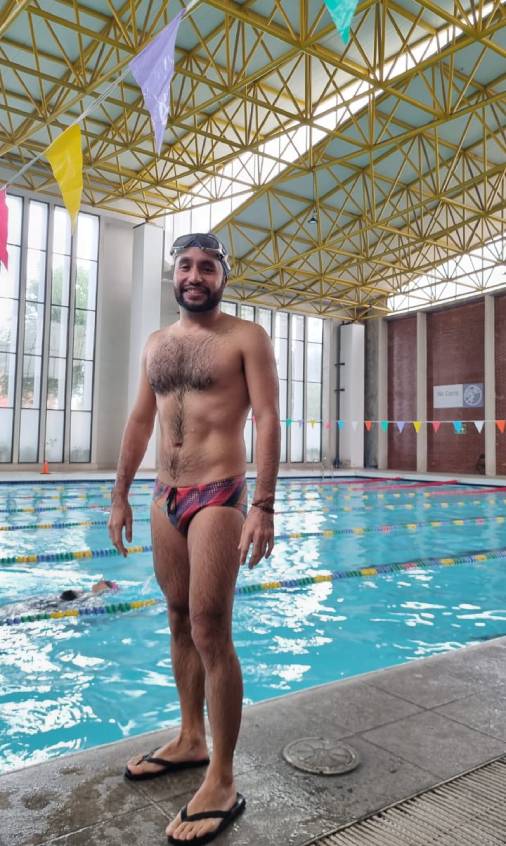
In Mexico, there are at least 55 LGBT sports teams across the country, participating in various individual and team sports. You can consult the map here to find the team nearest you ; they are located almost everywhere in Mexico.
“I have always been a person with feminine gender expression, and I would like to send a message to people of diverse backgrounds who have been rejected from sports for that reason or another: it’s okay to be who you are, it’s okay how you move. Don’t abandon the sport you love; there is a community here ready to support you, to be more diverse within diversity: we want to see the whole spectrum, we want to sweat together, we want to shout together, we want to celebrate our achievements together.”
***
It took 33 years for another professional footballer to come out of the closet. This February 14th, Czech footballer Jakub Jankto , a player for Getafe, told the world: “I am gay and I don’t want to hide it anymore.”
We are present
We are committed to journalism that delves into the territories and conducts thorough investigations, combined with new technologies and narrative formats. We want the protagonists, their stories, and their struggles to be present.
SUPPORT US

FOLLOW US
Related notes


We are present
This and other stories are not usually on the media agenda. Together we can bring them to light.