

Córdoba: torchlight march and one arrest for the transfemicide of young Sofía Bravo
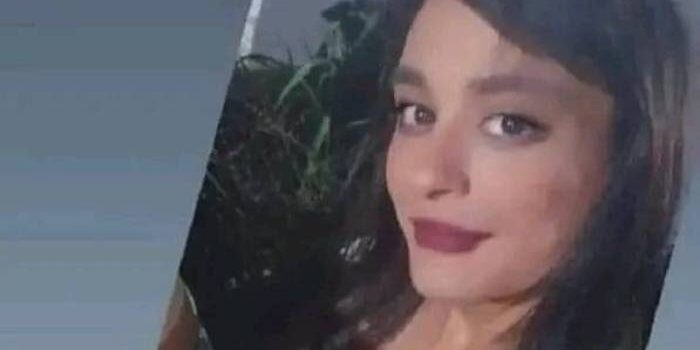
The young activist was a member of the La Carlota Diversity Roundtable. She was missing for a week.


Share

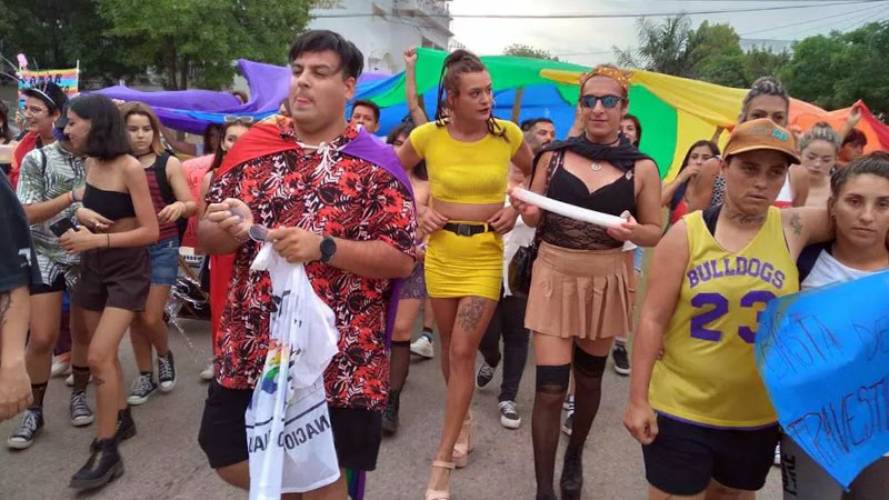
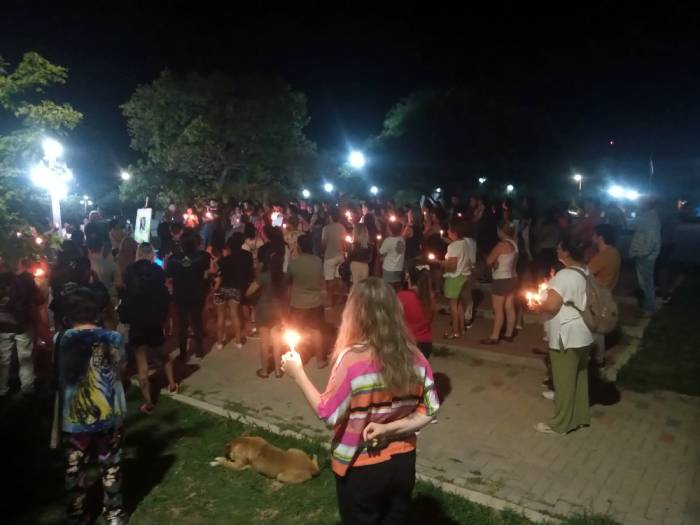
CORDOBA, Argentina. On January 16, 2022, Sofía Agustina Bravo, a young trans woman, walked smiling, wearing a yellow miniskirt and top, as part of the group participating in the First Pride March and Diversity Festival in the city of La Carlota , an agricultural area in southeastern Cordoba. Exactly one year later, on those same streets, some 500 people, illuminated by the soft glow of candles, paid tribute to her and demanded justice for her transphobic murder, for which one person has already been arrested.
“Agus: may you rest in peace and may justice be done,” “Today it was you, tomorrow it could be anyone. Shine wherever you are, Soso,” “Thank you for your struggle, Soso. We will remember you fondly,” “Always in our hearts, comrade!”, are some of the messages written by his friends and comrades around his portrait.
On Monday, the La Carlota Prosecutor's Office reported that police had arrested the alleged perpetrator of Sofía Agustina Bravo's murder in the town of Lavalle, Corrientes province. The detainee, a truck driver, has been charged with aggravated homicide (femicide). Judicial and police authorities are already working on transferring the accused to the La Carlota courthouse. His identity was released at midday today: Rodrigo Nicolás Espíndola, 22 years old, residing in La Cesira, Córdoba, but apprehended in Corrientes, his home province.
Missing for a week
Sofía, 26, was last seen in the early morning of January 6th. That Friday at noon, she was scheduled to travel to Marcos Juárez to visit her mother, taking the same bus her friend Lorena was traveling on to Villa María. They had already bought their tickets, but Sofía never arrived at the bus terminal. Lorena thought someone might have given her a ride, because the night before she had gone to work at the roundabout on the outskirts of the city, where truck drivers often park. But she never made it to Marcos Juárez. After losing phone contact with her daughter, her mother filed a missing person report at the local police station.
The search began on Tuesday the 10th. Police and firefighters, with the help of dogs and drones, combed the area around La Carlota and several nearby towns, without success. On the afternoon of Saturday the 14th, a hitchhiker on Provincial Route 4 noticed a foul odor and alerted the police. There, in a grassy area very close to the roundabout at the entrance to La Carlota, was the body of Sofía Bravo. The preliminary autopsy report raised doubts: “It does not reveal any information useful to the case. Not in light of the homicide hypothesis,” explained the prosecutor's office.
But that was the hypothesis of the investigation led by prosecutor Walter Guzmán. It was based on tracking the victim's cell phone and security camera footage showing her getting into a truck, which then drove to a nearby field. According to police sources, a raid was carried out over the weekend in La Cesira, a lodging where the driver had allegedly stayed overnight. He was eventually arrested in Lavalle and charged with aggravated homicide due to gender-based violence. The final autopsy results are pending.
“She was killed for being a woman, trans, and a sex worker.”
Sofia was active in the La Carlota Diversity Committee and was going to participate on Saturday the 21st in the Second Pride March in her city.
“From Diversidad La Carlota, we condemn the transphobic murder of our fellow activist Sofía Agustina Bravo. We stand with and support the Bravo family during this painful time. It was a transfemicide, a hate crime. Sofía was attacked and taken advantage of because she was a woman, because she was trans, and because she was a sex worker,” the organization stated.
Meanwhile, the Association of Sex Workers of Argentina (AMMAR – Córdoba) stated: “Another trans murder, another comrade dead, another life cut short, another family shattered, and our large community mourns. But it also draws strength from its weakness to continue our struggle. A struggle we are forced into simply because we choose a way of life that a few disapprove of—those who thrive on abstract hatred, sustaining the machinery of an intolerant and ferocious society.”
“I had the hope of coming out of hiding”
Marcos Cavaignac, a member of the Diversity Committee of La Carlota, recalled that “Sofía had already suffered violence. Last year, a man broke her arm. She didn't want to keep working. She always worked at the access roundabout, near where they found her. That night she was chatting with Lorena, the roommate she lived with. In her last messages to her, she told her mother that she was with a client in a truck. And she said, 'This is the last time I'm going out.'”
“She dreamed of leaving the shadows as a sex worker. She wanted to leave her life of marginalization on the highway,” Iván Crisóstomo agrees. He recounts that Sofía “approached the Municipality several times to find a job, she went to the municipal depot to ask for work cleaning the streets.”
This intention was supported by the "Claudia Pía Baudracco" Labor Inclusion Ordinance , sanctioned by the Deliberative Council on June 16, 2022, based on a popular initiative promoted by Diversidad La Carlota in accordance with National Law 27636 on the Promotion of Access to Formal Employment for Transvestite, Transsexual and Transgender People "Diana Sacayán – Lohana Berkins" .
“Always at the forefront, always with joy”
Her neighbor, María José Fernández, met Sofía at a dance hall. She describes her as “cheerful, respectful, and friendly, an excellent person. She always stood out because she greeted everyone with a kiss and was very funny. It hurt me deeply to learn of her death, because she didn't deserve it.”
For Marcos, Sofía's acceptance of her identity implied "a very strong, militant decision, because in towns like this, you're stared at, judged, and condemned solely for your sexual orientation. Unfortunately, in rural areas, the work of visibility, integration, and acceptance is still very far behind." He recounts that, in the lead-up to the Second Pride March, Sofía was going to participate in a panel discussion organized by Invicines about the short film Metami , by Maia Cristal Scaglia , which captures a testimony related to sex work. "It's a paradox that makes me very angry, because she wanted to leave that work, which she experienced from a marginalized perspective and which cost her her life," he concludes.
“Sofía didn’t mind walking alone, always going here and there in the street,” Iván adds. “Always at the forefront, always defending herself and also defending her family. We will remember her with pain but also with joy. She loved yellow and always dressed in that color.”
The La Carlota Diversity Committee has called for a new march on Saturday, January 21st. They are demanding justice for Sofía and the urgent implementation of the trans and travesti employment quota.
We are present
We are committed to journalism that delves into the territories and conducts thorough investigations, combined with new technologies and narrative formats. We want the protagonists, their stories, and their struggles to be present.
SUPPORT US

FOLLOW US
Related notes



We are present
This and other stories are not usually on the media agenda. Together we can bring them to light.
1 comment