

Indigenous women peacefully occupied the Central Bank: "Life is not negotiable"
The women staged a significant action at the Central Bank. They managed to meet with the bank's president, but received no answers.


Share

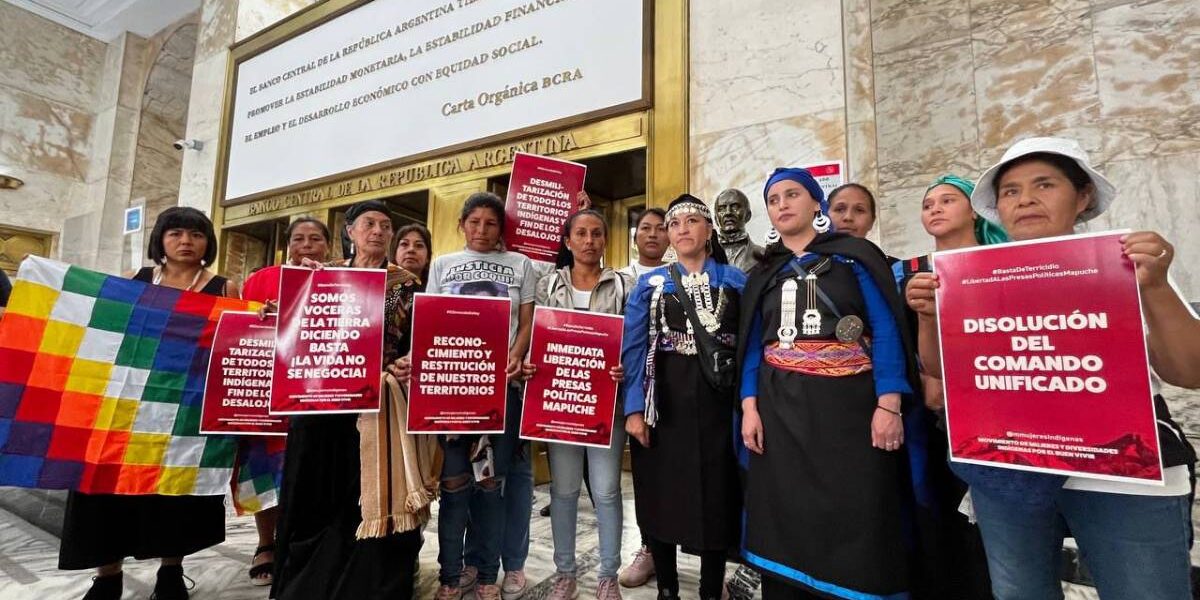
BUENOS AIRES, Argentina. Twenty women from the Tapiete, Wichí, Mapuche, Tehuelche, Aymara, Quechua, Qom, and Kolla nations traveled from their territories to Buenos Aires to voice their demands. Organized under the banner of the Indigenous Women's Movement for Good Living , the women peacefully occupied the Bank of the Argentine Republic (BCRA) on Wednesday, demanding a meeting with its president, Miguel Ángel Pesce. Despite securing a meeting, the women criticized the lack of answers they received.
“Once again, one of our daughters, just 12 years old, from the Wichí people in the province of Salta, has been attacked and they tried to strangle her . Today she is fighting for her life; she is hospitalized in critical condition.” This is what Moira Millán, a weychafe (warrior in Mapudungun), said in an audio recording that circulated this week. In it, she announced that the Movement had declared a “plurinational and continental alert to demand justice.”
This is one of the demands of the women, which is part of the "Abolish Chineo Now" . They also called for the immediate release of Mapuche political prisoners and the return of Machi Betiana Colhuan Nahuel to her rewe (sacred site). They also demanded the dissolution of the Unified Command, the demilitarization of all Indigenous territories, an end to evictions, and the restitution of ancestral lands.
An action with results
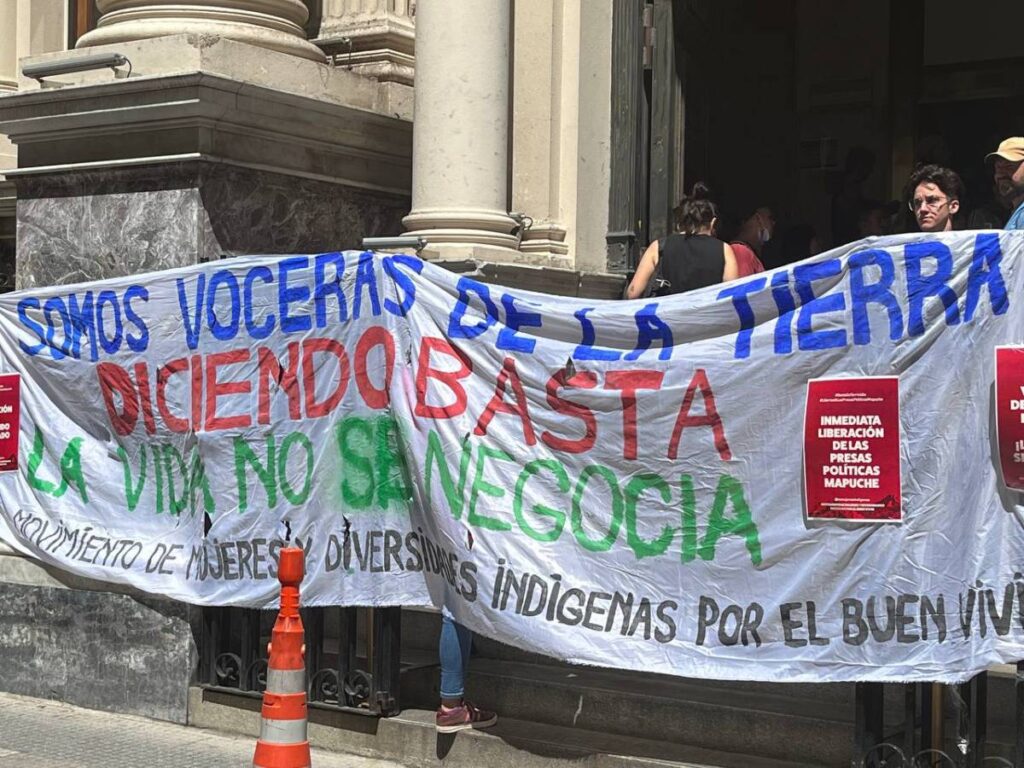
“We are spokespeople for the Earth saying Enough is enough, life is not negotiable,” the women emphasized.
At noon this Wednesday, the Movement called for a peaceful occupation of the Central Bank of the Argentine Republic, located at 266 Reconquista Street.
“Here, the budget for death, for bullets, for repression is legalized and approved . Here, the invasion we are experiencing from companies that are raping and murdering our girls is permitted and legalized. They are repressing and imprisoning our women, our highest spiritual authority, who are currently being unjustly detained,” said Moira Millán from the establishment.
“We are not going to leave until we speak with the president of the Central Bank. The State doesn't understand me. We didn't come here for a stroll or tourism; they are killing our girls,” said Alejandra, the mother of Ismael Ramírez, a Qom child murdered in 2018 in the province of Chaco.
“We took the first step today”
Around 4 p.m., the women received word that they would be received by the head of the Central Bank. Fifteen of them entered the building to meet with Miguel Ángel Pesce in a meeting where cameramen were not allowed. An hour later, the women left the building without any answers to their demands.
“He received us. We listened to his racist, arrogant views, but he also had to listen to each and every one of the sisters,” Millán said as she left the meeting. She also considered that “this is a step on a ladder we have begun to climb,” where “we took the first step today.”
“The president says he has complete confidence in his government, meaning he wasn’t aware of everything that’s happening in the territories, the child abuse, the girls being raped, the women being imprisoned,” added Soledad Cayunao, from the Cayunao community in the province of Río Negro, in an interview with Presentes. She traveled to Buenos Aires to defend the source of the Chubut River, “where we are being dispossessed by Qatari businessmen ,” she said.
The women were still unable to predict how the protests would continue. However, they maintained that “this is not a failure.” “We will return stronger than ever,” Millán asserted.
We are present
We are committed to journalism that delves into the territories and conducts thorough investigations, combined with new technologies and narrative formats. We want the protagonists, their stories, and their struggles to be present.
SUPPORT US

FOLLOW US
Related notes


We are present
This and other stories are not usually on the media agenda. Together we can bring them to light.