

The trial for the transphobic murder of Alejandra Salazar Villa enters its final stage
The closing argument will be read on Monday the 24th. The prosecution is seeking a life sentence.



Share

BUENOS AIRES, Argentina. Closing arguments in the trial for the murder of Alejandra Salazar Villa , a trans woman killed in her home in the Buenos Aires neighborhood of Once in December 2020, will take place next Monday, October 24.
Prosecutor Diana Goral, in charge of the General Prosecutor's Office No. 6 before the Oral Criminal and Correctional Courts, will seek a life sentence for the transvesticide of the woman.
The accusation against Rodrigo Alejandro Keilis is for the crime of "aggravated homicide motivated by hatred based on gender identity." The Oral Criminal Court (TOC) 26 of the Federal Capital is in charge of the case, and judges Marcelo Alvero, Maximiliano Dialeva, and Carlos Rengel Mirat will hand down the sentence.
Both the prosecution and the trial acknowledged that the crime was motivated by hatred of Alejandra's gender identity. If convicted of transphobic murder, this would be the fifth such case in Argentina.
The arguments will be carried out at the fourth hearing of the trial at 9 a.m. at the court headquarters, located at Paraguay 1536.

A premeditated act
Alejandra Salazar Villa was a 54-year-old trans woman who had come to Argentina from Peru. She earned a living as a sex worker and lived alone in her apartment located at 2200 Corrientes Avenue, in the Once neighborhood of Buenos Aires.
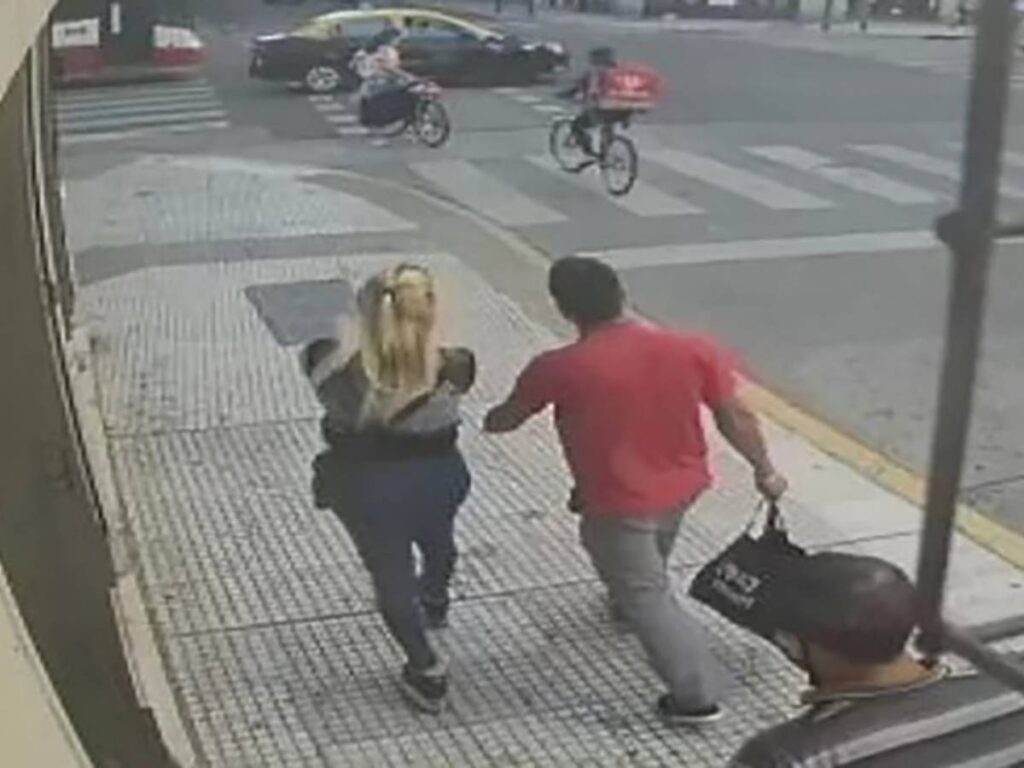
On December 6, 2020 , he went out to buy apples at a supermarket near his home. Once he had made his purchase, around 6:30 p.m., he headed home and on the way crossed paths with Rodrigo Keilis and Pablo Getar.
Keilis was 20 years old at the time, worked unloading trucks, and was homeless. That day she was with her uncle, Pablo Getar, a day laborer and cardboard collector who was 40 years old at the time.
Both escorted Alejandra to her house and one of them, Keilis, went upstairs with her to have an alleged sexual relationship, while Getar crossed the avenue and sat down to wait.
Once there, Keilis “placed one of the nylon bags brought from the supermarket, specifically the one containing the apples, and grabbed her tightly by the neck, causing a fracture of the hyoid bone and death by neck compression and suffocation.” This is according to the indictment, signed by prosecutors Ignacio Mahiques and Mariela Labozzetta.
The man then took some of Alejandra's belongings, such as the electronic device for opening the building's door and a television. Getar was no longer outside—he had left ten minutes before Keilis left the building—so she took a taxi to the Constitución neighborhood where she met up with her uncle again.
It was a hate crime
The investigation that led to the trial was carried out by the National Criminal and Correctional Prosecutor's Office No. 35. Its head, prosecutor Ignacio Mahiques, together with Mariela Labozzetta, in charge of the Specialized Prosecutor's Unit for Violence Against Women (UFEM), considered that the accumulation of evidence was sufficient to accuse Rodrigo Alejandro Keilis of "aggravated homicide due to hatred of gender identity in real concurrence with simple robbery."
Pablo Isaac Getar was also named as an “accessory.” While the charges against Keilis remain, those against Getar could be modified, according to sources from the Public Prosecutor's Office.
Violence and discrimination
Throughout the trial hearings, various witnesses testified, including neighbors, the building manager where Alejandra lived, the forensic doctor, Keilis' psychologists, and the two police officers in charge of the initial investigation of the case.
In addition, two specialists gave testimony explaining the problems faced by the transvestite and trans community and what a transvesticide entails.
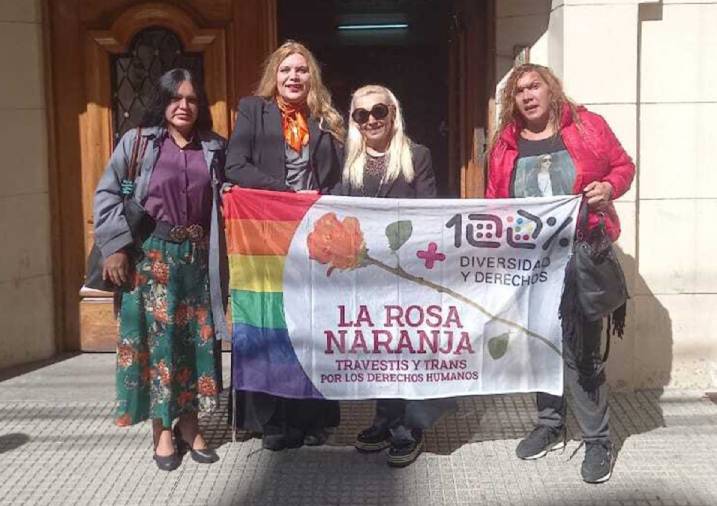
One of them was trans activist Marcela Tobaldi, president of the organization La Rosa Naranja . She had met Alejandra “because she needed to transition.” “She approached me one day. At that time, I was working at the Ombudsman's Office in the city of Buenos Aires. She asked for me. She was very shy,” she recalled. “He had no right to kill her, to strangle her, to rob her, and all the other things he did. It was a transphobic murder,” she emphasized in an interview with Presentes .
Social exclusion that ends in transvesticide
“Transvesticide is a specific form of gender-based violence. It is perpetrated through the murder of people who express or affirm a gender identity that does not conform to the criteria considered 'normal' for femininity or masculinity,” explained anthropologist Claudia Inés Josefina Fernández. She participated in the creation of the book *The Butterfly Revolution * and specializes in gender, sexual and gender diversity, and public policy. During the trial, she testified as an expert witness.
She also considered this type of crime “to be the extreme end of a continuum of violence.” “It begins with expulsion from the home, exclusion from the education system, the healthcare system, and the labor market, early initiation into prostitution/sex work, the constant risk of contracting sexually transmitted diseases, criminalization, social stigmatization, pathologization, persecution, and police violence,” she explained.
In this regard, in her statement she cited data compiled by the Inter-American Commission on Human Rights (IACHR): the average life expectancy of transgender people in Latin America ranges between 30 and 35 years. “Less than half the average enjoyed by the rest of the population,” Fernández emphasized. This average is a product “not only of lethal violence, but also of their life trajectories, generally linked to multiple experiences of vulnerability,” she continued.
The violation of a group
She also offered an intersectional perspective on the issue of value when analyzing Alejandra's murder. Alejandra, in addition to being trans, was a migrant and a sex worker. Along these lines, she considered that "the trans condition must be considered alongside other factors and variables such as class and race." This can further aggravate "the living conditions of the trans community in terms of their access to rights. And, of course, to the justice system, which increases the impunity of the perpetrators."
According to an investigation by UFEM , 66% of the trans women or transvestites murdered were foreign nationals. And the overwhelming majority, almost 100%, were sex workers, Fernández added.
Previous convictions for transvesticide in Argentina were for the crimes of Amancay Diana Sacayán, Marcela Chocobar, Evelyn Rojas and Melody Barrera.
The cases that set a legal precedent
The first conviction was for the transvesticide of activist Amancay Diana Sacayán on June 18, 2018. There, the Oral Criminal and Correctional Court No. 4 of the Federal Capital sentenced Gabriel David Marino to life imprisonment.
Then came the life sentence, also handed down, for aggravated homicide motivated by hatred of gender identity (transfemicide) received by Oscar Biott in June 2019. He and Angel Azzolini were accused of murdering the young trans woman Marcela Chocobar . The decision was unanimous among the judges of the Criminal Court of Río Gallegos.
The third is recent. On March 17 of this year, the Criminal Court No. 1 of Posadas sentenced Ramón Da Silva to life imprisonment for homicide due to the relationship between the couple, hatred towards her gender and expression, and for femicide, after the murder of Evelyn Rojas .
Meanwhile, on September 15 of this year, a jury in Mendoza sentenced former police officer Darío Jesús Chaves Rubio to 27 years in prison for the transfemicide of Melody Barrera .
We are present
We are committed to journalism that delves into the territories and conducts thorough investigations, combined with new technologies and narrative formats. We want the protagonists, their stories, and their struggles to be present.
SUPPORT US

FOLLOW US
Related notes


We are present
This and other stories are not usually on the media agenda. Together we can bring them to light.