

Who is Betiana Colhuan Nahuel, the Mapuche medicine woman repressed by the Argentine State?
Most Mapuche communities recognize her as a machi in training. It had been 100 years since there had been a machi on this side of the Andes.


Share

“You wanted dirt? Eat dirt, you fucking Indian!” That’s what a corporal from the Naval Prefecture told Betiana Colhuan Nahuel. He threw her to the ground to force her to eat dirt. It happened in the early morning of November 23, 2017, in the Lafken Winkul Mapu community of Villa Mascardi, Río Negro province. Dozens of members of that security force had entered with an eviction order from Federal Judge Gustavo Villanueva.
Just as during the procedure on October 4th, there were beatings, mistreatment, and the burning of her belongings. According to María Nahuel, Betiana's mother, she refused to kneel. She began speaking in Mapuzungun, the Mapuche language, and received a brutal response from one of the officers. This was taken as an affront to the machi, who was in the process of "rising" to become a healer, a spiritual guide.
Almost five years ago, when the Prefectura police murdered her cousin Rafael Nahuel , shooting him in the back, the men of the community took refuge up in the mountains. This time, the same thing happened. Betiana is now an adult and has a three-month-old baby whom she is breastfeeding.
On Wednesday night, she was nearly transferred, along with another Mapuche mother who is breastfeeding, to a federal prison in Buenos Aires.
The intervention of one of the community's lawyers, Laura Taffetani, and the Children's and Adolescents' Advocate, Marisa Graham, prevented it. They remained in Bariloche. Four of their companions did travel and are being held in the Ezeiza women's prison. None of them yet know what crime they are accused of because Federal Judge Silvina Domínguez ordered the case sealed. The transfer order, which Presentes obtained, lists the charges as "arson, trespassing, and assaulting an authority figure." Two of the detained women had gone to see Betiana for medical treatment; they are not from the community.
The role of the machos
The history of harassment against Mapuche communities in Patagonia continues to unfold over time, never ceasing. In fact, in October 2014, the Colhuan-Nahuel community was raided by the Gendarmerie as part of an investigation into an attack on a refuge in the area. Her family reported brutal attacks by that force. Betiana, a young girl who had not yet begun her journey to becoming a machi (Mapuche healer), was the source for local journalists. She recounted how the officers had dragged her brother José, who has a disability, along the ground.
The machi (Mapuche healer) can treat illnesses with traditional medicine, plants, and ceremonies. In other Indigenous communities, they are called shamans. They can have connections between the physical and spiritual worlds and even advise the lonko (political and community leaders). Until Betiana's emergence, to consult one, one had to travel to Chile, where they never ceased to exist, and where the formal healthcare system even incorporated them in the 1990s with intercultural services in areas of the country with Mapuche populations.
During the press conference held on Thursday the 6th at the University of Comahue to condemn the repression and demand the release of those detained, Soraya Maicoño stated that " the only crime is being Mapuche. Our Machi is important; it had been many years since someone with that role was born. The huincas (white invaders) know how important she is, that's why they imprisoned her; they want to weaken us. We don't go to churches, but they do interfere with our rehue (altar)."
100 years of absence
The territorial recovery began with the raising of the Betiana rehue, after a century of there not being a machi on this side of the mountain range, Puel Mapu.
“The name we give to the entire ancestral Mapuche territory is Wall Mapu –Argentina and Chile–, and when the Conquest of the Desert, as it was called by the Argentine State, arrived, one of the tasks was to burn alive the women who practiced medicine. In Argentina, no one had been born again who had the possibility of exercising that community role,” explained Maitén Cañicul Quilaleo, a communicator and member of the Mapuche collective Txafkuleiñ (We are united) from Junín de los Andes (Lavaca).
Betiana underwent a training process from a very young age. “It doesn’t just involve knowing the medicine, or lawen, as we say, which is speaking Mapuzugun, her mother tongue. It also involves a lot of changes in daily life in the city to fulfill this Mapuche role, after the recovery of her territory days before Rafael Nahuel, her cousin, was murdered in cold blood,” she adds.
Criminalization
With the murder of Rafael Nahuel, the national government of Mauricio Macri stirred up the idea of the existence of violent groups illegally occupying territories. Social organizations, human rights groups, some left-wing parties, and a large part of the Mapuche people insisted that the young man's death was caused by the State's historically repressive attitude toward Indigenous peoples.
Being a machi is not a vocation or a choice. It arises as an unstoppable force from signs that can be dreams or the discovery of one's ability to heal with ancestral methods.
Then come years of preparation that also involve completely abandoning Western culture. In Betiana's case, this happened when she was 16, shortly before the second repressive episode she would suffer in her short life.
Rafael Nahuel's maternal family does not support the recovery of ancestral Mapuche traditions, unlike the Colhuan Nahuel family who became one of the most combative groups in Bariloche.
There are those who seek to denigrate them, even other communities more in tune with the State, arguing that they come from the city.
They proudly explain that they left the slums where lack of opportunities, drugs, and alcohol were the only options. In fact, in these communities, young people don't drink or use drugs because they say they need to be clear-headed in their daily lives.
The territorial conflict
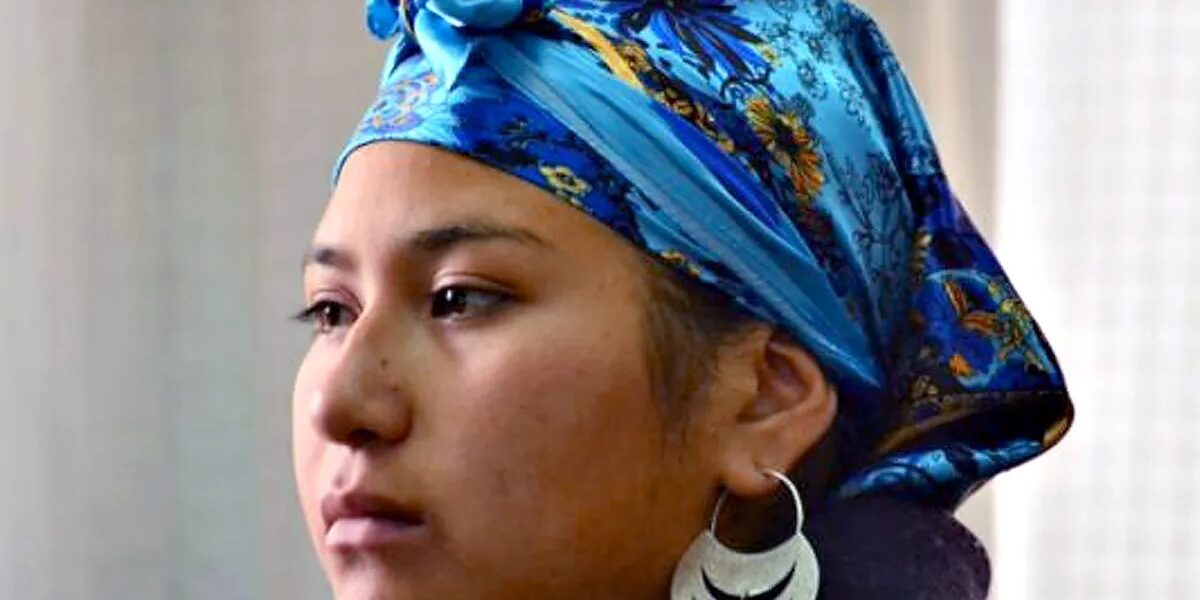
Between the murder of Rafael Nahuel and the recent legal proceedings against the same community, there were dialogue sessions. The land claimed by María Nahuel and her family is also considered their own by another Mapuche community, the Wiritray, which has had a presence in the area for several decades, runs a campground, and had ties to the National Parks authorities, the Macri administration, and the National Institute of Indigenous Affairs (INAI) of that administration. When Betiana was taken to one of these meetings, she wore her traditional clothing: a headscarf and a long, dark dress fastened with a trapelakucha (metal pin). At 16 years old, with her youthful face, she spoke little but firmly.
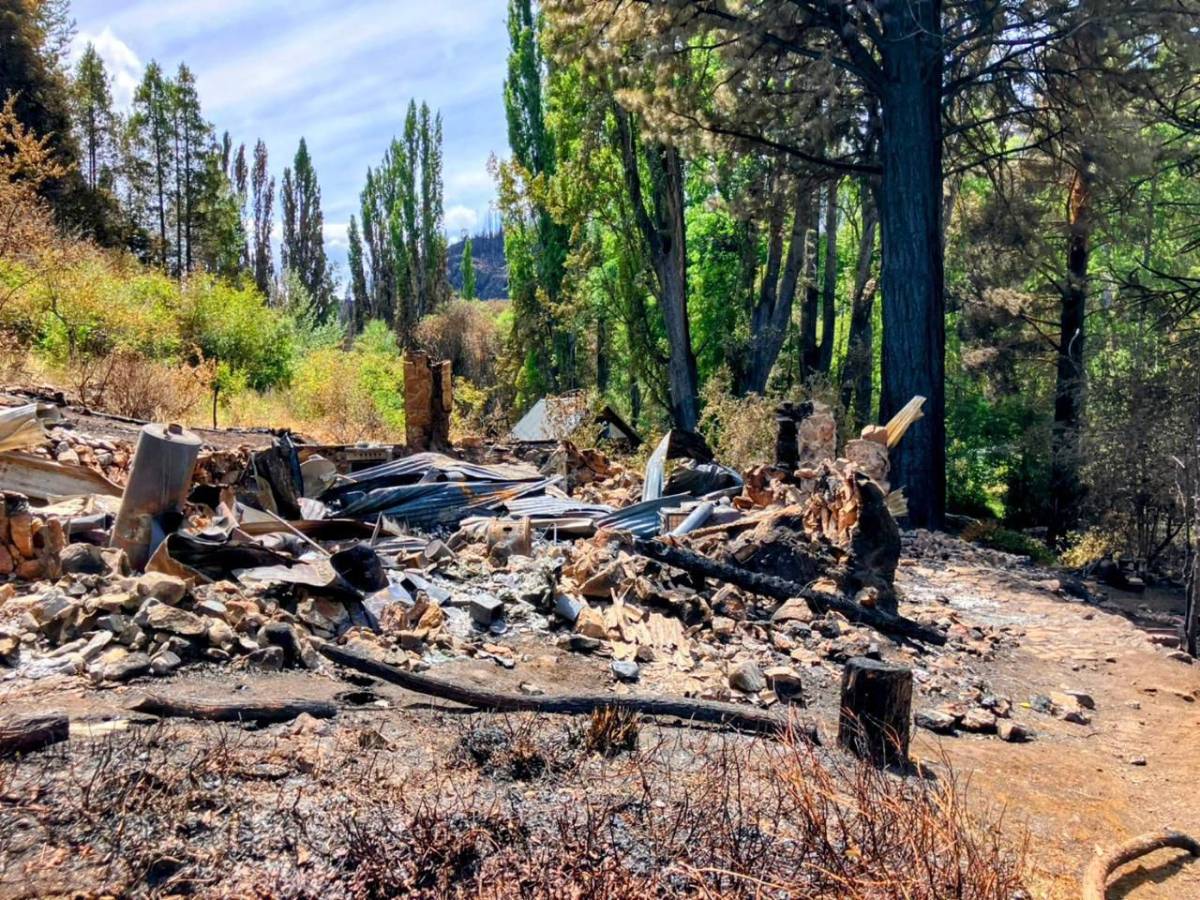
On Wednesday, June 2, 2021, an arson attack destroyed Betiana's ruca (house) in the reclaimed territory of the Lof Lafken Winkul Mapu. The family was in Bariloche and upon returning had lost everything, including items essential to their spiritual practices, such as priceless silverware, clothing, and their ceremonial kultrung, all consumed by the fire. When they reported the incident, they stated that unknown individuals, accompanied by members of the Gendarmerie and National Parks, were seen loitering in the area. However, the case was never solved. And now she is imprisoned, accused of the same crime.
We are present
We are committed to journalism that delves into the territories and conducts thorough investigations, combined with new technologies and narrative formats. We want the protagonists, their stories, and their struggles to be present.
SUPPORT US

FOLLOW US
Related notes

We are present
This and other stories are not usually on the media agenda. Together we can bring them to light.