

The Plurinational Meeting of Women, Lesbians, Trans, Transvestites, Bisexuals and Non-Binary People returns to discuss its agenda
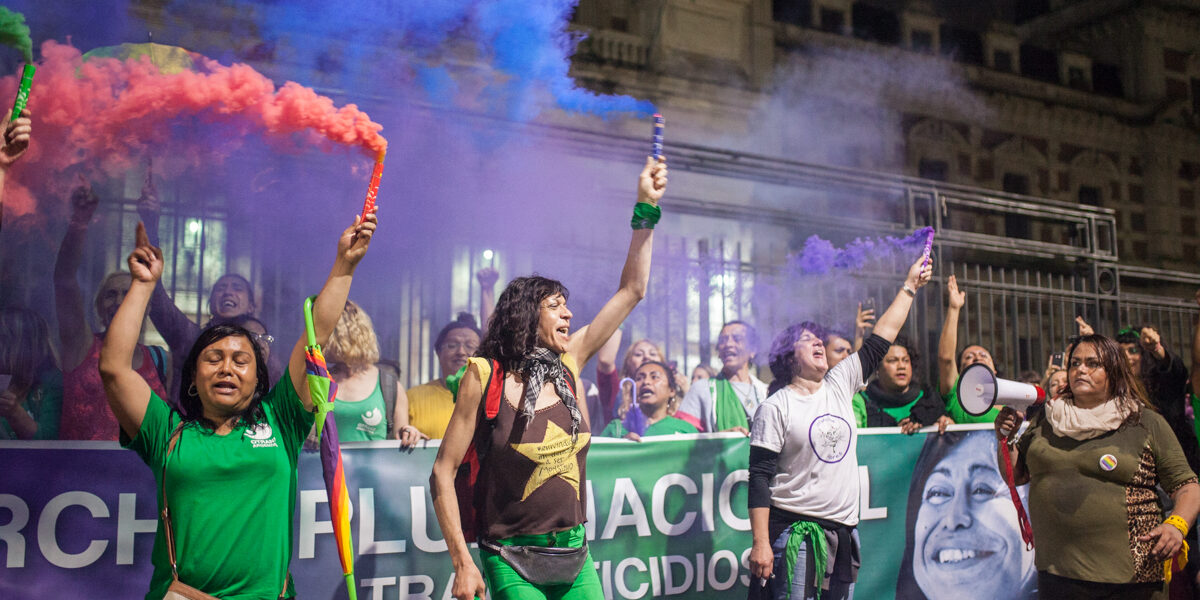
After two years, thousands of women, transvestites, trans people, and Indigenous women will once again gather en masse in San Luis. A story woven from debates.


Share

BUENOS AIRES, Argentina . The Plurinational Gathering of Women, Lesbians, Transvestites, Transgender, Bisexual, Intersex, and Non-Binary People will take place this year on October 8, 9, and 10 in San Luis, the territory of the Huarpe, Comechingón, and Ranquel peoples. This is the 35th gathering, reflecting a history marked by debates that have accompanied each historical moment and shared struggles. It has also been marked by ruptures, the most recent stemming from a name change that sought to incorporate a plurinational and diverse perspective.
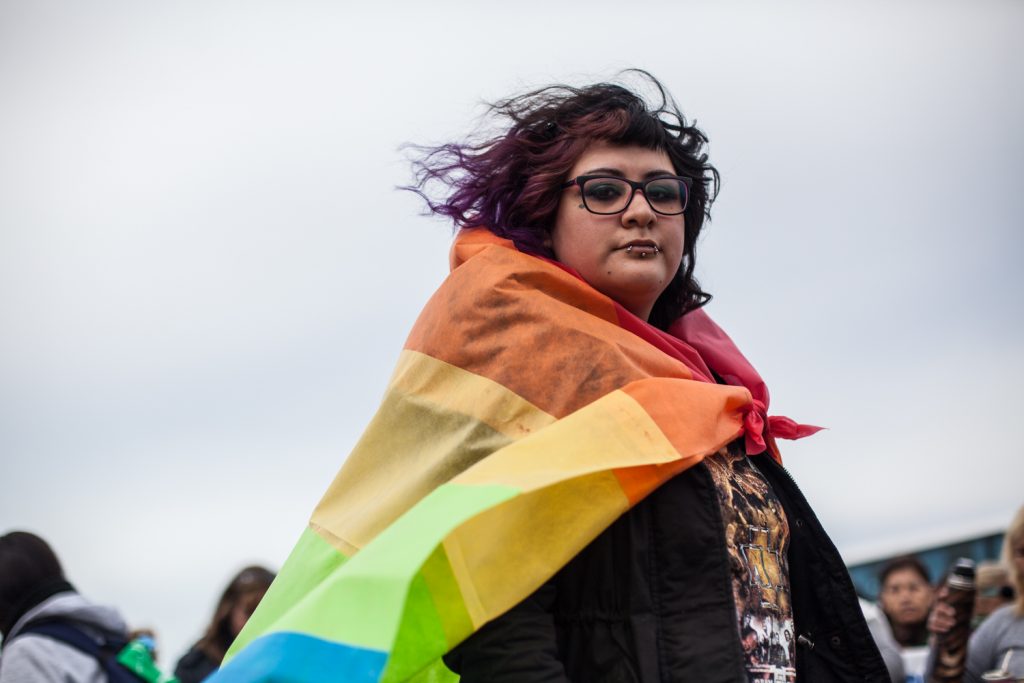
Without transvestites, trans people, women, and Indigenous diverse groups, this change would not have happened. Presentes spoke with transvestite activist Alma Fernández, Noelia Romina Naporichi from the Qom nation, and Paula Lorenzo, co-author with Amanda Alma of the book Women Who Meet: A Historical Recovery of the National Women's Meetings in Argentina (1986-2005), about the participation of these identities in the meetings.
Photos: Luli Leiras.
From expulsion to inclusion
“When I was younger, I read in a newspaper that 'transvestites' had been expelled from the National Women's Meeting in San Juan. It made me very sad. I remember that Lohana (Berkins) had gone. That day had been intense . From then on, I started paying attention to the meetings,” Alma Fernández Presentes She began participating in these events in 2014 while a student at the Mocha Celis Popular Transvestite High School .
Regarding that experience, she recalls: “It was a moment where I understood why it is called an 'encounter' and how it transforms you through each participation.”
The trans community grew with each gathering over the years. Sometimes they faced rejection, and other times they received attentive support from other women who listened to their demands and stories. Many remember the interventions of Lohana Berkins, the historic trans activist from Salta.
“Lohana was a trans mother who made us think, challenged our demands, and brought our struggles to light,” says Fernández, and recalls: “She made us understand that when someone laughed at us, we as sisters should protect each other, isolate ourselves, and organize. Through the beautiful workshops she coordinated, she made us aware that we needed to sit at the political tables and engage in the discussions. She was a wellspring of knowledge, as (Marlene) Wayar writes.”
At the 2015 gathering held in Mar del Plata, the community suffered a devastating blow. That weekend, they were expecting the arrival of trans activist Diana Sacayán, but she never came. On October 11, she was murdered. Her death sparked a massive movement within the community to begin discussing hate crimes based on gender identity. On June 18, 2018, the Criminal Court No. 4 of Buenos Aires sentenced her murderer, Gabriel David Marino , in a ruling that, for the first time, recognized the crime as a transphobic hate crime.
The demand for the lives of trans women
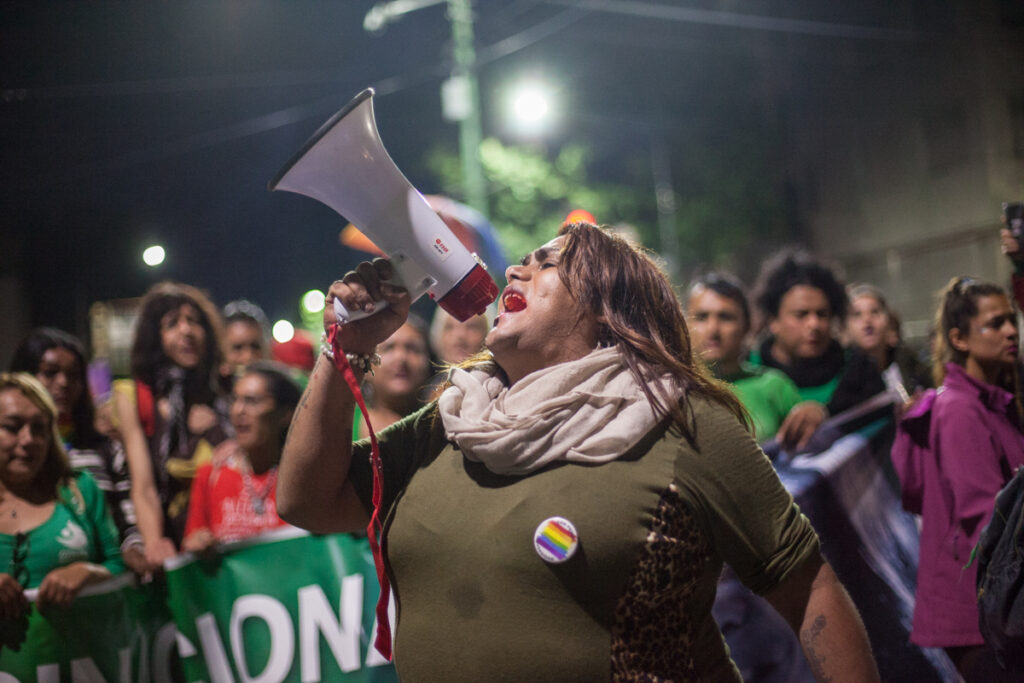
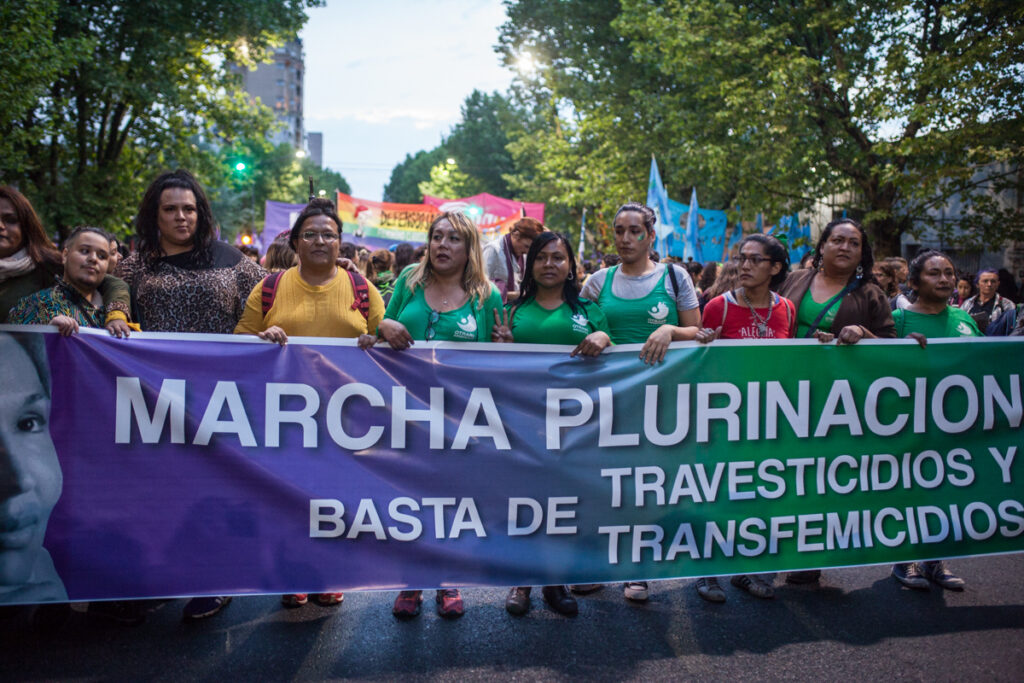
The first March Against Transvesticide and Transfemicide took place the following year, at the Rosario gathering in 2016. “That’s when we started demanding justice for Diana Sacayán. We were left orphaned because Lohana had also died in February. A journey began of carrying their banners, of embracing our slogans, and always from a place of poverty,” Fernández recalls.
From that moment on, the trans community also made great strides. In 2017, workshops were organized in Chaco for non-binary people , and later expanded to include trans and travesti children. In Trelew (2018), following the conviction for transphobic murder , the march against these crimes emerged from clandestinity and became part of the official program of events. And in La Plata (2019), the march “stretched over 15 blocks,” Alma recalls.
“The participation of trans women in the gathering had been established. But Saturday had also been designated as the trans women's march, and the entire gathering was in conjunction with it. I can't help but be moved by what we, the daughters of Diana and Lohana, have been building,” Fernández says through tears. She adds, “I love knowing that, from our own spaces, through our documents and the consensus we all reached, we made the gathering more inclusive.”
Cultural diversity
The first march that was part of the gatherings took place in the province of Neuquén in 1992. “The women marched through the city streets to protest the genocide and the 500th anniversary of the (Spanish) conquest, which was one of the main slogans,” describes the book *Women Who Meet* about that gathering, the seventh since its inception. “It was held because it was also October 12th, and the Indigenous women were marching on the 11th, the last day of their freedom. Those at the gathering wanted to participate in the march, and from then on, it became a tradition to include a march at the gatherings,” Paula Lorenzo, one of the book's authors, Presentes
The first Encuentro (Meeting) in which Noelia Romina Naporichi, a member of the Qom nation and native of Juan José Castelli, Chaco province, participated was in Misiones, when she was 18 years old. “The participation of Indigenous women in the Encuentros was powerful and very intense. Full of energy and pain. Also because many of us have been carrying forward demands that have lasted for centuries, bringing to the Encuentros the situations we experience in our territories or in urban areas,” she tells Presentes .
Currently, Naporichi belongs to the Indigenous Women's Movement for Good Living. For her, this participation arose from "a collective struggle of women leaders from different nations, movements, communities, and organizations." Regarding this, Paula Lorenzo explains that at the Encuentros (Meetings), when a workshop exceeds the 40-person limit, another one is opened. However, "those from Indigenous communities always wanted to do it together; they didn't want to divide themselves," she emphasizes.
Noelia traces the origin of the desire to change the name of these gatherings back to the Rosario Encounter (2016). “The idea of plurinationality began to take shape at the Rosario Encounter after some sisters from different places came and felt uncomfortable because they weren't being welcomed. They weren't even included in some of the activities. They struggled,” she explains. Discussions on this topic intensified in Resistencia (Chaco) and Trelew (Chubut).
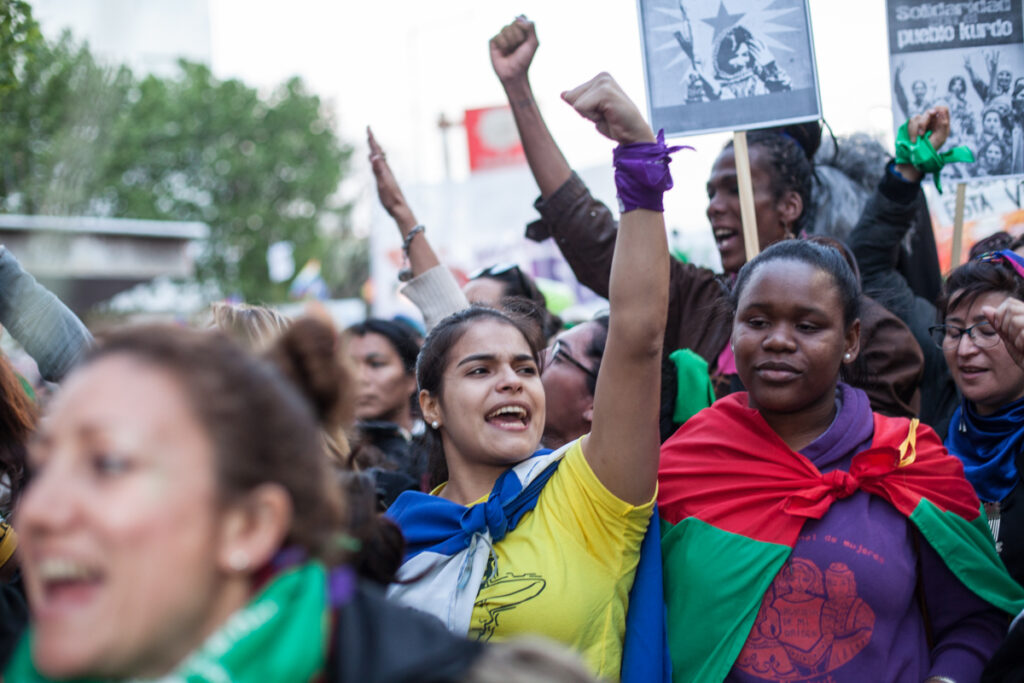
Photo: Luli Leiras
To name so that it exists
At the last meeting, held in La Plata—Querandí territory—two committees were formed. One was the 'official' committee, which opposed the name change. Meanwhile, a parallel committee, the Somos Plurinacional Campaign , facilitated the debate on the identity change.
This division persisted within the organizing committees for the San Luis meeting. When the meetings to organize it began, one sector—led by the Revolutionary Communist Party (PCR), which has organized the meetings for years—opposed the change in identity. It also promoted a parallel meeting scheduled for November. After several meetings seeking consensus to unify the two gatherings, the debate remains unresolved, as registration for the “National Women’s Meeting” is still open.
Meanwhile, the organizing committee of the 35th Plurinational Meeting of Women, Lesbians, Transvestites, Trans, Bisexuals, Intersex and Non-Binary People is organizing the meeting that will take place this weekend.
“We humbly believe that we have a political responsibility to respond to those thousands of comrades who have been expressing for years that they don't feel represented when the National Meeting is discussed. And just as feminism has taught us, what is not named does not exist. We believe we owed a debt to all those comrades made invisible by this colonialist, capitalist, and patriarchal system,” the organizing committee concluded upon adopting the new name.
The workshops
The list of workshops for the event has been published. There are 105 workshops, covering 15 key areas:
1. “Feminisms, transfeminisms, women and indigenous diversities”
2. “Identities and sexualities”
3. “Territories”
4. “Activism and organization”
5. “Childhood, adolescence and adulthood”
6. “Sex-affective relationships, diverse families and child-rearing”
7. “Feminisms, transfeminisms, indigenous women and diversities and their struggles in the field of health and self-care”
8. “Feminisms, transfeminisms, indigenous women and diversities and their struggles in the world of work”
9. “Feminisms, transfeminisms, indigenous women and diversities and their struggles in the field of education, science and technology”
10. “Feminisms, transfeminisms, indigenous women and diversities and their struggles in the field of culture, art and sport”
11. “Patriarchal violence in all areas”
12. “Human trafficking and the prostitution system”
13. “Human rights and access to justice”
14. “Feminisms, transfeminisms and their relationship with religions and religious institutions”
15. “Geopolitical and economic situation”
The workshops are free, and the organizing committee recommends registration. Registration is not mandatory and costs $500.
We are present
We are committed to journalism that delves into the territories and conducts thorough investigations, combined with new technologies and narrative formats. We want the protagonists, their stories, and their struggles to be present.
SUPPORT US

FOLLOW US
Related notes


We are present
This and other stories are not usually on the media agenda. Together we can bring them to light.