

Protest against the suspension of the Wetlands Law in the Chamber of Deputies: "Lobbying prevailed"
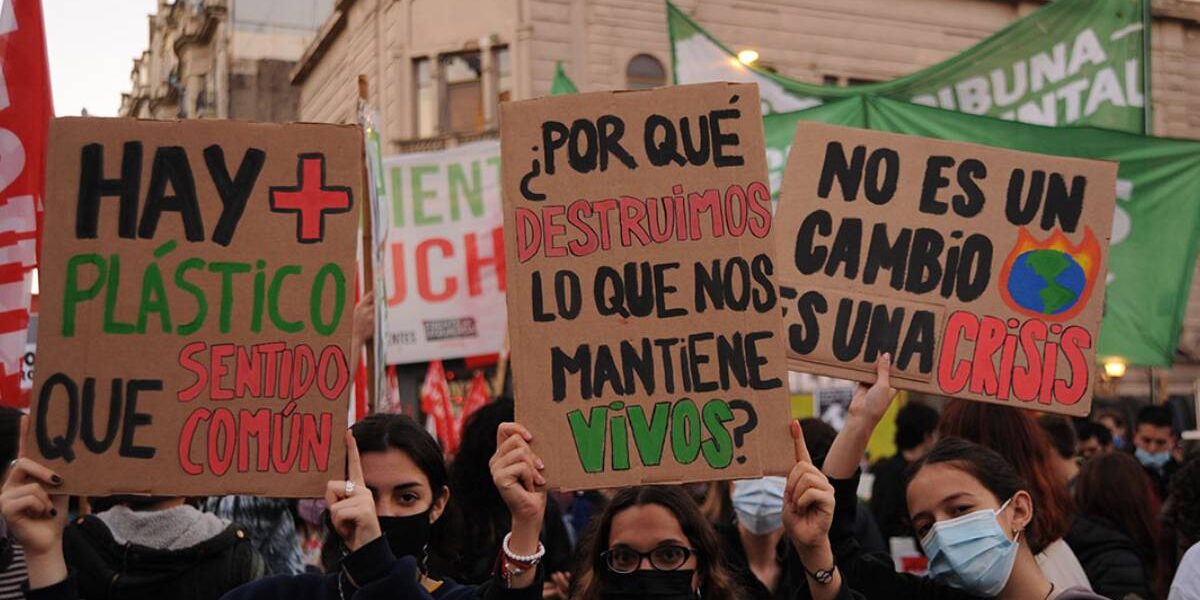
The mobilization demanded the approval of the Wetlands Law and denounced "the lobbying of agribusiness, the real estate and mining sectors."


Share

BUENOS AIRES, Argentina. The debate on the wetlands bills in a joint committee meeting in the Chamber of Deputies was suspended last night. Several party leaders signed a statement requesting a new date "in order to hear the positions of the provincial governments." The planned demonstration for 9 a.m. today went ahead as scheduled. Protesters demanded the passage of the Wetlands Law and denounced "the lobbying efforts of agribusiness, the real estate sector, and the mining industry."
“Lobbying prevailed: the meeting was postponed,” Congressman Leonardo Grosso said last night via his Twitter account. He explained: “After weeks of working to have a ruling on the wetlands law tomorrow, I received a statement in which the various leaders of the @DiputadosAR announced the postponement of the plenary session for another week.”
The statement was signed by Representatives Germán Giménez (Frente de Todos), Mario Negri (Unión Cívica Radical), Cristian Ritondo (PRO), Juan Manuel López (Coalición Cívica), Rodrigo De Loredo (Evolución Radical), Luis Di Giacomo (Provincias Unidas), and Margarita Stolbizer (Encuentro Federal). In it, they requested that a new date be set for the plenary session to hear the positions of the provincial governments.
"These are the lobbies we were talking about."
The projects were initially scheduled to be discussed in a joint committee meeting (Natural Resources and Environment, Agriculture, and Budget) last Thursday. However, it was postponed until this week and then suspended again.
“Unfortunately, last Thursday a group of lobbyists managed to get the chairman of the Agriculture Committee (Ricardo Buryaile) – a former minister during the Macri administration – to delay the process for another week. These are the lobbies we were talking about: the agribusiness, mining, and real estate lobbies that operate behind the scenes all year round and only come out into the open when it's strategic. And we saw it this week: with press releases, fabricated studies, paid articles in mainstream media, even with protests and bridge blockades,” activist Ivo Peruggino, a member of the Multisectoral Wetlands group .
Currently, there are at least 10 wetlands bills under consideration in Congress. Two are in the Senate: one introduced by Senator José Antonio Rodas of the Frente de Todos bloc representing the province of Chaco, and another by José Torello of the PRO party. Meanwhile, eight bills are in the Chamber of Deputies. These include those introduced by Grosso; Graciela Camaño of the Identidad Bonaerense bloc; Enrique Estévez of the Socialist bloc representing Santa Fe; Hernán Pérez Araujo of the Frente de Todos bloc representing La Pampa; and Gabriela Lena of the Unión Cívica Radical representing Entre Ríos.
After losing its parliamentary status at the end of 2021, the legislator reintroduced the "Minimum Environmental Protection Standards for the Rational and Sustainable Use of Wetlands" bill . This bill has the support of more than 400 organizations that participated in its creation.
"It's going to happen sooner rather than later."
Its objective is “to establish minimum environmental protection standards for the preservation, restoration, and rational and sustainable use of wetlands throughout the nation.” It also recognizes “their intrinsic value” and seeks to safeguard “their ecological integrity, ensuring the ecosystem services they provide.”
“This law distinguishes between production and destruction. It protects not only wetlands but also their inhabitants, both human and non-human. It organizes land use to ensure its healthy conservation, so that production can continue not only now but also in the coming decades,” Peruggino stated.
And he warned: “The problem is that there is a sector of our country that doesn't know how to produce without destroying. It has already been proven that this production system has only devastated all the territories, condemned half of the children in our country to poverty, and poisoned even more childhoods.”
“They know their time is up because the current climate situation demands it, and above all, because people in the streets are demanding it. They managed to delay something that will happen sooner or later,” he concluded.
We are present
We are committed to journalism that delves into the territories and conducts thorough investigations, combined with new technologies and narrative formats. We want the protagonists, their stories, and their struggles to be present.
SUPPORT US

FOLLOW US
Related notes


We are present
This and other stories are not usually on the media agenda. Together we can bring them to light.