

“Playing is my anchor,” the story of a trans foosball champion
The young woman from Mendoza was the winner of several national tournaments. What is the atmosphere like in foosball for diverse groups?


Share

BUENOS AIRES, Argentina. In the pantry of a humble family living in the city of Guaymallén , in the province of Mendoza, the youngest of six children of a Bolivian couple climbs onto a box to reach the rods of a foosball table.
She shares the toy with the whole family. She is four years old and still presents herself to the world as a child. Years later, she will be called Uma Daniela Flores.
A game for life
It's February 11, 2018. Thirty years have passed since this sport ceased to be a daily activity in her life. That day, when she was nine years old, a storm corroded the wood of the family foosball table. Uma places a water bottle beside her to absorb the sweat that will pour from her body. Then, she slides the overgrip over the handles of the rods where she will firmly place her hands. Her partner, Juan Aragón, accompanies her in the amateur category. She prepares to hear her opponent's "Let's go!"
“From my first tournament I remember two matches: the final of the amateur category, where we finally positioned ourselves as winners, and my first match in the individual professional category, where I faced a player from Buenos Aires,” Uma tells Presentes about that day.
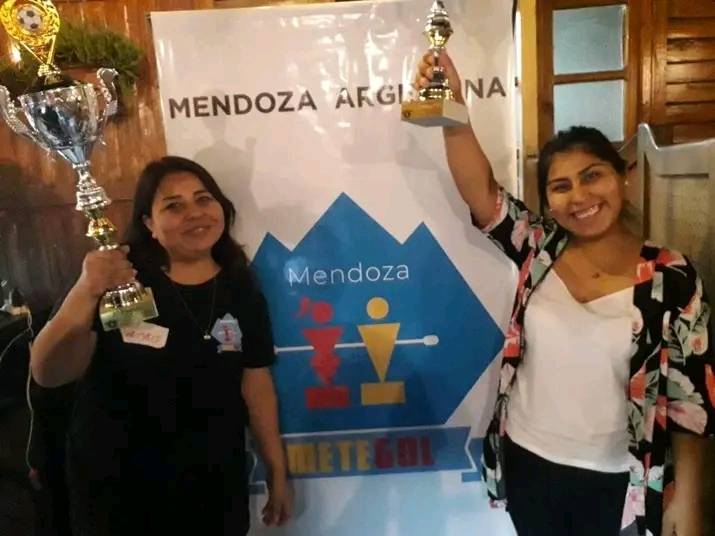
“My opponent was far superior to me in technique, speed, and experience. In that match, I saw for the first time a player pass from midfield to the forwards,” he recalls. “I also observed the snake shot , plays that ultimately paved my way to reaching the professional level.”
In December of that year, he competed in the city of Buenos Aires in a national tournament, organized by the Argentine Association of Foosball Players (AAJM) .
“I went to participate and I also won a medal in the women's category. Some players at that tournament told me, 'You're going to be a professional player.' I was thrilled. Besides, it's something I love to do, I enjoy it: it's a passion. That's where I started training and I haven't stopped since. Every time there was a tournament, if I could, I went.”
The first encounter with the trans world of Mendoza
Uma Flores is 39 years old. She is a Hemodialysis Technician, a graduate of the University of Cuyo (UNCuyo), and lives in the city of Guaymallén, in the north-central part of the province of Mendoza, Argentina.
After experiencing hardship and years of unemployment—a common experience for the trans community due to discrimination—she began working at the Central Hospital of Mendoza in At the same time, she started studying law, her second degree.

At 16, she had the tools to transition. But before that, although she had the support of her parents, she "couldn't understand" what was happening to her and also went through "difficult situations" within her family.
“Since my parents worked in a rural area, they were always away, and I was left alone at home with some of my siblings, and they hadn't taken it as well as my parents. The relationship with them was more difficult. So sometimes I preferred not to be at home and would go wandering around, walking about and getting lost,” she recounts.
On one of those "tours," at age 12, she saw a group of trans girls for the first time. It was around 10:30 p.m., and the last bus that would take her home had already left. She walked the eight kilometers that separate downtown Mendoza from Villa Nueva, along Independencia Avenue. Eighty minutes on foot.
“I just happened to be walking through a red-light district and saw a lot of women. I remember they looked like movie stars because they were all super pretty, super tall, and very sparkly. Beautiful, really. I was so impressed looking at them. As soon as they saw me, they kind of signaled to me. They asked if I was hungry and bought me a breaded cutlet sandwich. I stayed with them for a while; they were super nice, and I felt very comfortable at that moment,” she recalls about that night.
She adds: “I told them more or less what was happening to me, and they told me I was going to be a beautiful trans girl. At that moment, I felt so good. Later, I arrived home super happy, and very late, too. Fortunately, my parents never found out.”
The passion that always returns
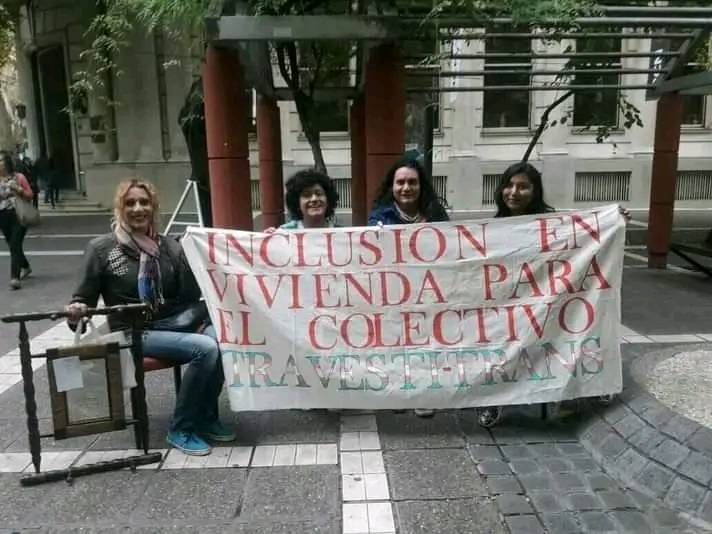
Uma considers herself an activist. She is part of the Movement for Housing Inclusion for the Trans Community in Mendoza. She also campaigned for the Gender Identity Law and paved the way in her province for access to gender reassignment surgery.
“In 2016, I was able to access a procedure through a social security organization. That set a precedent for many other women and forced social security organizations to provide 100% coverage, as stipulated by the (Gender Identity) law in its article 11,” she says.
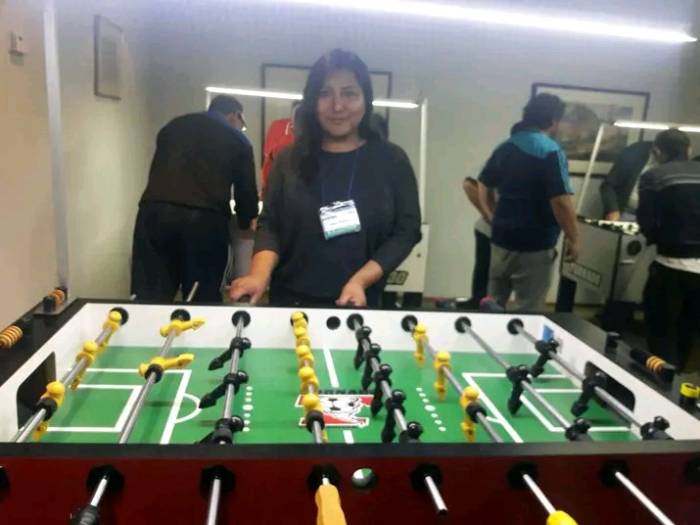
About four years ago, she rekindled her passion for playing table football. She trains by playing with other professional players and also by watching YouTube videos. She recently acquired a professional-style table, manufactured in the United States—a dream come true for her.
“It was a table that had some damage, it was a bit worn because it was about 10 or 12 years old. With the help of my brother and a carpenter, we managed to repair it. It was difficult to find someone willing to do it. Now I have it here, next to my bed, as a nightstand. I live in a very small studio apartment. I have the table next to the bed and the stove next to the table. I'm happy because now I can practice,” she says.
A game for everyone
Uma says she hasn't met any other trans people who play foosball. "In Mendoza, we did have an amateur teammate who used to practice with us," she recalls.
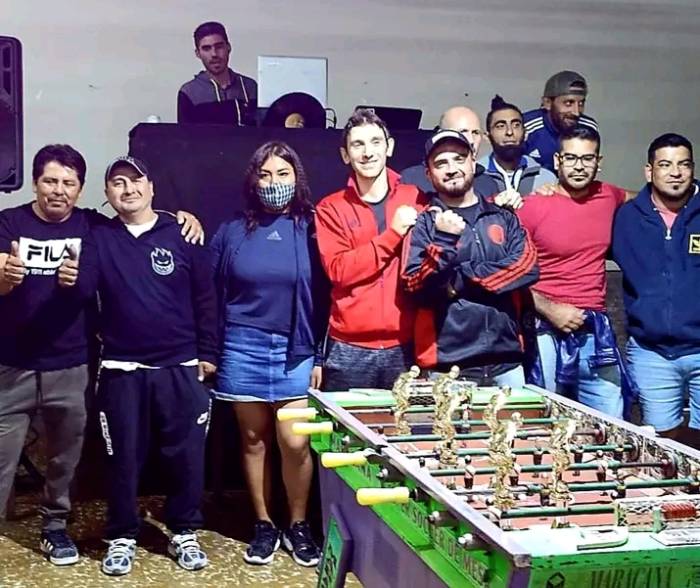
“I experience my identity naturally. I simply go, participate, and meet players to try to grow in the sport. I try to participate wherever I can and am accepted,” says Uma. “The times I’ve traveled to Buenos Aires to compete, I’ve always been received warmly, I’ve met great players, and thanks to them I’ve learned a lot.”
The dream of the Copa America
He is currently preparing to compete in the Copa América, which is expected to take place this October in Santiago, Chile, if circumstances allow. “Whenever you go to those tournaments, even if you don't win, you always gain valuable experience. It's three or four days of playing with players who are at a higher level than you, and you end up learning plays and acquiring different techniques,” he says.
“Now I have another chance to go with a little more experience,” says Uma, who had previously been invited to the Copa América that took place in Costa Rica in 2018. Because of the cost and because she still didn't feel confident in her training, she decided not to participate.
Regarding the sport, the player believes that it still needs to "become more professional." "There's no government support whatsoever to help teams formed in the country compete abroad. There are good players, but they always face the challenge of not being able to travel. This is the case with sports that lack the necessary recognition," she explains.
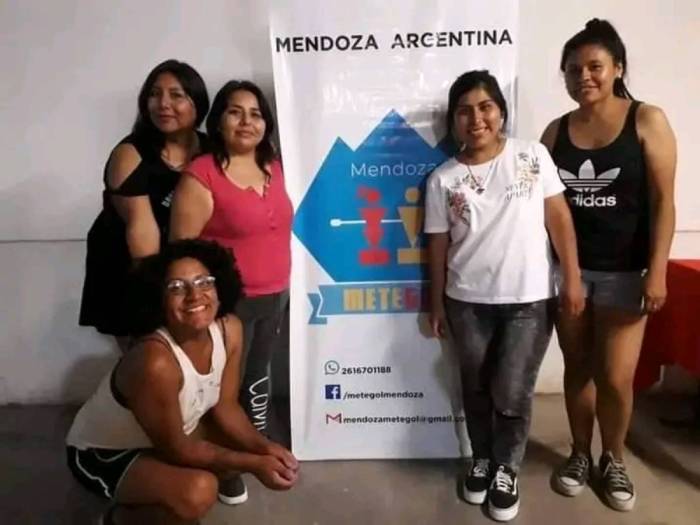
Currently, they have a group of eleven players from Mendoza , most of whom are women. They are currently campaigning to secure a space where they can set up the tables they already own, so they can train and promote the sport.
“Playing is a moment of joy, of enjoyment, it’s my anchor. The truth is, I do so many things that it’s the only time when it seems like everything else fades away, is set aside.” That’s how she enthusiastically ends the phone conversation.

We are present
We are committed to journalism that delves into the territories and conducts thorough investigations, combined with new technologies and narrative formats. We want the protagonists, their stories, and their struggles to be present.
SUPPORT US

FOLLOW US
Related notes

We are present
This and other stories are not usually on the media agenda. Together we can bring them to light.