

Cuba has same-sex marriage
Cuba approved a new Family Code that legalizes marriage and adoptions "between two people".


Share

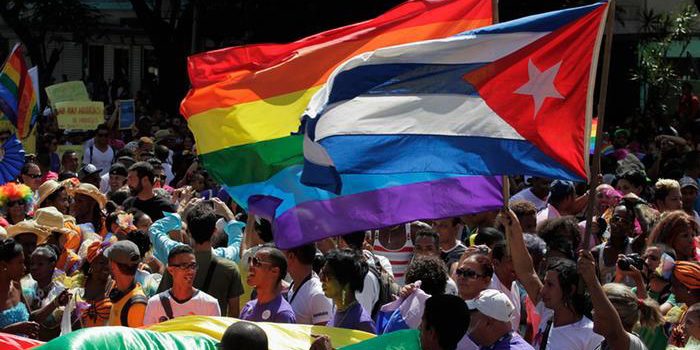
Cuba has approved a new Family Code that legalizes marriage and adoption "between two people," opening the door to same-sex marriage. This was done through a referendum where the "Yes" vote obtained 66.87%, exceeding the 50% threshold required for the legislation to pass.
“ Love is now law ” is one of the hashtags circulating on social media in reference to the news. The island's president, Miguel Díaz-Canel, used it on his Twitter account along with the message: “The 'yes' vote won. Justice has been served.”
“Approving the #FamilyCode is doing justice. It is settling a debt with several generations of Cubans, whose family plans have been waiting for years for this law. From today onward, we will be a better nation,” he added.
“For LGBTQ+ activism in Cuba, the support and working relationships with other activists in Argentina, who have long been linked to Cuba in this struggle for our rights, have been fundamental. I would like to highlight our friends and trans leaders Lohana Berkins and Diana Sacayán. Both came to Cuba, participated in our Cuban events against homophobia and transphobia, and appeared on the most important Cuban television programs to explain the progress that had taken place in Argentina during the Kirchner administrations,” said Francisco “Paquito” Rodríguez Cruz, a gay activist with the Community Social Networks of the National Center for Sex Education (CENESEX). He is also a member of the Regional Council of the International Lesbian, Gay, Bisexual, Trans and Intersex Association for Latin America and the Caribbean (ILGALAC).
"Let's celebrate. We've earned it. It's a victory of epic proportions, perhaps in the worst possible circumstances," the activist added on his Facebook account
"For the first time in Cuba, same-sex couples will have the right to marriage, to common-law unions, to become mothers and fathers through adoption or surrogacy, to determine the order of their offspring's surnames, and for children to have up to two mothers and one father, or two fathers and one mother," he added.
Recognition and reparation
The Cuban electorate voted yesterday on the new Family Code in a legislative referendum. This was the first time a law other than the Constitution has been put to a referendum in Cuba. It represents a recognition of rights and redress for the LGBT+ community, which was persecuted during the 1960s and 70s. Homosexual relations were decriminalized in the country in 1979. The current code was approved by the National Assembly in July and replaces the previous legislation from 1975.
“The new legislation is the result of a long journey of local activism and an extensive process of expert and public consultations, in which more than six million citizens of the island participated, including LGBTI+ activists, whose opinions and proposals were taken into account,” ILGALAC stated in a press release. It also affirmed that this is a “law that will guarantee the realization of important rights for LGBTI+ people in that country.”
Cuba's new Family Code defines marriage as the union "between two people." This opens the door to same-sex marriage and adoption for LGBTQ+ couples. It also allows for the legal recognition of multiple parents (in addition to biological parents) and non-profit surrogacy, among other rights.
Who opposes it?
"During the last decade, Cuba has made progress in recognizing and protecting the rights of LGBTI+ people, which it expressly incorporated into the 2019 Constitution and laws such as the Labor Code and the Penal Code," ILGALAC stated.
However, advances in human rights also have their opponents, mainly from Christian churches. Of the total number of people who voted (5,891,705), 3,936,790 voted in favor and 1,950,090 against. The 33.13% who voted "no" was the highest percentage of negative votes the government received.
"While there is still a long way to go in terms of gender identity, access to services and specific public policies, the approval of the code will constitute a historic turning point for the LGBTI+ community in Cuba and the region," said ILGALAC.
In this regard, Rodríguez Cruz maintained that "activism for the rights of LGBTIQ+ people doesn't end: a new stage begins." "The Code must be implemented, along with all other laws derived from the 2019 Constitution. Comprehensive sexuality education must come out of the closet where it was shelved," she concluded.
We are present
We are committed to journalism that delves into the territories and conducts thorough investigations, combined with new technologies and narrative formats. We want the protagonists, their stories, and their struggles to be present.
SUPPORT US

FOLLOW US
Related notes



We are present
This and other stories are not usually on the media agenda. Together we can bring them to light.