

Santiago del Estero: Denunciations of judicial persecution of peasant leader Deolinda Carrizo
The historic leader of Mocase received an arrest warrant along with other members of the peasant movement for accompanying a family that was resisting an eviction.


Share

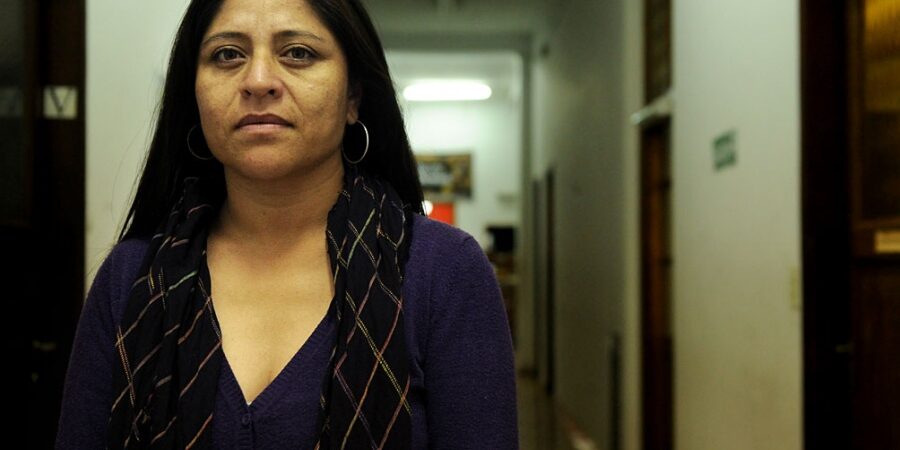
On Friday, September 2, a holiday declared by the Executive Branch, peasant leader Deolinda Carrizo received an arrest warrant from the Criminal Court of Santiago del Estero. She is accused of “usurpation and violence” for her presence—along with other members of the Peasant Movement of Santiago del Estero (MOCASE)—during an attempted eviction on August 26 in the El Urunday area, near the town of Roversi.
“There was never any violence; the police withdrew from the scene. It’s an absurd accusation. There are no weapons or sufficient resources for an act of violence. Furthermore, it’s a bailable offense; they have no reason to detain her, especially in the context of an eviction whose ruling is not yet final,” Majo Venancio, a lawyer and member of Mocase, explained to Presentes .
Venancio recounted that on August 26, the Medina family, who are farmers, received an eviction order, and that same day they sought help from Mocase. The nearest Mocase headquarters is in the department of Quimilí, where Deolinda Carrizo is from. “She went there as a Mocase activist and as head of the Gender and Equality Directorate of the National Undersecretariat of Family, Peasant, and Indigenous Agriculture,” Majo Venancio, a lawyer and member of Mocase, explained to Presentes.
Because the eviction violated the rights of the peasant families, the Mocase activists remained at the site. The police identified those present and opened a criminal case for trespassing. Prosecutor Luján González intervened and requested Judge Ana Cecilia Vittar to order the eviction and issue arrest warrants for five Mocase members, including Deolinda Carrizo.
Thanks to the support of Mocase, the eviction has not yet taken place. However, the arrest warrant remains in effect.
They demand an end to the criminalization of peasant families
“We submitted a document requesting the cessation of the arrest warrants and we will also make the corresponding arguments regarding the discussion about the right to land,” Venancio said.
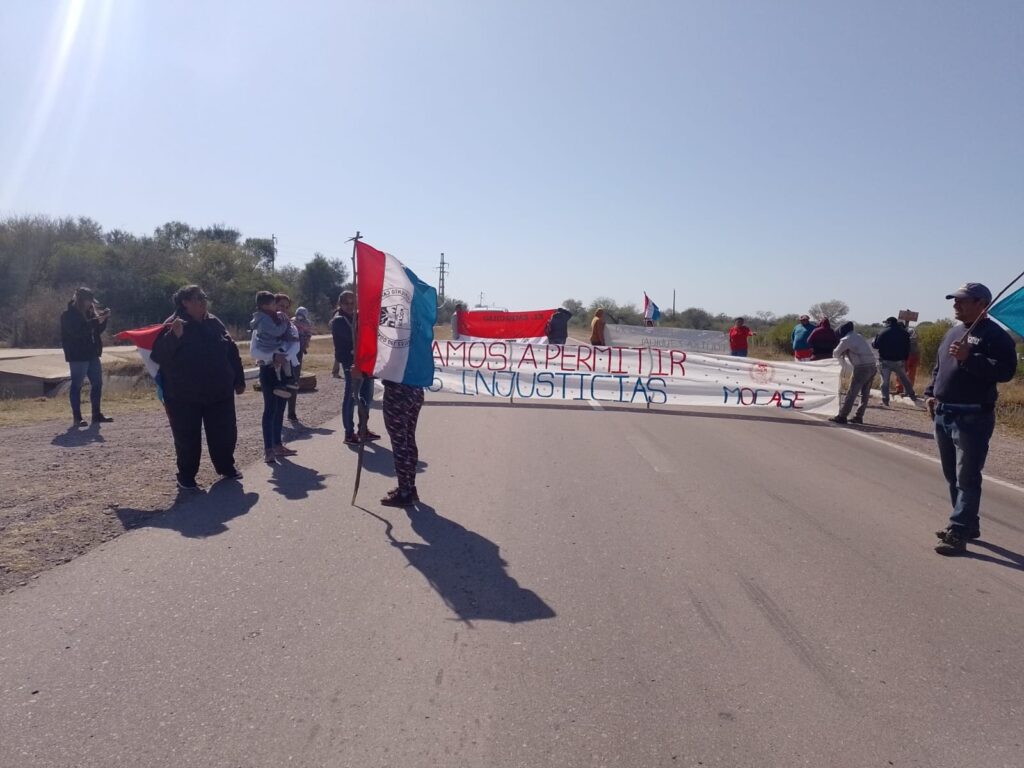
On Monday morning, road closures were carried out at various points in Santiago del Estero.
“We demand the immediate lifting of arrest warrants and an end to the campaign of criminalization against families defending their territories by the Santiago del Estero judiciary, in clear complicity with economic and police sectors. We demand that the province's Public Prosecutor's Office stop criminalizing human rights defenders. Stop the political persecution of MOCASE and its members, stop the political and judicial persecution. Stop the evictions of Indigenous peasant families,” the Movement stated on social media.
They also joined in the condemnations of the attack against Vice President Cristina Fernández de Kirchner.
An illegitimate request
The conflict over the Medina family's 200-hectare property began in 2019. That year, the Civil Judges' Association of the city of Santiago del Estero issued the first eviction order. They claimed to have a signed agreement between the person who said he owned the land and the family currently living there.
In that document, which Medina did not read completely because he has visual problems, he said that he committed to vacating the place in February 2020.
Mocase denounces as an irregularity the fact that there is no proof whatsoever that the plaintiff, Guillermo Ríos, owns the land. No judicial inspection or verification was ever carried out on the property to ascertain who lives there. And no socio-economic report was ever ordered to document the family's living conditions.
Nor did they monitor whether they were actually aware of the presentations and movements that took place in court.
Carlos Medina lives there with his partner Mirta Belizan and their five children. The whole family works in agriculture, raising animals.
We are present
We are committed to journalism that delves into the territories and conducts thorough investigations, combined with new technologies and narrative formats. We want the protagonists, their stories, and their struggles to be present.
SUPPORT US

FOLLOW US
Related notes


We are present
This and other stories are not usually on the media agenda. Together we can bring them to light.