

Transfemicide in Salta: Carina Guzmán was 37 years old and her life was marked by violence
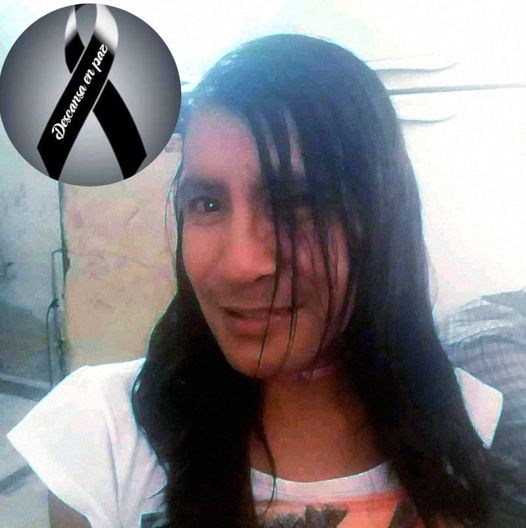
Carina Guzmán, a trans woman, was found dead in her home in General Güemes (Salta), with signs of violence. She had suffered rape, abuse, and discrimination since childhood.



Share

The body of Carina Guzmán, bearing signs of violence, was found on August 31st in her home in the Villa Tranquila neighborhood of General Güemes, more than 50 kilometers south of the city of Salta. Unofficially, it has been learned that several people have been detained in connection with the case. Friends of the 37-year-old victim recounted details of her life, marked by abuse and discrimination based on her gender identity.
Perhaps the final manifestation of that discrimination is the investigation into her death. Today, the Salta Public Prosecutor's Office informed Presentes that the case will be handled by prosecutor Leandro Flores of the Unit for Serious Crimes Against Persons. Carina had not legally changed her gender identity, and her national identity document still lists the name she was given at birth. Although the gender identity law enshrines the right in terms of each person's internal experience, the investigation of the crime will not be with the intervention of prosecutor Mónica Poma, from the Specialized Prosecutor's Unit for Femicides (UFEM).
Five people arrested
The Public Prosecutor's Office has not yet released the autopsy results, but unofficial reports indicate that the body showed clear signs of blows and stab wounds. The body was found around 9:30 a.m. on August 31. The news of the young trans woman's death generated widespread consternation among the residents of Güemes, who expressed their grief on social media.
Journalist Ángel Teseira, from Güemes, reported today that five people were arrested in connection with this incident . This was later confirmed by the head of Operations for Regional Unit VII, Juan Carlos Tapia. He also stated that these individuals were known to Carina. According to the police report, they stole her cell phone. They also took "items belonging to Carina that were in the possession of one of the detainees," Teseira said.
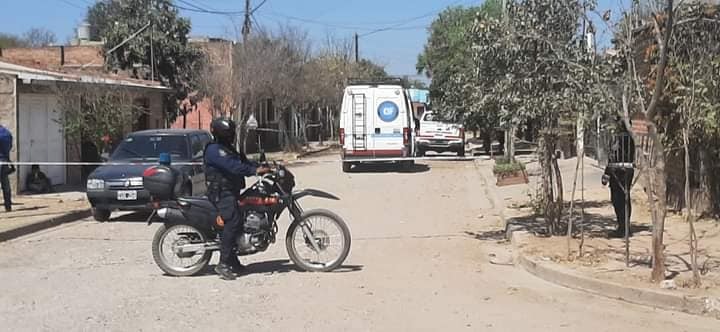
Photo: Courtesy of Ángel Teseira.
The story of her friend Estrella
By August 31, Carina had been disconnected from her social networks for several days, and this absence caused concern. One of the people who looked for her was her friend Estrella Mendez, a trans woman and member of the LGBTIQ+ collective in General Güemes, a city crossed by National Route 34 and very close to Route 9, which leads to the city of Salta.
Estrella was at Carina's house shortly before someone called emergency services and the police broke down the door. She recounted that around 9:00 a.m. on August 31st, she went to look for her again, knocking and calling out loudly without getting an answer. Finally, through a crack in the door, she could see Carina's legs. She assumed she was lying on the floor, but thought she was asleep and went to work. Minutes later, a call from a mutual acquaintance informed her of her friend's death.
Estrella is distraught. She said that Carina “always” called her, sometimes just ten minutes apart. “It didn’t bother me because she was funny, she always came up with something that made you laugh.” But she hadn’t called “for weeks” and wasn’t answering her calls either. Worried, she started looking for her. On Saturday, she went to a fair, where they always met, and to other places where they used to see each other. On Tuesday the 30th, she went to Carina’s house, didn’t find her, and thought it was strange that “the gate was unlocked.” Again, like so many other times, she looked through the crack in the door but didn’t notice anything unusual. Estrella said that other friends had also gone to the house, with the same result.
That same day, Estrella called Carina's partner, who had traveled to Jujuy. She learned that although she had planned to travel to that province, they hadn't heard from her either. The next day, Wednesday, August 31, she went back to the house and saw Carina's legs, but assumed she was asleep.
Estrella said she had known Carina for some time, and they used to go out dancing. Carina worked as a prostitute. Estrella was careful to clarify that she didn't work "on the street" as a prostitute, "like people always point the finger at all of us." She runs errands and does cleaning for elderly people. "One gives me 200, another 200, and that's how I make a living," she said.
And then, between sobs, she said: “Carina didn’t hurt anyone. She was a humble person; she gave away what little she had. I don’t know who hurt her or why. Besides, she was tiny, very skinny, she had no defense.”
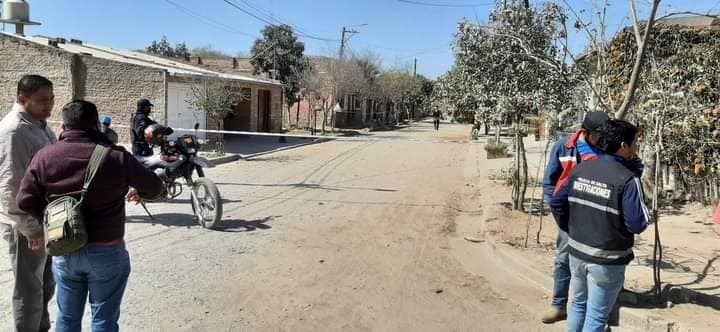
Photo: Courtesy of Ángel Teseira.
Structural violence and discrimination
Carina worked as a sex worker to survive in the precarious conditions of an empty lot near the bus terminal. The signage for the space was demolished in an attempt to prevent people with addictions from gathering there, but this continues to happen. Both Estrella and another friend of Carina's, who agreed to speak on the condition of anonymity, reported that all kinds of crimes are committed in this place, especially those related to sexual abuse .
The other friend, a woman who knew Carina when she was just a teenager, said that she used to prostitute herself at the gas station where she worked in sales. She described her as an “excellent person” with a drinking problem, having grown up in a family with that same problem. She also said that she learned from her own experience that Carina had been raped for the first time when she was only seven years old. She added that Carina suffered constant discrimination from “homophobes who didn't accept” her gender identity.
This woman recounted that she saw her two weeks ago at a bowling alley and ran into her again recently. Carina was with a group of people who clean windshields. She asked her for a cigarette, said she hadn't eaten that day, and asked for money to buy food.
Carina's family is "very humble," they said. A friend created a WhatsApp group to raise funds to help with funeral expenses. She recounted, as did other witnesses who agreed to speak on condition of anonymity, that three or four days before Carina was found dead, she had an altercation with a woman. During the altercation, she was hit on the head. This incident occurred near the place known as Gauchito Gil, close to the bus terminal. Rumors suggest that those arrested were involved in this incident, although there is still no official confirmation.
Share
We are present
We are committed to journalism that delves into the territories and conducts thorough investigations, combined with new technologies and narrative formats. We want the protagonists, their stories, and their struggles to be present.
SUPPORT US

FOLLOW US
We are present
This and other stories are not usually on the media agenda. Together we can bring them to light.