

Paraguay: Seed guardians gathered 200 varieties at the Heñoi Jey Fair
Peasant and indigenous organizations held a new edition of the fair where they exchanged products and seeds.


Share

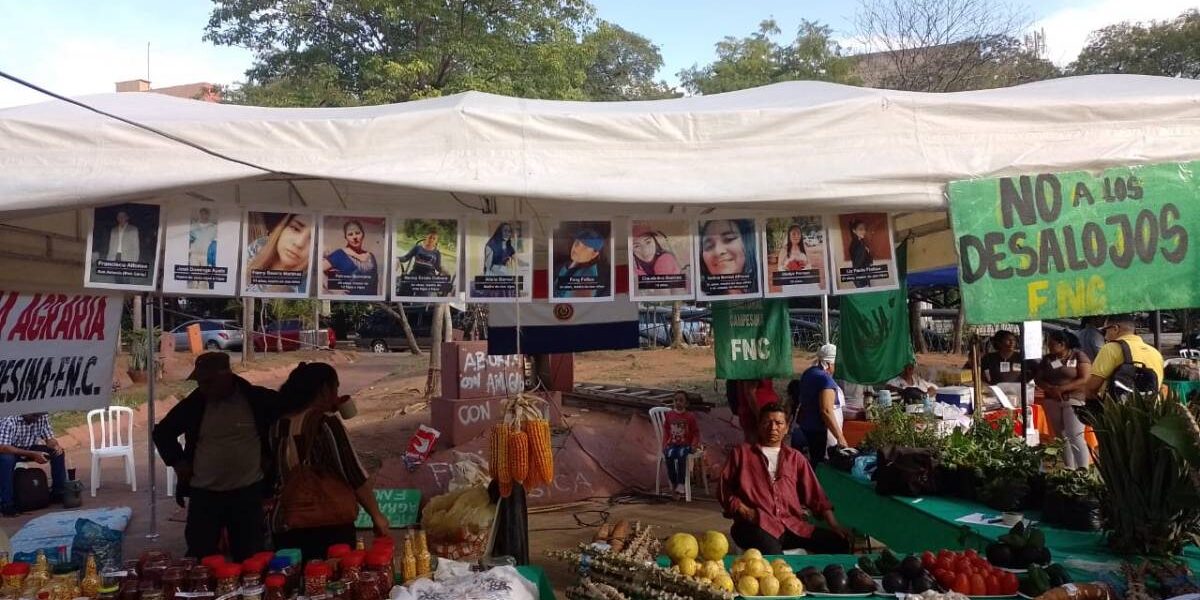
ASUNCIÓN, Paraguay. The Heñói Jey (It Sprouts Again) National Fair of Native and Creole Seeds has brought together 200 varieties of seeds from the Eastern Region of the country. Peasant and indigenous organizations took center stage on Friday, July 8, presenting their seeds for exchange and other agricultural products.
On the same day, the International Seminar on Seeds also took place, with the participation of experts from Argentina, Brazil and Denmark.
Democracy Square, located in the center of Paraguay's capital, was the designated venue for the Heñói Jey Fair. This event has been held since 2010, stemming from the concerns of peasant, indigenous, and urban organizations, as well as individuals, regarding the expansion of agribusiness, which threatened seed varieties, the foundation of Paraguay's food supply.
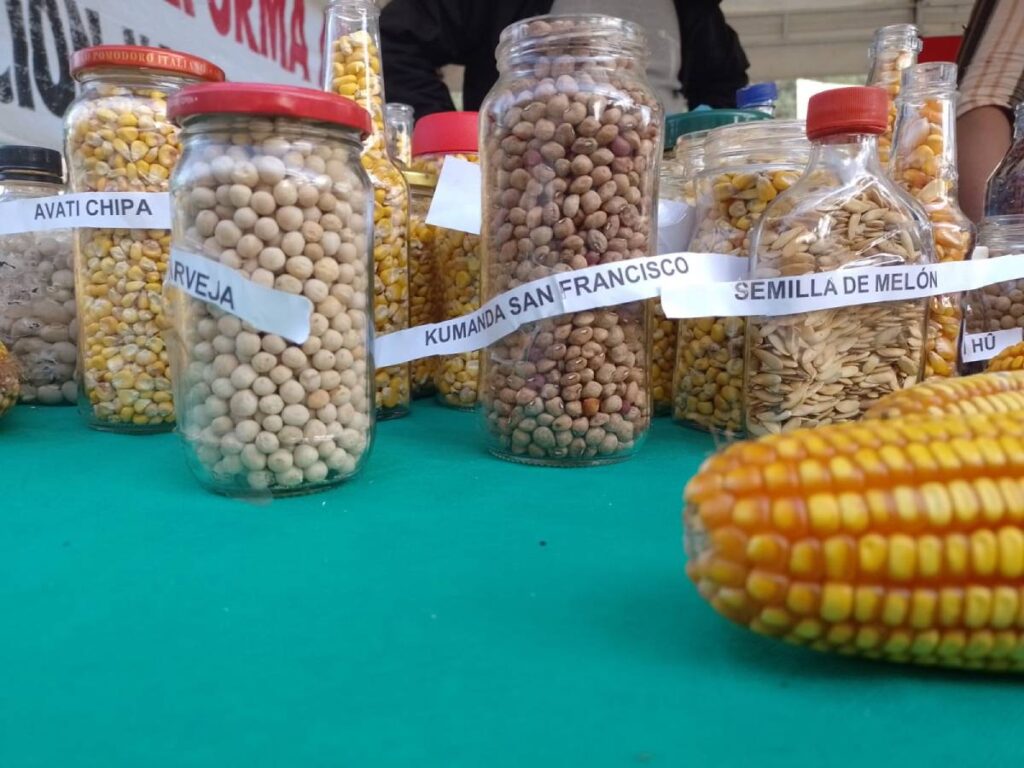
All the organizations bring their seed varieties and exchange them for seeds that are no longer produced in their communities because they have been lost. In this way, someone from the south of the country can share a variety of corn with someone from the north who can exchange a variety of legume. Through this practice, organizations from different regions have recovered seeds over the last 12 years.
A reunion of seeds
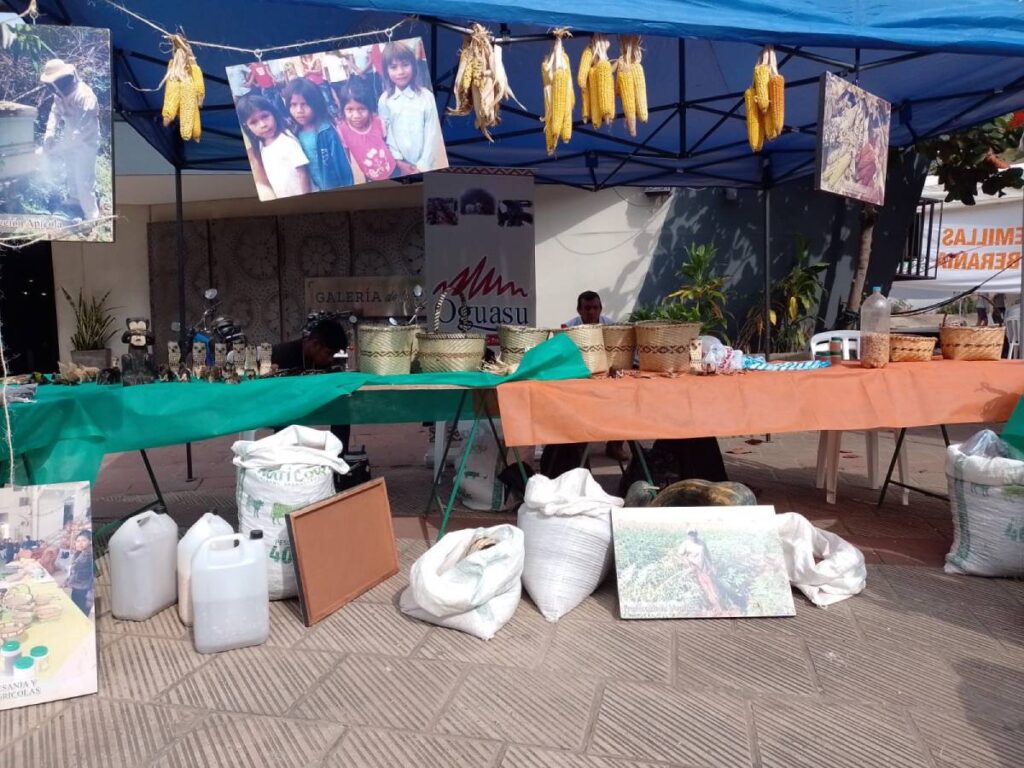
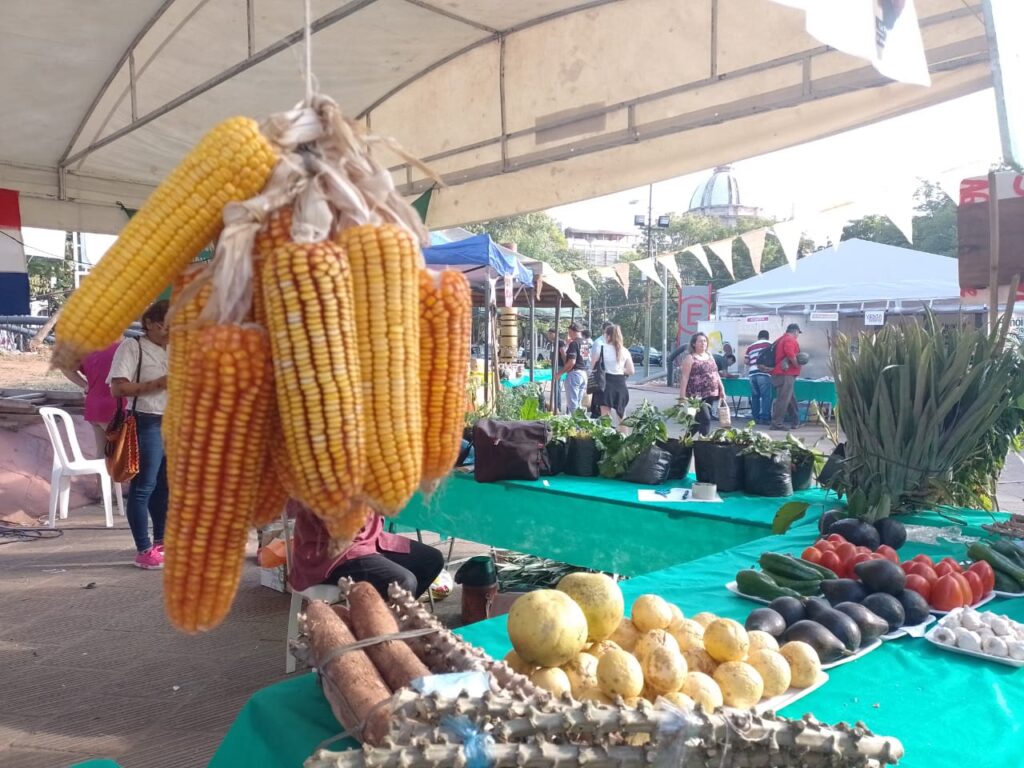
Friday, July 8th, was a warm and hot morning, typical of Paraguayan winter. In the plaza, a vibrant array of colors was on display at each of the stalls. There, the farmers and indigenous people proudly offered their products with smiles. Peanuts, cassava, sweet potatoes, tomatoes, bell peppers, tangerines, oranges, cheeses, strawberry seedlings, and a variety of seeds, presented as their greatest treasure, were all on offer.
There was a festive atmosphere in the square. After two years, hugs, smiles, and the hope that these organizations are able to instill with their production model returned.
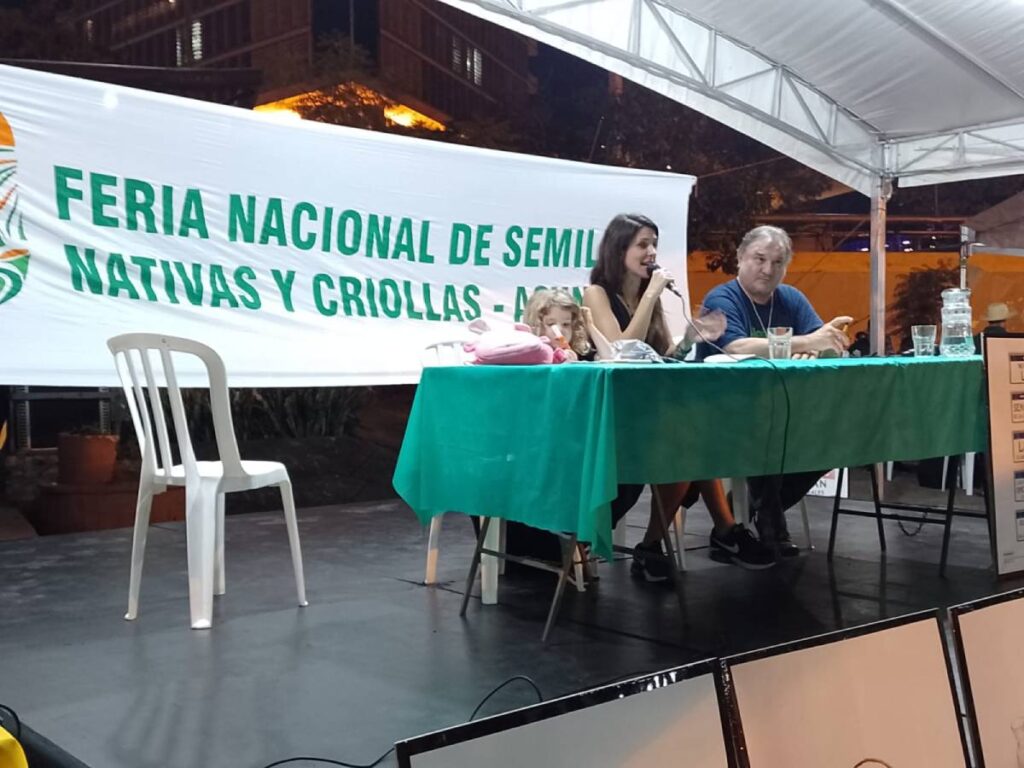
During the morning the seminar held its first panel which dealt with “Native Seeds for popular power”, where Alicia Amarilla from Conamuri , Germán Ayala, Indigenous Pastoral and Josuan Schiavon, Small Farmers Movement, Brazil participated.
They explained their organizational processes for caring for, recovering, and reproducing seeds. They agreed on the importance of seeds as the basis of food, and that only through community work is it possible to conserve them in the face of the advance of the extractive model.
The voice of women
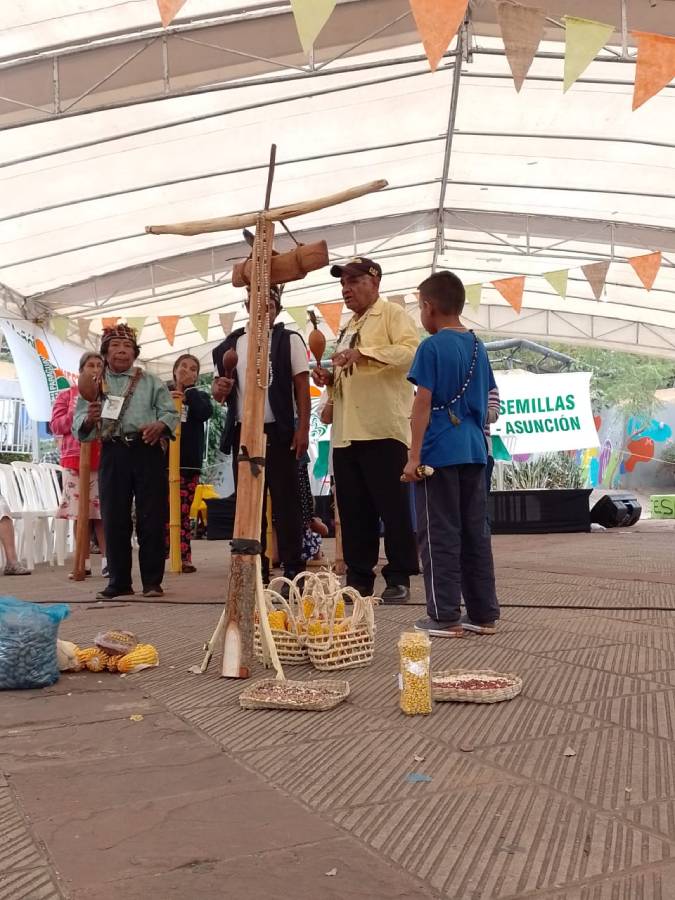
Around eleven in the morning, the Mbya Guaraní and Ava Guaraní peoples performed the blessing of the seeds. They invited all organizations that wished to participate; women, men, and a child performed the ritual, in which those who attentively witnessed the blessing were also blessed.
At midday, the Karu Guasu, a communal meal featuring locally grown produce, was prepared by a team of volunteers, led by the National Peasant Federation . The menu offered was noodle stew, bean salad, cabbage, and cassava.
During the afternoon, the first panel was “Among Women: Exchanging Visions and Strategies to Strengthen Resistance and the Defense of Forests.” Bernarda Pesoa, from Conamuri, Teodolina Villalba, from the National Peasant Federation, and Inés Franceschelli, from Heñói, shared their experiences. In her presentation, Bernarda denounced that the state-proposed aqueduct for the Chaco region does not solve the problem of water scarcity.
She stated that she is only part of the Bioceanic Route project, which will serve to transport soybeans, since the bridge is intended to cross through Qom territory. “If we don't block the route, we are nothing,” the leader emphasized, noting that they are only heard when they mobilize.
For her part, Teodolina recalled that she comes from weeks of daily mobilization following the forced eviction against the Zavala Cue settlement , in the district of Tembiapora, where 450 police officers destroyed the houses, the production and injured several farmers.
They also arrested 10 people, 9 of them women, and 2 of them mothers who were prohibited from breastfeeding. It wasn't until that same Friday that the FNC secured the release of those detained.
Climate crisis
“Climate and Food Crisis: Are There Solutions? Where Are They?” The panel included Ingvild Haukeland-Noah, Friends of the Earth Denmark ; Angel Strappazzon, CLOC-VC, Alliance for Food Sovereignty; Luis Rojas, HeñóI; and Marcial Gómez, FNC. They shared opinions on existing agricultural policies and those needed to guarantee agrarian reform within the framework of peasant rights.
The seminar concluded with a lecture by Soledad Barruti who spoke about "Nutrition, activation and resistance for these times of collapse."
The Argentine journalist, -author of the books Malcomidos and Malaleche- spoke about the need to recover the narratives that come from the territories, the agroecological model and the seriousness that the food industry linked to agribusiness implies for health.
The rescue of seeds and the guardians of the seeds
Since 2006, the Conamuri organization of peasant and indigenous women has been working to recover native and creole seeds. Representing La Via Campesina were the historic guardians, Ña Julia Díaz and Ña Ceferina Díaz, also founders of Conamuri, and mothers.
Both are peasant women from the Caaguazú department, from different communities. They have a history of working with seeds, and they have instilled that same love for peasant culture and identity in their sons and daughters.
Ña Cefe makes delicious coffee. It comes from a variety of legume called Kumanda ybyra'í in Guarani, whose scientific name is Cajanus cajan. Only the Guarani name is known, as it's learned from childhood.
“I’ve been involved with the peasant organization for 30 years. I studied to be a health promoter, and since then we’ve been talking about food security with the women in Repatriación. We instilled a love for seeds among ourselves because we knew that one day we would reach this seed crisis. We always try to emphasize their value because seeds are the food of the poor, the sustenance of the poor. Now the situation is difficult; we’ve already lost many seeds due to the drought, and the climate isn’t conducive to producing them properly ,” commented Ña Cefe.
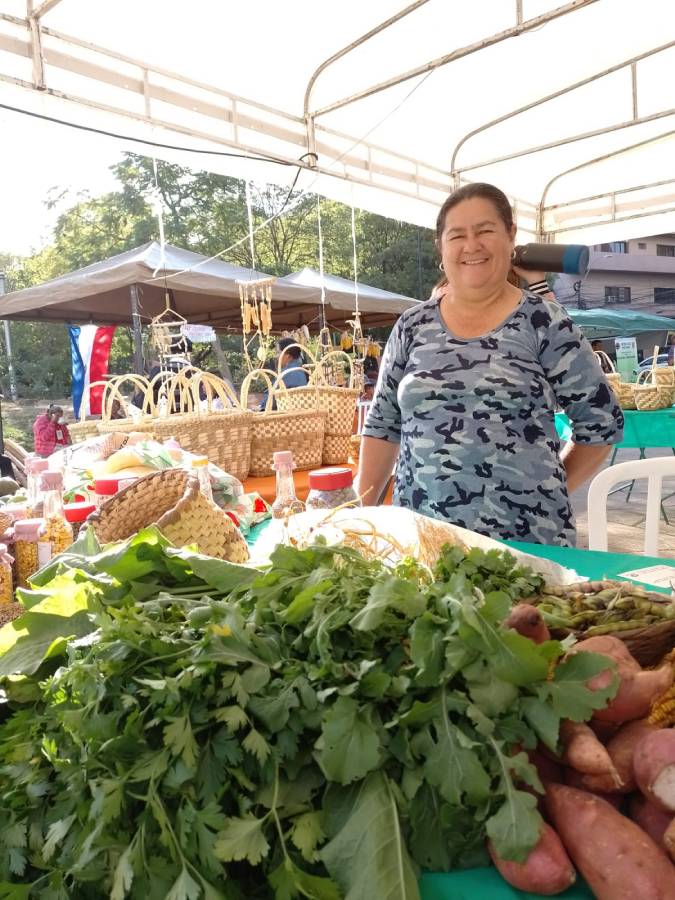
For her part, Ña Julia recalled that she has been producing seeds since she was very young with her father. “I started working with seeds on the farm, and I still have seeds that he left me. Later, I organized with Conamuri and we talked about collecting seeds; we gathered more than 150 varieties, 45 of them of corn.”
Ña Cefe also explained that they produce two types of seeds for self-consumption and fertilizer. “The fertilizer seed is also to feed our mother earth. If we don't feed her, she won't produce food for us anymore,” she said while showing the fertilizer seed, mocuna.
For these two seed guardians, gathering, storing, and re-producing seeds is a vital practice. They teach, both in their community and in the spaces where they are invited, about the value seeds hold for them and their culture.
“It’s important to collect the seeds because they will decompose. We collect seeds because we have many children and it’s a long-standing practice. The seeds can reproduce again for up to two years, so we keep them separate for eating and for planting,” said Ña Julia.
For her part, Ña Cefe recalled: “We don’t want what happened to Mexico in the 1970s to happen to us. The United States left them without seeds and genetically modified crops. They were left without native and heirloom seeds, without food, and became completely dependent on stored products. If we are left without seeds now, what will we depend on? The junk food sold by those with money? That’s why we must take better care of our seeds and land. A piece of land produces many things if we know how to care for it.”
The dreams of the guardians
A deep sigh preceded Ña Cefe's response when asked about her dream as a peasant woman. “So many dreams have already been shattered because peasant and Indigenous women aren't given a voice. Nor are men, so they can have a piece of land to eat, to feed their families in the community. The uprooting in my community is complete. People leave for other countries, they go to live as foreign workers and sell their land. My dream is to recover the lost lands of our country, because otherwise, Paraguay will disappear. In five years, it will sadly be just another Brazilian state. That's what we have to believe because, unfortunately, that's the direction our government is heading,” she emphasized, a mixture of nostalgia and worry on her face.
Without hesitation, Ña Julia says: “My dream as a peasant woman is that we become more and more frugal with our seeds. Today they are disappearing, and genetically modified seeds are coming in. I tell my fellow women to be frugal with our seeds; my dream is that the native and heirloom seeds we have don't disappear.”
We are present
We are committed to journalism that delves into the territories and conducts thorough investigations, combined with new technologies and narrative formats. We want the protagonists, their stories, and their struggles to be present.
SUPPORT US

FOLLOW US
Related notes



We are present
This and other stories are not usually on the media agenda. Together we can bring them to light.