

Testosterone shortage in Mexican pharmacies: what effects does it have on the health of trans men
Trans men, transmasculine people and non-binary people denounced the lack of testosterone in the Primotestón brand in Mexico.


Share

In the past week in Mexico, trans men, transmasculine people, and non-binary individuals have denounced the shortage of Primotestón brand testosterone in both pharmacies and public health centers. They also pointed out the consequences this has for their mental health.
Izack Zacarías, founder of the Impulso Trans, told Presentes that since October 2021 he noticed that the ease of purchasing Primotestón, a testosterone brand produced by the pharmaceutical company Bayer, began to worsen. Month after month the situation intensified, to the point where today, “it is impossible to buy a box of Primotestón in Mexico.”
“Testosterone doesn’t make us who we are, but it does help us have a more friendly socialization, free from discrimination and violence. That’s why I think it’s very important to emphasize that this is a human rights issue, a public health issue, because it’s the State’s responsibility to guarantee that these medications are available. Just as a diabetic person needs insulin to prevent their body from deteriorating, there are trans people who need these treatments so that our mental health doesn’t deteriorate, and therefore, neither does our physical health,” Izack explains.
They are seeking signatures
Due to the urgent need to find testosterone, Mexican trans men are organizing to gather signatures in order to reach an agreement with Bayer Mexico. Their goal is to expedite the production of Primotestón or, failing that, to make Nebido (testosterone from the same laboratory, but more expensive) more affordable. Otherwise, they may resort to testosterone of dubious origin and put their health at risk, something that is already happening.
Furthermore, they demand that the Ministry of Health guarantee the availability and supply of medicines on a permanent basis.
From March 2020 to June 2022, at least eight reports of testosterone shortages were recorded in the database of Cero Desabasto (Zero Shortages), a citizens' collective that demands effective access to medications. However, due to data protection laws, it is difficult to know if these reports were made by transgender people. Furthermore, the Mexican Social Security Institute (IMSS) accounts for the largest number of reports, with five.
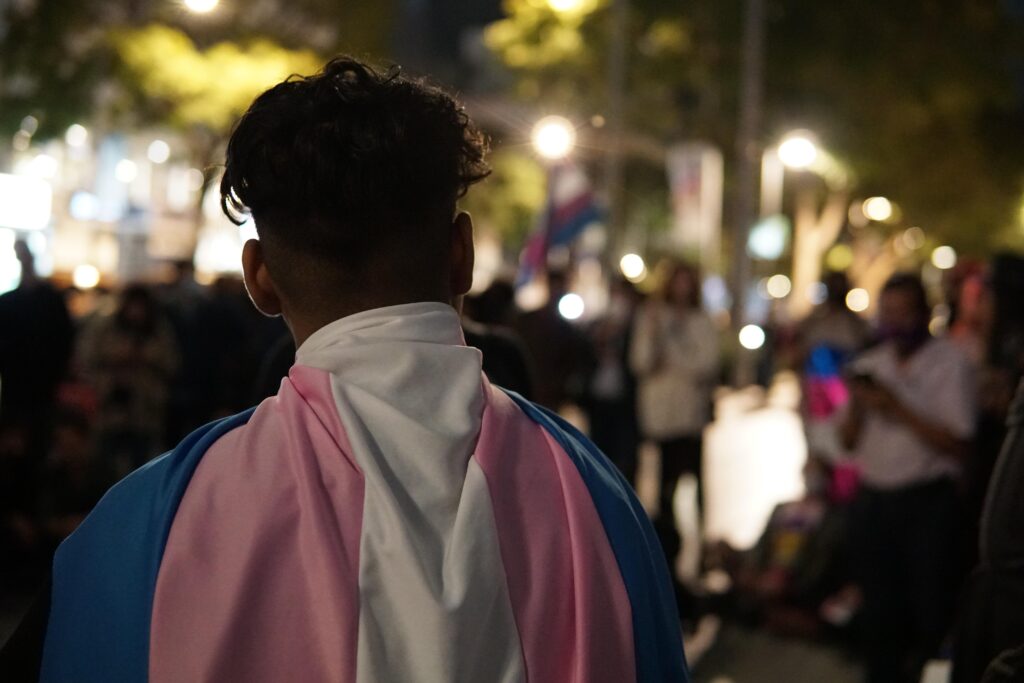
“We are not demanding anything beyond our basic rights.”
Testosterone treatment has both permanent and temporary physical implications. A change in treatment, such as its discontinuation due to shortages, can affect the emotional, mental, social, and physical well-being of transgender people.
“The shortage has affected me a lot. What scares me most is going back to menstruating. I can’t imagine going to the office, having my period, and going into the men’s restroom… it terrifies me. But not only that, I feel like my progress is going to stop (…) It’s not a whim; suddenly taking away our testosterone has repercussions because for many of us, it’s not just about how we perceive ourselves and how we look in the mirror, many times it’s about safety, not only for our individual mental health but also for how people perceive us, and (testosterone treatment) helps us be perceived in a way that allows us to feel safer in public and not be the target of violence (…)”, said Altair.
“It doesn’t matter if you take full doses or, like me, microdoses. People who use Primoteston are in trouble, and it’s urgent that this be seen as an issue that puts our health, especially our mental health, at risk. Now is the time for LGBTQ+ people to support us, and also for those who claim to be our allies, to empathize with our need, with our desperation. We’re not demanding something beyond our basic rights; it’s about our health,” Pauli added.
“There is collective stress”
Presentes consulted trans men, transmasculine people, and non-binary individuals who use testosterone and live in different parts of the country. They all agree that the price of a box of Primotestón has tripled in the last four months and warn: “Not all of our trans friends can afford it. Because we are trans, many of us don't have stable jobs; many of us work in the informal sector and don't have social security.”
If they used to get Primotestón for 180 pesos (the lowest price), the last boxes they managed to get in pharmacies cost them up to 590 pesos each in May.
Izack Zacarías, who from Impulso Trans is in charge of connecting trans people from all over the country on legal and health issues, tells Presentes that given the panorama of uncertainty “there is a collective stress”.
“Those of us who inject ourselves with questionable testosterone are kind of confused. Those who haven’t injected themselves are experiencing an emotional avalanche of anxiety, despair, and stress due to the setback in their own progress, and that’s what has led some to inject themselves with whatever they can find,” he adds.
What should I do if I injected testosterone of dubious origin?
Faced with the shortage, social media users also reported the sale of counterfeit Primotestón. In response, Impulso Trans reported that samples were sent to the Bayer laboratory to determine if the product is indeed testosterone and if it meets health standards.
This was Bayer's response: "The analysis process is still underway, and we expect to have the results soon. However, we have noted that the product has certain irregularities that prevent us from verifying its authenticity. Therefore, we recommend that this product not be used to prevent health risks."
If for some reason I injected testosterone of dubious origin, what can I do?
Presentes consulted Mitzi Fong, a Mexican endocrinologist and member of the World Professional Association for Transgender Health (WPATH), and these are her recommendations:
- Stop using that testosterone.
- Perform a testosterone test to check the concentration level.
- Perform blood chemistry only to see if anything is affected by an unknown substance or if it may be contaminated.
- Report it to Cofepris (you can do so at this link)
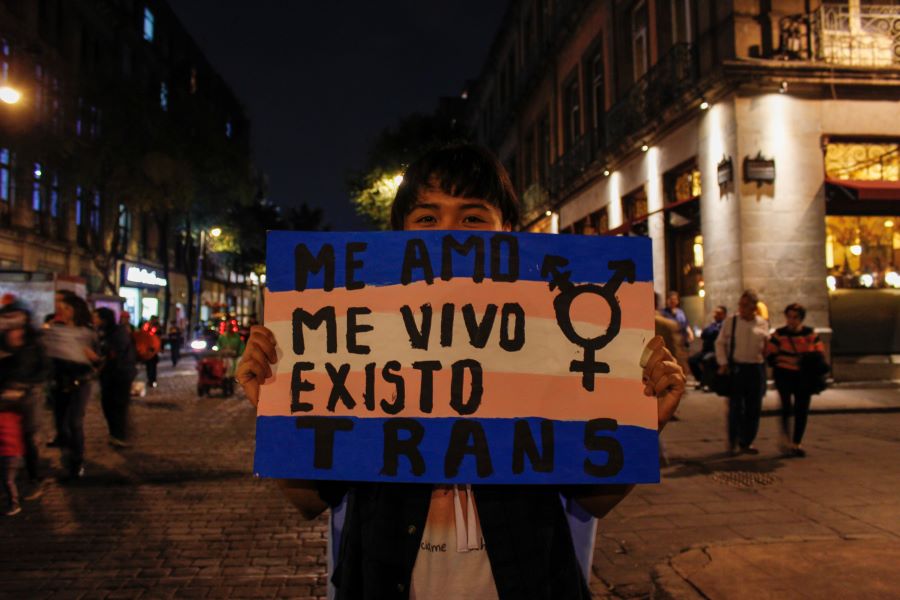
What happens to my health if my treatment is interrupted?
These are some of the questions that Presentes asked Dr. Mitzi Fong.
Are there health risks to suspending testosterone treatment due to a shortage?
“An abrupt suspension due to shortages doesn't endanger people's physical lives, but mental health is affected and can have negative consequences. The physical changes that would be problematic if a sudden suspension due to shortages were caused by the return of menstrual bleeding. This is a very hard blow for some; it can cause depression and anxiety. Another change is fat redistribution, but this would take months to occur. In this sense, one can gain fat in the hips and lose muscle mass.”
What about the process for those people who haven't been in treatment for very long?
"In general, there is a delay in the physical changes they desire; for example, they may notice that their voice is unstable for longer periods of time. These delays can cause dysphoria attacks and anxiety, depression, due to the fact that the treatment is not continuous."
If I underwent any type of surgery such as a hysterectomy, is my health at risk?
“It depends. If they only had a hysterectomy and not an oophorectomy, the positive aspect is that there is no bleeding, but they would still experience bodily changes if many months pass. If they had a bilateral oophorectomy (that is, the removal of both ovaries), in the long term they may be predisposed to decreased bone mineral density. In other words, a risk of osteoporosis, and since they don't have sex hormones, they would need to be supplemented with calcium and vitamin D, and have medical supervision for any issues.”
Are there risks if I switch testosterone brands due to the Primotestón shortage?
“Whenever you change a treatment regimen, you have to readjust the dosage. Furthermore, every body is different and reacts differently to different formulations; some people tolerate one well and others don't. So it's not ideal because it can cause delays, but given the shortage, that's what we're doing because we're not being given any other options. Ideally, if someone is doing well on one type, they should continue with that one.”
“The government is responsible for the shortages”
According to Dr. Andrés Castañeda, coordinator of La Causa de Salud y Bienestar en Nosotrxs, a group of organized collectives that combat issues of inequality in Mexico, the problem of shortages of medicines and treatments is not related to the pandemic but to "the bad decisions of the authorities."
“To give you an idea, in the first quarter of 2022, the IMSS (Mexican Social Security Institute) had already denied more prescriptions than it did during all of 2019. We continue with this trend, which didn't exist before and which, neither in 2020, nor in 2021, nor today, can we attribute to the pandemic. The government is responsible for the shortages, the poor decisions of the authorities, changes made without understanding the situation, without structure, without a real plan,” he explained in an interview with Presentes.
Furthermore, Castañeda believes that three things are needed to solve the supply shortage problem:

- "We want the authorities to acknowledge their responsibility; they continue to deny that there is a problem, and as a society we have come to terms with it."
- Listen. “The authorities must listen, not only to themselves, but also to each other within the institutions, and externally to the industry, to health professionals, and to patients.
- “We need to go together, and for that we invite the groups that are being affected by this to join the Zero Shortages.
Likewise, Dr. Mitzi Fong believes that one way to resolve the shortage crises of testosterone for trans men and estrogen for trans women is the creation of generic hormones, since in Mexico the options recognized by Cofepris are only patented.
The earrings
In Mexico, there are only three specialized clinics for transgender people, and all are located in the capital. According to Dr. Mitzi Fong, Clínica Condesa saw a 30% increase in people requesting hormone therapy in 2021 alone. Given this trend, the endocrinologist insists that each state in the country needs a health institute that provides comprehensive care to transgender people.
“Thinking about the health of trans people shouldn't be reduced to hormone treatment. Comprehensive healthcare involves preventative care, peer support, and any medical specialty must take trans people into consideration, and their access to healthcare must be from a multidisciplinary perspective,” concludes Mitzi Fong.
For Izack, a comprehensive healthcare standard for transgender people is needed. This includes everything from the training of healthcare professionals to "guidelines for when treating a transgender person in different specialties, for example, in gynecology. I believe that for this to happen, research is needed, and studies must take transgender people and our needs into account."
Resources
- Are you a trans person seeking care and support for your physical and mental health? Contact Impulso Trans via WhatsApp to be connected with healthcare specialists in various fields who are sensitive to the needs of trans people. +52 33 1038 2509
- Do you want to report a counterfeit medicine? The Zero Shortages collective has this anonymous reporting platform.
- Do you want to report a shortage of a treatment or medication? You can do so at this link. Zero Shortages invites you to do it collectively to raise awareness of this problem.
- Through this link you can file a health complaint directly with the Federal Commission for Protection against Sanitary Risks (Cofepris)
We are present
We are committed to journalism that delves into the territories and conducts thorough investigations, combined with new technologies and narrative formats. We want the protagonists, their stories, and their struggles to be present.
SUPPORT US

FOLLOW US
Related notes

Cannon fodder: the book that recovers silenced stories of transvestites and trans people during the civic-military dictatorship

Lechedevirgen: “Undoing art means restoring its ritual and collective dimension”

Why the trial for the murder of Eldin and Milton could be historic for Guatemala's LGBT community
We are present
This and other stories are not usually on the media agenda. Together we can bring them to light.