

Transvestite and trans people concerned about the new “red light district” in Mar del Plata
The law provides for severe penalties. The measure represents a setback and the criminalization of the trans community.


Share

MAR DEL PLATA, Argentina. The Deliberative Council of the Municipality of General Pueyrredón approved ordinance 1280-vj-2021 to regulate the practice of prostitution by relocating the so-called red-light district to a location yet to be determined.
The law provides for sanctions such as fines between 123 and 617 thousand pesos, and jail time of 5 to 30 days for those who do not comply with the regulations.
Mayor Guillermo Montenegro has 45 days to receive complaints and opinions about the regulation while they determine the area to relocate the street sex corridor.
The close vote of 12 to 11 expresses the rejection of the decision due to the seriousness of the project, both in its content and in the way it was presented.
The approved ruling is the result of an addendum to the bill submitted by the Frente de Todos bloc, which was adopted by councilman Nicolás Lauría of the ruling Crear Juntos bloc. The punitive articles were added to this bill, distorting the spirit of the legislation that the opposition bloc had worked on for a long time.
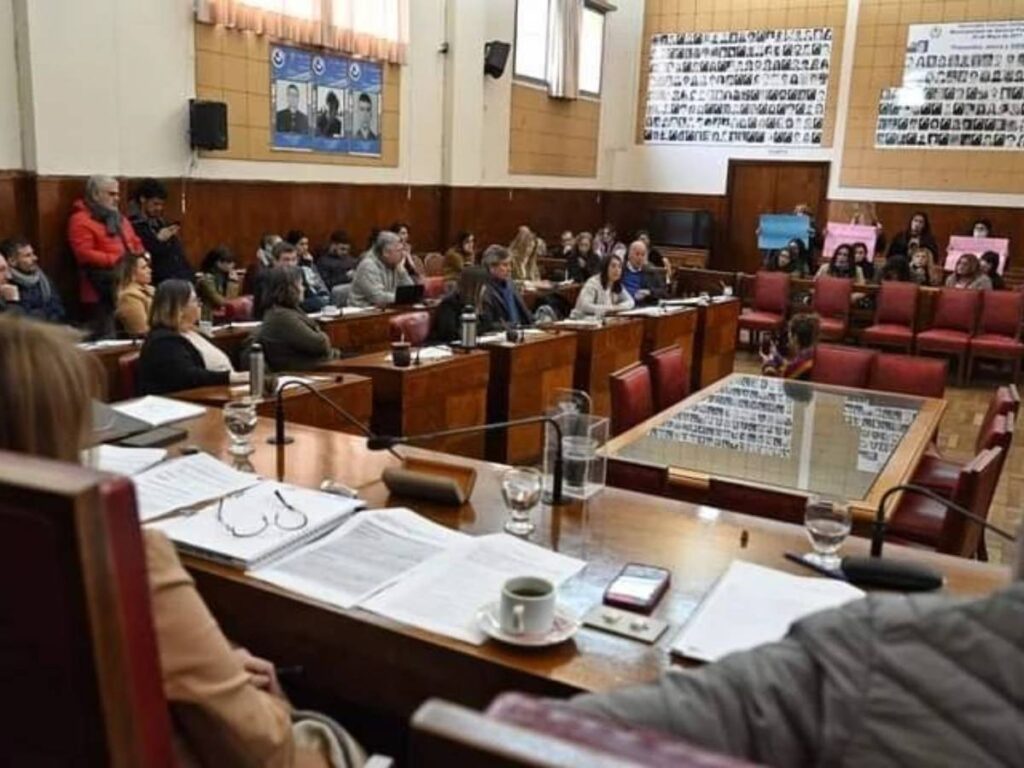
Photo: AMI Mar del Plata
Equality projects, underestimated
The president of the Commission on Gender Policies, Women and Diversity, Sol de la Torre (FdT), told Presentes that seven projects have been presented since 2021.
“These were projects linked to the revitalization of the neighborhoods involved in the area where prostitution took place. Others were associated with policies addressing the vulnerabilities faced by people who engage in prostitution, the vast majority of whom do not choose it as a job. But there are also those who do, in a city that is quite hostile to this activity,” she stated.
“There were also projects aimed at adopting the guidelines of the Ministry of Women, Gender and Diversity of the Nation to eradicate the criminalization of people engaged in prostitution. In 2018, the elimination of sanctions from the municipal code regarding soliciting sex in public was a factor to consider when legislating in the Municipality,” she explained.
The councilwoman is referring to the repeal of Article 68 of the Code of Misdemeanors, which penalized people who engaged in prostitution, and which the Senate of the Province of Buenos Aires passed. This put limits on the persecution and criminalization of prostitution. Surprisingly, a government of the same political affiliation reversed that decision four years later.
An instrument for criminalizing identities
“This is very worrying. It’s a huge step backward, and we’re organized in anticipation of the reprisals that are coming,” says Agustina Ponce, a trans activist. “It directly criminalizes our sisters, and even goes so far as to criminalize all of us. Not just those who are in prostitution or call themselves sex workers,” she emphasizes.
“I say this because by establishing prostitution zones and expanding police powers, the military will have this tool at their disposal,” she explains. “In other words, if I, who managed to escape prostitution several years ago, am walking at 3 p.m. through any neighborhood because I’m waiting for someone, a patrol car could say to me: ‘You’re a trans woman, you’re working as a prostitute here. To jail.’ They’re being given the instrument to continue criminalizing our identities.”
Verónica Lagos says she is a councilwoman (FdT) “circumstantially,” but she is a lawyer in the Municipality's Human Rights department. “We had a more proactive obligation. We needed to reach an agreement with the then-president of the security commission, Nicolás Lauría, to create a set of tools and ordinances related to the absence of the State at night,” she explains.
“As a lawyer, I have had to intervene and listen to the suffering caused by the State itself. And when it is present, it is in a repressive way or to regulate crime. It is no secret that many times my colleagues - the vast majority of them trans and migrants - have been victims of institutional and police violence, with aggressions and degrading searches.”
According to the councilwoman, a complex problem requires complex solutions, not just a simple relocation.
The absurdity of a measure
Verónica Lagos recalls that at the end of the session, the members of the ruling bloc "celebrated because it was a historic day."
"And it really was," he says, "but because the institutional framework was set aside to carry out a project that undermines rights, that doesn't solve anything. It's sold as a panacea, but it criminalizes a vulnerable sector."
And he adds, “They also underestimate the residents by telling them that the problem is solved simply by imposing arrest or a fine. The world is debating the basis of using punishment as a deterrent, or what purpose prisons serve. There is no real will to end this. There is no survey, no outreach, no study of people's realities.”
The network during the pandemic
Agustina explains that during the pandemic they created an emergency committee to provide humanitarian and food aid to LGBTQ+ community members in Mar del Plata and Chapadmalal. They continue to provide that aid today.
Within this context, a survey was conducted of people engaged in prostitution on public streets. Of the 168 transgender individuals surveyed, 153 were engaged in prostitution.
“In other words, prostitutes aren't drug traffickers, they don't live in luxurious mansions. When we went to deliver aid, we had to look for the humblest house. At the poorest house on the block, we'd knock, and a trans woman would come out. That image they try to create of trans women as drug traffickers isn't true. It's criminal networks that take advantage of our sisters who are extremely vulnerable. There's also a romanticization of it, but if you go to La Perla, you see older women prostituting themselves because they're the only ones supporting their families. When I stood in Godoy Cruz, I was with women who were putting food on the table. I didn't stand with the image of university students who, instead of choosing a career, choose prostitution.”
Mar del Plata boasts an ordinance declaring itself an inclusive city to promote "gay-friendly" tourism. However, in that same city, at a beach resort in Playa Grande, a gay couple was expelled, and members of the trans community and sex workers were penalized. The city was a pioneer in enacting a trans and travesti quota law, but it was never regulated or implemented.
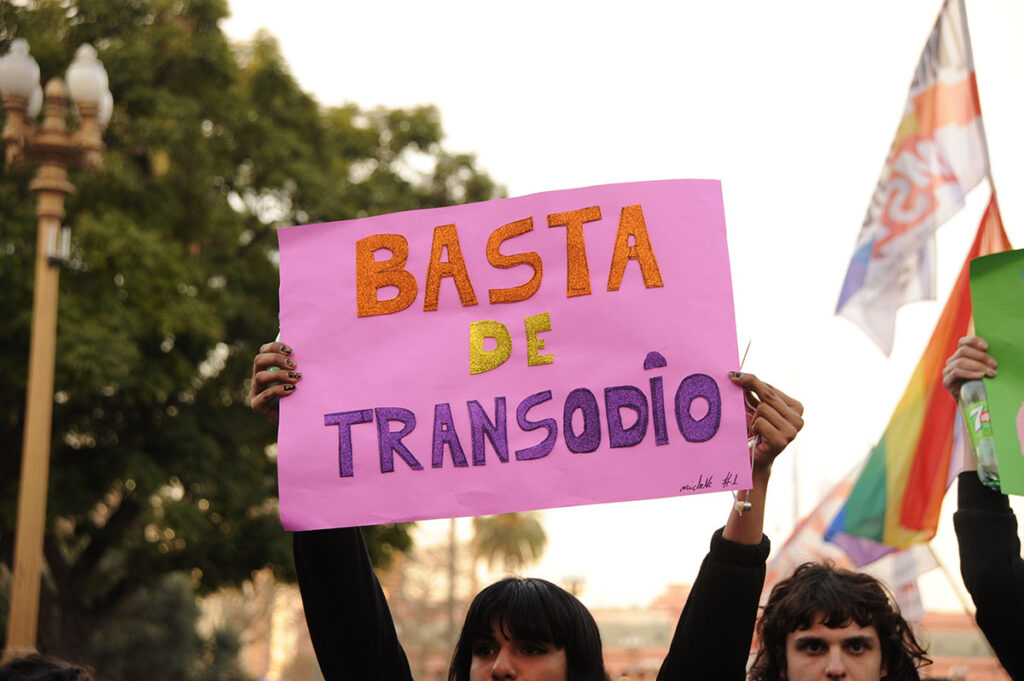
Persecution and criminalization
Daniela Castro, Provincial Director of Sexual Diversity Policies of the Ministry of Women of the Province of Buenos Aires, was present during the approval of the project.
Castro expressed his repudiation of the project presented by the ruling party, for "persecuting and criminalizing those people whose rights are constantly violated in terms of access to work, health and education."
She stated, “We regret that Juntos didn't take the time to listen to our voices and listen to us in the same way they listened to the neighbors. Trans women who are in prostitution in Mar del Plata have the same rights as any other citizen. However, in practice, those rights don't exist,” Castro expressed.
“With great sorrow, we see the setback in Mar del Plata, where the already approved ordinance that complies with the Transvestite Trans Labor Quota is also not being implemented,” he stated.
"Repression and violence as a response"
The women's and diversity movement of the city of Mar del Plata-Batán expressed its condemnation of the approval of the ordinance.
"We emphatically reject the project. We demand that the mayor, in the exercise of his powers, veto the ordinance voted on by his bloc," they stated in a press release.
"The proposed law criminalizes sex workers who do not engage in prostitution in the areas designated by Mayor Montenegro. This represents a setback in human rights and violates international treaties enshrined in the Constitution," they emphasize.
"We are alert and mobilized in the face of this violation of our rights. We want to make it clear to the municipal government that we will no longer tolerate state violence and we will work until this regulation is repealed."
The full statement can be read on the movement's Facebook page .
To cry from sadness and anger
On Friday, June 24, the Mar del Plata City Council was filled with a large police presence and people who witnessed the session.
When the vote came out by the narrowest of margins and while the ruling party bloc celebrated, colorful signs with phrases like "We're not going back to jail" and "No to Montenegro's project that criminalizes and solves nothing" could be seen among the public, along with other slogans that were chanted.
Half the council members were muttering angrily, and Sol de la Torre was crying, perhaps from sadness and rage. “A project that my team and I worked incredibly hard on, including with a transvestite colleague, has been derailed. What distresses me most is the impunity, the perversity, the demagoguery with which things are done in the City Council. They seem unaware that when we vote on a law, we are deciding the future, or lack thereof, of a community.”
“As feminists, we do politics from the heart. We want to build a state that addresses and considers the problems, anxieties, and pain experienced by the residents of these neighborhoods. And also one that embraces the residents who choose sex work, or who are unemployed and engaged in prostitution, because they have been excluded from all forms of rights and dignity in our city.”
Agustina, from life experience, knows how this situation will end: "This is going to end in the military hunting down transvestites."
She's skeptical about the creation of a safe zone with restrooms, cameras, and shelters. “What the city government is saying is that there are first-class and second-class citizens. The council members from the ruling party referred to the residents of Mar del Plata in the abstract. A bubble whose members we don't even know. Not to mention that we, the residents of Mar del Plata, are also part of that bubble. Because this whole Disneyland they want to build is going to end up on the highway or near a working-class neighborhood, reinforcing the idea of second-class or fifth-class citizens.”
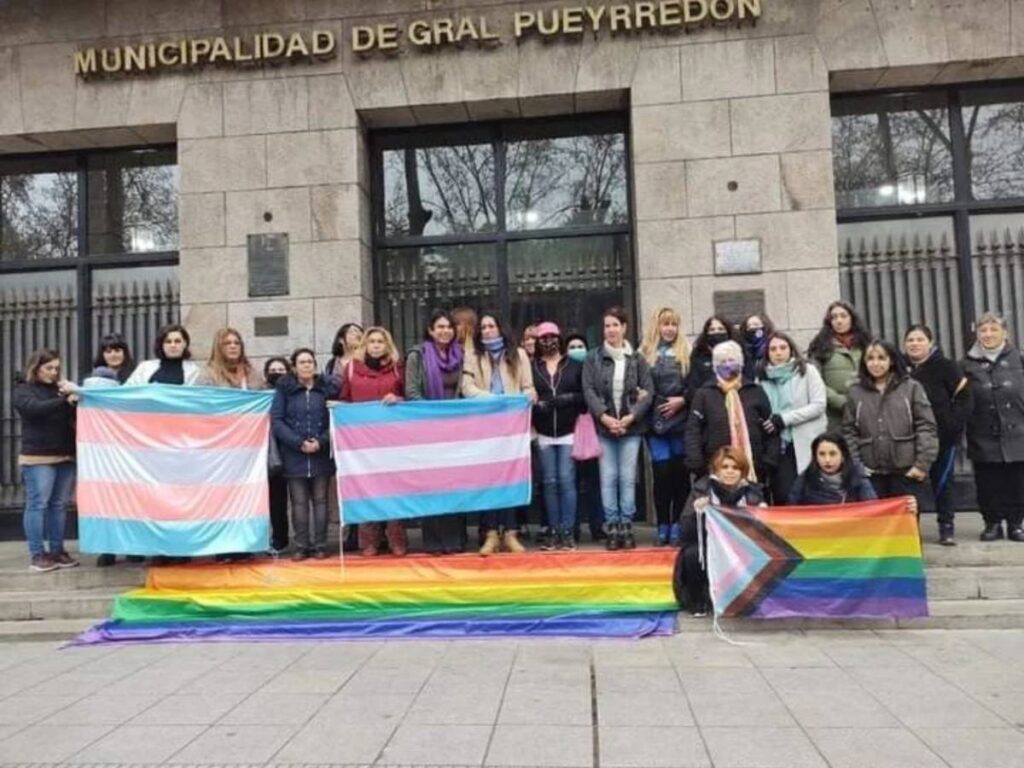
We are present
We are committed to journalism that delves into the territories and conducts thorough investigations, combined with new technologies and narrative formats. We want the protagonists, their stories, and their struggles to be present.
SUPPORT US

FOLLOW US
Related notes



We are present
This and other stories are not usually on the media agenda. Together we can bring them to light.