

Homophobic campaign against a Colombian congressman: an analysis of an absurdity
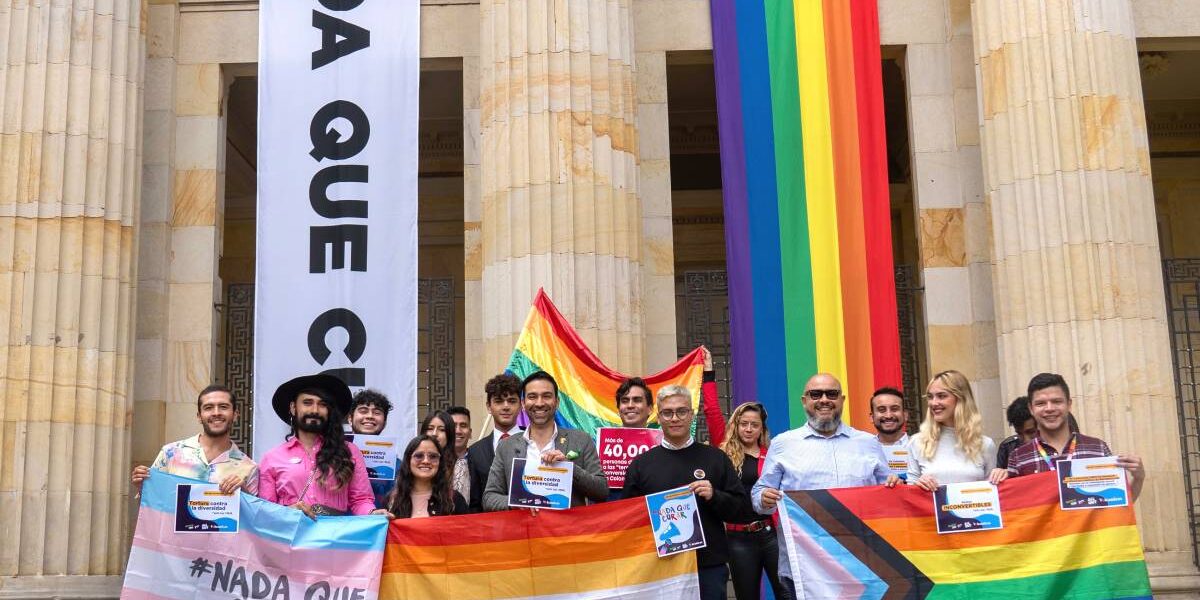
Colombian congressman Mauricio Toro introduced a bill to ban so-called conversion therapies. Members of Congress accused him of a conflict of interest and recused him. Alberto de Belaunde reports from Peru.


Share

LIMA, Peru. Last month, Colombian congressman Mauricio Toro introduced a bill to eradicate so-called “conversion therapies” in his country. This term refers to various efforts to suppress or change the sexual orientation, gender identity, or gender expression of an LGBTQ+ person.
These practices are not only unsupported by any scientific evidence, but have also proven in practice to be cruel, inhuman, and degrading. In some cases, they even constitute forms of torture. Conversion therapy practices do not achieve the changes they advertise, but they do generate serious long-term psychological consequences for those subjected to them .
Despite this, there are still unscrupulous healthcare professionals and religious or social leaders who engage in these practices. Despite the progress made by the LGBTIQ+ community, conversion therapy remains a problem in every region of the world, as documented in OutRight International's groundbreaking report .
A homophobic recusal
By presenting this initiative, Representative Toro seeks to have Colombia join other countries that have already passed laws to eradicate these harmful practices against the LGBTIQ+ community. Countries such as Germany, Canada, various states in Mexico and the United States , and France already have specific legislation prohibiting them.
Unfortunately, prejudice and intolerance prevailed in the Colombian Congress.
Just as the debate on this initiative was about to begin, the committee received a motion to recuse Representative Toro , filed by a Christian activist. The complaint alleges a conflict of interest, since Mauricio Toro is openly gay and the bill benefits LGBTQ+ people.
The debate was suspended and the matter will be reviewed by the Ethics Committee of the Colombian parliament.
Unacceptable
This isn't the first time something like this has happened. In 2014, Peruvian congressman Carlos Bruce came out as gay, becoming the country's first openly LGBTQ+ public official. Immediately, ultraconservative groups accused him of having a conflict of interest for promoting a civil union bill for same-sex couples.
Accepting this argument would have dangerous consequences. No minority or vulnerable group would be able to reach our congresses to represent their communities and legislate for the protection of their rights. Nor would they be able to hold any public office to try to solve the problems they know firsthand.
For example, no senator with a disability could propose bills to promote accessibility, no Afro-descendant mayor could promote local programs against racism, and no Indigenous minister could propose public policies with an intercultural approach.
Female senators from all countries would have to stand up and leave the chamber every time a bill related to eradicating violence against women is debated.
The argument simply doesn't hold up.
Despite the clearly unfounded nature of the accusation, it is important to pause and provide a more detailed response. There is a growing number of openly LGBTQ+ authorities in Latin America, and we will see similar arguments being echoed by anti-rights groups throughout the region.
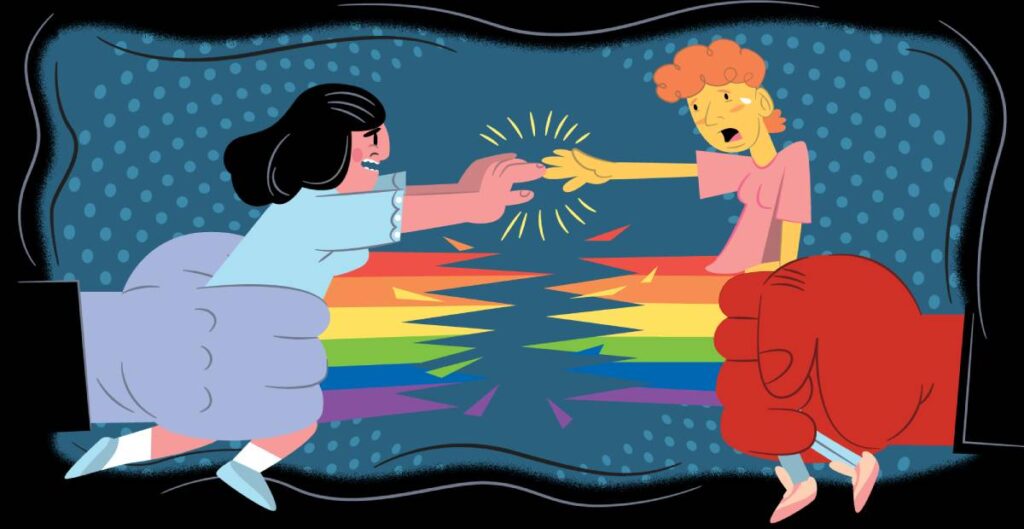
These disinformation and smear campaigns are often deliberately absurd. They aim to prevent the groups they accuse from even bothering to respond. And without a response, some of the arguments continue to circulate in the public consciousness.
A conflict of interest is an ethical violation. It occurs when, while performing a public or private duty, one prioritizes interests other than those one is obligated to protect. This standard of conduct is particularly important for public officials, including political authorities such as members of parliament, senators, and mayors.
The interest they must serve through their work is the interest of society, the public interest. A public official who, in the course of their duties, prioritizes their personal or private interest to the detriment of the public interest, falls into a conflict of interest.
"There is no conflict of interest, only human rights."
In the case of Colombian congressman Mauricio Toro, there is no conflict of interest because his bill seeks to protect human rights . Whether this bill is aimed at a minority or a majority of citizens, the relevant factor is that it serves the public interest, since in a state governed by the rule of law, the central objective is that every citizen—without discrimination of any kind—has their rights recognized, respected, and protected.
Clearly, serving the public interest will also serve many individual and collective interests. Otherwise, we wouldn't be talking about human rights. The interest addressed by this bill extends beyond Representative Toro and benefits many citizens who are currently in a vulnerable situation.
Therefore, in this specific case, there is no conflict between the public interest and other interests, and thus, we are not dealing with an ethical violation. I hope that the Ethics Committee of the Colombian Parliament will respond swiftly and decisively.
A momentous proposal
Finally, it is important to remember the significance of initiatives like the one presented by Representative Toro for the people at the heart of these issues. These efforts are not aimed at granting the LGBTIQ+ community special privileges, as some believe. Nor are they driven by mere ideological will, as is the case with those who oppose them.
Projects like this can make the difference between a dignified life and one plagued by physical and psychological consequences. In some cases, they can even be the difference between life and death.
Conversion therapy practices are rooted in the homophobia, lesbophobia, biphobia, and transphobia that exist in our societies. Disparaging remarks like those made against Congressman Mauricio Toro are part of the same phenomenon. In Pride Month, let this case serve to redouble our efforts in the fight for societies free from intolerance and discrimination.
(*) Alberto de Belaunde is a Program Advisor at OutRight International and a former Peruvian congressman, who is openly gay.
We are present
We are committed to journalism that delves into the territories and conducts thorough investigations, combined with new technologies and narrative formats. We want the protagonists, their stories, and their struggles to be present.
SUPPORT US

FOLLOW US
Related notes

We are present
This and other stories are not usually on the media agenda. Together we can bring them to light.