

How does the persecution of journalists in El Salvador impact women and diverse groups?
Since the state of emergency was imposed by the Bukele government, journalists and LGBT activists have suffered threats and harassment.


Share

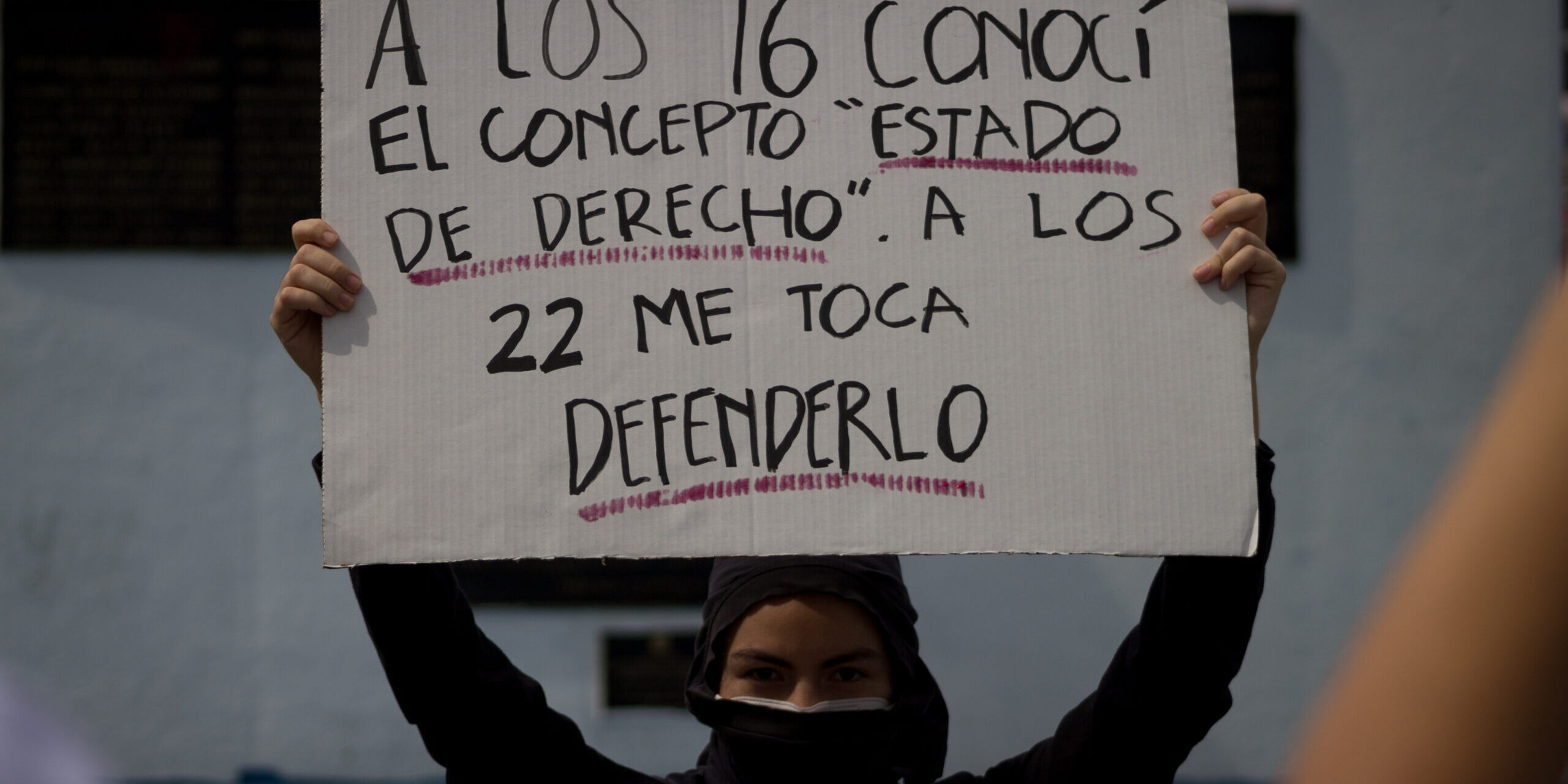
SAN SALVADOR, El Salvador. In March, the Salvadoran Congress approved a new and controversial reform to the country's penal code. This measure establishes sentences of up to 15 years for journalists who publish news reports about the violent gangs Mara Salvatrucha and its rival Barrio 18.
The move is not a surprise. Since coming to power in June 2019, Bukele has progressively created a barrier to scrutiny, silencing journalistic investigations and publications that denounce and provide evidence of possible cases of corruption, human rights violations, opaque bitcoin transactions, and dealings with the gangs that plague the Central American country.
Bukele has insisted that during his government El Salvador ceased to be the most violent country in the world, after the historic reduction of homicides thanks to the implementation of his Territorial Control Plan, of which no detail or program is known.
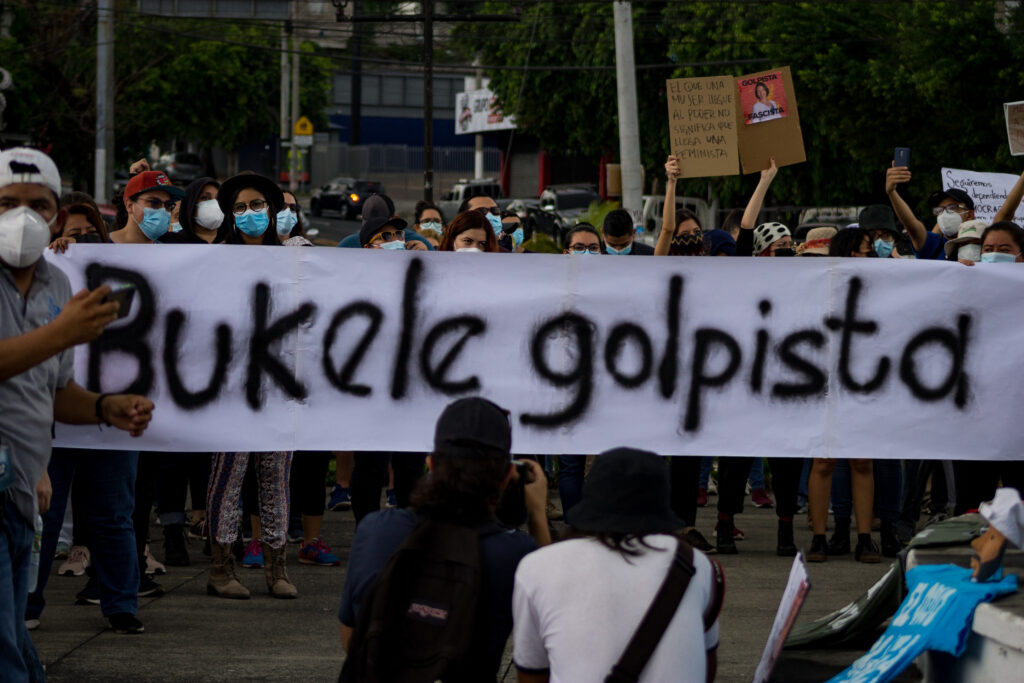
The constant intimidation
Gabriela Cáceres, a journalist specializing in judicial issues and violence for the digital newspaper El Faro , is already facing the consequences of the approved reforms . The journalist revealed that the Directorate of Prisons, managed by the executive branch, released Élmer Canales Rivera, alias Crook. He is one of the top leaders of the MS-13 gang and has pending legal proceedings.
Five days after the reforms were approved, Gabriela was threatened by Kevin Sánchez, a member of Bukele's party, Nuevas Ideas . He told her that they would initiate criminal proceedings against her for "replicating gang-related messages in order to intimidate the population."
“These are unfortunately the consequences that we investigative journalists are facing when we work under such a difficult regime. I said, ‘Oh well, I’m going to face whatever comes and I’m going to keep doing my job because I haven’t lied.’ It’s legal proof, proof that was issued by a judge,” Gabriela told Presentes .
Judge Godofredo Salazar, who specializes in organized crime, was accused by Bukele of being an “accomplice of organized crime.” also “recommended” that the Supreme Court remove him from his position. His removal was approved on the same day the president's statement was published.
“It’s a measure that has spiraled out of control and generated a great deal of fear within the journalistic community. You’re left wondering, ‘How can I publish this without getting arrested?’ Because you can’t even seek protection from an institution, since the institutions themselves are also linked to the ruling party. The decision made by the assembly and supported by President Bukele is quite worrying,” Gabriela lamented.
Justifying the reforms
The effectiveness of the Territorial Control Plan was called into question on March 26, when 62 people were murdered, the highest number this century, according to human rights defenders. In 72 hours, 87 people lost their lives in alleged gang attacks.
The president asked his deputies to approve an emergency regime of exception, which temporarily suspends constitutional rights such as free association, the inviolability of communications and correspondence, detention by the police or military and the annulment of legal defense.
For 24 days, police and military personnel have arrested 13,573 people accused of gang membership based solely on their appearance. None of these arrests were made with a court order.
Gag order when talking about gangs
Originating on the streets of Los Angeles, thousands of gang members were deported to their country of origin and spread throughout the United States. From there, they extort money, sell drugs, and fight to the death for control of their territories. It is officially estimated that some 86,000 belong to these gangs.
In 2015, El Salvador recorded 103 homicides per 100,000 inhabitants, one of the highest rates in the world, according to the United Nations. Since then, the figures have been declining, and during Bukele's administration, the numbers fell to historic lows.
In 2021, the police recorded a total of 1,140 murders, 15% less than in the same period of 2020. This equates to 18 deaths per 100,000 inhabitants.
Crisis Group International asserted in September 2020 that the drop in the homicide rate could be due not only to security policies, but also to the gangs' own decisions , possibly stemming from a fragile non-aggression pact with the authorities.
In December, the U.S. Treasury Department indicted two high-ranking government officials, Osiris Luna, director general of prisons, and Carlos Marroquin, director of the Social Fabric program. According to the indictment, they facilitated negotiations with gangs in exchange for electoral support for Bukele's party in the February 2021 elections.
“In 2020, the government of Salvadoran President Nayib Bukele provided economic incentives to the Salvadoran gangs MS-13 and Barrio 18 in order for them to guarantee low levels of gang violence and confirmed homicides,” the Treasury Department said in an official statement.
In January 2021, the United States Department of Justice requested El Salvador to extradite 14 leaders of the Mara Salvatrucha gang for drug trafficking, terrorism, and conspiracy charges, but Bukele and his allies in the Attorney General's Office and the Supreme Court, which he co-opted on May 1, 2021, refuse to extradite them.
The attorney general appointed by Bukele asked the Supreme Court not to approve the extradition, arguing that there are no guarantees that the United States will respect the constitutional rights of the accused.
However, in the first week of April, pro-government legislators approved reforms that penalize radio, television, print, or digital media outlets that reproduce and transmit messages or statements originating from these criminal groups, which could generate anxiety and panic in the general population.
Punishment of the press
“We view the reforms with great concern because they could increase cases against women journalists, especially those working on investigations,” Mónica Rodríguez, a member of the Women Journalists Collective in the Central American country, Presentes
According to the Association of Journalists of El Salvador (APES) , the reforms promoted by Bukele respond to the interest of censoring the media and undermining the right to freedom of the press and information in the country.
“Our main concern is that the Salvadoran population’s right to information is being limited. They want to hide from Salvadorans that, in this supposed fight against crime, too many abuses are being committed, rights are being restricted, and freedom of the press is being curtailed,” said César Fagoaga, president of the journalists’ association.
The APES monitoring center for attacks against journalists registered 38 reports of attacks between January and April 2022. Nineteen of these were cases of online harassment and eight involved restrictions on journalists' work; 15 of the cases were against women. Gabriela Cáceres received 1,095 insults from pro-government accounts on a single Twitter post.
“This law is solely about silencing the press. I don’t believe this reform is about fighting gangs, and the best option is not to talk about them. It’s a measure that points in another direction that we don’t yet know, but right now it’s clearly about silencing the press. We’re walking on very shaky ground right now,” Gabriela said.
The president of Congress, Ernesto Castro, attacked journalists and researchers from the floor of the chamber. He "recommended" that they seek humanitarian asylum outside of El Salvador.
“We don’t need you, go away. But if you want to stay, this is the new country we are living in and this is the new country where we are going to live,” he said, visibly agitated, during his speech at the approval of a law to build more prisons in the country.
According to APES, four journalists have gone into exile in 2022 after being attacked by Bukele, who accused them of being defenders and relatives of gang members . The reported attacks were mostly carried out by public officials and social media users affiliated with the Nuevas Ideas party.
Bukele justified the criminalization of journalists by citing Germany's penal code, which regulates the use of Nazi symbols. However, German law does not restrict freedom of the press and information.
“When the Germans wanted to eradicate Nazism, they legally banned all Nazi symbols, as well as messages, apologies, and anything aimed at promoting Nazism. Nobody said anything,” Bukele wrote on his Twitter account.
Freedom of information at risk
The Salvadoran Federation of Lesbian, Gay, Bisexual, Trans and Intersex People (FESLGBTI) stated in a press release its concern about the increase in digital harassment and hate speech since the implementation of the state of emergency , which puts the lives of human rights defenders at risk.
They believe that the government maintains a permanent campaign of disinformation and criminalization of the country's human rights defenders.
“We are facing a hate speech instilled by the State and constantly validated within its institutions. Even those that should be trying to put an end to it, which instead contribute to exacerbating these situations motivated by intolerance of criticism and dissent,” FESLGBTI stated.
Human rights defender and political activist Erick Iván Ortíz received two death threats via telephone. According to the FESLGBTI (Federation of Lesbians, Gays, Bisexuals, and Transgender People), criticizing the government's constant abuses against the press and social organizations makes them targets for the ruling party.
We are present
We are committed to journalism that delves into the territories and conducts thorough investigations, combined with new technologies and narrative formats. We want the protagonists, their stories, and their struggles to be present.
SUPPORT US

FOLLOW US
Related notes


We are present
This and other stories are not usually on the media agenda. Together we can bring them to light.