

Police in El Salvador violently arrested a trans activist during the state of emergency.
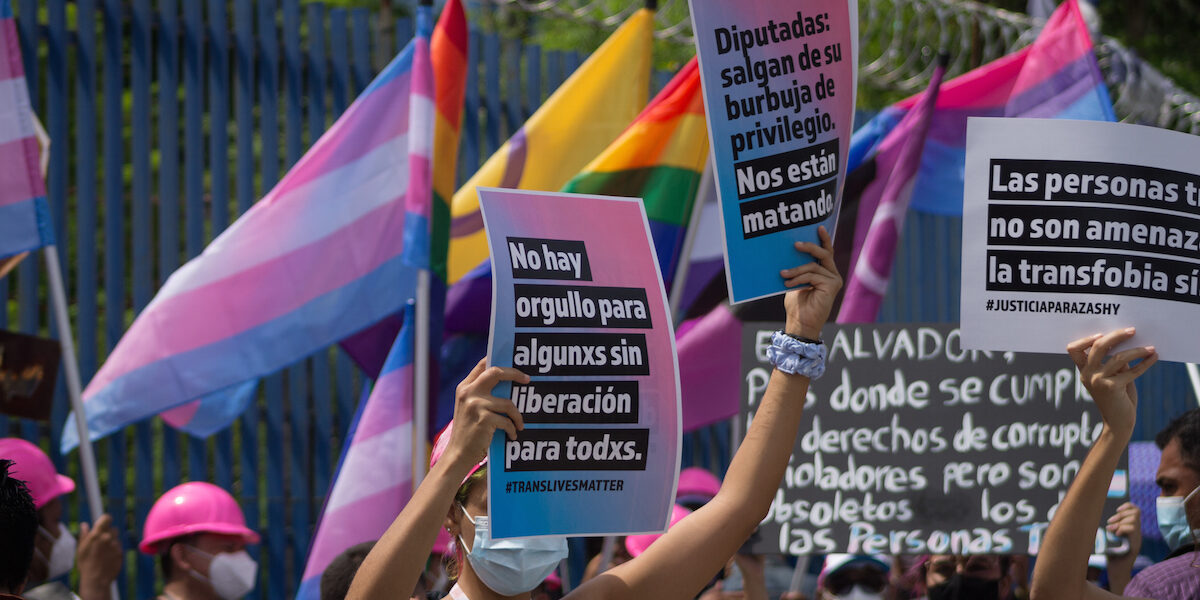
The incident occurred on Thursday as the young man was on his way to a meeting with Amnesty International. There is growing concern about police violence against the LGBT community.


Share

SAN SALVADOR, El Salvador. Esteban M (the victim's name has been changed to protect his privacy) is a 27-year-old transgender man. On the afternoon of Thursday, April 21, police forced him to get off the bus for a routine check under the state of emergency.
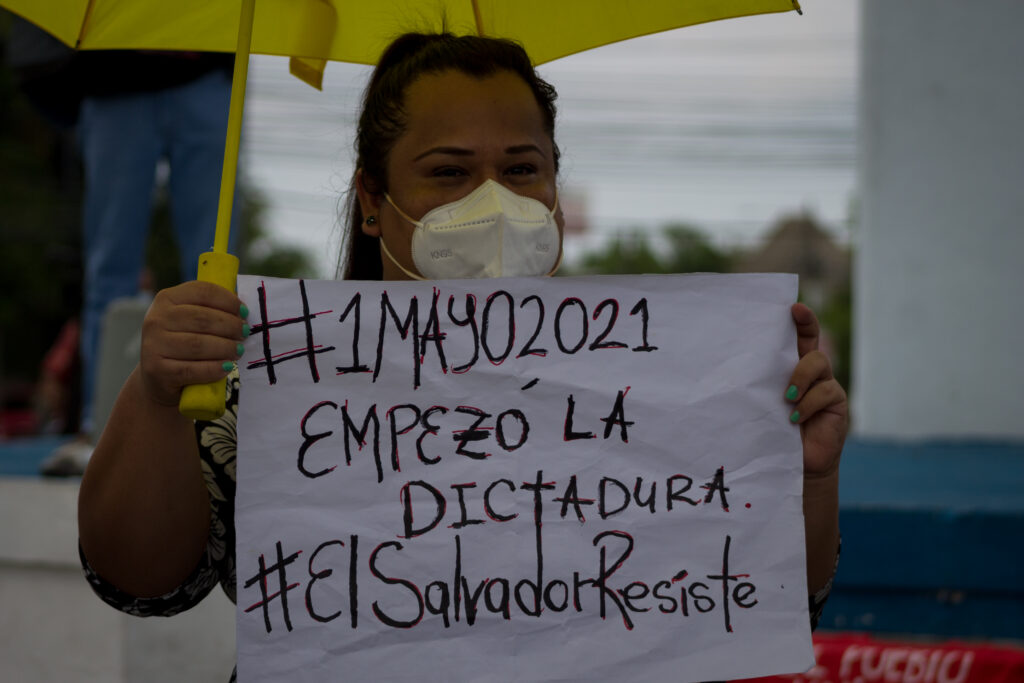
The Salvadoran Congress, controlled by President Nayib Bukele, approved in the early hours of March 27 a state of emergency for thirty days throughout the territory of the Central American country, which was extended from April 25 for another 30 days.
The goal is to contain an unprecedented surge in murders caused by the violent gangs Mara Salvatrucha and its rival Barrio 18. The situation has called into question the effectiveness of the government's Territorial Control Plan
Between March 26 and 28, 87 people were murdered. Sixty-two murders were recorded in a single day, the highest number this century, according to human rights advocates.
The president asked his deputies to approve an emergency regime of exception, which temporarily suspends constitutional rights such as free association, the inviolability of communications and correspondence, detention by the police or military and the annulment of legal defense.
For 27 days, police and military forces have arrested more than 15,000 people accused of gang membership based solely on their appearance. None of these arrests were made with a court order.
Arbitrary arrests and violations of due process
Esteban is an activist and human rights defender; he belongs to the organization Cultura Trans . On the day of his arrest, he was on his way to a meeting with Amnesty International , but he did not show up.
The Cultura Trans collective has been working since 2017 on influencing public policies and on the formulation of care protocols for the LGBTI population.
The activist left his house at 1 p.m. to meet with Liam Fernando Linares (coordinator of Trans Culture) to go together to the international organization's headquarters. When his friend was late, Linares called him but received no answer. It wasn't until 2:24 p.m. that Esteban responded to inform him that he had been arrested. That was his last message.
Esteban recounted that police officers ordered several people to get off the bus, but focused their attention specifically on him because of the artistic tattoos on his body. They questioned why his name was different from the one on his personal identification document.
El Salvador does not have a gender identity law. On February 22, the Constitutional Chamber of the Supreme Court issued a partial ruling recognizing the right of transgender people to change their name on identity documents to reflect their self-perceived gender.
“They beat him and made him kneel, then told him they were going to arrest him.”
Since the state of emergency began, the naval force headquarters has become a kind of temporary detention center while detainees are sent to the country's prisons.
“In the current context where fundamental judicial guarantees have been suspended, LGBTI people could experience increased human rights violations, including arbitrary detentions in prisons without recognition of their gender identity,” Erika Guevara Rosas, Amnesty International’s Americas Director, Presentes
Esteban recounted that he was humiliated by the security forces. In addition to being beaten, he was insulted and locked up with other detained women in the temporary detention center.
“They beat him and made him kneel. Then they told him they were going to arrest him. They made him take off his binder, which is the compression shirt we wear to make our chests look flat. They made him undress to check if he had any more tattoos,” Liam told Presentes .
The report “Case studies that demonstrate discrimination and violence against the LGBTI population in El Salvador” carried out by the organization Communicating and Training Trans Women – Comcavis Trans , indicates that 90 percent of the people consulted in the research have suffered discrimination because of their sexual orientation and gender identity.
“It is important to emphasize that LGBTI people have disproportionately suffered high levels of violence and discrimination in El Salvador. In the past, we have documented how LGBTI people have had to flee the country due to threats, harassment, and violence, without receiving protection from the State,” Erika noted.
Complaints on social media
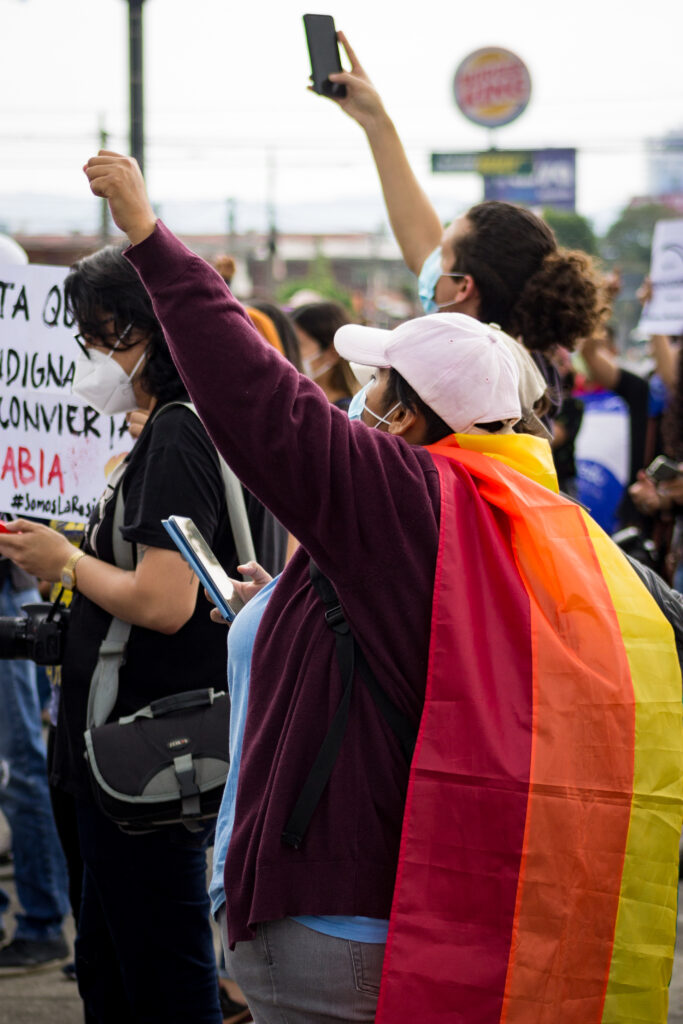
Social media is now the primary means of denouncing arbitrary government arrests. After Esteban's detention became public, he was released, beaten and terrified by the brutal experience he endured.
The state of emergency suspends the guarantees of a fair trial and due process. Those detained during this period are not entitled to legal counsel and may remain incarcerated for up to six months while the investigation is underway.
Nayib Bukele, 40, is known for his laid-back and modern image. He calls himself the "dictator of El Salvador," "the emperor," or "the coolest president in the world," and uses social media to promote his agenda while avoiding criticism.
With inflammatory rhetoric, similar to that of former US President Donald Trump, he has become a kind of policeman, investigator, and judge. The presumption of innocence is obsolete for this government.
The Inter-American Court of Human Rights (IACHR) urged the State of El Salvador to investigate those responsible for human rights violations, in accordance with due process of law. It also called for absolute respect for judicial guarantees and the adoption of a comprehensive citizen security policy that prioritizes the protection of human rights.
During the state of emergency, audiovisual producers, human rights defenders, employees, and senior citizens have been arrested. Social organizations reported that four detainees have died after being beaten by police and gang members in prison.
In the early hours of April 25, the Salvadoran congress approved extending the state of emergency in El Salvador for another 30 days.
We are present
We are committed to journalism that delves into the territories and conducts thorough investigations, combined with new technologies and narrative formats. We want the protagonists, their stories, and their struggles to be present.
SUPPORT US

FOLLOW US
Related notes


We are present
This and other stories are not usually on the media agenda. Together we can bring them to light.