

Depathologization of transvestite, trans and non-binary identities: how far has it come in Argentina
Academic references, activists and users reconstruct the landscape of practices for transvestite, trans and non-binary people in the health system.


Share

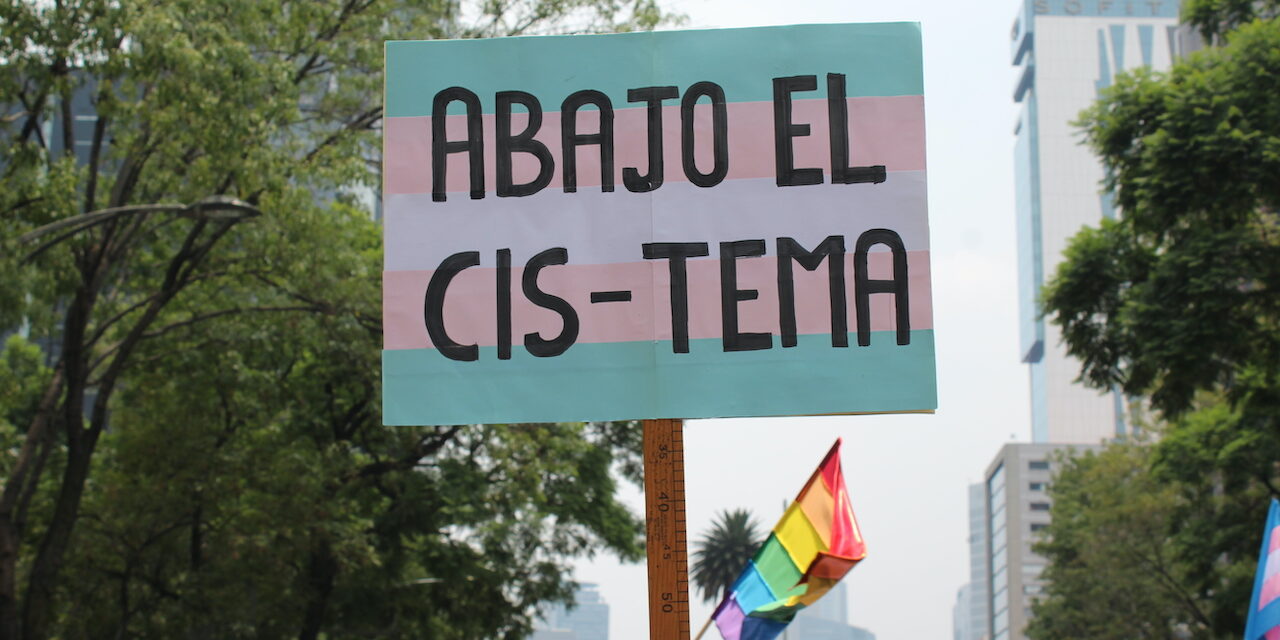
BUENOS AIRES, Argentina. Gender dysphoria, psychosis, bipolar disorder, perversions, and even paraphilias are some of the terms used in our country—with decreasing frequency—to describe lives that deviate from cisnormativity.
What do all these categories have in common? Primarily, they locate illness in individuals rather than in intersubjective relationships. And their legal use is the exclusive domain of registered professionals. However, we are far from a scenario of antagonistic confrontation between diabolical mental health services and defenseless trans, travesti, and non-binary people.
What is pathologization?
This refers to the practice of describing something as an illness when it is not. In the case of mental health, this problem takes on particular dimensions : arguing with an orthopedist about whether an X-ray we've had reveals a fracture doesn't make much sense. But we do talk about our emotions, our stories, our behaviors, and our feelings.
This is not always respected, as credibility and legitimacy are not distributed equitably in our society. Trans, transvestite, and non-binary people, like other groups, suffer various forms of stigmatization, exoticization, and marginalization. These diverse symbolic and concrete forms of oppression, sometimes subtle and at other times brutal, lead to these users receiving mental health services that neither respect nor guarantee their rights.
“I feel that the intention to classify me was, from the beginning, in the male-female binary as a woman, when I do not identify as a woman but as a transvestite-trans person,” says Galaxia Rod, a 24-year-old transvestite-trans activist who lives in La Plata, about her experience as a user.
“That was my first shock. The second was when I found myself explaining transvestite and trans identities to the person who was treating me. It seemed like a lot at one point because it wasn't what I was looking for at that moment, which was support.”
An Millet is a social worker and researcher who recently published the book Cisexism and Health: Some Ideas from Another Side , and has served as a member of interdisciplinary mental health teams. The author argues that “ something very striking about cisexism is how we constantly deny it, how we fail to recognize that it is at work. Exoticization is also one of the tools of cisexism—the idea that trans people are strange, odd, or abnormal.”
Furthermore, Millet adds that “another way is to ignore the identities of these people, to deny them, to not recognize their names. As well as assuming that the people who enter a facility are cisgender.”

What the law says
The National Mental Health Law No. 26,657 does not establish specific policies for this group, nor does it show in its structure a problematization in terms of gender.
The only mention of the issue in the body of the law is article 3. It explains that a person's sexual orientation or sexual identity cannot be one of the factors on which a diagnosis is based exclusively.
Alicia Stolkiner, a prominent teacher and leading figure in psychoanalysis in our country, states that "identity politics are in themselves a mental health policy."
“Psychological suffering is not exclusively an individual phenomenon or the product of a neurological condition or something entirely unique to that person.” He adds that “a significant part of suffering is produced by the social position in which a person is placed and whether or not they are recognized as a person, that is, as a subject of rights.”
Stolkiner argues that “a trans person may experience a psychotic episode, or have a bipolar presentation at some point in their life and need medication. It can happen, because something like that can happen to people in general.”
He also warns that “all psychiatric categories can be revised,” and points out that “bipolar disorder is a rather misused category. When I was a student, it didn’t exist; it was called manic-depressive psychosis. The term appeared, incidentally, in connection with something that happened in the field of pharmacology, which is differentiating between antidepressants and mood stabilizers.”
Depathologize
Millet, in turn, warns that “pathologization in general is a problem. The idea that bodies or experiences are sick, for me, is a problem that goes beyond the pathologization of non-cis or non-heterosexual people.”
Depathologizing mental health is the antithesis of political correctness, if by that we understand an act of complacency or condescension that doesn't affect practices. The pharmaceutical industry and international corporations of specialists who control diagnostic manuals are constantly working to produce euphemisms.
“We went from the category of disease to that of syndrome, and then to spectrum disorder. So it's a kind of package that includes everything,” Stolkiner emphasizes.
Millet draws attention to the fact that pathologization can occur without a diagnosis. “The consummation of the act is secondary. Often, someone doesn't need to make a diagnosis to engage in pathologizing practices. Because when there is an underlying moralizing strategy regarding sexual identities and practices, there is a pathologizing perspective, a worldview at work. A way of understanding the world.”
Reviewing the paradigms
Are these perspectives currently being strained? Or, to put it another way, do we currently have the necessary theoretical tools to ensure that interventions are not pathologizing? How compatible are traditions with emerging knowledge?
“Psychoanalysis says that the child is polymorphously perverse. It does not start from the premise of a normality in the configuration of sexuality, but rather points to the presence of diverse and multiple identity possibilities in the very configuration of human subjectivity,” Stolkiner states.
“We are constantly producing collective and community knowledge. For me, the example of the Transvestite, Trans, and Non-Binary Assembly for Comprehensive Health is a very clear example,” says Millet. “The organization emerged to fight against the shortage of hormones, but then it continued to promote forms of health support, which is not just about treatment. It's about someone making the appointment for you because you won't dare call yourself because they'll assume another gender based on your voice; it's about someone accompanying you to the appointment.”
A collective safety net
Transvestite, trans, and non-binary people also work in mental health services. In this regard, Millet shares the experience of the Trabajadorxs Inesperades (Unexpected Workers) collective, of which she is a member. “We are a group that brings together a variety of non-cis workers in the health field, who have been reflecting on cissexism within our workplaces.” This collective works to create support and care networks and to produce content for academic and outreach programs.
Galaxia points out that trans, transvestite and non-binary people who participate in mental health service teams “are very few, and that goes hand in hand with what happens in academia; it is a very hostile world for our identities as well.”
The activist argues that it is necessary to "trust transvestite and trans people to carry out projects or concerns," and emphasizes that "little by little there is an opening, but at the same time it is scarce."
In a similar vein, Millet argues that members of Trabajadorxs inesperades in their workplaces are subject to “everyday practices of devaluing their words. This classic 'no, she says this because she is trans, it affects her personally'”.
Perhaps it's not about imagining a world without disease, but about building new experiences in which users make decisions about their health, illness, care and treatment processes, including diagnoses.
As Stolkiner suggests, “theoretical, care, and even clinical changes will become increasingly possible to the extent that experts, that is, those who have lived the experience, are part of those who build knowledge. It is the phrase of the mental health users from whom I learned a lot: 'nothing about us without us'.”
We are present
We are committed to journalism that delves into the territories and conducts thorough investigations, combined with new technologies and narrative formats. We want the protagonists, their stories, and their struggles to be present.
SUPPORT US

FOLLOW US
Related notes



We are present
This and other stories are not usually on the media agenda. Together we can bring them to light.