

She is the only trans health telemarketer and she saved a baby's life
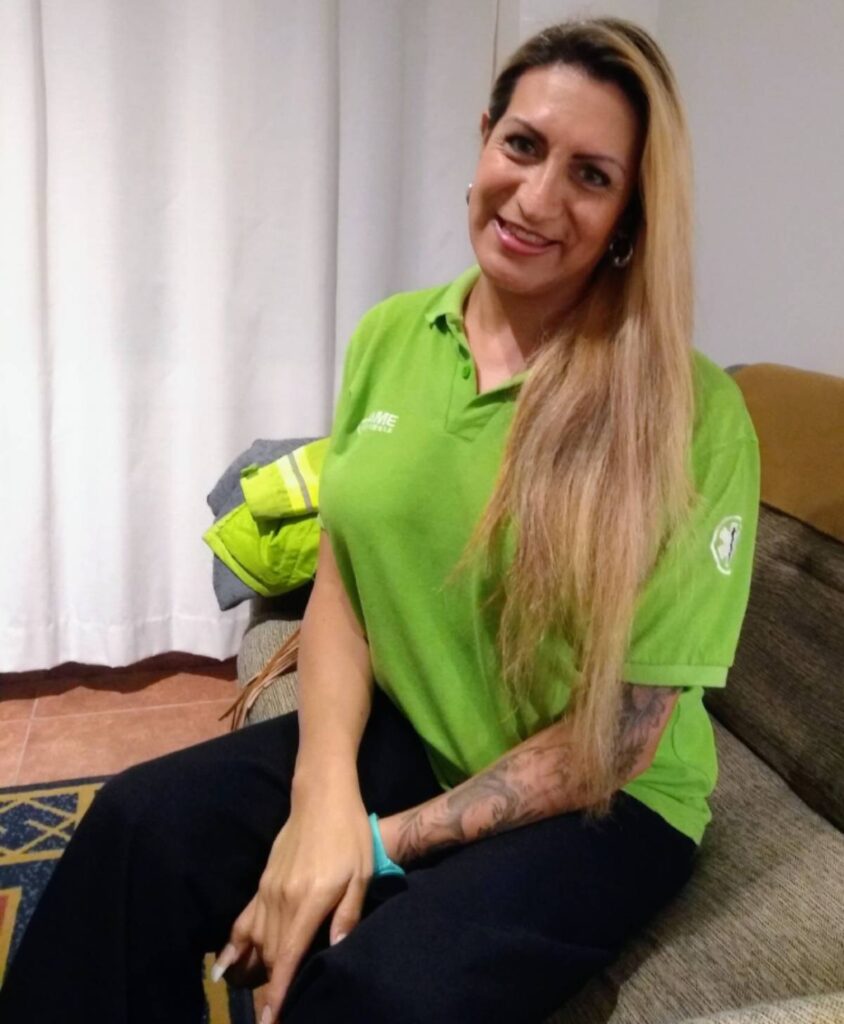
Alma Cristal Barraza joined the Emergency Medical Care System five years ago.


Share

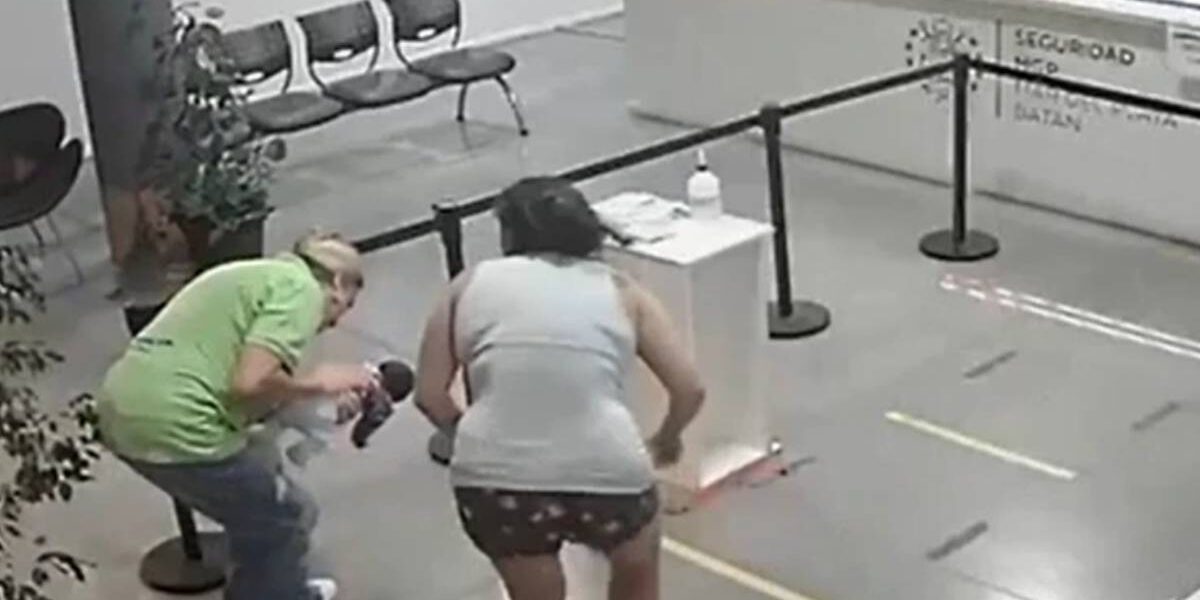
MAR DEL PLATA, Argentina. A pickup truck drove the wrong way down a one-way street and parked haphazardly in front of the COM (Operations and Monitoring Center) in the city of Mar del Plata. The cameras recorded the time as 2:55 a.m. on Sunday, April 10. A man jumped out and ran, seemingly asking for help, followed by a woman who ran toward another door and appeared to be carrying something. They separated. She returned to the door where the man was standing, shouting, “My son is dying!”
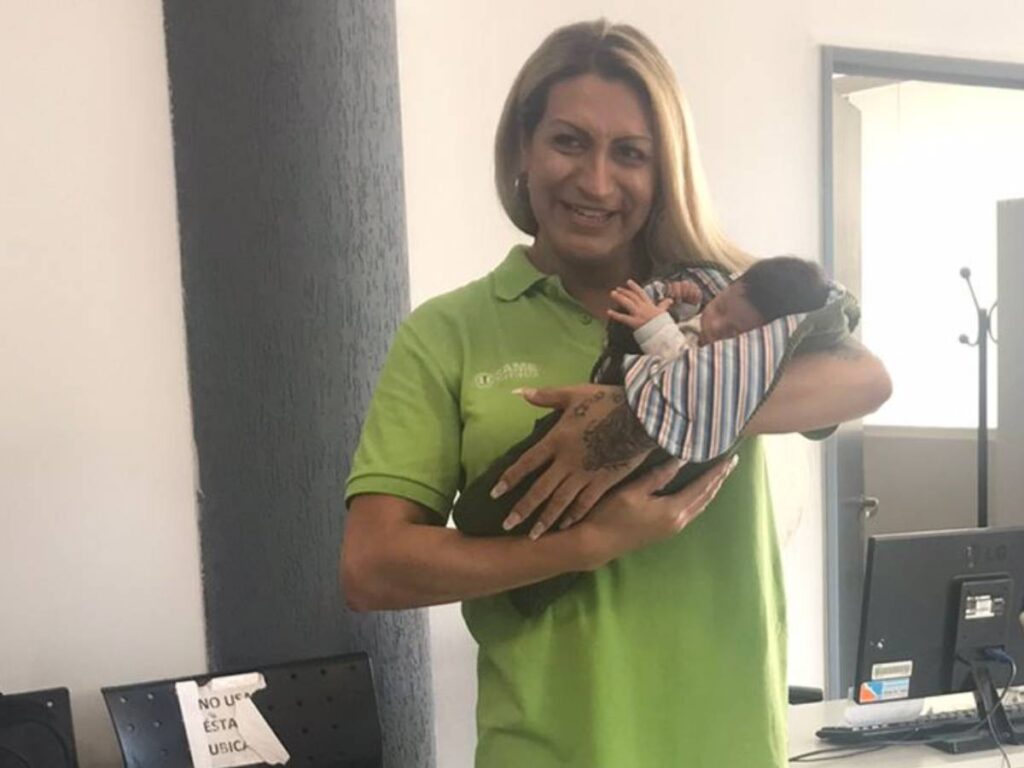
The baby showed no vital signs. An Emergency Medical Services operator received him, placed him on her hand and part of her forearm, and began massaging his back while trying to contact the mother.
The operator is Alma Cristal Barraza, the first and so far only transgender call center operator in the country working for the SAME emergency service. “I picked up the baby; he was like a little sugar. That tiny. His eyes and mouth were closed, and his face and hands were purple. He wasn't responding, but he was a little warm. I went all in. Given how he came in, I said: this can't be left like this. The first thing I did was warm his back while I asked the mother, 'Mom, Mom, what happened? What did he choke on? Did you fall asleep? Did you crush him? Please, tell me, help me.'” She says it in rhythm with the movements she makes with her hand on her leg, as if Marquitos were still there.
The mother, Yemina, was in a state of total shock and explained, “I remember very little from that night. I can only remember that they gave him to me when he was already well. Everything else is blurry.”
The agency's security camera footage shows a mother frozen in a grimace of pain; a hyperactive man, Marcos Etcheverry, the father, pacing back and forth in despair; and Cristal, her gaze fixed on the baby. "I created an airtight capsule between Marcos and me," she recalls. Those were moments when time stood still for four people.
After performing certain maneuvers on the baby, and seeing that he began to respond, he asked the father how old he was. He said 20 days old. “He was very small, and far too small for resuscitation. Anything I might have done wrong could have broken a rib, for example. The outcome would have been different.”
Save, always
She says she could have excused herself because it wasn't her job, which is true. Cristal is a call center operator trained in CPR and emergency procedures in neonatology and pediatrics through courses taught by SAME doctors to give instructions over the phone. She had performed resuscitation maneuvers on an adult before, but never on a child, much less an infant.
What happened to Marquitos? Yemina explains that the baby has laryngomalacia, a condition that occurs when babies' pharyngeal muscles are not yet fully developed and they can choke.
Cristal explains that he's a big eater; he drinks a lot, but some of the milk doesn't go down because his muscles close, causing him to aspirate. He'll be like this for four months, so his parents need to be vigilant because it could happen again. They asked for training, and Cristal promised to get them a course. “I work for the Health Department (of the Municipality of General Pueyrredon), and I have colleagues who teach CPR for infants and adults. The tools are available, and they can get trained and prepared for a situation that might happen to them, and hopefully, it won't happen again.”
Numbers that don't yet add up
It recognizes that Mar del Plata is an inclusive city that embraces diversity and has an agenda that celebrates important dates for the LGBTQ+ community, such as the Gender Identity Law, Equal Marriage, and the Pride March.
She says that “at times, certain actions have somewhat overshadowed or weakened those hard-won rights, but all of us who occupy certain positions are making progress for the collective. We were a highly vulnerable minority, persecuted and criminalized. Our life expectancy was low, and it's rising because we've gained rights, access to healthcare, and a more dignified life.”
Even so, she remains the only woman in the SAME (Emergency Medical Assistance System). There's only one other woman in Pilar, Wanda, who started two years ago as an ambulance driver. “It's a debt that the administrations still owe. The pandemic is over. There's no excuse. They have to address everything that was left pending, including the trans job quota that allowed three or four people to be hired.” The trans job quota was established by the National Ministry of Labor, Mar del Plata branch, in December of last year.
The latest statistics from 2017 revealed that seven out of ten trans girls lack access to education. “It’s discriminatory to talk about that, because if you don’t give someone the opportunity to develop, grow, and demonstrate their ability to improve, it’s logical that that person will continue to remain stuck there,” Cristal concludes.
Study and struggle
Before joining SAME five years ago, becoming the country's first transgender call center operator in that role, she was also a pioneer as the first person in Argentina to legally change her gender marker on her high school transcript, from biological sex to self-identified gender. The process took a year, but once completed, she submitted it to the Ministry of Health and joined SAME.
She completed two high school diplomas, one in education and the other in accounting through the advanced adult education program. She graduated as a counselor specializing in elderly care and worked for almost three years at Hogar Ipanema, one of the most important nursing homes in Mar del Plata.
“Of the twenty trans girls who signed up for the training offered at the National University of Mar del Plata, five of us remained and four of us graduated. I kept telling them that we had to finish, we had to occupy other spaces, these are tools that will be useful to us in the future,” Cristal recalls.
“We need to stop thinking that as a trans woman, the only place we’re destined for is a street corner. Because that’s what they made us believe, and that’s what I believed too. But no. It’s not like that. I worked on the street for a while without my family knowing, and it was to help them. To live, to pay my expenses, but it wasn’t the place I chose, the place I wanted. It was the place that was forced upon me. There are sex workers who choose to be in that line of work, but the physical damage caused by being on the street, the cold, the danger, the infections, and the alcohol and drug use, makes it an unpleasant environment for everyone. But I respect those who choose it.”
She always had the support of her family, whom she calls her 'diverse' family. “Unfortunately,” Cristal recalls, “I found myself with a lot of cousins and uncles who are part of the LGBTQ+ community. We're a humble family, with hardworking parents and eight siblings, and I have a twin brother. He's my other half, and he adores me. Even though I distanced myself to be myself, to go through my identity process, they were always by my side.”
Trans Pride
Standing at 1.80 meters tall, with long, blonde, and very conventional hair, she knows she stands out. “I love being a trans woman, I love saying it, I love that it's noticeable, that people bump into me and say, ‘Wow, you're in the Emergency Room, you wear a uniform, you save lives.’ You, your person, your lifestyle. Yes. Me. It makes me proud. It's who I chose to be.”
She goes back to that early morning, a moment when time stood still. “When I saw Marquitos come out of his trance, I showered him with kisses and said, ‘Okay, you’re fine now.’ They took him away in the ambulance for evaluation, and I went back to my workstation. That’s when I saw some of my colleagues crying. I wasn’t aware that I had saved his life. Later, at home, I realized how important this is. First, because I saved a baby’s life, and second, because I did it. Because we can be just as capable as any other human being in any kind of job, but we lack those opportunities.”
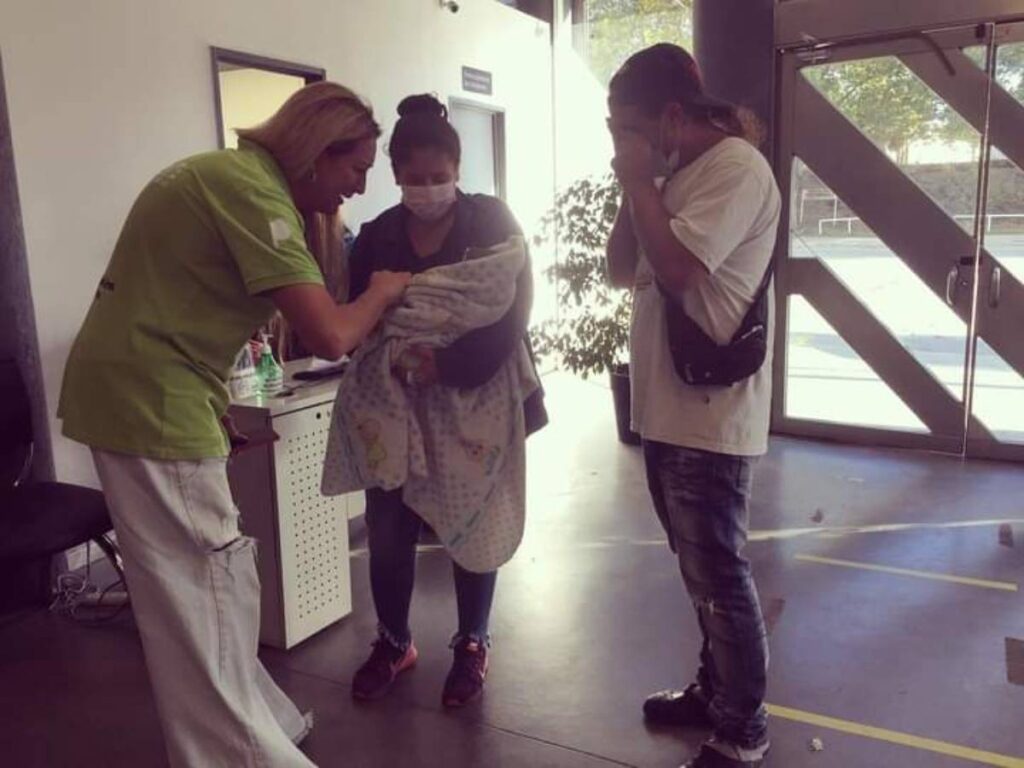
Cristal is 45 years old and has been with her life partner, Luis, for 27 years. Life was about to surprise her when, on the very day the baby was discharged from the hospital, his mother and father returned to the hospital, but this time specifically to find Cristal. Yemina was clear: “My husband and I decided to ask her to be the godmother; it’s a way of thanking her for everything she’s done and because we want her to be a part of Marquitos’s life.”
And Cristal said yes to Marquitos once again.
We are present
We are committed to journalism that delves into the territories and conducts thorough investigations, combined with new technologies and narrative formats. We want the protagonists, their stories, and their struggles to be present.
SUPPORT US

FOLLOW US
Related notes


We are present
This and other stories are not usually on the media agenda. Together we can bring them to light.