

Peasant women stand up: Demands for the environment and food sovereignty
Rural women play a central role in the fight for rights. On the International Day of Peasant Struggle, Latin American leaders speak about their demands in 2022.


Share

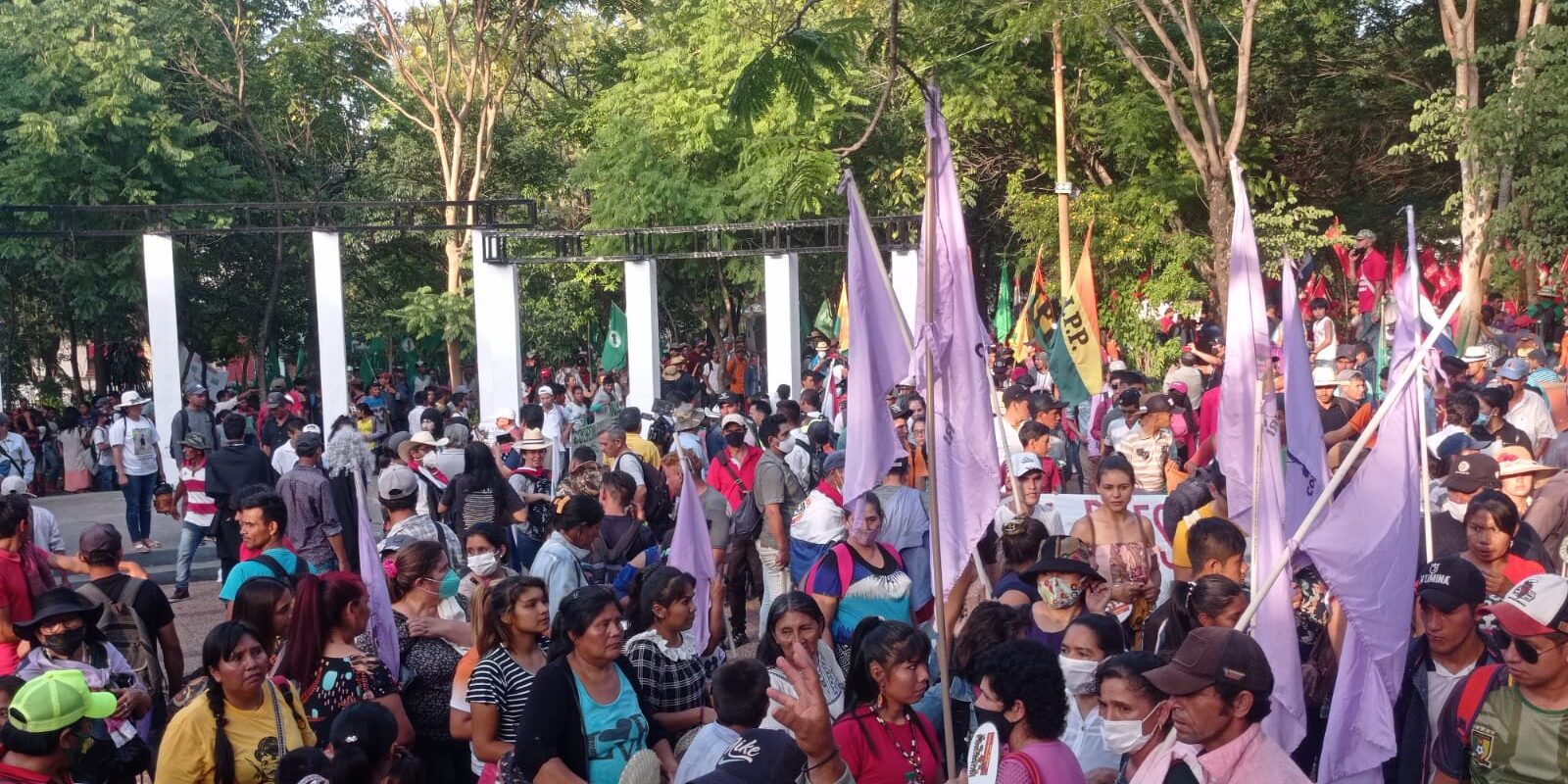
BUENOS AIRES, Argentina. For years, rural women from different countries in the region have joined together to support each other and give a collective voice to their demands. They do so to demand food sovereignty, connectivity in their communities, access to water and land, as well as support for production. They also demand just recognition of the role they play: they are on the front lines in the struggle to defend their territory and, in addition to carrying out production tasks, they care for the families in their communities.
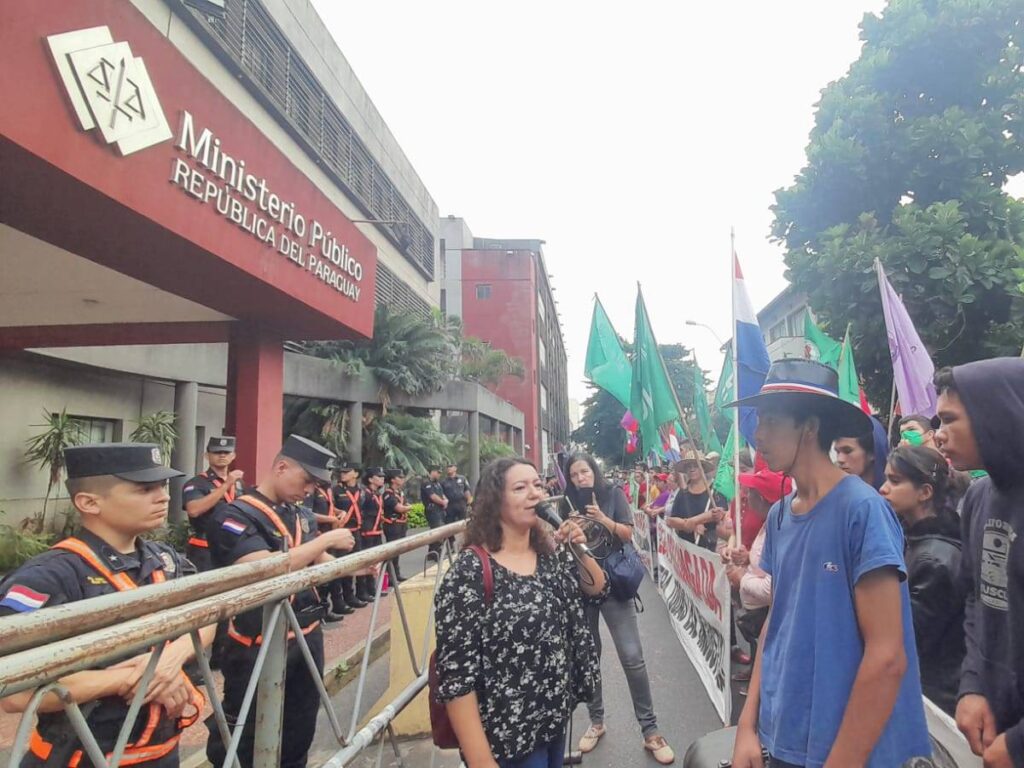
To learn about their experiences, in the context of the International Day of Peasant Struggle, Presentes spoke with peasant leaders Lesbia Artola (Guatemala), Alicia Amarilla Leiva (Paraguay) and Miriam Vilcay (Argentina) .
The anniversary commemorates the murder of 19 peasants from the Landless Rural Workers Movement of Brazil in 1996 , during the government of Almir Gabriel. Under the orders of the Secretary of Security of Pará, Paulo Sette Câmara, an unidentified troop opened fire on the approximately 1,500 landless rural workers who were blocking the PA-150 highway in the town of Eldorado dos Carajás in Pará, on April 17, 1996.
The massacre resulted in the deaths of 21 peasants—two more people died days later—and 56 injuries. Former military police colonel Mario Colares Pantoja and former major José María Pereira de Oliveira were sentenced to 258 and 158 years in prison, respectively, for the crime.
Guatemala: Criminalized for defending the land
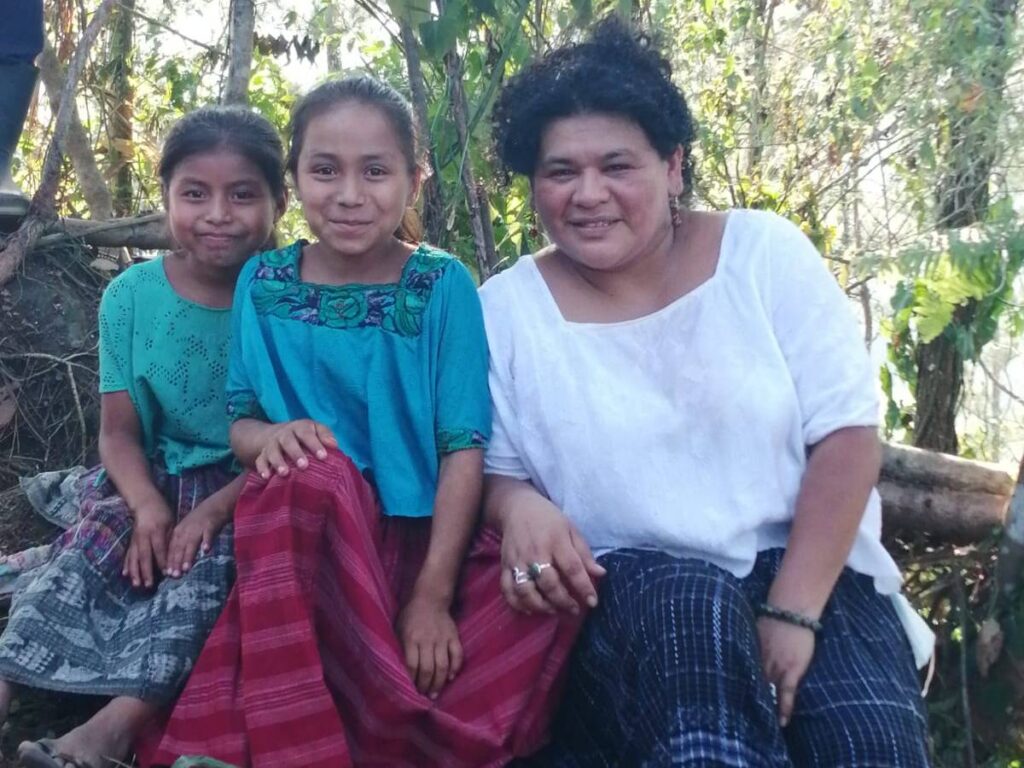
Lesbia Artola is 42 years old, a Maya Q'eqchi' woman, and lives in Cobán, in the department of Alta Verapaz, Guatemala . She identifies as a defender of land and territory and is the regional coordinator of the Highland Peasant Committee (CCDA) . She Presentes that she has seven legal cases against her, as do other fellow defenders.
“As women, we live in a very difficult situation. Our struggle begins from the moment we are born, in our homes, our communities, in every space. We often say that it seems as if being a woman is a crime, as if raising our voices, defending others, or supporting them were criminal offenses. Criminalization, racism, and discrimination against women are ever-present,” Artola began.
The CCDA has documented 342 women with arrest warrants and 5 linked to legal proceedings . “They are criminalized for fighting to defend their rights and territories. We are seen as a threat in this struggle and resistance. It seems like a danger to the landowners, who have called us invaders and usurpers, when in reality they are the usurpers, since they came from abroad; they aren't even from here. They want to block our struggle,” she stated.
In addition to criminalization, the lives of women land defenders are often at risk. Front Line Defenders documented 1,942 human rights violations against defenders and activists worldwide in 2021. The most targeted sector was environment/land/megaprojects/Indigenous peoples' rights, accounting for 14.5% of the total. This was followed by freedom of expression (9.4%), the human rights movement (9.3%), women's rights (8.3%), and LGBTIQ+ rights (7.6%).
Despite the role that peasant women play, Lesbia believes there is a lack of recognition for their struggle as defenders. “The reality is that we are the resistance itself. To defend our territories, our natural resources, rivers, mountains. We, the women, are on the front lines of all this hardship we experience with the repression in peasant communities,” she said.
“During evictions, who is protecting the families, the children? The women. In the criminalization and repression against men, who is left in charge of everything? The women. There is a lack of recognition for us in this struggle to defend the land and natural resources,” she concluded.
Together, despite the occupations and the poor connectivity
Miriam Vilcay is one of the few rural women with internet access in the rural area of Socavones, in the north of the province of Córdoba , Argentina. Of Quilmes and Comechingón descent, the 56-year-old woman serves as secretary for Mujeres Libres del Norte Cordobés (MULINEC).
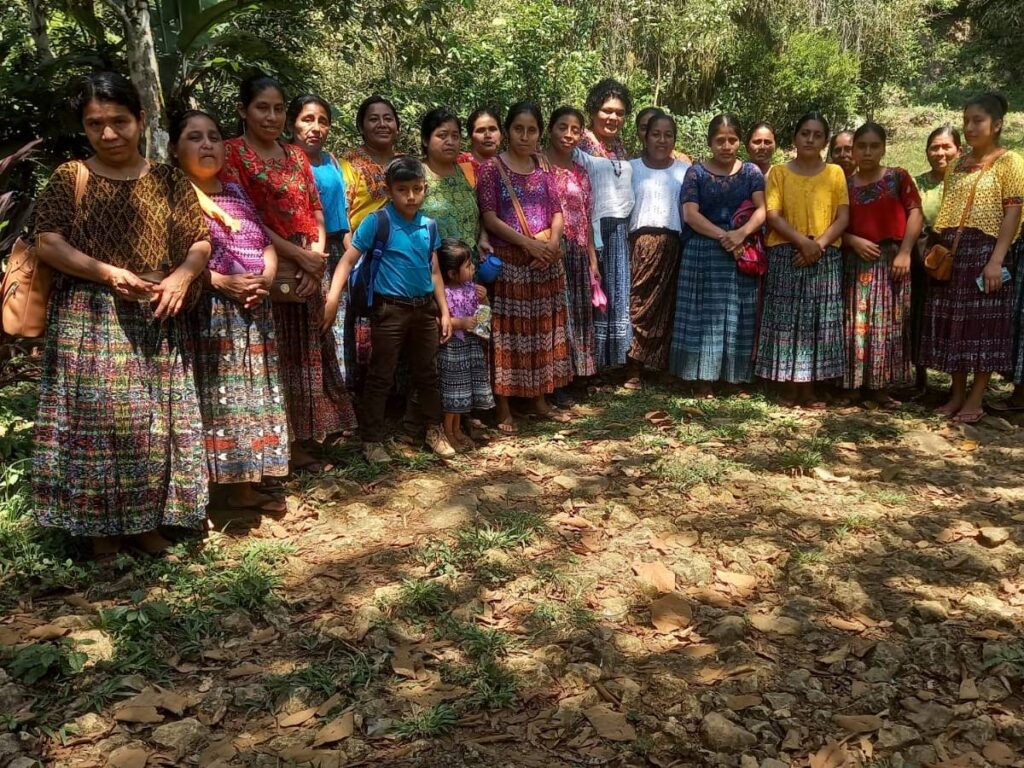
“We started getting in touch with each other. There were three of us who realized we were fighting for the same things, and it seemed much better to do it together. We've been working together for 15 years,” Miriam told Presentes. The organization brings together women farmers located within a 40-kilometer radius. It encompasses five municipalities and the rural areas along Routes 9 and 16 in northern Córdoba province.
In addition to their daily agricultural work, rural women are responsible for housework and caring for children and the elderly. “These days we don’t have many children: two, three at most. But rural women have to take care of everything in the house, fetch water, feed the animals, look after the children, wash clothes, and cook. In 90 percent of the homes, there is an elderly person or older who needs care, a member of the family. All of these tasks fall to the women,” Miriam explained.
For her, rural women are “very neglected by the State.” “This worsened during the pandemic. There are femicides, many cases of violence. We would like more support: first, assistance for women who suffer violence, and second, help with production so that women can achieve economic independence,” she demanded.
In this regard, she explained that it is “difficult” for them to access national production support programs because “they require too many prerequisites,” such as women having a simplified tax registration “which they cannot afford.” Furthermore, there is “limited access to media, the internet, or phone service.”
He also noted that the demands in his area are “access to water and access to markets for their produce, guaranteeing roads, for example.” “There’s no public transportation, there are places without electricity. In my case, I’ve only had electricity for a year,” he explained.
Miriam was born in Córdoba, but 22 years ago she moved to a rural area where she raised her children and where she works the land daily with her husband. The area is mountainous and rocky, so they can't keep many animals, only a few cows, sheep, pigs, and chickens.
“It was arid, and now in recent years it has become even more arid. We have experienced some rather cruel changes. We used to have a rainfall regime of between 900 and 1000 millimeters annually, and it has been declining. Now, unfortunately, we barely reach 500. We are 5 kilometers from the site of the large fire that occurred last year, in Cerro Colorado,” he said about the environmental difficulties that affect his daily life.
“With climate change, women are the most affected.”
Florencia Gómez Galizzi is the former Secretary of Environmental Policy and Environmental Resources at the Ministry of Environment and Sustainable Development. She currently serves as Director of Institutional Relations at the Center for Public Policies for Socialism (CEPPAS).
For her, initiatives related to environmental conservation must guarantee the participation of rural women. Furthermore, environmental policies should aim to improve the situation of rural, peasant, and indigenous women. In this sense, investments that enable access to water and support production are a step "towards making the right to land a reality." "Today, rural women spend nearly six hours a day fetching water," she explained.
Following this line of thought, before leaving the Ministry of the Environment, Florencia promoted the Inclusive Conservation Program , which she hopes will be allocated funding. Through this program, it is recognized that “the areas with the best ecosystem conservation are the areas where Indigenous and peasant communities live today ,” Gómez Galizzi noted. Therefore, the program considers that these sectors should “become key partners in the development of sustainable land use and biodiversity conservation models.”
“With climate change, women are the most affected. If there isn't enough production, we women practically have no income,” said Alicia Amarilla Leiva, a 41-year-old farmer who identifies as Guarani and lives in the department of Caaguazú, Paraguay.
“Our economy depends on processing products for the market, whether it’s corn flour or cheese. That income is for us: to buy what we need, for our transportation, to take courses, so we don’t have to depend on men. Our raw materials for crafts are at risk. With the advance of agribusiness, they are destroying and wiping out the species we use for crafts. And the economy of Indigenous women is based on crafts ,” she explained.
Food sovereignty
Alicia is part of the coordination team at CONAMURI (National Coordinator of Peasant and Indigenous Women's Organizations) , where she has worked for almost 20 years. She describes it as "a fundamental tool in defending our rights and fighting to eradicate the deep-seated sexism we have in our homes, in our communities, in society, and in the fight against patriarchy." CONAMURI is present in 11 of Paraguay's 17 departments.
For the members of Conamuri, the main banner is food sovereignty. “We always say that with food sovereignty we are a sovereign people. When we talk about food sovereignty, we are talking about our territory: we have to have territory, we have to produce according to our culture, and we have to eat according to our culture as well. Having sovereignty means deciding what we want to eat,” Alicia explained.
“We began the fight against agribusiness and agrochemicals with major campaigns here in Paraguay because this is what affects us most with the advance of monoculture,” he said, adding: “It’s a fight where we confront the production of the capitalist system with agroecological production. It’s about rescuing seeds, valuing them, understanding that this is a war: they are patenting and privatizing our seeds.”
In the peasant movement, women aim for the development of a “peasant and popular feminism.” “For us, what we do, our knowledge, our wisdom (natural medicine, for example), are our powers that we must politicize,” explained the coordinator of Conamuri.
“According to the history of agriculture, it was we women who discovered agriculture. At what point in history were we removed from that process and it became masculinized? Women’s work is not visible, it is not taken into account ,” she concluded.
Share
We are present
We are committed to journalism that delves into the territories and conducts thorough investigations, combined with new technologies and narrative formats. We want the protagonists, their stories, and their struggles to be present.
SUPPORT US

FOLLOW US
Related notes



We are present
This and other stories are not usually on the media agenda. Together we can bring them to light.