

Reconversos: a play about "conversion therapies" to heterosexuality
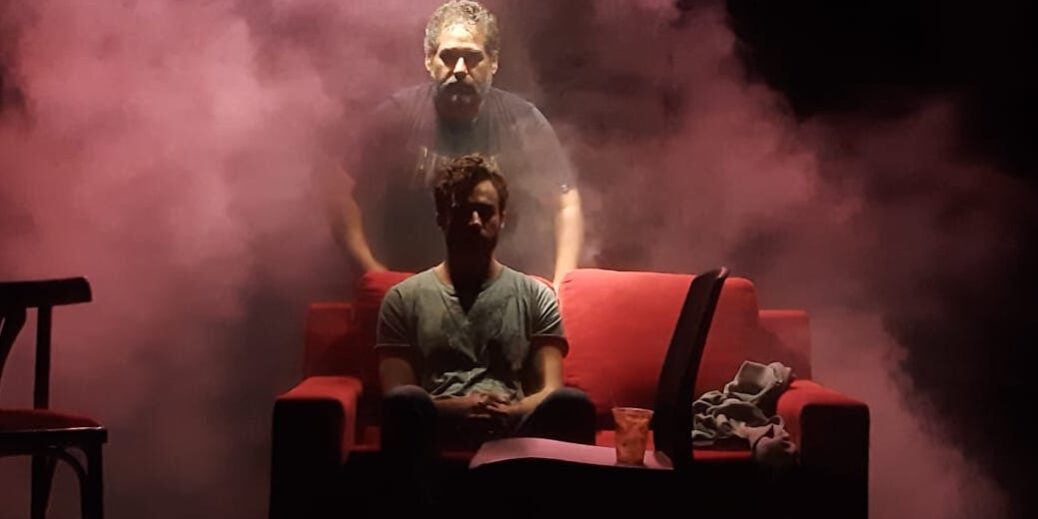
“Reconversos” explores so-called conversion therapies. With a rotating cast, it has been shown in Bogotá, Cartagena, Madrid, Copenhagen, San Juan, Puerto Rico, and New York. Now in Buenos Aires.


Share

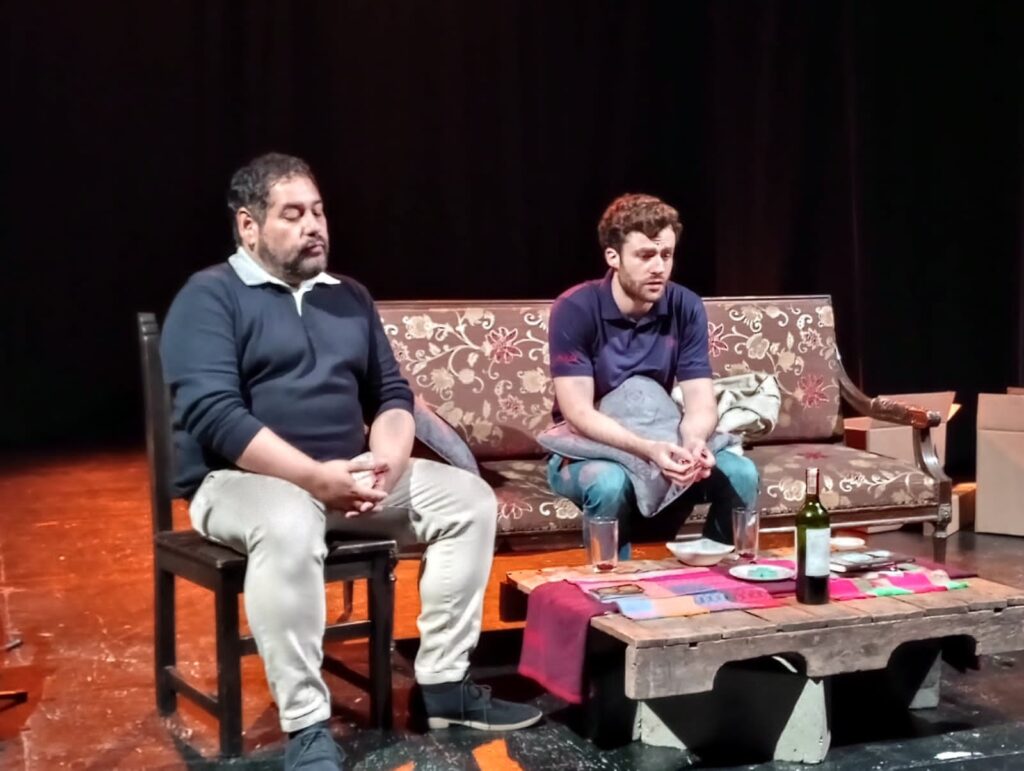
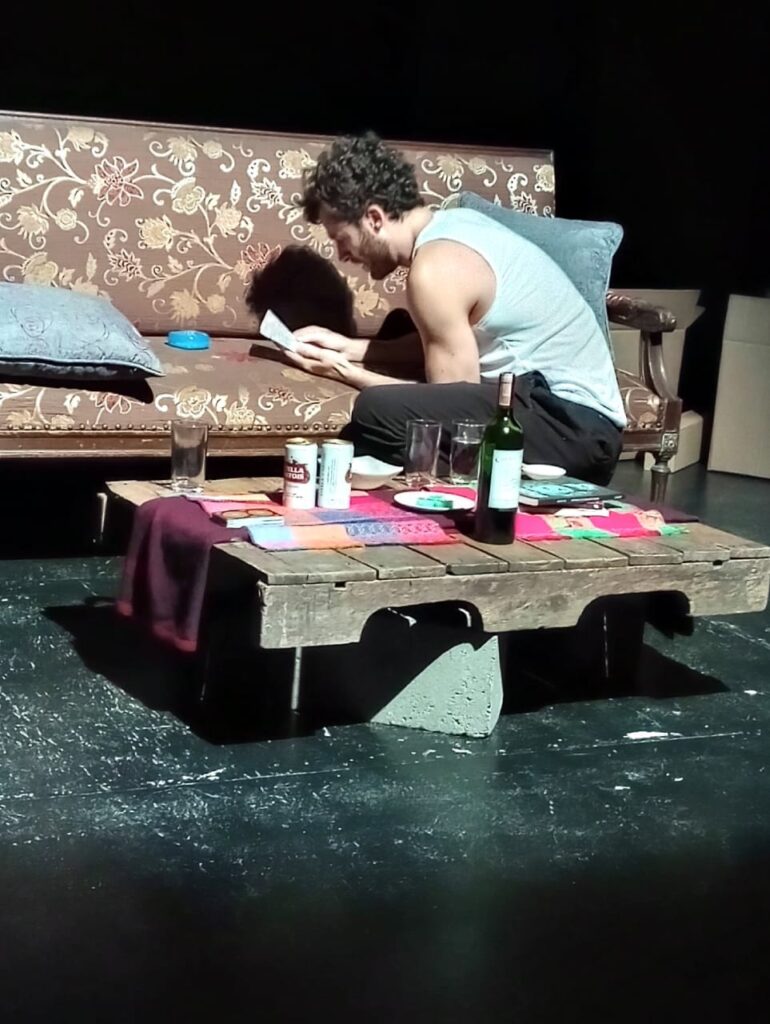
Matías and Alejandro reunite after many years. As they reminisce over glasses of wine, it becomes increasingly clear that the reason for their meeting is far more sinister than it seems. Matías and Alejandro are not just ordinary friends: Alejandro was not only Matías's therapist, but he also led the therapy group whose ultimate goal was to convert Matías, and all his companions, to heterosexuality.
Little by little, the characters shed their masks of cordiality, and the consequences of these conversion therapies, closer to torture than therapy, become clear. Written by Paul Caballero—who says the play is a collaborative work with his co-actor, Cristian Mariani—"Reconversos" arrives in Buenos Aires after a tour with a rotating cast that took it to Bogotá, Cartagena, Madrid, Copenhagen, San Juan, Puerto Rico, and New York. Paul and Cristian spoke with Presentes about the process of writing the play and exploring these types of therapies in front of such diverse audiences.
-How did the idea for the work come about?
Paul Caballero: Cristian and I met a year ago. I had written "Reconversos," but it was very complex because it portrayed what happened inside therapy and had twelve characters. We also wanted to travel. We liked the theme, but it was impossible to tour a play with so many characters. We started writing based on a reunion between this therapist and one of the boys ten years later, which is what you see in the play.
Cristian Mariani: When he told me the idea, I loved it. I wanted to contribute everything I could from my perspective. I tried to read a lot, watch documentaries. I even had the opportunity to talk to people who had gone through one of these therapies, and that helped me a lot to try to understand all the contradictions that people experience when they go through this, who feel one thing inside themselves, but then their environment tells them that it's wrong and that they have to act differently.
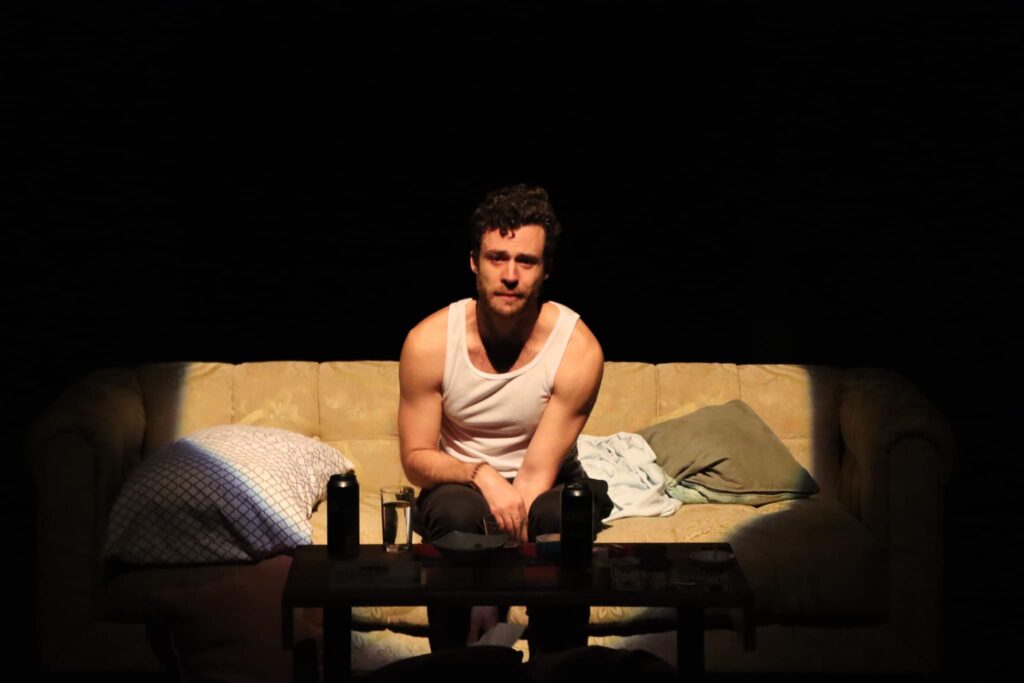
-There's something of that discomfort that you can even see in your body.
Cristian Mariani: Yes, isn't it? It's physical. That feeling of being very small and self-absorbed. If I want to translate it into a physical sensation, for me the cold is something that simplifies that quite a bit, making the sensation very palpable.
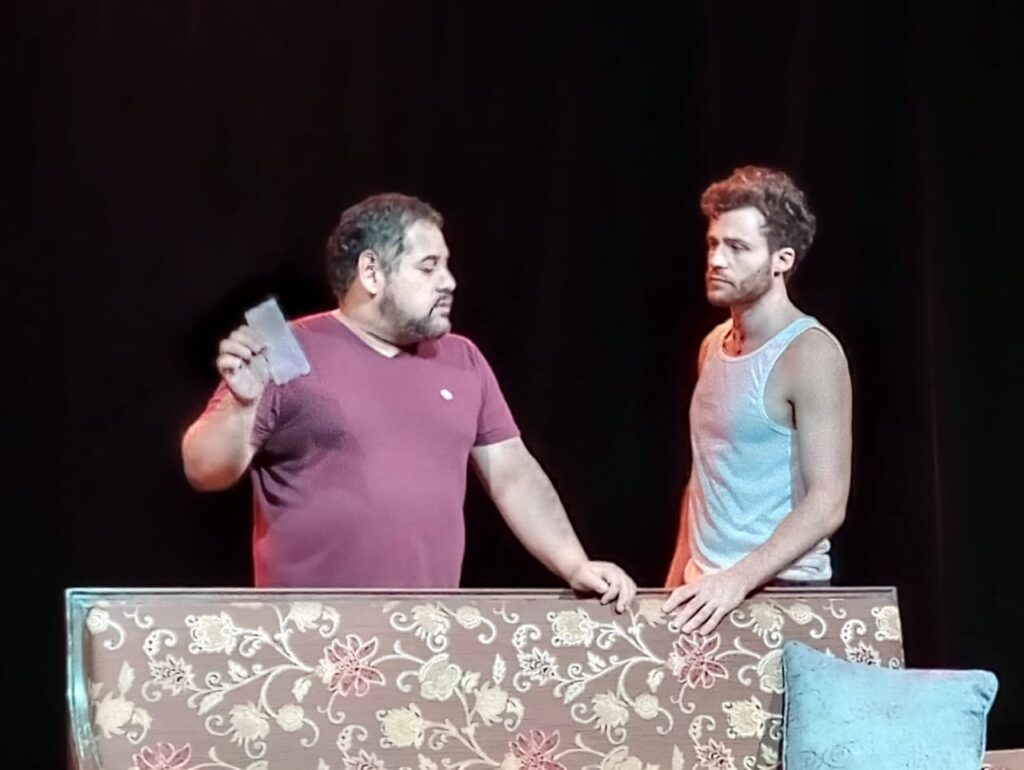
They focused the play on a later encounter for logistical reasons, but that focus is interesting. There's something a little morbid about wanting to see the therapy itself, isn't there?
Paul Caballero: Exactly . We were very careful there. It couldn't become an instruction manual either. We didn't want it to be a pamphlet, or a lesson on what conversion therapies are, nor a training course for those who wanted to practice them. We wanted to focus more on the human drama behind it and not so much on the structure it's based on. My character, the therapist, operates with terrible impunity. I didn't want the villain to be villainous, to be that stereotypical bad guy with a mean face who says and does bad things. I wanted to create a character who tried to be empathetic and likeable because that's where the trap lay. In reality, they're very charismatic people who pretend to have good intentions, who are convinced that what they're doing is the best thing that could happen to others.
-Did they make modifications according to the country they were in?
Cristian Mariani: We've been trying to adapt certain ideas based on audiences that are quite different. A Puerto Rican has a very different sense of humor and idiosyncrasy than an Argentinian. We believe that people here are more aware of certain issues. The humor used in the play is quite biting.
Paul Caballero: And these characters and this type of humor exist, whether we like it or not. This kind of poison is still being dispensed. In general, the Argentine public is more politicized or has already developed certain views. But paradoxically, that makes people not want to see certain things because they dismiss them, as if saying, "Well, this is all in the past." And it turns out it's still happening and it's still just as awful. Another big change is that Cristian acted with different actors in each country we went to. In Puerto Rico, for example, people are much more politically incorrect. The actor went way too far in that sense, and people connected with that.
-Did you think about that when you decided to choose a different actor in each location, that there would be an element that would connect with the local audience?
Paul Caballero: Yes, because we were going to be performing for completely unknown audiences, and having a local actor also allowed us to draw a bigger crowd and access venues we wouldn't otherwise know. Logistically, it was also a challenge. If I could build a monument to Cristian for his logistical prowess in always performing with someone different, after rehearsing via Zoom before meeting them in person, I would.
Cristian Mariani: For me, it was very interesting to see the different acting styles. In New York or Puerto Rico, they were more theatrical and open; in Spain, more reserved. It was a process that helped me grow a lot, both professionally and personally.
-What impact did the work have in different countries?
Paul Caballero: In Copenhagen, for example, a trans activist from Central America, who was living as a refugee in Denmark, came to speak, amazed and deeply moved. In Puerto Rico, we were joined by a man who had undergone conversion therapy with an organization called Exodus, which disbanded in the United States because its leaders, who had been converted to heterosexuality, came out again and decided to shut down the organization. This man recounted that he did everything he was told and managed to abstain from sex with men, but he could never stop feeling that attraction; he just repressed it. But that wasn't what he wanted; he wanted to stop feeling, and he realized that it was impossible not to feel. So he projected it outward and seemingly managed to tame it, but he couldn't eliminate it.
Cristian Mariani: In Puerto Rico, a woman also approached me who had subjected her son to one of these therapies. She told me, crying, “I want to thank you because I was able to understand a little more about what my son went through after seeing you. I am very sorry, and luckily I was able to correct it, but I subjected him to this.” It was very impactful.
-What are conversion therapies like today?
Paul Caballero: Perhaps a few years ago this functioned like a kind of clinic. People would actually go to a place in a group and undergo this treatment. Nowadays, it's at the level of consulting and personal counseling, so it's disguised as coaching or religious counseling. The variety and the modality have changed, so it seems like something foreign or that doesn't happen, but if you have 50 psychologists and pastors doing it one-on-one, you don't see it.
Reconversos has five exclusive performances in Buenos Aires. On April 1, 8, 15, 22 and 29 at 10:30 PM at the Teatro Buenos Aires, Rodriguez Peña 411 and Av. Corrientes.
We are present
We are committed to journalism that delves into the territories and conducts thorough investigations, combined with new technologies and narrative formats. We want the protagonists, their stories, and their struggles to be present.
SUPPORT US

FOLLOW US
Related notes


We are present
This and other stories are not usually on the media agenda. Together we can bring them to light.