

Seven out of 10 non-binary people and trans men suffered discrimination in healthcare
A study revealed that 7 out of 10 trans and non-binary people suffered discrimination. The stories of Carolina and Iván.


Share

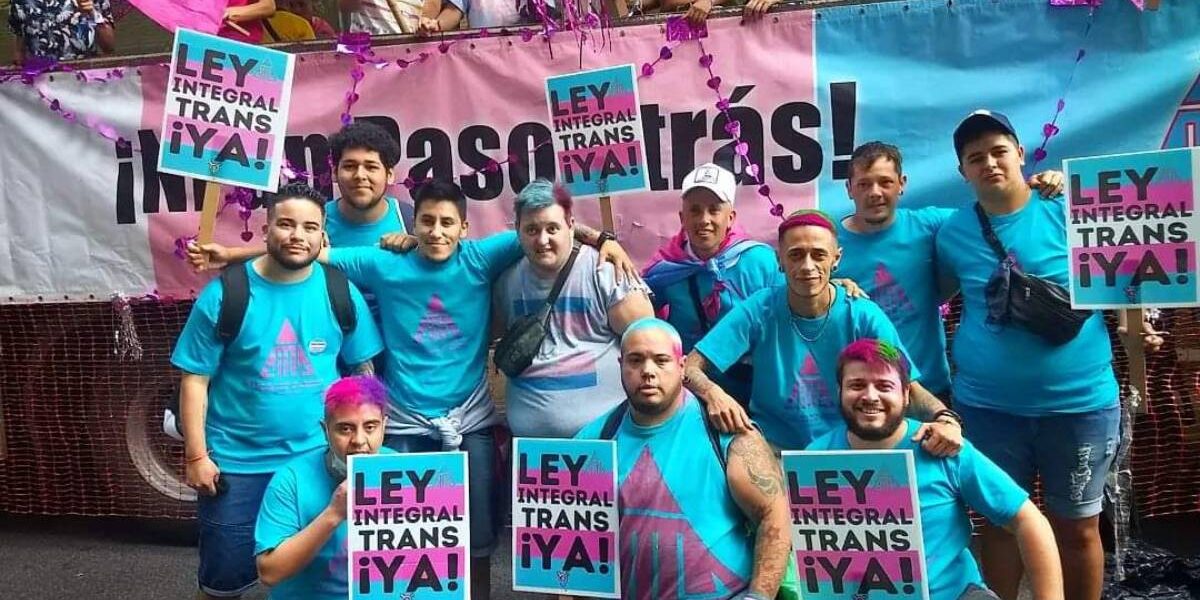
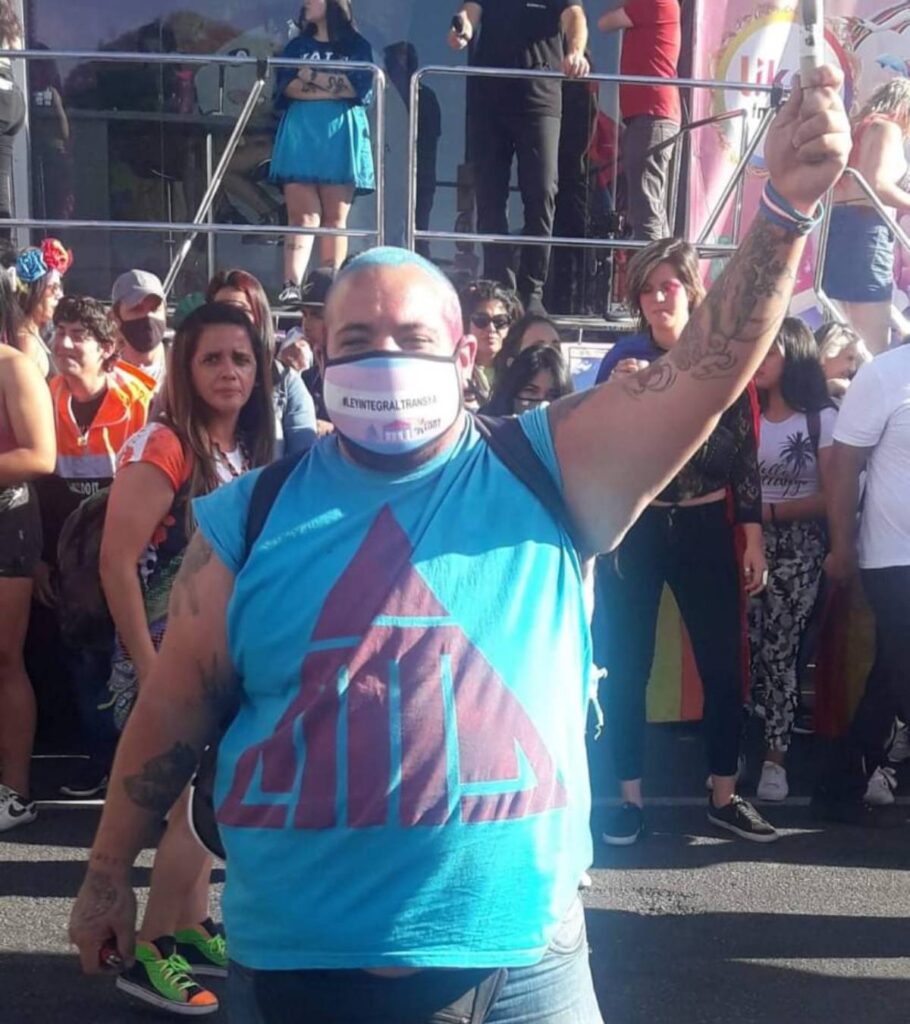
BUENOS AIRES, Argentina. “The first time I went to the gynecologist was when I was 15. I went back when I was 37.” Iván Puhlmann is now 42 years old. He is a trans man, and access to sexual health care in his life has been difficult, with many obstacles. But he is not the only one.
According to research conducted by Fundación Huésped and ATTTA (Association of Transvestites, Transsexuals, and Transgender People) , 7 out of 10 trans men and non-binary individuals experienced discrimination or negative treatment related to their gender identity in healthcare services. As a result, many stopped going.
In 2019, these two organizations sought to understand the health status of trans men and non-binary people in Argentina. To do so, they conducted a qualitative and quantitative survey of 415 people, asking about access to healthcare, sexual and reproductive health, gender identity and social expression of gender, leaving home and dropping out of school, and situations of abuse and violence.
The results, released this week, reveal a reality that must change. “It is necessary to train healthcare professionals so they can provide care tailored to the needs of the trans masculinity and non-binary population,” explained Inés Aristegui, coordinator of Social Research and Community Participation at Fundación Huésped.
Let them see us
“It was necessary to conduct this study on the trans male population and its diversities because people were unaware that we existed,” says Iván, now an activist and member of ATTTA Capital . It wasn't until 2018, with the release of the telenovela 100 Days to Fall in Love , featuring the character of Juani, a trans boy portrayed by actress Maite Lanata, that Argentine society began to acknowledge trans masculinities.
Iván knows that naming himself and being named is important. As a young man, he lived on the streets and was in rehabilitation centers. He was able to leave when he discovered his true self. On the streets, he remembers a moment when he felt comfortable: "When they mistook me for a man."
In 2001, he began to explore all the variations of sexuality. “Each person is unique and unrepeatable. No one should ever tell you how you should be,” says Iván.
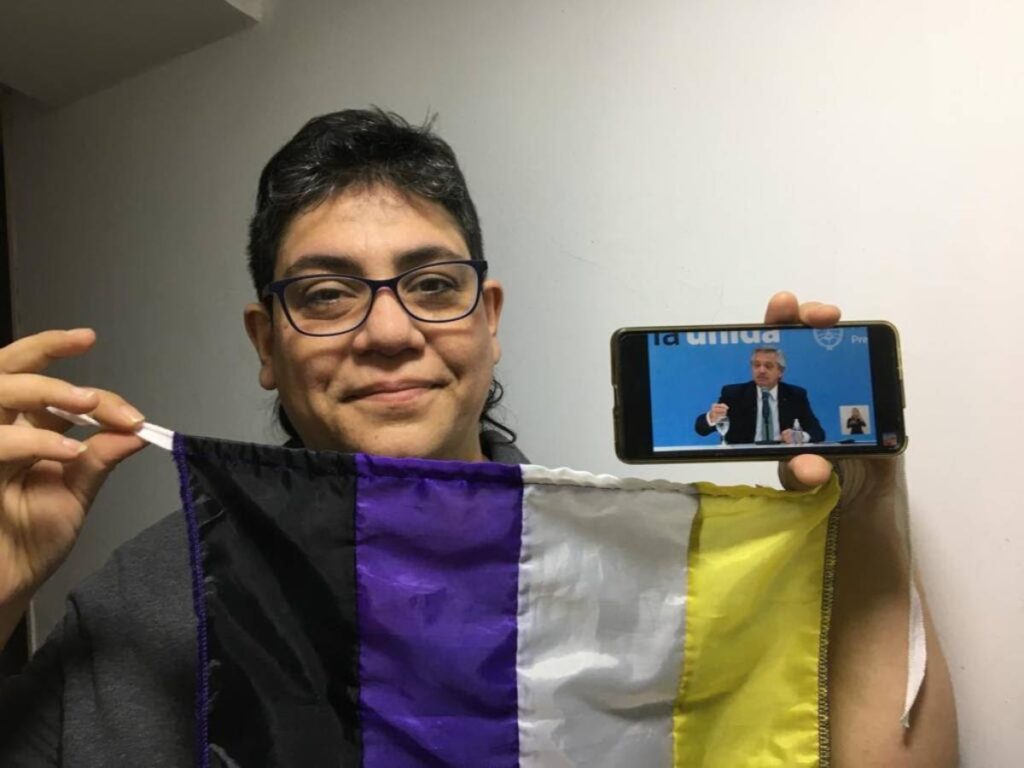
That same year, Caro Mattie Dumas, 43, a music teacher, member of ATTTA Tucumán , and non-binary person, moved to Spain with their family. There, they first heard about non-binary people. “The thing is, when I came here, there weren’t any more,” they say now from their hometown.
“To define oneself, one had to do so in relation to others,” says Caro. And she achieved that when she learned the story of Sasa Testa, author of the book “I Am Sabrina, I Am Santiago: Fluid Gender and New Identities.” She identified with Sasa, and that was key.
“In Tucumán, stores are still segregated by gender. When I go to buy dress pants for school, most of the clothes I buy are men's. The employees don't know how to help me,” says Caro. Changing rooms, public restrooms—everything is still binary. And that makes daily life difficult.
“The report is very important, especially for doctors and families, because it raises awareness and gives the issue a voice, putting it into people's mouths. When they read it, they begin to acquire the vocabulary. It becomes a topic of conversation. Everything that is shared publicly helps to raise awareness. Especially the Huésped Foundation, which has its own prestige,” Caro points out.
The (lack of) access to health
In the 22 years that Iván didn't see a gynecologist, he did what he could to make his body cooperate: he injected himself with every medication that said "masculinizing" on the label. But that brought him many complications: "My body wasn't functioning properly. I was damaging my liver, and I was breaking out in acne. Because I wasn't taking the correct breaks and I didn't know about the side effects."
“Most of them go to the doctor for the first time because they want to start hormone therapy. It’s the first step to returning to the healthcare system they left behind in pediatrics,” Iván knows.
Although more than half of the people surveyed for the Fundación Huésped and ATTTA report stated that they had private health insurance or social security coverage, the majority opt for care in public services. This is possibly due, the report explains, to the greater availability of inclusive services within the public system.
“As coordinator of ATTTA, I have tried to open other health spaces in public spaces. And doctors have told me: ‘someone comes in with painted nails who wants to have a mastectomy’,” Iván explains about the health system, which he defines as one of the most violent systems and one that most eradicates the trans population.
“From that root, it’s very difficult to get out into the system. That ambiguous reading leads to an enormous degree of discrimination,” he points out.
Caro had a total hysterectomy for health reasons at age 40. She has endometriosis: the tissue that normally lines the uterus grows outside of it. For the previous five years, she went from doctor to doctor, none of whom even considered the possibility of treating non-binary trans people.
“Here in Tucumán, there’s Dr. Fabiana Reina. I found her office through meeting trans people. She’s a gynecologist and endocrinologist. She told me, ‘There’s nothing we can do, this is going badly, getting worse and worse.’ We’re going to have everything removed. It was a shock to me,” says Caro.
She now collaborates with the Transforming Family Foundation , run by Dr. Reina, and that's why she knows: "There is little sensitivity on the part of gynecologists regarding pregnant bodies and vulvar bodies."
Caro was lucky to find that clinic, which was the first to implement the hormone therapy program after the Gender Identity Law . Now she has nearly 500 patients.
Little by little, Caro became the person who accompanies those undergoing mastectomies, during their recovery period, in their presence. “I’ve accompanied many colleagues who were hiding their reality. I’ve taken care of them. And I don’t see that the doctors have any commitment. I’ve seen colleagues with terrible infections,” she recounts.
The month of rest without work, the expenses for gauze and creams, make this much more difficult for many people. But there's also the cost of hiding: “A 40-year-old man fainted; his family picked him up and reopened the wound. He called me two days later: ‘I’m hospitalized again.’ The family had no information. And the doctor wasn’t committed either.”
Self-harm and suicide
“More than half (58%) reported having had at least one suicide attempt in their lifetime, which generally occurred during adolescence,” the report says.
Iván is familiar with these situations through his activism in ATTTA: “In trans masculinities, there is a high prevalence of self-harm or suicide. This is related to the lack of support, the violence, the corrections. A trans colleague was even attacked with a branch.”
During her childhood and adolescence, music was a great comfort to Caro. But she knows that not all cases are like that. Her friends were rejected by their families, some attempted suicide. "Corrective rape" was very prevalent—the attempt by heterosexual men to "change" sexual orientation (in the case of lesbians) or gender identity by raping the person. Higui survived; this was commonplace during Caro's adolescence.
Violence: at home and at school
Iván's mother accompanied him, but he knows that this isn't always the case. In fact, the report shows that more than half suffered domestic violence, and 58% suffered violence at the hands of a partner. Furthermore, 6 out of 10 experienced some form of sexual abuse in their lives, mostly during childhood or adolescence.
Furthermore, regarding leaving home, 53.5% indicated that they left home during adolescence. The main reason was related to their gender identity: 48.5% due to experiences of discrimination because of their identity and 35.6% due to how they felt about their identity.
Furthermore, 33.7% dropped out of school during adolescence due to experiences of discrimination related to their gender identity (16.4%) and how they felt about their identity (15.7%). The majority—8 out of 10—experienced bullying at school.
Comprehensive Sexuality Education, sanctioned in 2006, did not exist in the childhood or adolescence of Ivan or Caro Mattie.
At Iván's school, when they talked about health, they talked about menstruation: how to use a sanitary pad correctly, what the gestational period was, etc. "Sex education, libido, desire, 'no means no,' didn't exist," he says. And outside of that classroom, the situation wasn't any better. Discrimination was constant.
Caro remembers that at her (religious) school in Tucumán they showed a video that said if they liked women or animals - they were on the same level - they had to go to confession.
I already knew I was attracted to women. I kept saying, "Any minute now I'm going to start liking animals."
Who do I look like? The lack of role models
At 24, Caro told her family she was a lesbian. She still had no role models to help her understand what she felt and how she wanted to live. “My mom would tell me: you can be a lesbian, but dress better. That's when she labeled me unisex. She'd say: my daughter is very unisex,” she laughs today.
When the debate about inclusive language came up, Caro was drinking mate with her sister-in-law.
– "How do you see me? Am I a lady?" Caro Mattie asked.
-No.
– Am I a gentleman?
-No.
– So what am I?
-And… you're Caro.
-That's why, when there's a person you can't see as male or female, there's "elle."
“He understood it a little better from that perspective,” he says now.
The problem, Caro explains, is the lack of role models: “A large number of kids go through that stage of self-harm. But when you see that someone else has been able to develop their life, it helps you.”
Today, they work in the public education system, teaching music in kindergartens and elementary schools, and also at a mental health clinic. “Because of my appearance, I have no chance of entering the private education system,” they say. Thus, their non-binary identity also limits their future employment prospects.
What needs to change
To improve the health situation of trans masculinities and non-binary identities, Fundación Huésped and ATTTA conclude the report with six recommendations, which are reflected in the requests of Iván and Caro: to make trans masculinities and non-binary identities visible and explicitly include them in programs and public policies, to not assume the practices and needs of this population, to include and involve them in preventive actions in sexual health, and effective implementation of CSE.
Two other points indicate the need to train health professionals and increase the supply of transaffirmative mental health services.
“We need to raise awareness among administrative staff, among everyone who works at the hospital. Because if we don't conform to the male or female gender stereotype, we are discriminated against,” says Iván. And he demonstrates this: at the Durand Hospital in Buenos Aires, one of the pioneers in treating trans people, in a laboratory in a hall with more than 100 people, trans men are asked when they are menstruating.
“In medical school, there should be a focus on the trans population so that they understand why one needs access to health care,” she concludes.
We are present
We are committed to journalism that delves into the territories and conducts thorough investigations, combined with new technologies and narrative formats. We want the protagonists, their stories, and their struggles to be present.
SUPPORT US

FOLLOW US
Related notes



We are present
This and other stories are not usually on the media agenda. Together we can bring them to light.