

What does the ruling that acquitted Higui say, and why does it have a gender perspective?
“Can Higui, a lesbian, black, and poor woman, defend herself against an attack? The ruling answers this question and recognizes her right to self-defense.


Share

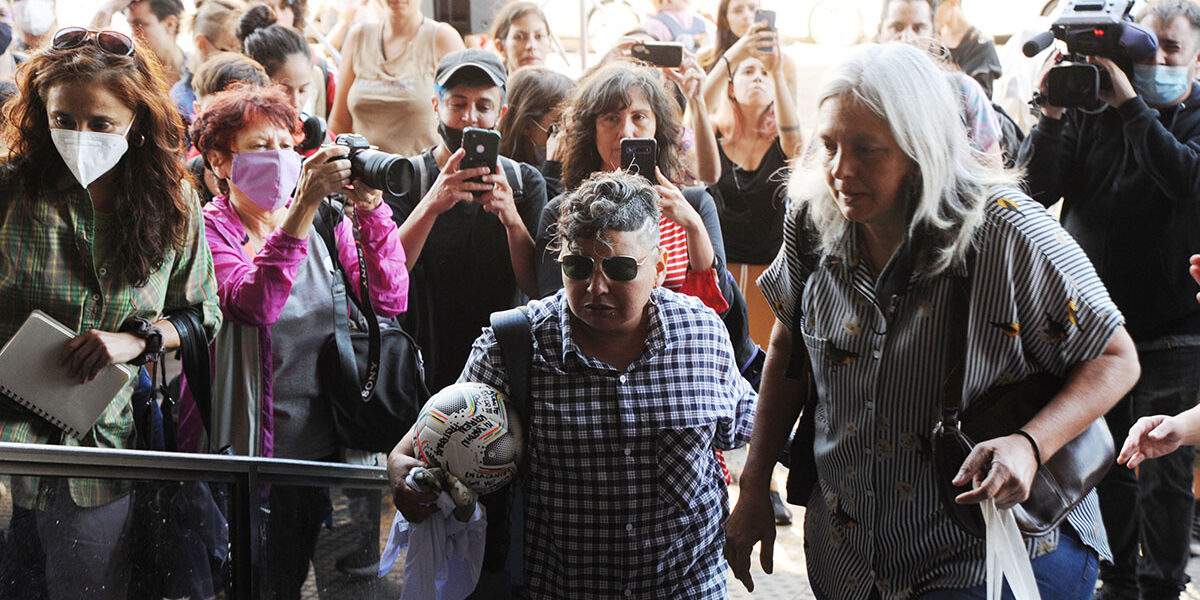
The verdict acquitting Eva Analía “Higui” De Jesús , accused of simple homicide for acting in self-defense, included arguments presented from a gender perspective. This was emphasized by the lawyers who represented Higui during the trial and released the document today at a press conference at the Peace and Justice Service (SERPAJ) center in downtown Buenos Aires. The court informed them of the verdict on March 25.
“Can Higui, a lesbian, black, and poor woman, defend herself against an attack?” was the question that the court resolved for Claudia Spatocco, Higui’s lawyer along with Gabriela “Chiqui” Conder.
“The ruling analyzes the evidence from the perspective of Higui’s version of events. That’s why it’s extremely important. That’s what the gender perspective is all about: placing the event in context and not just reading the particular, isolated fact, considering everything Higui experienced that day,” explained Indiana Guereño, a member of the Defense Support Team at the Ministry of Women, Gender Policies and Sexual Diversity of the Province of Buenos Aires, which supported Higui’s defense and is available to assist in other cases.
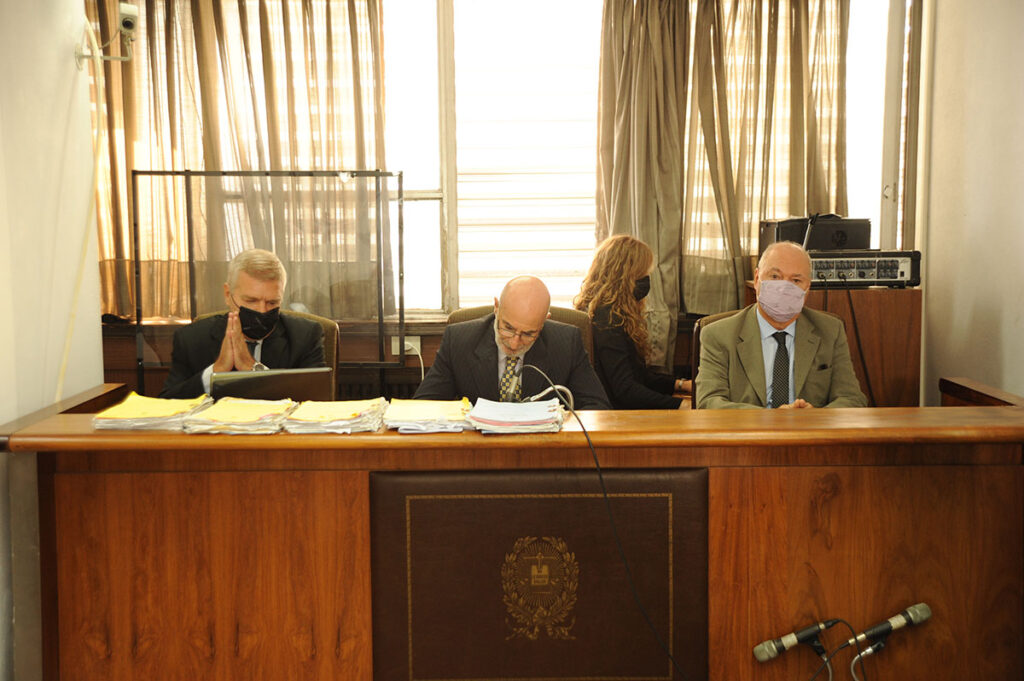
The verdict acquitting Higui on March 17 was reached unanimously by judges Gustavo Varvello, Germán Saint Martín, and Julián Descalzo of the Oral Criminal Court Number 7 of San Martín, Argentina. After three hearings, they favorably assessed Higui's defense version of events and rejected the prosecution's version, which had charged her with homicide and carried a 10-year sentence. The judges found that the prosecution's case was based on "inconsistent" testimony.
Among the most relevant points of the ruling, Guereño highlighted that the judges “recognized that the prosecution’s version, based on the testimony of the deceased’s entire family, was implausible.” Furthermore, “they took into account all the bruises Higui had on her body, her torn clothing,” and the heights of both the attackers and herself, as she is approximately 1.5 meters tall.
“The aftereffects of the blows on her body and the state of her clothing show that she was the victim of a significant physical assault, which, although it can be inferred from her statements, took place in a swift action, was multiple and significant, to which she reacted, trying to make it stop and to avoid a greater one of a sexual nature, according to the tenor of the words she perceived,” described Judge Varvello in his opinion.
What was not investigated
The ruling also notes that the deceased, Cristian Espósito, was "agitated" (sic) due to the alcohol he had consumed and a previous fight he had with his cousin. In contrast, it shows that, based on all the other testimonies, Higui was calm and trying to leave before the attack.
The judges argued that, apart from Higui's account, the insults she received during the attack regarding her sexual orientation (“fucking lesbian” and “I’m going to make you a woman”) could not be proven. However, they emphasized that her sexual orientation “is a common factor in discrimination, which generally translates into sarcasm, insults, and in some cases physical aggression, and that significant alcohol consumption intensifies aggressive behavior, both verbal and physical.”.
The lawyers emphasized that an important aspect of the ruling "is to address everything that wasn't investigated." Guereño and Spatocco told Presentes this in relation to the expert analysis process, which the judges found deficient.
Finally, based on the analysis of the evidence, the court concludes that "by inflicting the wound, the accused acted in response to an illegitimate aggression, which she did not provoke, using a rational means in the emergency to repel it, given the marked inequality of forces, both natural and numerical, thus exempting her from responsibility in the action she undertook and which culminated in the death of Cristian Rubén Espósito."
Right to defense
“The courts have just recognized the right of women, and lesbians, to defend ourselves,” Gabriela “Chiqui” Conder said today during a press conference. She also emphasized the possibility of defending oneself against “corrective” rape.
Higui's psychologist, Raquel Disenfeld, who has been working with her, spoke along these lines. She was emphatic: "If she hadn't acted the way she did, she would have died." For her, self-defense and social defense should be included in the Comprehensive Sexuality Education (CSE) curriculum. "We need guidelines for self-care, self-defense, and combating violence," she proposed.
“I speak louder every time because I am stronger.”
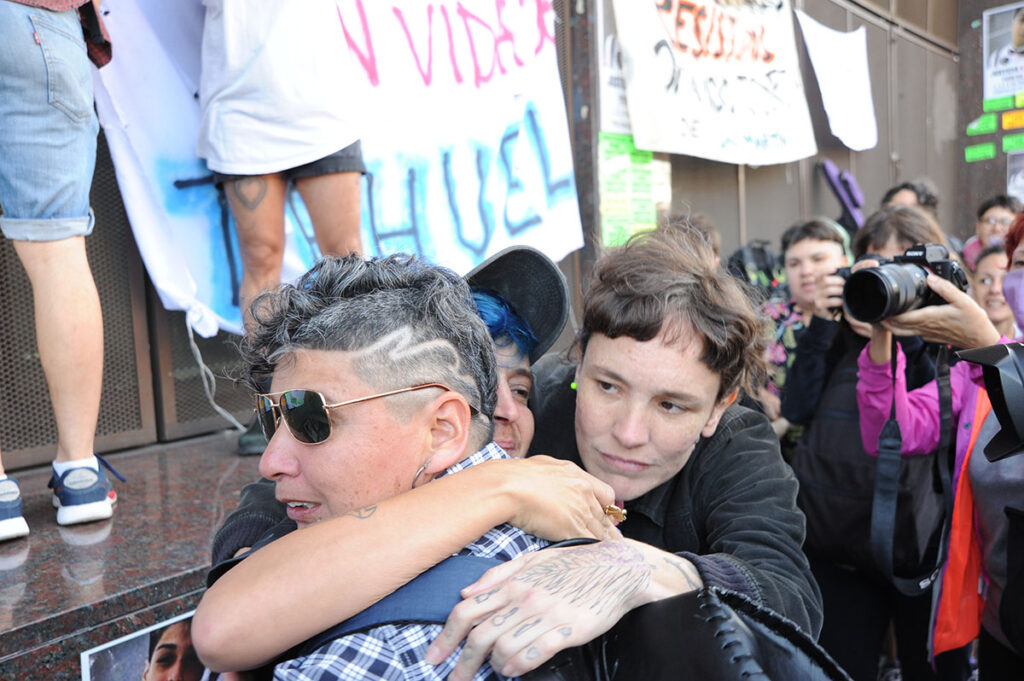
Higui played the role of a midfielder in the SERPAJ courtroom: she received questions, provided support, and moved forward with a firmness she had acquired over the years of the legal process. There, she shared her desire to open a children's snack bar and her wish to study law.
“That way of defending oneself is not that of a victim: it is taking the lead, taking the field, raising one's head and saying 'here we are',” said Mónica Santino, a lesbian and feminist activist, as well as co-founder of La Nuestra Fútbol Feminista .
During the conference, when she tried to answer a question, Higui was surprised by the volume of her voice. “I speak louder and louder because I’m getting stronger,” she said, her eyes sparkling.
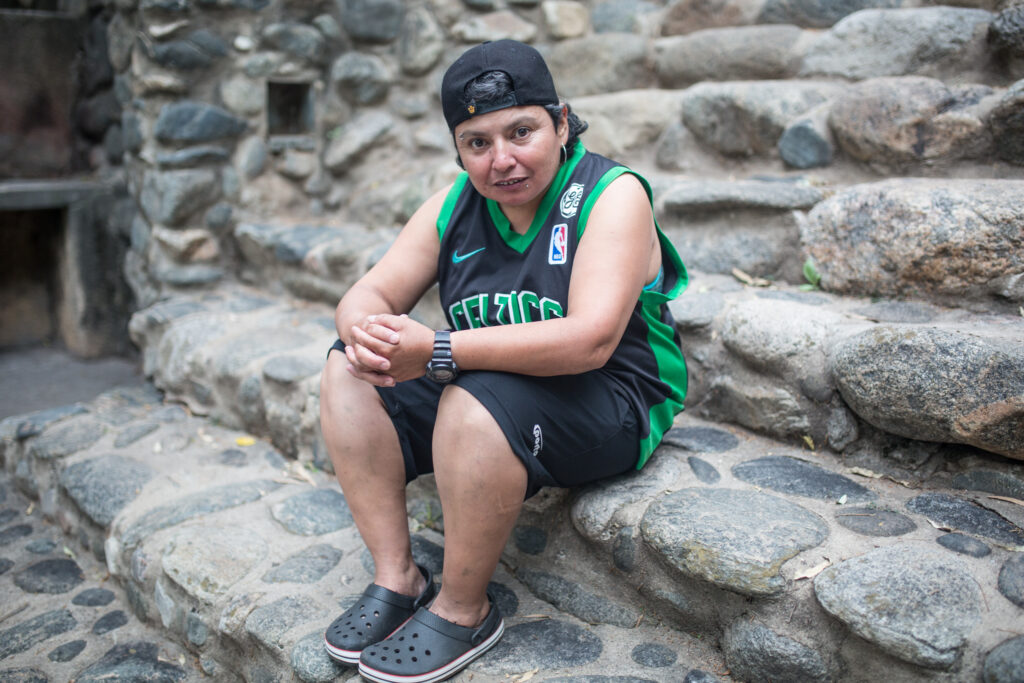
“Lesbians can do so many things, it’s just that doors are closed to us,” she said. Regarding her personal journey, which led her to be able to name what she experienced and recognize her rights, she recounted: “I’ve been an activist since I was a girl without really knowing what activism was. And I’m certainly going to continue being an activist now that I have so many tools.”.
At this stage of her life, she has many projects. “First and foremost, I want to open a community center to share everything I’ve learned. (…) starting with the children, teaching them about their rights,” she began. She added that she would like to have a children’s play area at her house for single mothers so they can take care of their kids, as well as a music space because in her neighborhood “there are only weapons and drugs,” she said. A third dream is to run a radio station to report on everything “that happens in these communities.”.
In five years, Higui sees herself as a lawyer. She says she can't stand injustice. That's why on March 17, when she left the San Martín courthouse after being acquitted, she demanded the safe return of Tehuel, justice for the young people who are victims of police brutality, and also for trans people deprived of their liberty.
We are present
We are committed to journalism that delves into the territories and conducts thorough investigations, combined with new technologies and narrative formats. We want the protagonists, their stories, and their struggles to be present.
SUPPORT US

FOLLOW US
Related notes


We are present
This and other stories are not usually on the media agenda. Together we can bring them to light.