

Qom women from Santa Fe founded a basketry cooperative
The cooperative brings together 67 women who combined ancestral knowledge of basketry with entrepreneurial spirit.


Share

SANTA FE, Argentina. “When I was 14 years old I started working with crafts, because my grandmother taught me; she taught me everything. When I stayed with my aunt, she sent me to school, but I wasn't interested in going because I had to work to earn something to eat.”
Qom Alphi workers' cooperative evokes when asked how she started making palm leaf baskets. It's a technique passed down through generations in the Qom indigenous community, and today it's one of the community's "pride" and "treasures," in Graciela's own words, describing the activity that occupies much of her time.
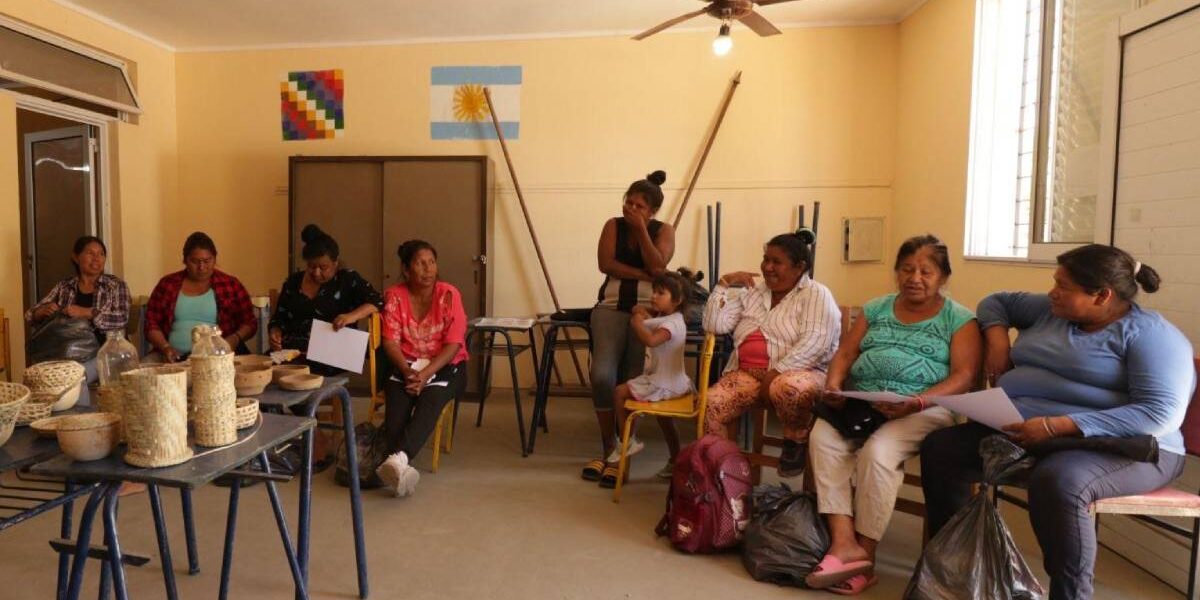
The Qom Alphi work cooperative (“Qom Women”, in the language of that indigenous people) began its history in 2018, from the union between two groups of women: the Qom artisans of the community who live in the Las Lomas and Santo Domingo of the city of Santa Fe and the Creole women who make up the Mutual of Volunteers of the province.
The first group, after seeing the good results obtained by the artisans of Chaco from organizing themselves to sell their work, focused on the ancestral technique of palm leaf basketry, sought support from the second group.
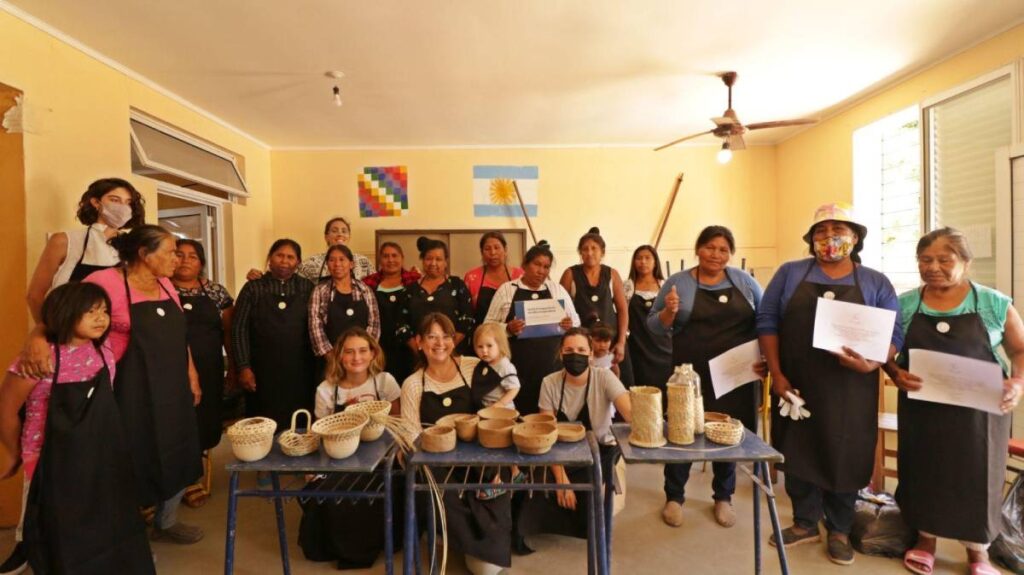
Photo: Qom Alphi
A fabric for freedom
The volunteers are four: Pilar Cabré, Noelia Carrizo, Mercedes Carrizo, and Sofía Novaira. They are between 30 and 40 years old and currently combine their own jobs with the time they dedicate, pro bono, to social work at Qom Alphi.
Through dialogue and cultural exchange, they developed various commercial, organizational, and communication strategies to contribute to the consolidation of the artisans' group and the promotion of their products. But that wasn't all: the bond they forged highlighted the need to address other issues as well, such as the right to education, access to healthcare, and gender-based violence.
They recall starting with meetings to get to know the artisans, who at that time were a small group. Initially, they found their first client, an influencer living in Buenos Aires, who began ordering products, and with her came more customers. However, it was a slow process because these buyers requested special designs with measurements that the women didn't know or didn't want to work with.
“We realized that they wanted freedom in their knitting. Some joined, and others left. We went to the neighborhood every week, bringing them photos with designs and measurements. The group began to grow, and the challenge of providing work for everyone began. Little by little, they started to understand the potential of fulfilling orders. Before, they only sold on the street, but then they realized that with this system they could have a fairly regular income, getting paid every Friday,” Sofía recalls, speaking about the beginnings of the collaboration.
Las Lomas and Santo Domingo, the surroundings of Qom Alphi
The neighborhoods of Las Lomas and Santo Domingo are located in the northwest of the city of Santa Fe, 10 kilometers from the center. There stands one of the largest Qom communities in the country and one of those that best preserves the culture, language, and ancestral traditions of this people.
The community was formed starting in the 1980s, when families began to leave their homes in the north of the province of Chaco, driven by poverty and lack of work.
The scenario that displaced the Qom people was driven by the mechanization of the agricultural tasks they performed (for example, cotton and sugarcane harvesting). By the 1990s, these crops had been replaced by soybean production.
The images of Las Lomas and Santo Domingo reveal the numerous deficiencies suffered by its inhabitants. Most of the houses are precarious and too small for the several families crammed into just two or three rooms. Only the access road to the health center is paved; the rest of the streets are dirt and become impassable when it rains. Part of the neighborhood has access to running water, but there is no sewage system. Electricity does reach the neighborhood: most residents have legal connections, although others receive the supply irregularly. The accumulation of garbage in front of houses, on sidewalks, and in the streets is a public health problem.
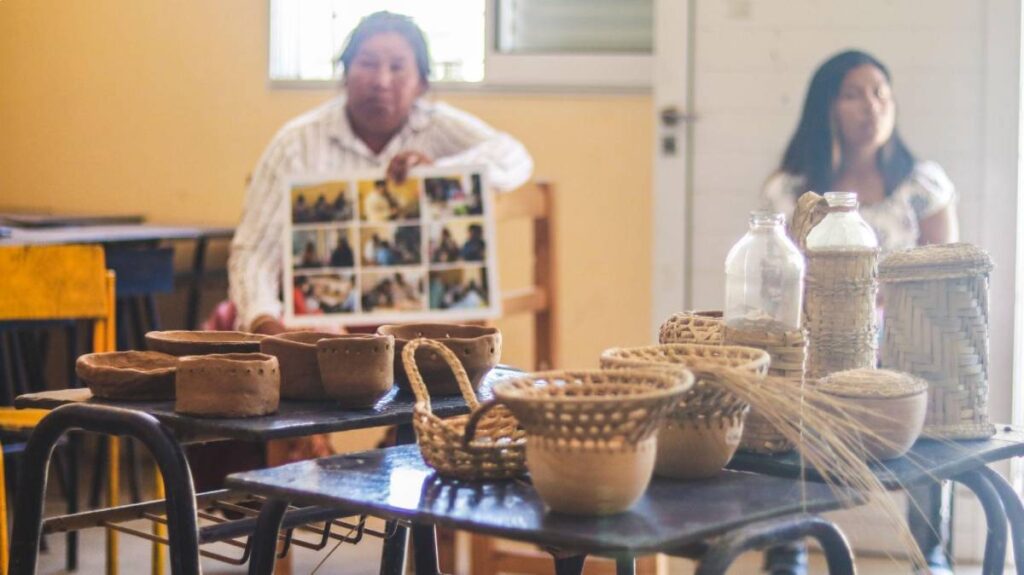
Photo: Qom Alphi
Graciela, from pain to pride
Graciela is 42 years old and the president of the Qom Alphi Cooperative. Born in the department of Castelli, in the province of Chaco, she recounts during the interview, which takes place in her backyard, that her mother died when she was 10 years old and that she was then raised by her grandmother, who taught her to weave palm leaves. When her grandmother passed away, she was left in the care of an aunt, her father's sister, with whom she did not have a good relationship. She states that hers is "a very sad story" because she grew up feeling a lack of affection; so, at 17, she ran away to Santa Fe with a family she knew.
Upon arriving in a new province, unfamiliar territory, she embarked on a journey that led her to the Santo Domingo neighborhood in Santa Fe, where today her home is filled with children, grandchildren, dogs, cats, and chickens. Most of the neighborhood's residents are from the same community; Graciela is proud of her culture and defends it: “I feel happy; I can speak Spanish and my language, I can answer a question.” For this reason, in addition to their artisanal work, the language is the community's “other treasure,” one they strive to prevent from being lost by teaching it to their daughters and granddaughters.
Graciela says she doesn't miss her home province, which she only visits "every now and then" to buy palm leaves, and that's why she remembers the first stage of the pandemic, during quarantine, as a "very sad" time: "I couldn't travel to get materials; it wasn't until mid-2020 that they got us a truck, and we went to pick it up. They also helped us with groceries, since we couldn't go out to sell." Access to food baskets was made possible thanks to the efforts of her colleagues at the Volunteer Mutual.
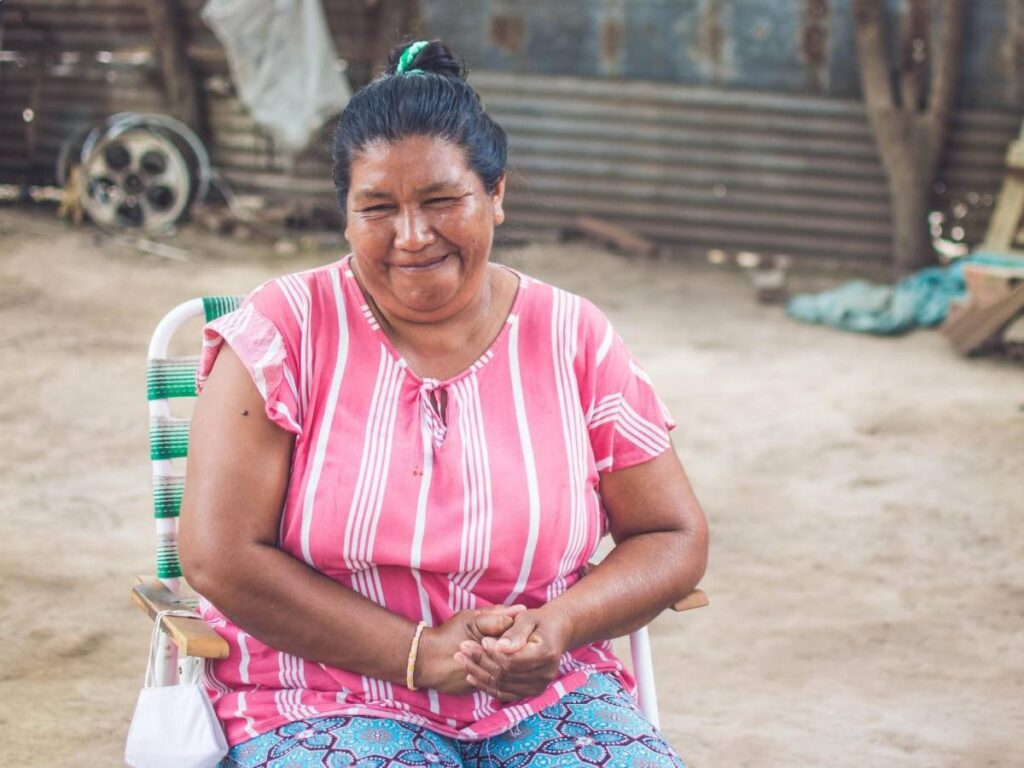
Photo: Gisela Curioni.
Qom Alphi from the perspective of its president
Graciela recounts that before Qom Alphi existed, the artisans went door-to-door selling their baskets individually. The initial group that decided to join forces consisted of six women, neighbors and fellow artisans, who came into contact with the Mutual de Voluntarias (Volunteer Mutual), where a group of "criollas" (people of mixed race) helped them begin the process of organizing their work.
When it came time to formally establish the cooperative, decisions had to be made regarding the role each member would play on the board: “I didn’t want to, but my colleagues voted me for president,” she confesses. She says that at first it was a “quiet” task, but acknowledges that later came “the big problems,” inherent in any group of people where there are conflicting interests.
“I really enjoy working with palm leaves, and now at the cooperative we're learning other things like ceramics, which I also like. In addition, every Wednesday at the Mutual we have training on the cooperative's administrative matters. I'd like us to grow so there are more orders and more work,” she concludes.
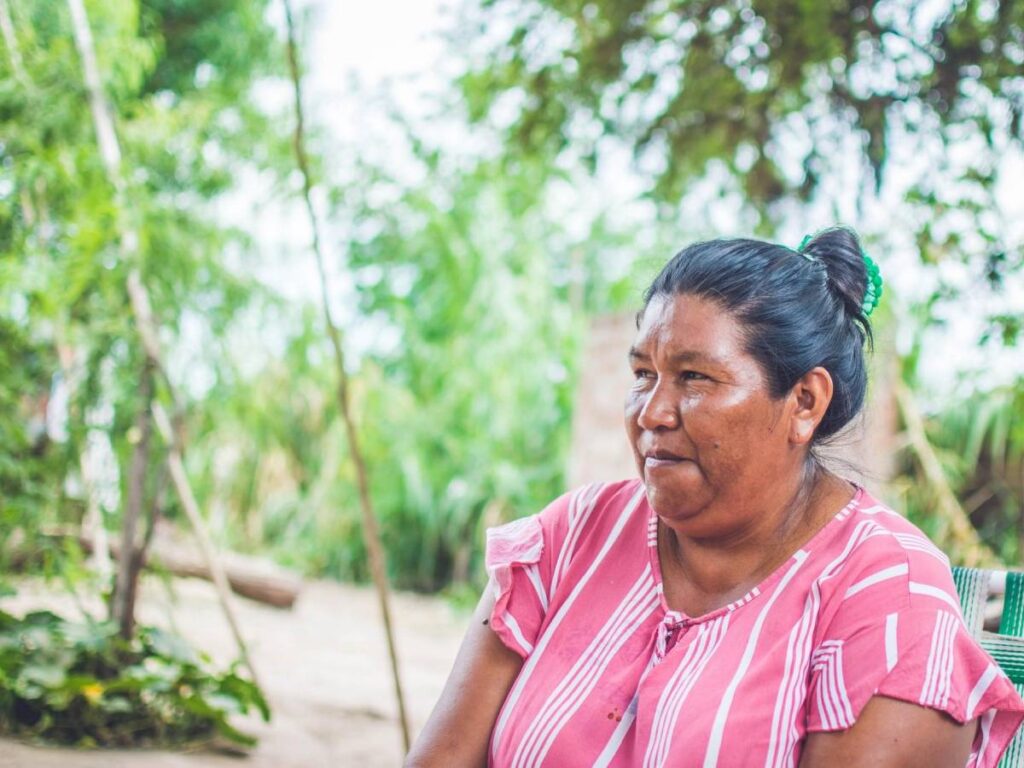
Photo: Gisela Curioni
In November 2021, the Qom people, organized in their production, distribution, and sales processes, formed a cooperative. However, far from being the culmination of a cycle, the legal framework they obtained was a beginning in which they still have much to learn.
Currently, there are 67 women who make up Qom Alphi, who have achieved a secure weekly income through the cooperative's work system and also have a sales point in the center of the city of Santa Fe.
Marianela and her essential role within the cooperative
Marianela Sánchez is 25 years old and the treasurer of the cooperative. She was chosen for this role because she is one of the most literate members. Her role is fundamental to the work system, as she prepares the spreadsheets detailing completed tasks, keeps track of who is paid and how much, and serves as the direct link to the external volunteers.
“I learned to make crafts when I was 17; when I was younger I would see my mom and ask her why she did it, I didn’t really understand, but then when I started making some pieces, I liked it. My mom told me that if I wanted to buy something I had to take orders and earn my own money: that’s how I started,” she says in the interview.
Marianela is the mother of a five-year-old girl, whom she plans to teach basket weaving in the future. “I have a daughter, and thanks to this work we support ourselves and can feed the children. If she wants, I'll teach her everything I know when she's older,” she reveals, her eyes shining and lighting up as she speaks of her daughter, who is her greatest pride.
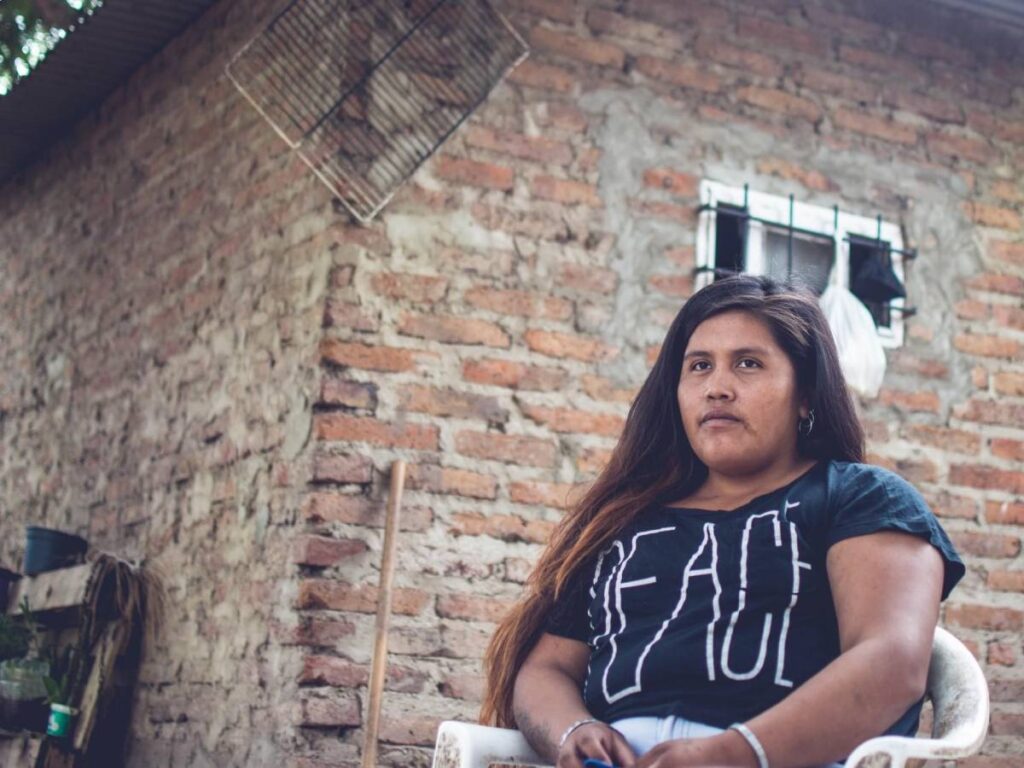
Photo: Gisela Curioni.
Basketry, an ancestral technique that is enhanced through generations
Originally, Qom indigenous crafts were primarily used for everyday items within the communities, such as woven nets and bags. Following the Spanish arrival in the Chaco region at the end of the 17th century, Europeans seized the fertile lands and raw materials that the indigenous peoples worked with, reducing them to mere laborers. Many escaped this subjugation to more remote and less productive areas, where they discovered that the ancestral technique of palm leaf basketry could be a viable way to meet their basic needs.
In the case of the artisans in the city of Santa Fe, the vast majority are originally from Chaco province and, like the rest of the Qom community, came to the city fleeing the poverty of their homeland in search of a better life. Nowadays, they return to Chaco only to obtain the raw materials they need for their work. Palm weaving is a skill passed down through generations, and all the women in the community know how to do it, although not all of them pursue it as a means of earning a living.
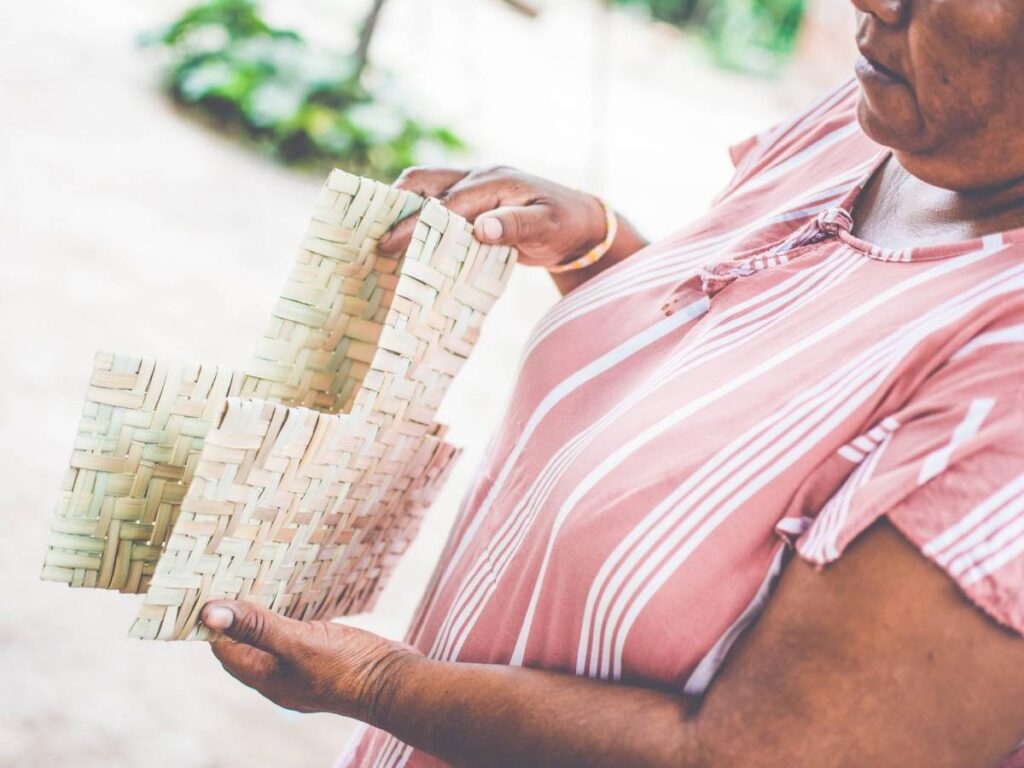
Photo: Gisela Curioni.
Those whose children are older have more freedom to dedicate themselves to making handicrafts, but most weave at night because during the day they do not escape the logic of a patriarchal society and must dedicate themselves to the house and the children; to caregiving tasks.
The palm leaves used by Qom artisans are only found in the northeast of the country. They have tried weaving with other materials, but haven't achieved the same results, so they continue to choose this traditional raw material. This type of palm grows on a plant with sharp thorns, making it difficult to harvest. After harvesting, it must be left to dry for at least a week to reduce its weight (which facilitates transport) and increase its malleability, essential for weaving.
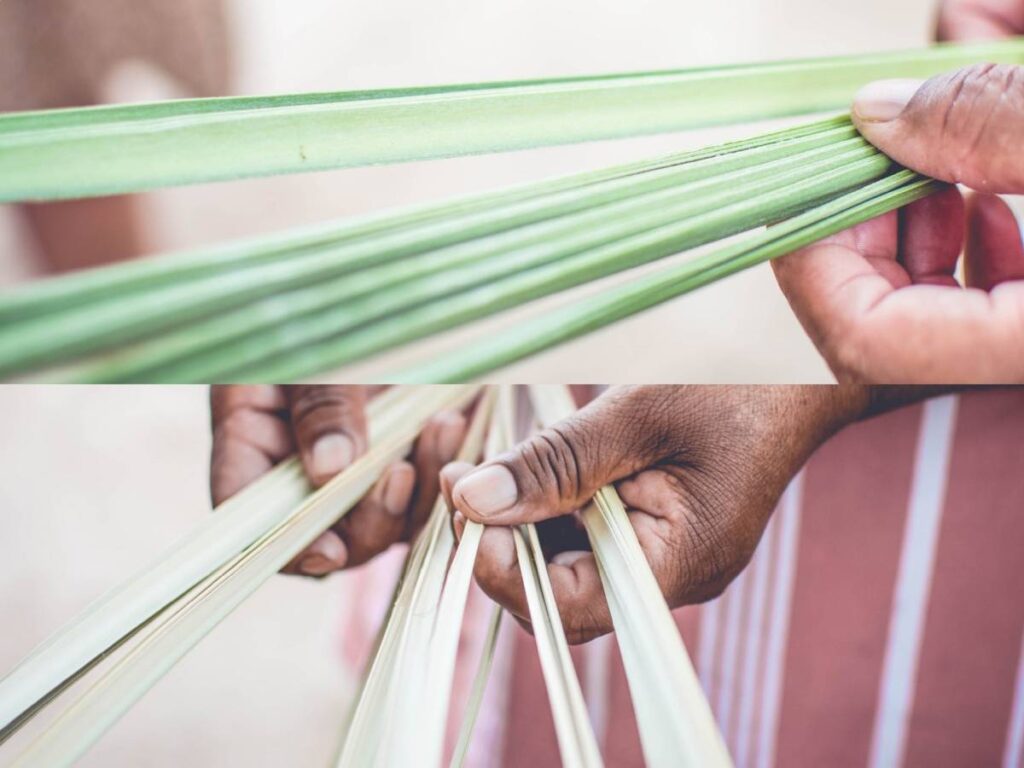
Photo: Gisela Curioni
The artisans work from their homes. Orders arrive on Monday afternoons, and deliveries are made the following Tuesday at 10 a.m. at the Qom Mutual, which operates in the neighborhood . They communicate via WhatsApp, and there are six groups. Each group is responsible for fulfilling the order, and each artisan works with her own palm leaf. If she doesn't have one, she can't fulfill the order, and another woman does it for her.
The volunteers coordinate communication with buyers and seek new clients for the handicrafts made by the members of Qom Alphi. The volunteers and the cooperative's board of directors strive to ensure that the distribution of orders—and, consequently, the profits generated by sales—is as equitable as possible among all members.
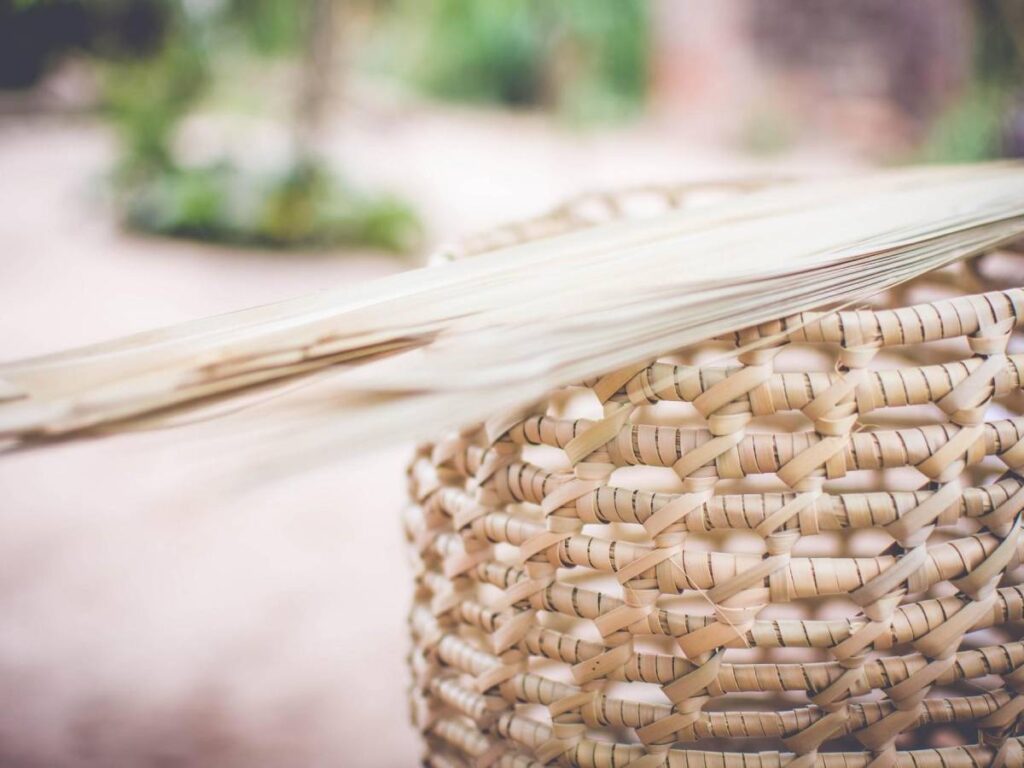
Photo: Gisela Curioni.
The work of the volunteers: to accompany without intruding
Pilar Cabré holds a degree in Geography and is a doctoral fellow at the National Scientific and Technical Research Council (CONICET). She has been working as a volunteer with Qom Alphi for three years and explains that her role in the project began as supporting “women artisans who were looking for ways to add value to their work for consumers.” “Initially, that was the goal. Later, we organized ourselves and expanded the scope of our activities, and we were able to address other aspects such as administrative and organizational issues, and the need for literacy training.”
“They recently completed a cooperative management course, and with that, we will continue to move forward so they can achieve full autonomy and manage all aspects of the cooperative; this also allows them to set prices and handle logistics with supplies, as well as relationships with buyers. The cooperative will give them tools in terms of the commercial side. While we, as community activists, provide other types of support, formally, the cooperative will serve that purpose,” he adds.
Sofía Novaira first became a volunteer with Qom Alphi as a graphic designer, intending to help promote the business. However, the whirlwind of the process transformed her role: she began handling client acquisition, orders, sales, and even the accounting for the entire operation. For her, this “is not just a business, it’s a project that takes women off the streets, values dignified work, ancestral knowledge, and strives for equality.”
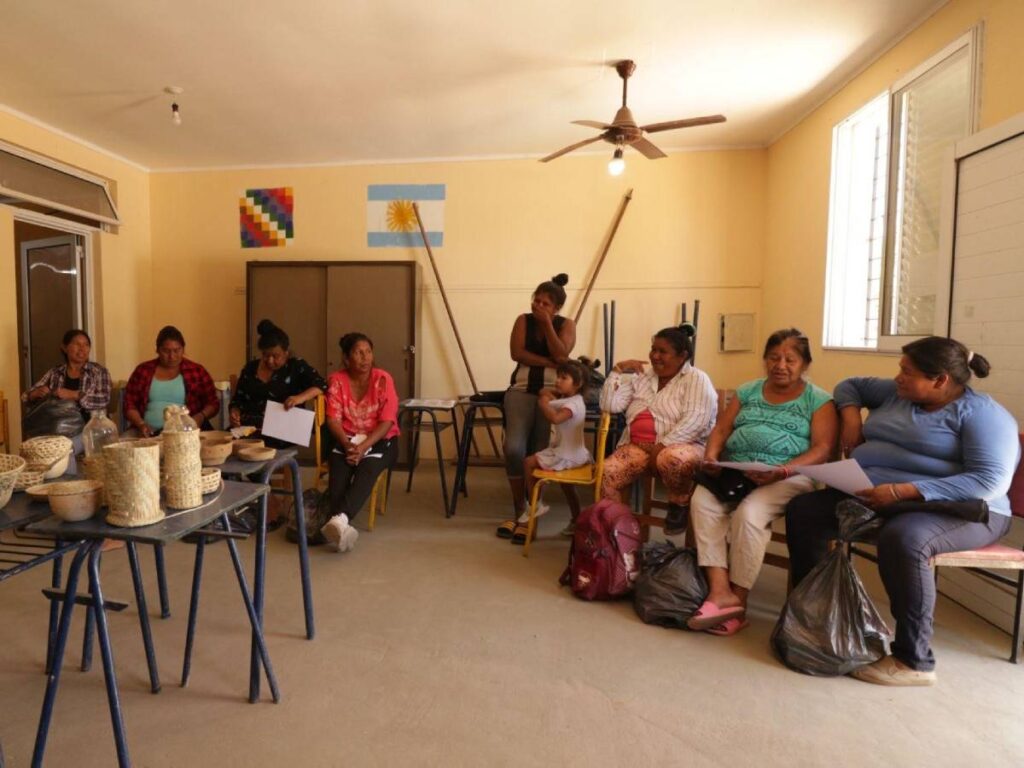
Photo: Qom Alphi.
Horizontality as a banner
The start of the COVID-19 quarantine was the peak sales period for the women of Qom Alphi, as the lockdown led many people to dedicate themselves to home decorating and restoration. “There were times when we couldn't keep up with the demand and had to stop taking orders because all the artisans were swamped with work. We would give them the designs we needed, and they would make them weekly and sell them. The orders would come in and sell within an hour. We always try to explain to customers that it's a completely handmade process, and that making them takes time,” Sofía points out.
“We also had to organize the palm leaves, because they always traveled to Chaco to get them. We were able to hire transport to bring them. That's when we started using bank transfers, to stop carrying cash. The pandemic allowed us to organize remotely, sending them orders via WhatsApp. We always try to establish a rhythm: the order is sent on Monday, they deliver the previous week's order on Tuesday, a taxi picks up the items on Thursday, they bring them to the shop, they check them, and on Friday everything is entered into a spreadsheet, checked to make sure everything is in order, and they get paid. This system was designed to order one item per day to avoid mixing up information, and it was super organized for them, giving them a routine and letting them know they'll get paid every Friday,” says Sofía.
The volunteer group is completed by Noelia Carrizo and Mercedes Carrizo. Noelia holds a master's degree in Economics and guided the entire group through the accounting complexities involved in forming a worker cooperative. Mercedes has a degree in Political Science, and her academic and professional background proved fundamental in understanding the scope, obstacles, and challenges of the social project they are part of. Furthermore, they all contribute to carrying out all kinds of operational tasks, such as scheduling appointments at ANSES (Argentina's social security administration) or applying for Progresar scholarships.
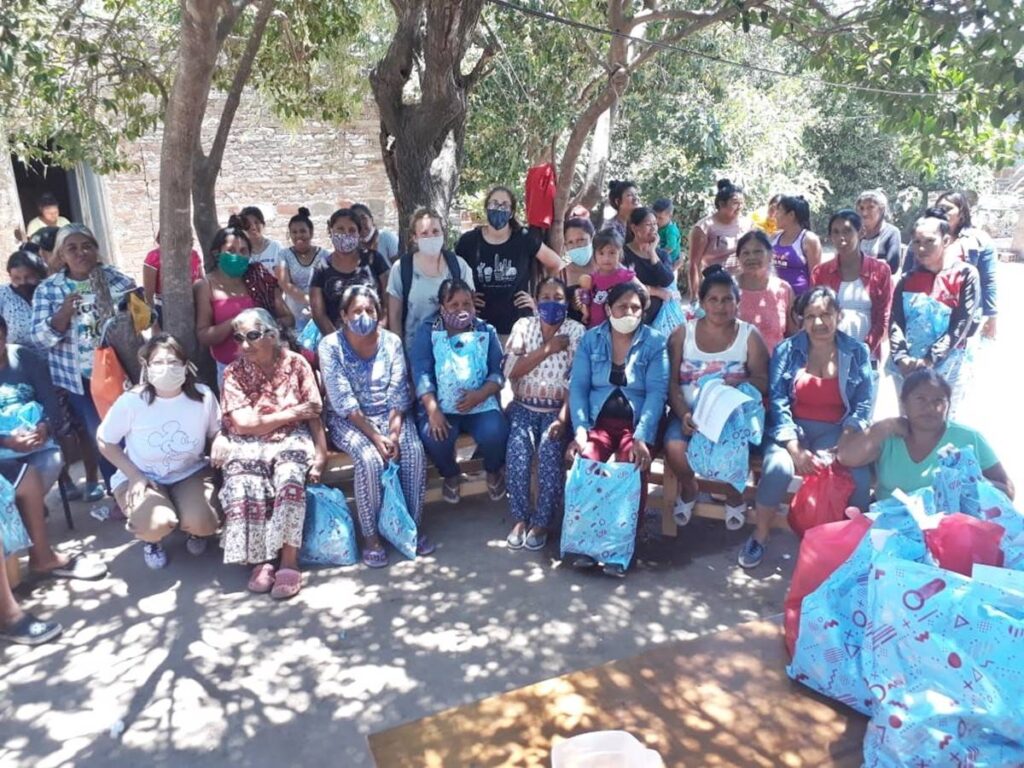
Photo: Qom Alphi.
Collective construction, always
Pilar reflects on the role of the volunteers as Creole women, with a cultural background distinct from that of the Qom women: “Our role involves supporting processes based on our abilities and knowledge. We are all women, and there is an implicit logic of care, of connecting as sisters, as companions. In that sense, I believe that the support is not hierarchical, even though it is difficult because we are in a social context biased by a colonial logic. I believe that we are achieving a collective construction of new knowledge, of new approaches, shaping a cooperative that responds to the interests of the women and allows for their autonomous development. My wish is that at some point we, the white, external Creole women, will step aside completely so that Qom Alphi can function on its own,” she concludes.
That desire is shared by the artisans. Marianela also expresses her wish that the cooperative will consolidate and continue to grow because, although they generally have many orders, there are also many members and sometimes there isn't enough work for everyone.
That's why she asks "for more customers" to buy everything Qom Alphi produces, and reiterates her personal commitment, which she shares with her colleagues, to ensure that the initiative continues to thrive and consolidate itself as an empowerment tool for the artisans who make it up.
Products manufactured by Qom Alphi can be purchased through the cooperative's Instagram account and at the point of sale located in the city of Santa Fe, at Rivadavia 3255.
We are present
We are committed to journalism that delves into the territories and conducts thorough investigations, combined with new technologies and narrative formats. We want the protagonists, their stories, and their struggles to be present.
SUPPORT US

FOLLOW US
Related notes


We are present
This and other stories are not usually on the media agenda. Together we can bring them to light.