

Qom spokeswomen, daughters of the pandemic: "Today I know what my rights are"
While most of the world was locked down due to the pandemic, Qom women from a neighborhood in Santa Fe went out, met each other, and organized against gender discrimination and the hierarchical power of local bosses. They challenge the State, which systematically excludes them. And they share their stories of transformation and struggle for rights.


Share

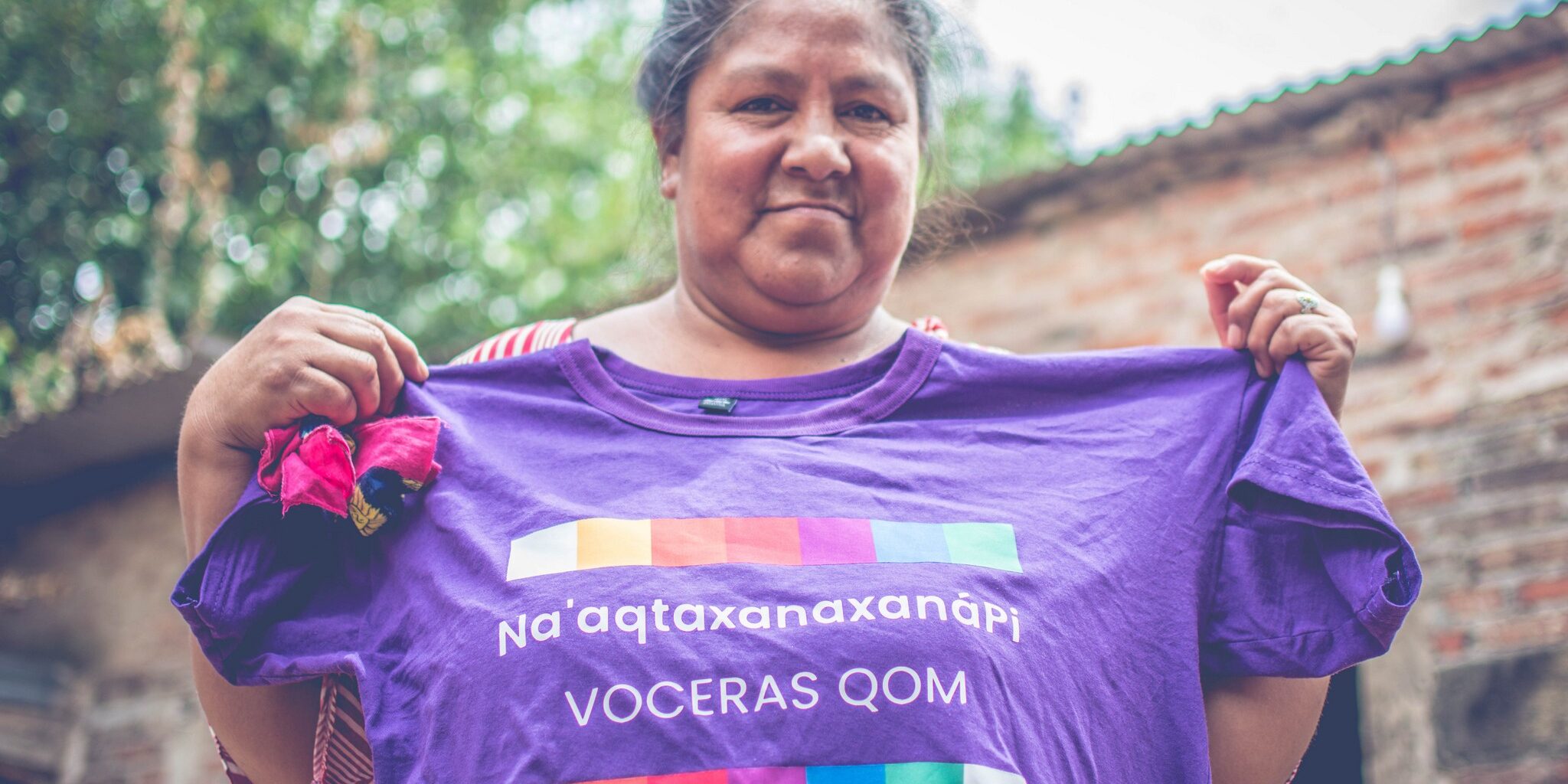
“I didn’t know I had rights before. Getting together with other women opened my mind.” This is the first response that comes to Estela Flores when asked about the significance in her life of the women’s circle in the Qom community, which originated in the Las Lomas neighborhood of Santa Fe in mid-2020. The circle also led to the creation of the “Voceras Qom” Civil Association ( Na'aqtaxanaxanáPi , in the Qom language) to formalize the process that some 30 women from this indigenous nation have been carrying out for a year and a half now in search of reducing the gender, symbolic, and economic gap that has marked them.
The Las Lomas neighborhood is located in the northwest of the city of Santa Fe, 10 kilometers from the center. There stands one of the largest Qom communities in the country and one of those that best preserves the culture, language, and ancestral traditions of this people. The community was formed starting in the 1980s, when families began to leave their homes in the north of the province of Chaco, driven by poverty and lack of work.
According to Pilar Cabré, a geographer who has been involved with this community for years, the scenario that led to the displacement of the Qom people was caused by the mechanization of the agricultural tasks they performed (for example, the cotton and sugarcane harvests). By the 1990s, these crops had been replaced by soybean production.
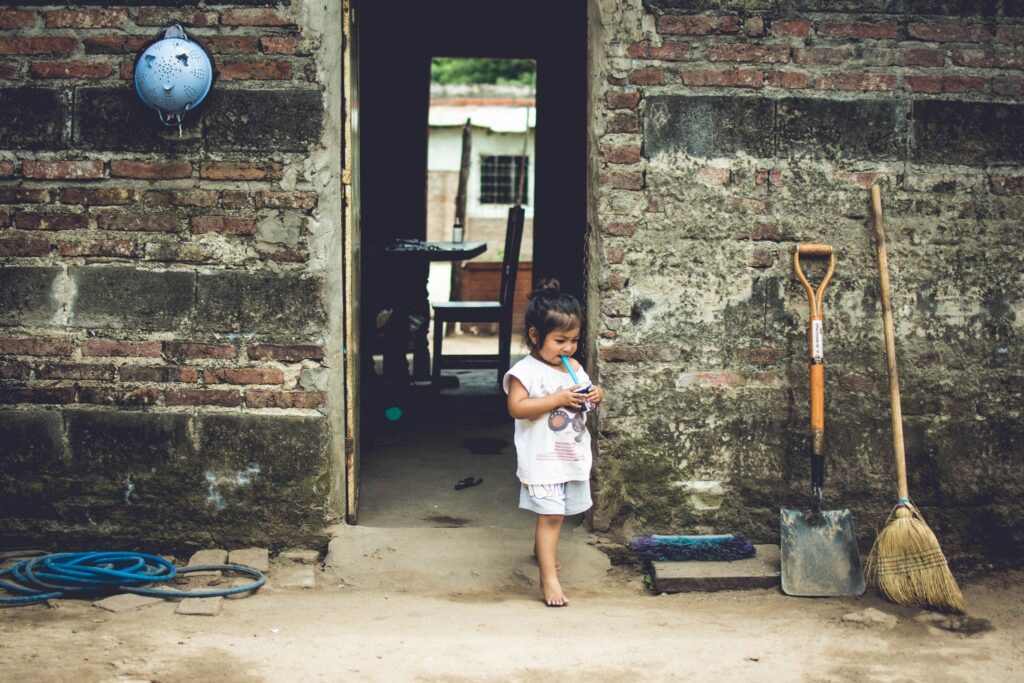
The images of the Las Lomas neighborhood reveal the numerous deficiencies its residents face. Most of the houses are precarious and too small for the several families crammed into just two or three rooms. Only the access road to the health center is paved; the rest of the streets are dirt and become impassable when it rains. Part of the neighborhood has access to running water, but there is no sewage system. Electricity does reach the neighborhood: most residents have legal connections, although others receive service irregularly. The accumulation of garbage in front of houses, on sidewalks, and in the streets is a public health problem.
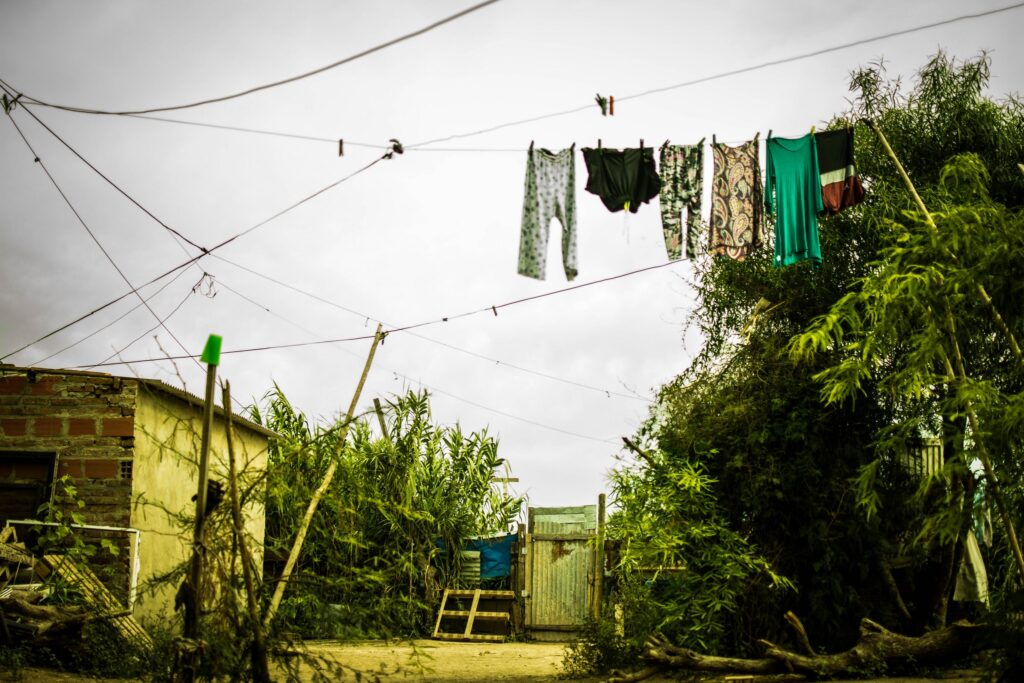
In mid-2020, a sanitation operation by the Ministry of the Environment of Santa Fe was one of the catalysts for the process that the women of the Qom community have been leading. In the midst of the pandemic, the cleaning of ditches and drains was crucial, and the importance of proper waste management to improve quality of life and prevent disease became evident.
In this neighborhood, most people speak Qom, and few speak Spanish. Faced with this situation, the ministry invited 10 women to be trained as “environmental promoters” to share information about the sanitation program with the rest of their community.
In those workshops, the women met for the first time. And one of their first decisions was what to call themselves. They called themselves “spokeswomen,” not “promoters,” because the latter word has no translation or meaning in the Qom language. As the meetings progressed, other issues related to structural inequalities began to emerge and be discussed: gender-based violence and discrimination, and difficulties in accessing health and education. The participants requested that the workshops continue even after the sanitation project was completed.
In that context, two workers from the Provincial Ministry of Equality, Gender, and Diversity entered the scene. They arrived in Las Lomas to support the process the women had already begun. They started organizing meetings on Wednesday mornings. The initial 10 spokeswomen were joined by other women from the neighborhood, and the group continued to grow, reaching its current 30 members.
Estela: “ I didn’t know I had rights before.”
Sitting in her backyard on a sweltering morning, one of those that Santa Fe residents know by heart, Estela slowly recounts the journey that took her from her native Chaco and brought her to Santa Fe. When she lived in Las Lomas, she dedicated herself to her family and her work, without asking too many questions. That's how it was until the beginning of 2020, when the coronavirus changed the world. " Before the pandemic, we women didn't get together, we didn't talk much. That's when we started to get to know each other and became friends, even the younger ones with the older ones ," she recalls, shooing away one of the many dogs that roam the property.
In their initial Wednesday meetings, the women began by talking about their work and everyday situations. At first tentatively, and then with the confidence that comes from friendship, they began to share their problems: conflicts with their partners or ex-partners, health difficulties, and other issues that particularly affect those living in poverty. For example, not having their children's documentation and thus being unable to access government assistance, or the obstacles they face when trying to complete any paperwork or file a report of gender-based violence.
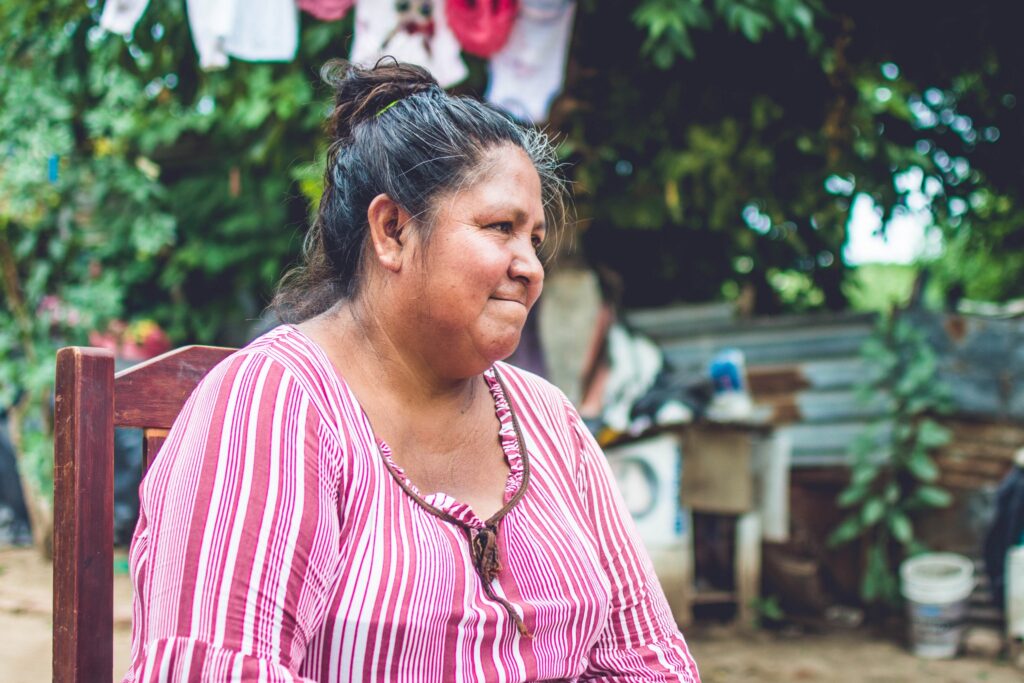
“Everyone has their own opinion. We’ve worked hard these past years, now they respect us more and even argue with us, because we divide things up. Sometimes we clash with our leader (chief) because we meet and he doesn’t accept that we get together, there’s always his rejection, what he’s doing is very sexist and they’ve even threatened us,” says the 46-year-old woman.
With a gentle voice, yet unwavering resolve, she says she can work and wants to. She also says that the local leader decides who gets new jobs, and women aren't on that list. “He told me I can't work because I don't have a husband. Women can work, we get ahead, we have two hands and two feet. There's always conflict, but we keep going, no matter what,” she asserts. And she highlights one of the many situations they face within a community that sometimes also expels them.
“This year we were able to go out and show ourselves. Negra (Urgorri, a worker at the Ministry of Gender) helped us to keep going, to learn about our rights, to open our minds. Before, I didn't know I had rights.”
Camila: “ The pandemic opened doors for us”
The women decided to challenge for power. One of them ran for the position of chief, historically held by a man . However, the threats and attacks she suffered ultimately led her to withdraw her candidacy and flee the neighborhood out of fear. Another woman decided to take up the mantle, Camila Quiroga. She overcame countless obstacles but didn't give up thanks to the support and organization of her friends, who even went to the Provincial Institute of Indigenous Affairs of Santa Fe (IPAAS) to help her succeed. They are certain that a woman could change the reality of the neighborhood, governing fairly and equitably, achieving progress and a better quality of life. In the end, she lost by fewer than 30 votes. Far from being disillusioned, their arms remain raised, linked together. The future is not negotiable, nor are rights.
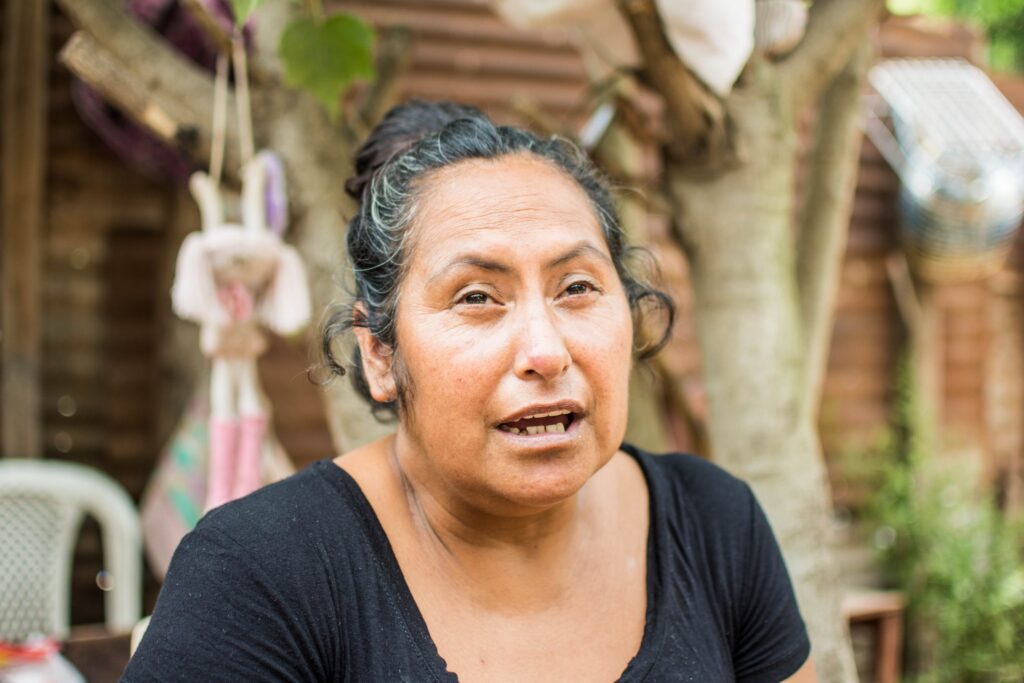
“It came from within me. I saw that the local leader wouldn't let us participate, because many young men and women who want to access a program are rejected. That's where the desire for change came from. In the end, they agreed, but they made my life impossible… I was right on the edge. It was about telling him that women can do it, that we're not the same as before. Before, I was a woman of the house, of the children, of crafts; today I know what my rights are. This all started when we began to get together. We are a product of the pandemic, which closed doors, but opened them for us ,” Camila explains.
She is convinced that a profound transformation of the state is needed so that Indigenous women can learn about and access their rights. She says that workers at all levels are not prepared to provide them with support and guidance; this amounts to another form of exclusion. “In places where we should feel supported, we end up crying, feeling bad for being Indigenous women when we spend our time talking about rights and equality ,” she laments.
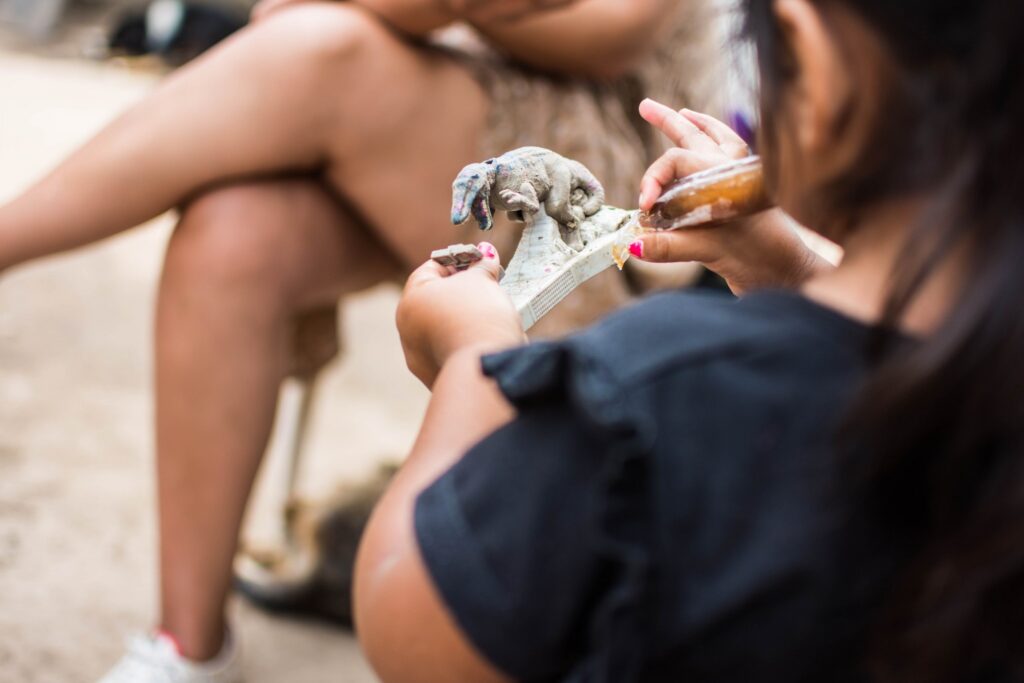
Gladis, Qom translator and future lawyer
Gladis Jara is 26 years old and until recently worked at the neighborhood health center as a Qom-Spanish translator . Her contract ended, and she is awaiting a resolution that will allow her to continue working. She acts as a liaison between the community and the various levels of government. At the very beginning of the pandemic, she spoke to the media to highlight that isolation in the neighborhood would not protect them if they were completely deprived of their rights. She affirms that her role as a translator is supported by the various groups that make up the community and that it is essential for her employment situation to be resolved soon because many people's access to healthcare depends on her.
Not only does she work as an interpreter at the neighborhood health center, but she is also called upon by the Iturraspe and Cullen hospitals when there is an obstacle in communication between the health personnel and the patients of the Qom community: “When the doctors see difficulties in attending to them, or when they notice that they did not understand the instructions, or it is necessary to ask for authorization from the families and explain the risks of an operation, they call me and I go to intervene and translate,” explains Gladis.
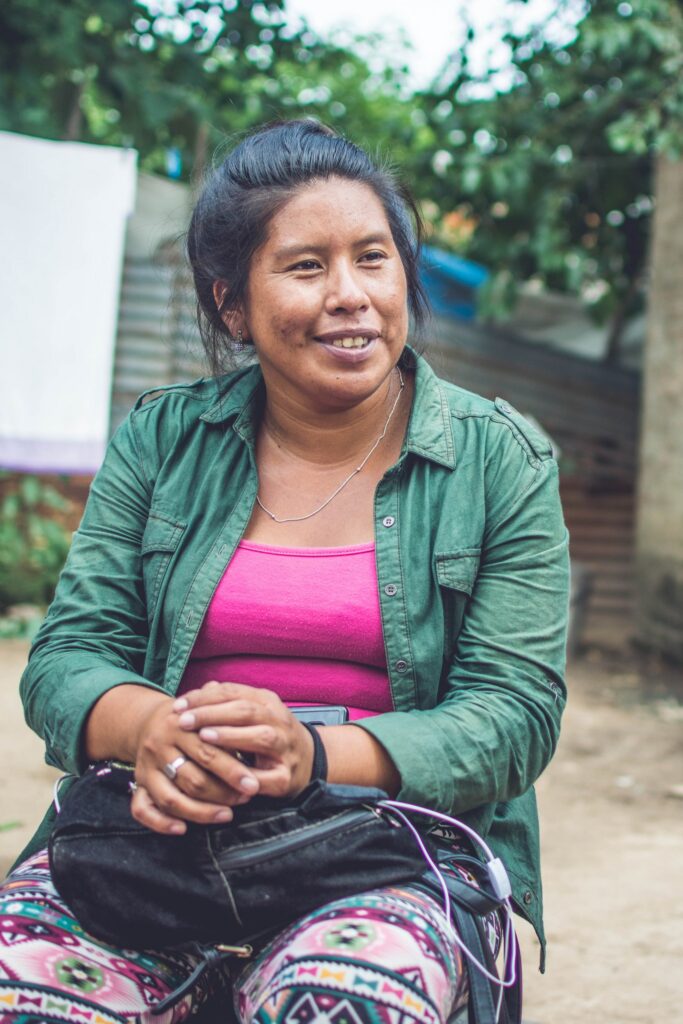
Since the women's meetings began, she says, "a lot of things have changed." "Basically, we're breaking with the community's norms. The dictates of the local political boss are a replica of sexism, patriarchy, and colonialism. That's why we've come together. Our cooperative is called 'The Organized Artisans.' We're all independent artisans, but we organize ourselves when these kinds of issues arise, like the closure of workshops. Small actions that challenge the local political boss, and that's what's really needed within the community: no more people saying, 'You can't do anything without my permission.'"
“Sometimes I try to correct them. I know that many locals tell us that we are role models in the community, and that's not the case. We are simply women in the same place as other women, but we think about what each one needs or what can be projected, what the benefits are for certain projects, and that is what we have been maintaining and replicating with other young people,” says Gladis.
A future law student, she will be the first person from her community to attend university. She explains that for any activity she wants to undertake, such as studying in her case, she would normally have to ask the chief for permission, but she won't: she will begin studying law this year at the National University of the Littoral (UNL).
Organized Qom spokeswomen
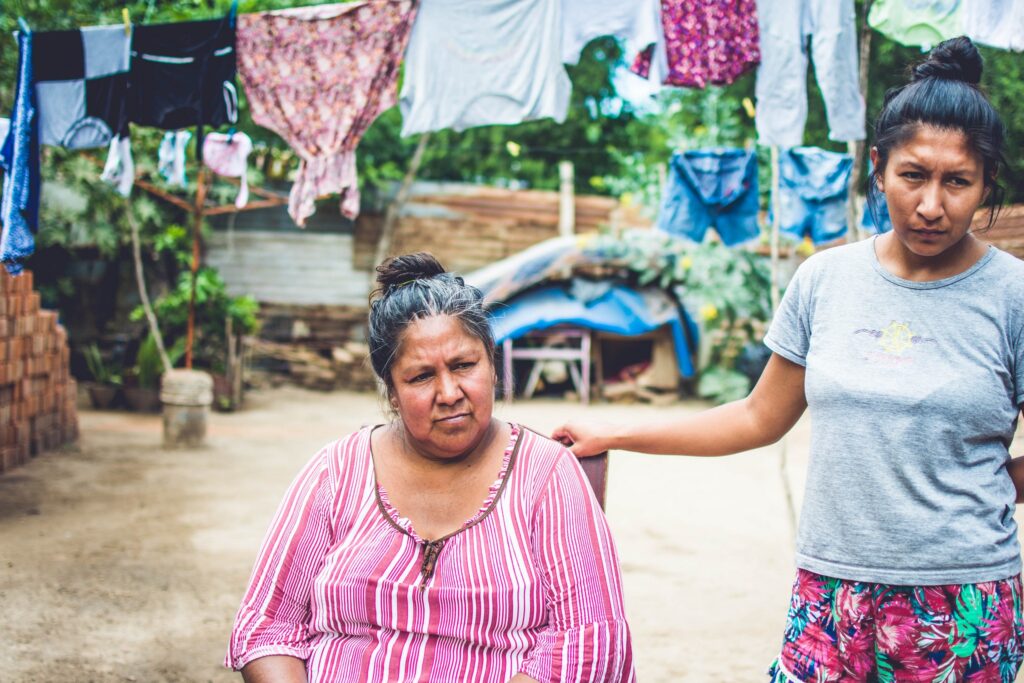
The learning experiences of the past few years have transformed each of these women. They not only want their voices to be heard, but they also seek improvements for their community and to create a safe space, similar to the one they have already established, but now backed by a legal structure. They are currently in the process of forming a civil association called “Qom Spokeswomen.”
The workshops they attend, accompanied by two staff members from the Ministry of Equality, Gender and Diversity, allowed them to learn about laws and how the state functions. They also learned about the community's bylaws and suspected they were tailored to the chief's preferences; they discovered that approving proposals at the assembly required a simple majority of 20%. “We wanted to start a soup kitchen; at first, the chief approved it, and then he rejected it. We gathered all 120 mothers, and he had to speak with each of them individually to explain why he wouldn't authorize it,” they recount, laughing. The soup kitchen was eventually established, but they gradually distanced themselves from it for various reasons, some related to the handling of funds. And now that they are no longer managing it, it only operates one day a week.
“We want to have a safe space for women, since some of them experience gender-based violence and substance abuse. We also want to offer workshops on the ancestral knowledge of our community. The community leader doesn't agree with these ideas; the old-style leadership used to think about the community, but that has become distorted, and now all they do is benefit themselves,” Gladis reflects.
"When the world shut down, they had to go out."
The two Ministry of Gender employees who facilitate the meetings are Miriam “La Negra” Urgorri and Agostina Tavella. Miriam has been working with women's groups for over 30 years, including many from Indigenous communities. She recounts the inter-ministerial work that led her to the Qom women of Las Lomas and says she is “fascinated and moved.” Approaching retirement, she chose a partner and successor: Agostina Tavella, or simply “Ago,” as she prefers to be called.
This is how they describe some of the activities they carried out in the Las Lomas neighborhood: “They asked us to teach them about the different levels of government, so we put together a worksheet and explained what the government was and even where each program was located, so they would know where to protest. But we also talked about sexual and reproductive rights, gender violence, and making care work visible,” they list.
La Negra says that when women unite, it generates “a fantastic empowerment process.” “It’s not idyllic, nor am I romanticizing it; it’s been very difficult to build and sustain the group,” she warns. “They themselves say they are children of the pandemic ,” says Ago. “ In the midst of quarantine, everyone was locked in their homes. They had to go out to feed their children, they started with soup kitchens and community kitchens, they began to organize themselves, and from there they never stopped . We work primarily on empowerment processes regarding rights, and everything is done by their own choice.”
Summarizing what they gained from these meetings, both women are moved by the achievements, emphasizing that nothing was imposed on them, but rather that it was an exchange, a learning process that bore fruit. “Before, they were very withdrawn, in their homes, and the group brought them into the public sphere and into the struggle for power. We accompanied them in that and witnessed their growth,” they said.
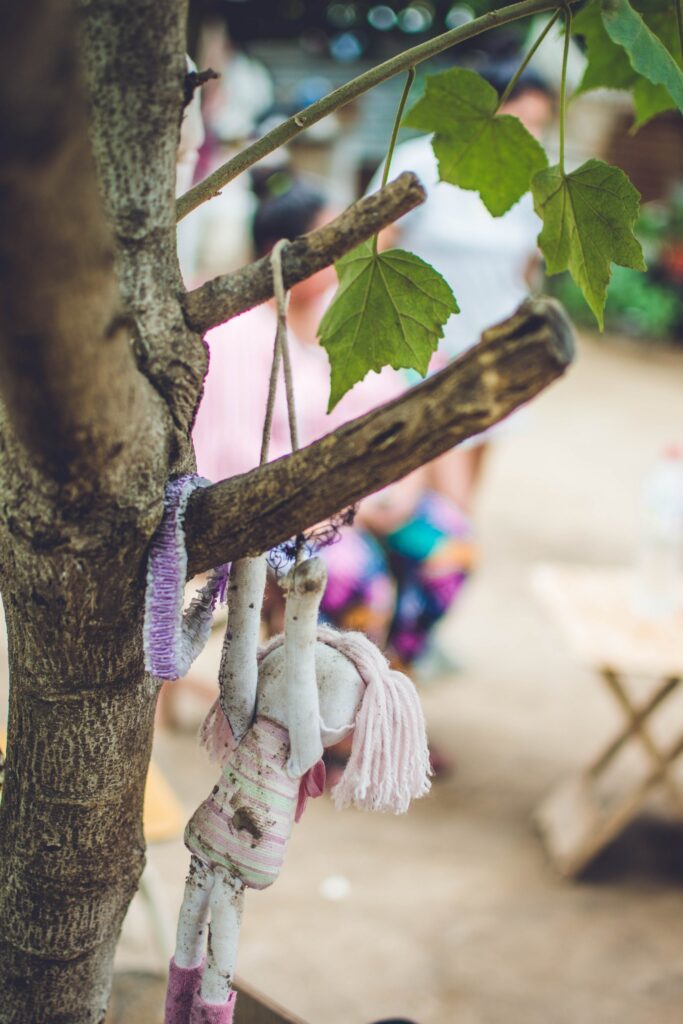
“We are the voices of those who were silenced”
Although many years have passed, the deep scars remain and resonate in the present of these women and their community. Like the open wounds of that July of 1924, when a massacre was perpetrated against the Indigenous communities, primarily Qom and Moqoit, in the Chaco region. It became known as the Napalpí Massacre. The Indigenous families lived in extreme poverty, plagued by hunger and exploitation.
However, they decided to rebel and protest against the conditions under which they produced and harvested cotton; they also demanded fair compensation and the right to work at other mills where they were offered better pay. They were punished and repressed by gendarmes, police, and paramilitary groups who, with firearms and airplanes firing from the air, ended the lives of nearly 500 Indigenous people.
This is how Gladis recounts it: “I always listened to my grandmother; she spoke of the 'iron birds,' and over time I realized she was talking about that massacre. She told me how they escaped to the mountains barefoot. That stayed with me, because history repeats itself in different times and forms. It's the same massacre; just as they were brave to escape, to survive, we must too. They are us; we are the voices of those who were silenced ,” she says without her voice trembling.
“The system is designed to exclude Indigenous women. They were the first to be enslaved, tortured, and raped; where was the equality for them?” she asks. And she warns: little has changed in almost 100 years. Violence and discrimination against women in the community persist today.
The women interviewed agree that they want to be remembered for their fighting spirit. “May what we are doing remain from today and forever,” Camila wishes, and she affirms that in the community women are now “seen and exist”: “ Here, no woman ever got ahead before, but we are the rebels who do everything ,” she says with a broad smile.
Gladis, brimming with pride, reflects: “We break everything thinking of others. What I'm changing will benefit someone else, the young people, the kids who are left out of the community. The organization itself leaves them out, and we're here to bring that group together; showing and encouraging them that they can come together, plan, and think for the community and everyone else.”
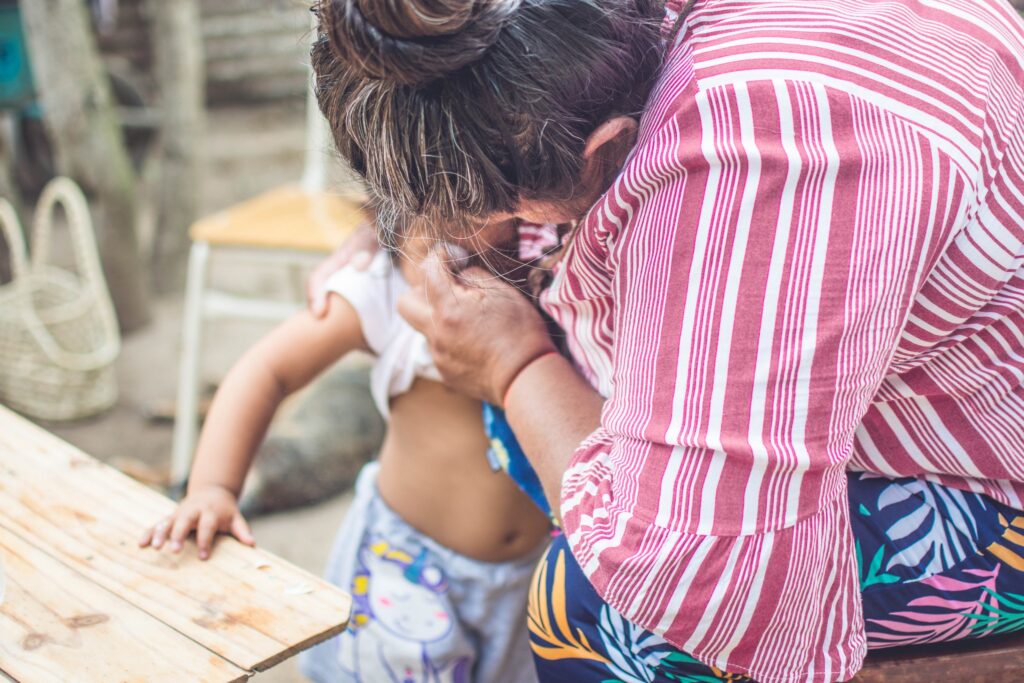
Estela hopes that her daughters and granddaughters “will continue fighting, that when they grow up they will apply what we are doing. That's what I always tell them, not to give up, to be brave when facing things. I found the courage; before I was alone, now I can speak out.”
The Napalpí Massacre, they say, is a story that resonates in the present, as they feel excluded by the State. This community, which lives in Las Lomas in the city of Santa Fe, continues to live in conditions of extreme poverty and vulnerability, not only economically, but also in terms of health, as was evident at the beginning of the pandemic. As they did almost 100 years ago, the Qom women decided to rebel, to fight for a better life. That will be the legacy they want to leave for future generations, so that one day the pain of an entire people will be an inspiration and so that the struggle will be transformed into rights.
This article was produced by a team from Periódicas through an alliance with Agencia Presentes.
We are present
We are committed to journalism that delves into the territories and conducts thorough investigations, combined with new technologies and narrative formats. We want the protagonists, their stories, and their struggles to be present.
SUPPORT US

FOLLOW US
Related notes



We are present
This and other stories are not usually on the media agenda. Together we can bring them to light.