

Xiomara Castro takes office with the support of feminism and diversity: she will have to confront the conservative elites
The president of Honduras takes office on January 27. Among the major challenges are eradicating hatred against the LGBT community and upholding a feminist agenda.


Share

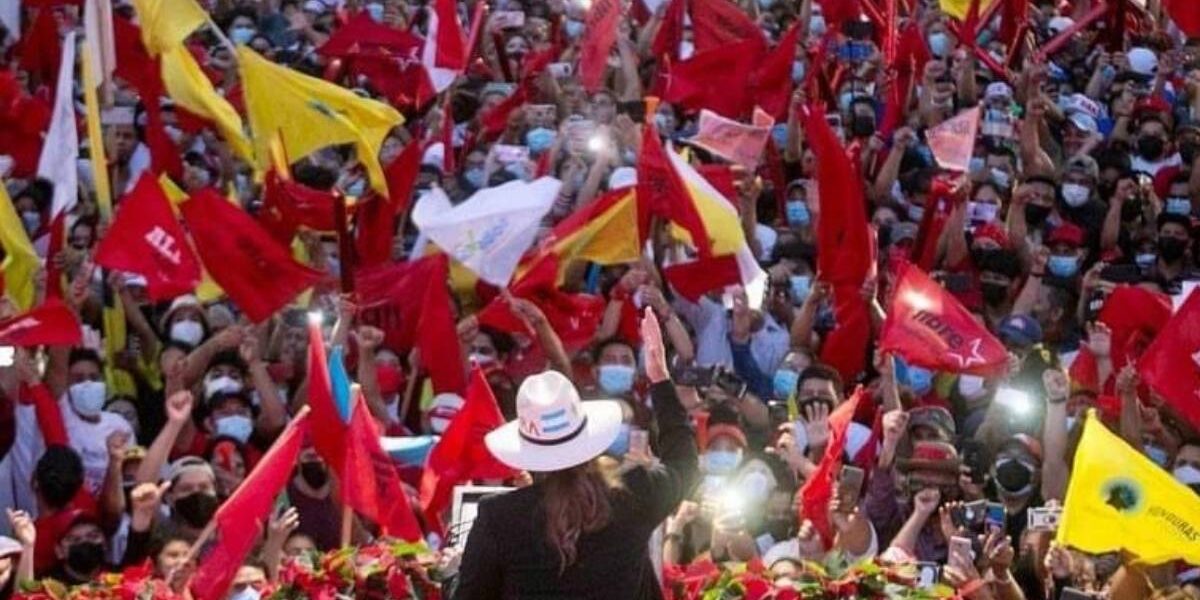
TEGUCIGALPA, Honduras. “A country in pieces” and “a great challenge” is what experts say Honduran President-elect Xiomara Castro when she takes office on January 27, 2022, in a ceremony that, according to spokespeople for the incoming government, will be much more austere than those of outgoing President Juan Orlando Hernández. The ceremony will take place just five days after a crisis within her party, the Liberty and Refoundation Party (Libre), in which she was challenged for leadership , generating chaos at the presidential residence and protests in the streets of Tegucigalpa.
Xiomara became president of Honduras on November 28, 2021, after winning with 1,716,793 votes. With a difference of 376,533 votes, the Libre candidate crushed her rival, the National Party candidate, Nasry “Tito” Asfura.
Thank you. One million, seven hundred and sixteen thousand, seven hundred and ninety-three Hondurans, certified by the National Electoral Council (CNE) with 100% of the tally sheets, placed their trust in me to change this dictatorship for a direct and participatory democracy. No more corruption! We are already working. 😉 pic.twitter.com/K2fxZhEUWj
— Xiomara Castro de Zelaya (@XiomaraCastroZ) December 20, 2021
Xiomara's landing
“A new story begins, a story that will be marked by this woman speaking to you, along with women and men committed to the people. Of course, we have a great challenge, but today I can tell you: I am prepared and I am ready,” Castro said upon receiving her credentials as the new president.
“The expectations of the Honduran population are very high, and the beginning of social conflicts is already visible due to the way the country has been governed during the last three nationalist governments, following the 2009 coup,” analyst and director of the media outlet En Alta Voz told Presentes .
According to Ramírez, “the crisis in education and health, unemployment, underemployment, and security will require specialized work teams to respond to all sectors demanding an end to extortion and improved healthcare, not only because of the pandemic, which was a hotbed of corruption for the nationalist government, but also because of the inhumane conditions in which hundreds of thousands of Honduran families live.”
Xiomara Castro is the wife of Manuel “Mel” Zelaya, who was overthrown on June 28 by a coup d'état imposed by the de facto government headed by the transport worker Roberto Micheletti, of the Liberal Party.
Micheletti was only at the head of the government for six months and after his departure there followed 12 years of nationalist government, considered by its critics as illegal, since it occurred as a result of a coup d'état.
A milestone in the history of Honduras
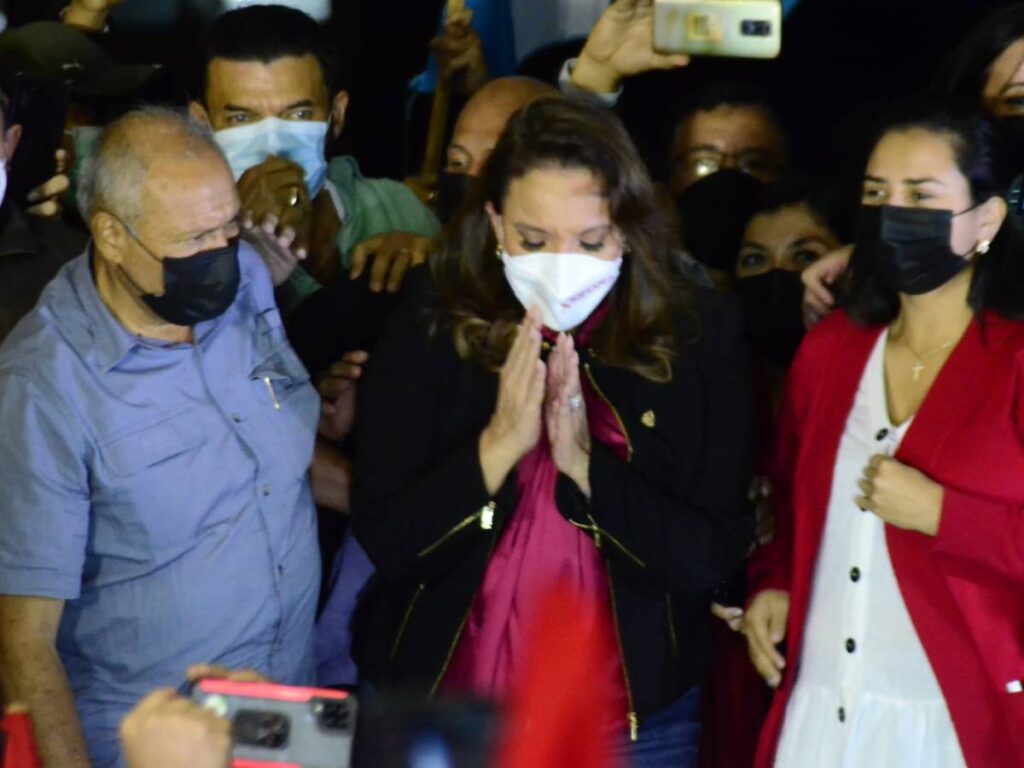
With Xiomara's victory, at least three important milestones in Honduran history have been reached. First, it abruptly ends 12 years of rule by the National Party, which was mired in corruption scandals and narco-government .
“Xiomara is aware that LGBTQ+ people also supported her presidency,” Esdra Sosa of the Arcoíris Association Presentes . “We voted for her. We tried to end the dictatorship that for 12 years marginalized and excluded various social movements, but we are confident that she will bring about change.”
Secondly, with Castro, a center-left party came to power, ending the two-party governments that had determined the fate of Honduras throughout its history.
And finally, a woman becomes president, thus also dismantling the idea that only men can lead Honduras.
On the other hand, Mel and Xiomara are one of the few married couples in the world who have both become presidents of a country.
With Xiomara's rise to power, vulnerable communities in Honduras, women and LGBTIQ+ people, hope for a change that will divert the country from the path of corruption and shame that, according to the opposition, the National Party rulers have led it down for more than a decade.
However, for the new president to achieve what women and diverse populations expect of her, it is necessary to confront the country's problematic reality and a series of challenges that at first glance seem as high as a mountain.
The reality: a country mired in misery
Xiomara Castro inherits a country devastated by the coronavirus pandemic, two hurricanes, countless corruption scandals, and 12 years of nationalist government.
Even without considering the scandals and drug trafficking, the current national reality is already so harsh that any president faces terrible problems, difficult to solve in just four years. And even less so in the traditional "100 days" when voters expect the first positive results for the country. Xiomara is facing decades of backwardness and poor governance.
That is, in fact, the widespread view: that during her term Xiomara will hardly fulfill all her campaign promises.
“All of this cannot be achieved in one, two, or three months,” says Luis Velásquez, sociologist and professor at the Regional University Center of the Atlantic Coast.
"But I believe that the foundations can be laid during the president's four years in office for the country to move towards a path of respect for human rights."
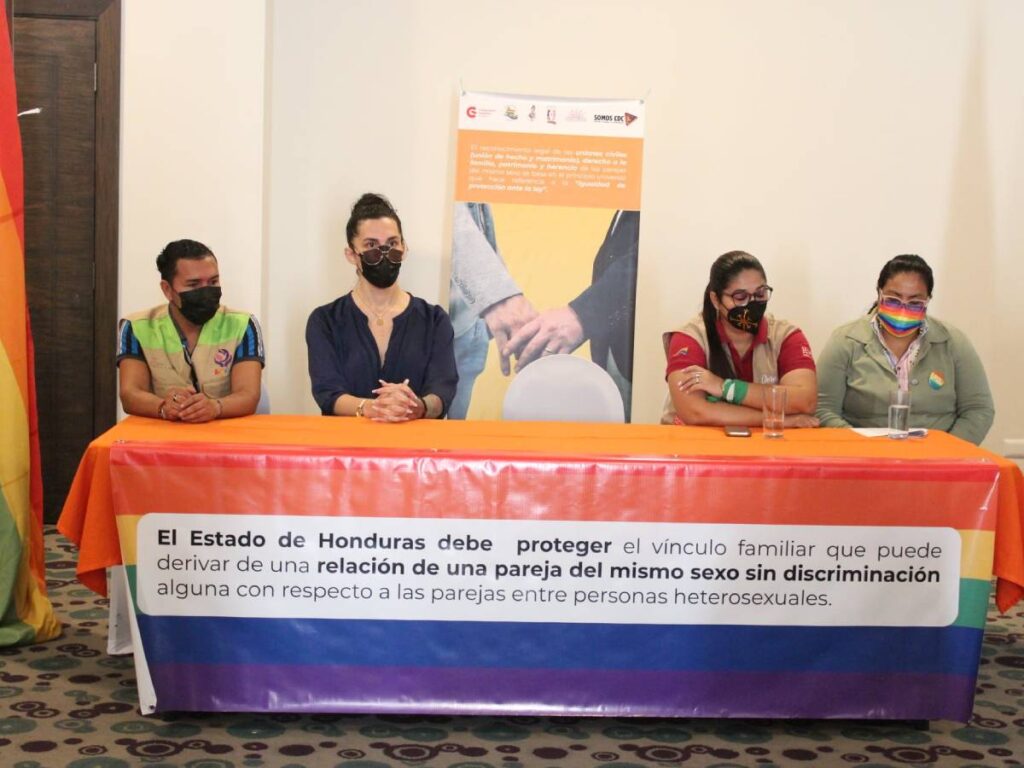
However, for Esdra Sosa, “talking in public is not the same as putting it into action.” She adds that Xiomara “is inheriting a country in pieces” and that vulnerable populations have “many basic needs” that bipartisan governments have failed to address. On the contrary, “they have taken away people who risked their lives defending the rights of LGBT people.”
As of 2022, more than 400 LGBTI+ people have been murdered. A total of 318 women were murdered in Honduras in 2021 , which equates to one violent death every 27 hours and 33 minutes in the country.
“In these 12 years, the nationalist government promoted hatred toward this population, in addition to the crimes against the trans population that continue with impunity,” says opinion leader Kevin Contreras . “The few victories that have been recognized for the LGBTIQ+ community have come at the cost of lives.”
One of the challenges: fighting against hate
Xiomara Castro will find herself, starting on January 28, the first day of her term, with "a bankrupt country, with empty coffers," says Vanessa Siliezar, the director of the Comprehensive Development Unit for Women and Families (Udimuf) , a lawyer who has supported feminist struggles in the country for 20 years, especially on the Atlantic coast (Udimuf's headquarters are located in La Ceiba).
The country that the new president is receiving, Siliezar adds, is “plunged into the greatest inequality and the most historic level of poverty.”
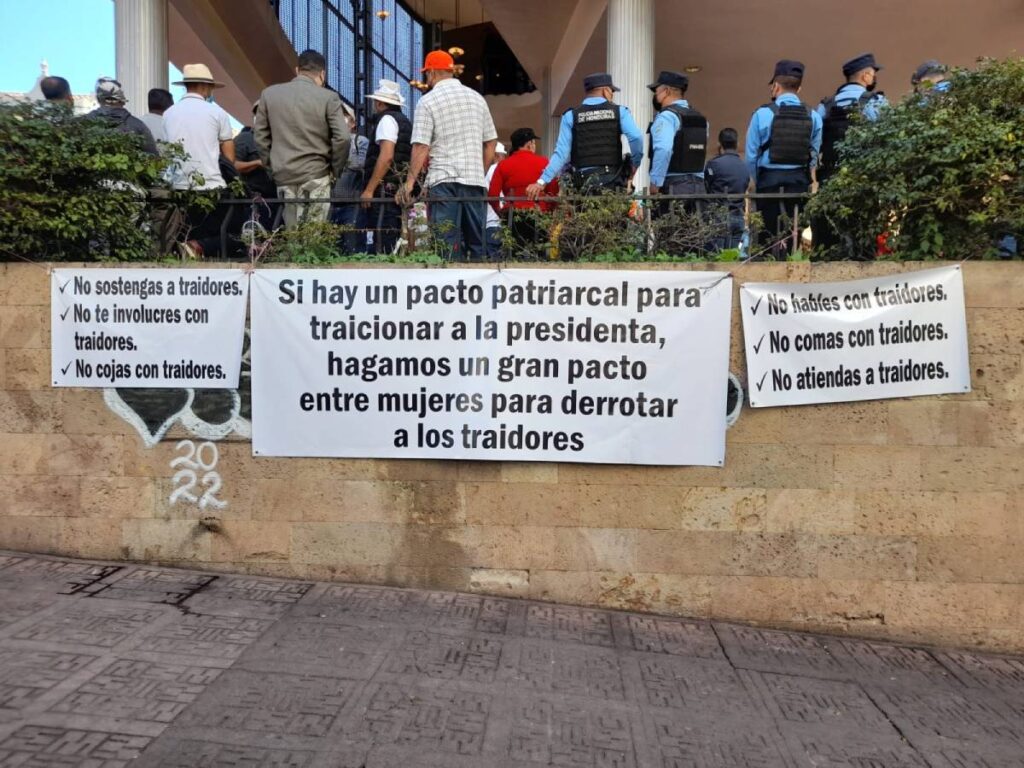
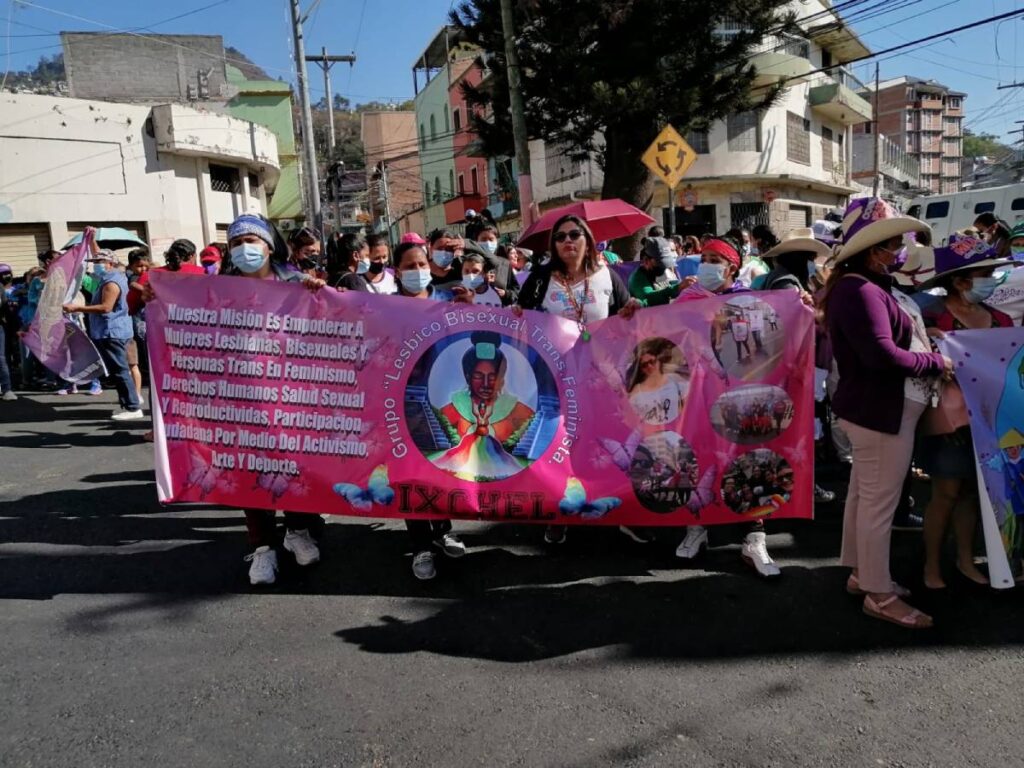
The reality for young people in Honduras consists, among other things, of a constant struggle against a “conservatism” that prevents them from expressing themselves and being who they are. “The persistent commitment to conservatism cannot be changed or combated by decree,” says Christopher Castillo, a young LGBTQ+ activist.
Castillo is known for his involvement in defending the territory and opposing the ZEDEs (Special Economic Development Zones). Due to his outspoken criticism of extractivism, the controversial development zones known as ZEDEs or model cities, and the policies of the nationalist government, Castillo was attacked in October, forcing him into hiding for months to escape death.
Hate speech from conservative circles is one of the biggest concerns for Castillo and other diverse leaders in Honduras. For them, one of the most alarming experiences was the speech given by President Hernández himself on September 15, 2021 , in which he called LGBTIQ+ people and abortion rights advocates “enemies of independence.”
Castillo states: “It is not a law that will remove that installation of hatred from people's minds.”
“This isn’t going to change so quickly,” says Vanessa Siliezar. “Difficult times are coming for the president. We hope the people will be patient and understand that it won’t happen overnight.”
Despite her cautious optimism, the director of Udimuf points out that Xiomara's party, Libre, does not have a majority in Congress. This circumstance, she adds, will hinder the achievement of reforms to change "this level of impunity that has been fostered" within the legislative body.
The challenges: achieving change in four years
During the 12 years of what many call the nationalist “narco-government,” institutions lost credibility. Scandals and incompetence plagued most state bodies, from the presidency itself to the police, including health and education agencies and the justice system.
In addition to the loss of credibility of its institutions, Honduras is mired, according to Lourdes Ramírez, director of the digital media outlet En Alta Voz, in a crisis of “health, education, unemployment, underemployment and security”, while “hundreds of thousands of families” live in “inhuman conditions”.
“Restoring the institutional integrity of the State and the separation of powers is perhaps the biggest challenge for the new government, and it is something that cannot be achieved in 100 days,” says Lourdes Ramírez.
To achieve the changes, according to sociologist Luis Velásquez, Castro needs to be "let to govern," to be allowed to "truly exercise the authority of the Executive Branch, to make decisions."
This is a huge challenge, since, according to the expert interviewed by Presentes , the group surrounding the new president is "mostly composed of men, from relatives to advisors."
An agenda for women
With Xiomara Castro's rise to power, the landscape appears to be shifting for women. After 68 years of women's suffrage, Honduran women have faced invisibility and gender-based violence. But with the new president, winds of change seem to be blowing.
Among the issues that cause the most harm to women in Honduras are the lack of access to health care, emergency contraception pills, and the right to choose.
“It’s been 200 years since we became a republic. However, for 66 years women have been putting themselves on the line to ensure we get to where Xiomara has gotten,” says Vanessa Siliezar.
The new government faces challenges not only in the field of women's rights, but also regarding diversity rights.
“It is urgent to create political conditions that favor countercultural struggles, and to stop state aggression against LGBTIQ+ people,” says activist Christopher Castillo in an interview for Presentes .
Creating policies that benefit diverse groups is a pending task for the new government. This would help heal, to some extent, the wounds of the LGBTIQ+ community, which has accused the administration of Juan Orlando Hernández of being “involved in many crimes,” Castillo points out. However, he adds, “it has almost never acknowledged its responsibility and complicity.”
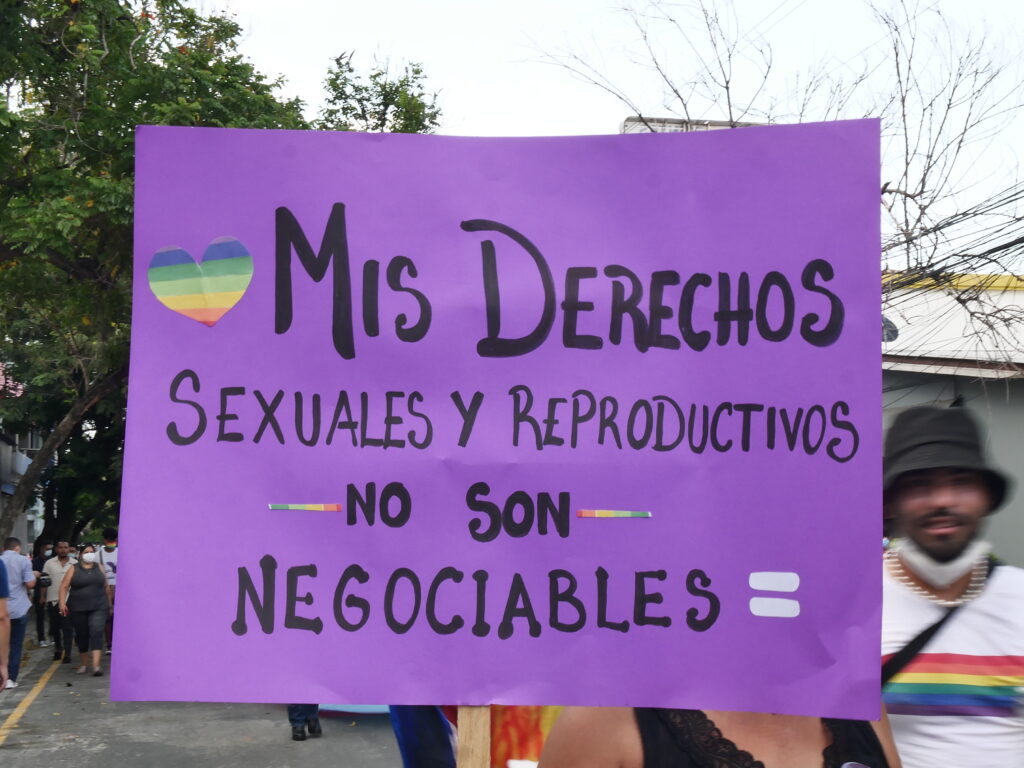
“The new government faces challenges due to the vulnerability of the LGBTIQ+ population due to labor discrimination [and the rights to] education and reproduction that have been violated for decades,” says Kevin Contreras.
Contreras lists among Xiomara Castro's pending tasks the recognition of the human rights of diverse groups, gender identity, and marriage equality. Furthermore, according to the activist, now more than ever, the State needs to promote sex education and protect displaced persons.
“The vote of confidence towards a woman is the handshake that the LGBTIQ+ population has placed in a government where homophobia, sexism and exclusion are not practiced.”
Hopes and solutions: more political participation, less corruption
For women's rights groups in Honduras, Xiomara's victory represents a unique opportunity for new gains. After women achieved suffrage in 1954, the election of a woman to the presidency is the most significant milestone in the history of women's participation in Honduran politics. Feminist leaders are overjoyed.
“I feel encouraged and, above all, hopeful,” says Vanessa Siliezar, director of Udimuf. “The possibility of achieving political rights was raised between the ages of 40 and 50. We were told no more than four times. To date, only two women have run for office: Nora Gúnera de Melgar and Xiomara. Let's remember that only 14.1% of women have had effective political participation since 1981.”
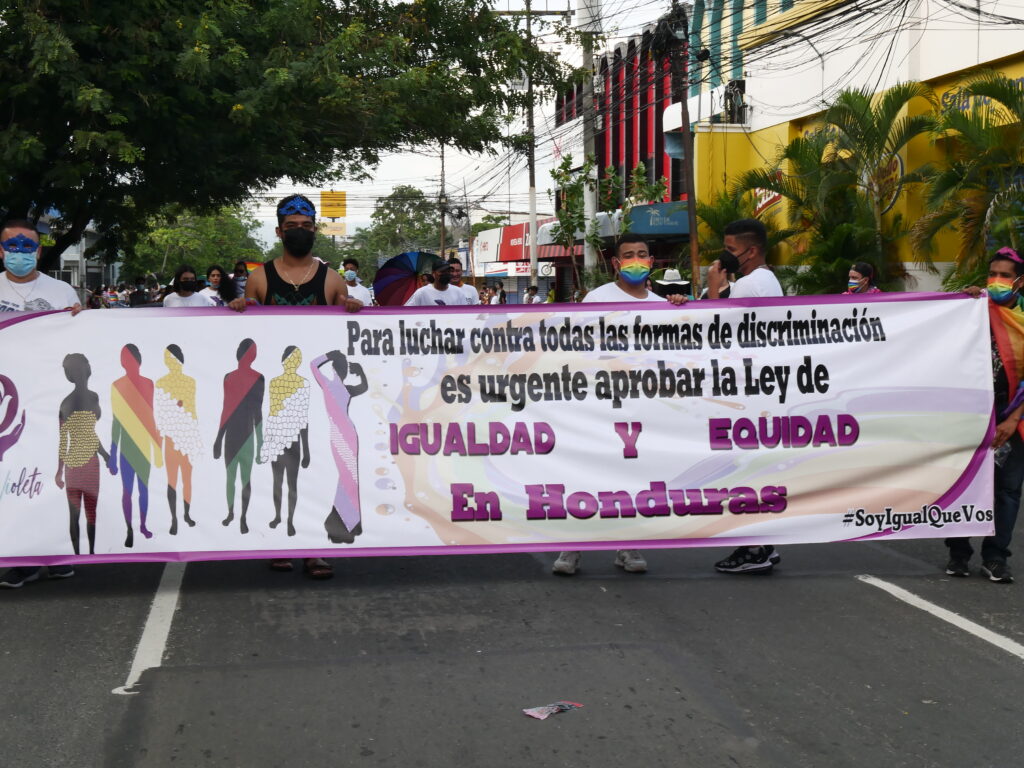
Diverse communities are also waiting to see what happens. Although, according to LGBTIQ+ leader Esdra Sosa, they don't expect the new government to fulfill "100% of the LGBT proposals," they are confident that the government will at least review them and try to incorporate them.
If there's one thing LGBTQ+ groups are certain of, it's that the fight continues. "Not only to continue what we were already proposing, but to go for more," says Christopher Castillo.
How to deal with this government
The possible solutions for this new government, Castillo says, have to do with the ability to propose “deeper changes with the territory, that have to do with life, that go beyond a campaign, an action on social networks and a forum.”
Another solution proposed by experts is the nomination of professionals and leaders with proven efficiency and honesty to the country's top leadership positions. Hondurans voted against the nationalist government because they are tired of officials implicated in all kinds of illicit acts, including the plundering of institutions like Social Security, drug trafficking, and abuse of power.
“Xiomara Castro must assemble the most qualified people to accompany her in the administration of the government,” says journalist and director of En Alta Voz, Lourdes Ramírez. “It would be a mistake to appoint people based on friendship or political activism who lack the merit to face the multiple challenges she inherits from a government that leaves Honduras with the worst rates of corruption, poverty, migration, violence against women, and impunity.”
The time for diversity
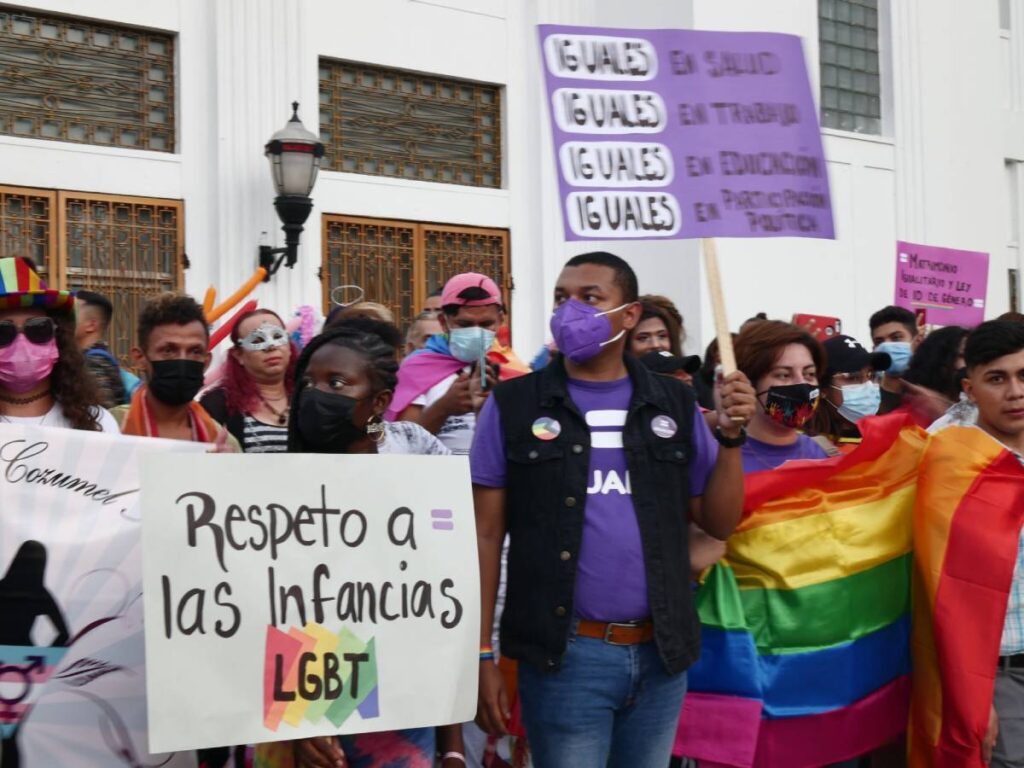
Christopher Castillo hopes that with Xiomara there will be "spaces for coexistence so that culturally there is greater understanding about dissidence and great diversity, not only sexual."
mainstreaming human rights is one of the important tasks the new government must undertake . To achieve this, he adds, it is necessary that “all actions of the government and public institutions,” from “a human rights perspective,” include everyone: women, Afro-descendants, land defenders, people with disabilities, and people of diverse sexual orientations and gender identities.
Honduras is in crisis, despite the false optimism of the pro-government media. The crisis encompasses all sectors of society and all public institutions. Mitigating the effects of this crisis is undoubtedly the most difficult task facing the incoming administration.
According to Lourdes Ramírez, the hard work ahead requires “specialized teams” to stop extortion, provide health care, achieve quality of life for the population, rebuild the social fabric, respect the right to life and human rights, offer quality education and employment options to children and youth.
“We must unite,” adds the award-winning journalist, “with our sights set on another possible Honduras, equitable, equal, without discrimination against anyone.”
We are present
We are committed to journalism that delves into the territories and conducts thorough investigations, combined with new technologies and narrative formats. We want the protagonists, their stories, and their struggles to be present.
SUPPORT US

FOLLOW US
Related notes


We are present
This and other stories are not usually on the media agenda. Together we can bring them to light.