

What are asexuality, graysexuality, and demisexuality?
The boundaries and terminology surrounding sexuality and self-perceptions are expanding. In this article, we'll explain some of these concepts.


Share

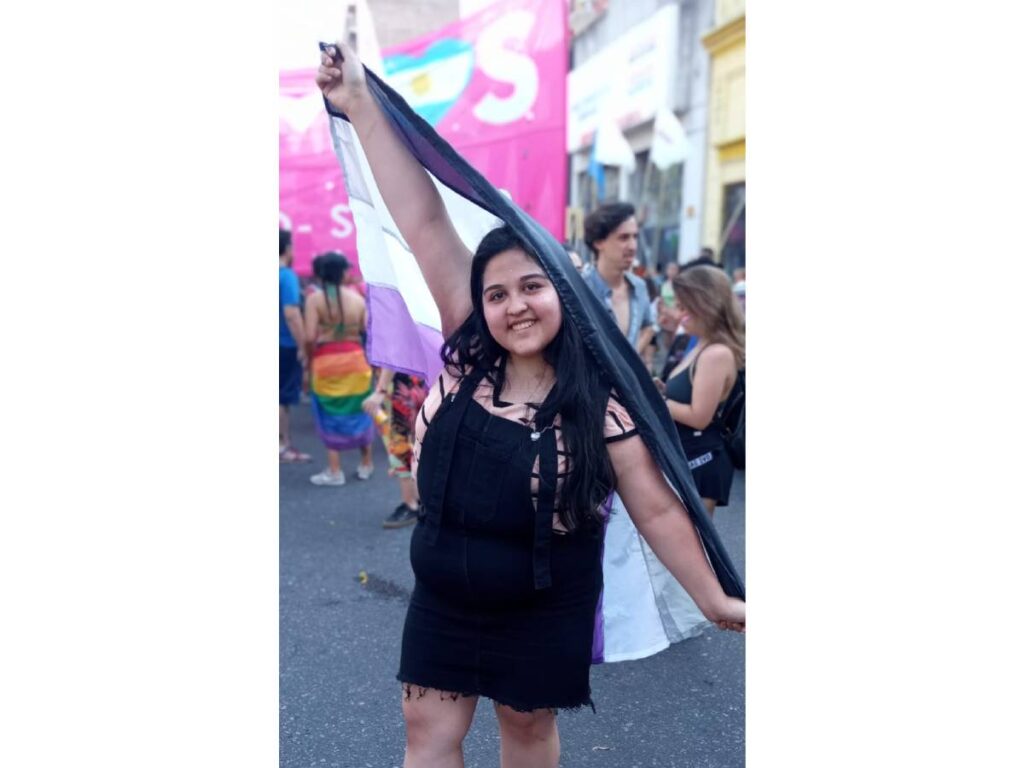
BUENOS AIRES, Argentina. In 2018, Flavia Herrera, 21, from Rosario, Argentina, decided to publish on her personal Instagram account explaining what asexuality is.
Shortly afterwards, a classmate from her high school and president of the student council contacted her asking for permission to print the plaques and stick them on the walls of the school.
Following this action, two people wrote to Flavia privately.
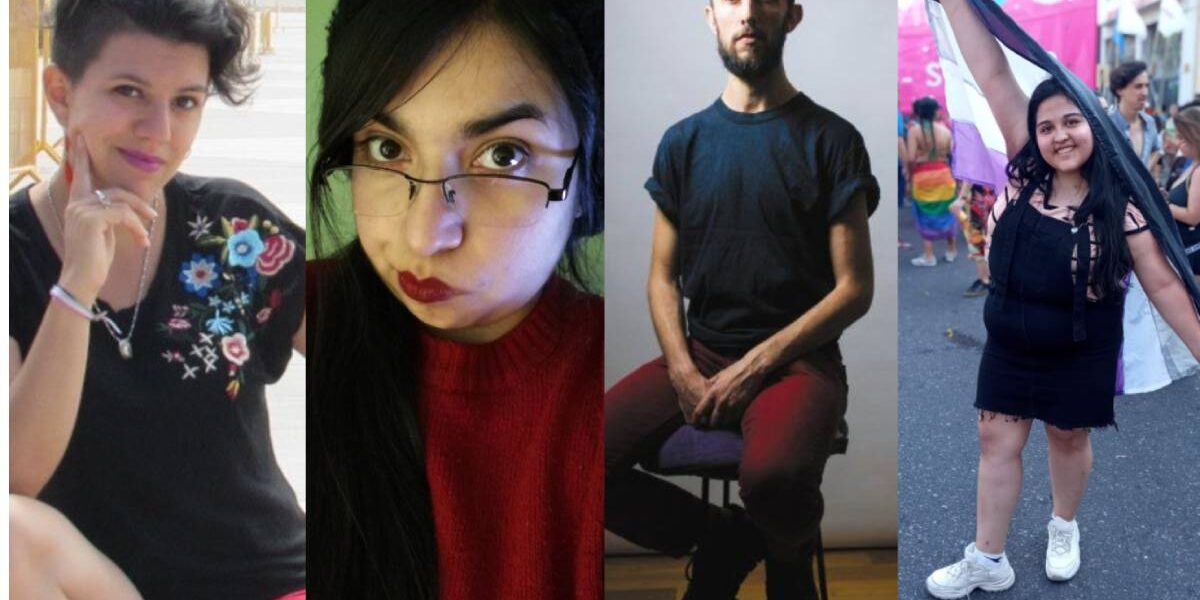
“Two people from that same school contacted me, telling me they were also asexual and thanking me for doing this. That's when I realized how important it is to share this information, because it can help people connect with each other, and on the other hand, it made me feel good,” Flavia tells Presentes . The activist works as a domestic employee, wants to study journalism, and is active on her account “ I'm Not Asexual ,” where she provides information about asexuality.
“They are spectra that include different experiences”
So, what is asexuality?
“Asexuality is defined as a sexual orientation in which one feels little or no sexual attraction. Something similar occurs with aromanticism, but in relation to romantic attraction. These and other attractions don't necessarily go hand in hand. That is, not all asexual people are aromantic, and not all aromantic people are asexual. Both asexuality and aromanticism are spectrums that include different experiences ,” explains Gabriela Soto, 25, an asexual and gray-romantic from Santiago, Chile. Soto is also a psychologist and a member of the board of directors of Ases y Arros Chile (Ases and Arros Chile ).
Mel (25) is a sex worker and educator, as well as a non-binary trans activist, fetishist, and neuroqueer. For him, “ there are many people who experience possibilities that are not found within the framework of allosexuality .” The latter term refers to those people who are part of the norm in terms of sexual attraction , that is, people who experience desire and sexual attraction to others.
“Within the spectrum there are millions of possibilities: from people who experience sexual attraction after having a bond with someone, whether friendly, romantic, platonic, etc.; or feeling sexual attraction whenever you don't know a person and losing it when you start to get to know them; only feeling romantic attraction; or only feeling sensual attraction,” says Mel.
She points out that these sexual and romantic orientations are ignored or pathologized because there is a tendency to think of sexuality as something "monolithic", which is found "in a framework of naturalness, of what is expected, of what is healthy and not feeling it is considered an illness" .
The fanzine “ Asexuality. A small guide ”, which comes in two volumes and was produced by Kinky Vibe , a cooperative and sex shop dedicated to disseminating information on sexual health, and Tallarines con Tuco, opens up the range of different sexual and romantic experiences that exist, and defines some of them, such as graysexuality, demisexuality, aromanticism and fetishism.
“Just as when we talk about asexuality and aromanticism we are talking about a spectrum in which, while one can feel no attraction, sexual or romantic as appropriate, one can also feel little . When we talk about the “gray” area (graysexuality and grayromanticism) we are referring to that spectrum where one can feel attraction, but with low intensity compared to the norm and what is socially expected, in the face of certain characteristics, in very specific situations or that last a short time,” explains Gabriela Soto.
Lucas “Fauno” Gutiérrez, a journalist from Argentina, HIV+ activist, and gay man, identifies as “demisexual,” which he describes as “feeling sexual attraction when a connection is formed.” “It could be that you show up with a flag of that band, or you come up and make a funny comment that I find cool, or that I know we like the same things in terms of politics or cartoons,” he explains, adding: “That connection is what connects me and generates my sexual attraction.”
Lucas found it “very helpful” to identify as demi because he believes he was “constructed with a very 90s-style Comprehensive Sexuality Education (CSE) where gay men only wanted to have sex with everyone.”
Thus, in his coming out of the closet from heterosexual to non-heterosexual, he wondered: “Don’t we faggots like all this? Why is it that I don’t? Why don’t I have that same desire to want to fuck everyone?”
“Suddenly, in demisexuality, what I found, more than an answer, was a pivot, a place to see that there are other people who live their sexuality in this way ,” he summarizes.
Many people on the asexual spectrum consider their sexual orientation dissident because it deviates from the norm . In this sense, Flavia struggled to understand herself in this way. “Within the LGBT community, there’s a question of whether we belong or not because there are heterosexuals. Now I’m beginning to understand myself as dissident and that I’m not actually part of the norm,” she tells Presentes .
For Gabriela, “one of the beautiful things” about recognizing oneself in this way “is having the possibility of also looking for other ways of connecting and socializing, considering that these are norms that are socially imposed and that we are raised within them.”
What myths exist about asexuality?
In addition to thinking of (a)sexuality as a spectrum, activists focus on dismantling the myths that exist associated with asexuals : that it is a phase, that they do not have sex, that they do not want to have a partner or start a family, that they are strange, lonely, how can you enjoy life, that it is because you are a virgin or because you have not yet found the right person.
“One of the biggest myths about sexual orientation is that asexuals don’t have sex, that we’re antisocial or sex-repelled, and that’s simply not true. There are asexuals who are sex-positive or sex-indifferent and who have no problem having relationships ,” says Ainhoa Ruiz Verdugo, 35, a Mexican asexual, panromantic, and sex-positive activist, as well as an epic fantasy writer and digital entrepreneur.
“Also saying that such a thing doesn’t exist, that it’s just a phase, that you just need to meet the right person. In my opinion, saying that last phrase shows a lack of understanding of what we mean when we talk about asexuality and aromanticism. It has nothing to do with who we want to connect with sexually and emotionally, but rather how we experience sexual and romantic attraction,” Gabriela adds.
And she adds that “another very common idea is to talk about trauma, to say that it’s a traumatic response.” “This is extremely invalidating not only for asearro people, but also for survivors of traumatic experiences. Trauma in itself does not imply a change in orientation. It is also extremely invalidating for asearro people who have been victims of traumatic experiences, and who may or may not link that traumatic experience to how they experience their feelings regarding their sexual and romantic attraction.”
Regarding the possibility of forming (sexual) emotional bonds, the asexuals who spoke to Presentes believe that there may be problems, or not.
“Many people who identify as alloromantic find it very difficult for their allosexual and alloromantic partners to understand that not feeling sexually attracted to someone doesn't mean they don't love them. These are issues that require a lot of communication. Sometimes it doesn't work because there's a lack of understanding or a reluctance to understand, but also because there are needs and boundaries that are incompatible with each other,” Gabriela points out.
In this sense, Flavia has recently found herself in a “dilemma about whether or not to have relationships with allosexual people.” “I haven’t yet had the opportunity to meet someone who is understanding and accepts that sometimes sex might happen, and sometimes it might not. And that those times when it doesn’t, they have to respect that,” she says, adding that if she were to have sexual or romantic relationships, she would do so with asexual people. “Because in some way we understand each other.”
However, getting to know people who are part of the asexual spectrum isn't always easy. "I'm lucky enough to have a friend in my own city with whom I can meet and talk about all these issues, but not everyone is so fortunate," says Flavia.
With this problem in mind, online spaces for connection emerged in several countries, such as Asexuality Guatemala , Asexuals Mexico and Latin America , Aces and Rice Chile , Tinder-Ace (Argentina) and, for a year now, a historical debt: aseqs.net , a dating app for people on the spectrum.
“ I would like allosexuals to ask themselves and reconsider whether they could date an asexual person and why not. Because by asking themselves that, they might be able to deconstruct many issues that they may have tied up and that are not so necessary to live their lives,” Flavia suggests.
Another debt… The representation
[The following section contains spoilers for the second season of Sex Education and the fourth season of Bojack Horseman ].
— I think I'm a…sexual.
— Sexual what? Dynamo? Deviant? Harassment lawsuit on the way?
— No! Asexual. Not sexual. I bet you think that's weird…
— Are you kidding me? That's great! Sometimes I wish I were asexual. Maybe I wouldn't have herpes type A.
— It feels good to be able to say it out loud. I'm asexual. I'm asexual!
This is how Todd Chavez and Bojack Horseman spoke in the fourth season of the animated series Bojack Horseman available on Netflix , one of the rare occasions where asexuality takes place in a mass cultural product.
“I think Todd is a great character. Especially in how his self-discovery was approached and later how he accepts that he is a man and begins to learn about this world. But clearly, a single character isn't going to describe all the experiences that can exist,” Gabriela says.
“On a more mainstream level there is also the character of Florence in Sex Education , who had a beautiful scene, but it lasted two minutes and then she was not relevant again in that episode nor did she reappear in the following season of the series,” she adds.
“As for more underground products, or independent creations, there are more and more authors who are creating content with characters specifically to see themselves represented, and that’s really nice. But it hasn’t managed to reach mass audiences yet,” says Gabriela.
For Ainhoa, representation is still small, hidden, and underrepresented. “We need more representation in the media, in the LGBT+ community, but we are gaining strength, and that’s what’s important,” she concludes.
We are present
We are committed to journalism that delves into the territories and conducts thorough investigations, combined with new technologies and narrative formats. We want the protagonists, their stories, and their struggles to be present.
SUPPORT US

FOLLOW US
Related notes


We are present
This and other stories are not usually on the media agenda. Together we can bring them to light.