

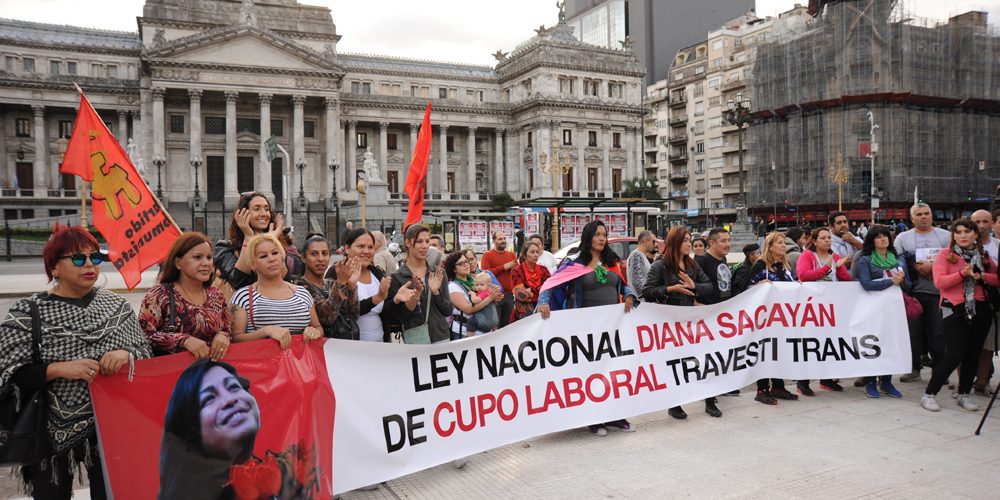
Six months after its approval, Corrientes still has not adhered to the transvestite trans labor quota law
They denounce discrimination, dismissals and various irregularities in public employment for LGBTIQ+ people.


Share

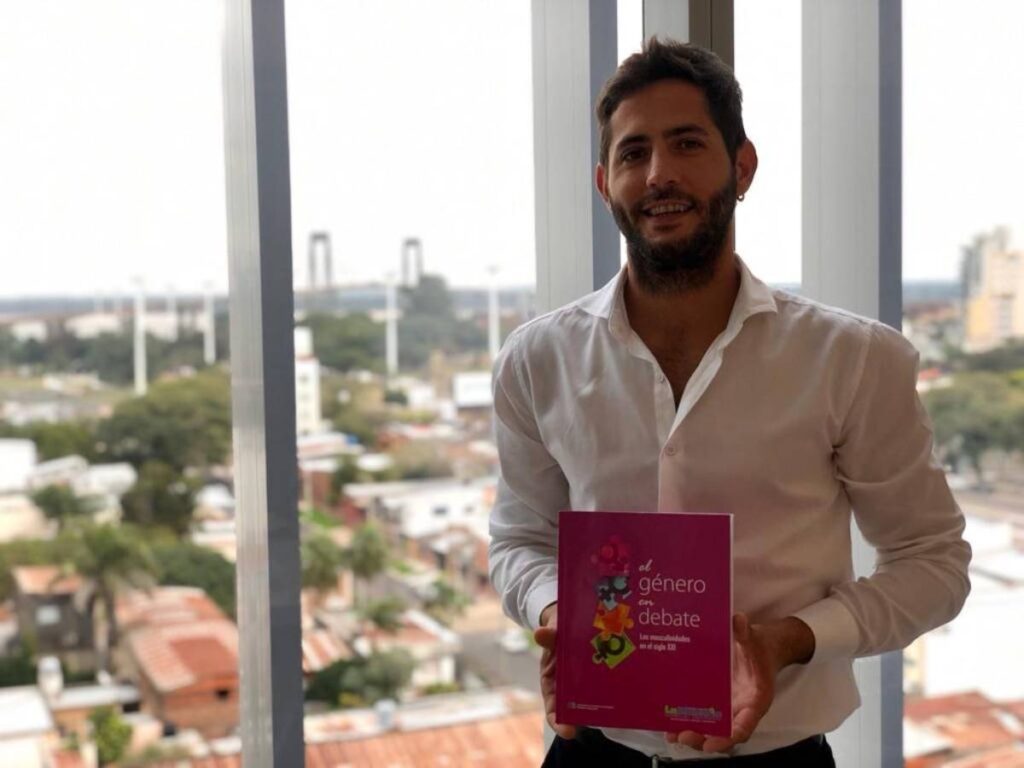
LGBTIQ+ individuals denounce harassment and irregular working conditions in public sector jobs in Corrientes, a province that “prioritizes idiosyncrasies and traditions over rights.” This was highlighted by LGBTIQ+ activist and communicator, Miguel Nicolini.
Miguel is one of the people who recently publicly denounced the employment situation he is experiencing.
The activist began working in July 2020 at the Bank of the Province of Corrientes in the Marketing Department. There, he endured “countless jokes” from his boss because of his sexual and gender identity. He also spoke to Presentes .
In addition, Nicolini stated in a complaint to the Central Bank that he received threats of dismissal from his superior and that he notified the Human Resources department on several occasions.
However, Miguel explained, that department responded three months later. They organized a meeting where Nicolini and his boss were summoned, and both were referred to the Psychosocial Risk Unit. Miguel was informed that his contract would be renewed for three months, not six as expected.
Neither answers nor solutions
In mid-November, Miguel made his situation public. By then, he had already filed complaints with the Central Bank and the Human Rights Secretariat of the La Bancaria union. Three days after the publication, his gender column, which he had hosted for a year on Radio Continental, was cancelled.
To this day, she continues to work in the office alongside her boss. She doesn't know what her employment status will be after January 2nd, the day her contract ends.
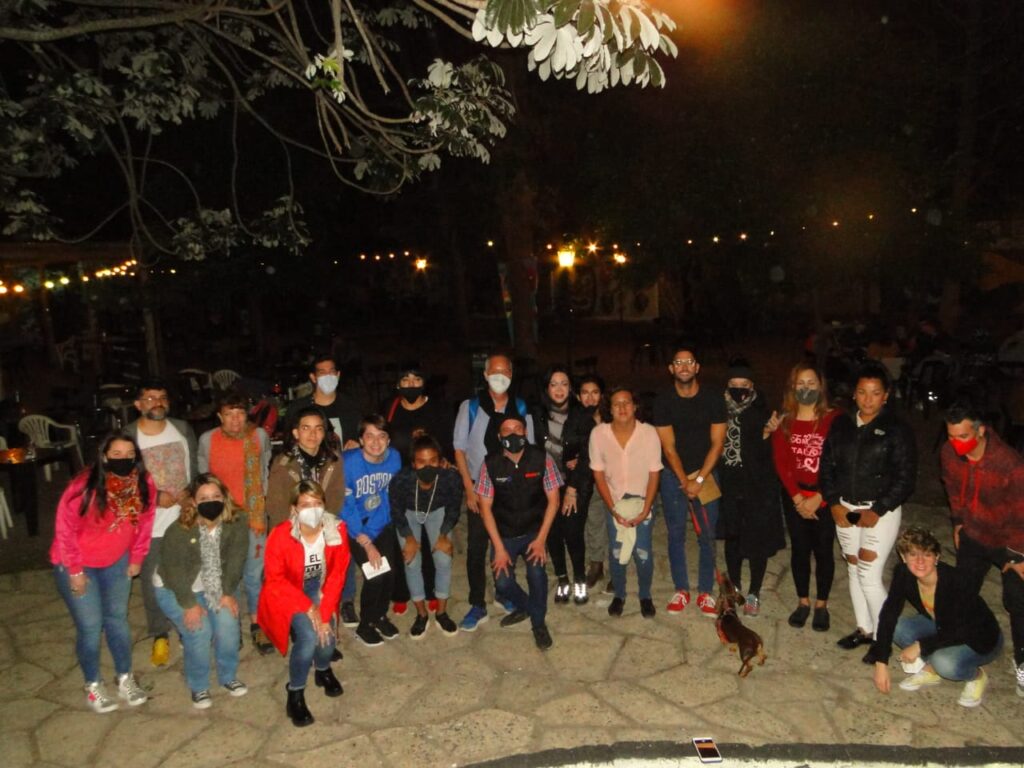
In his process he is accompanied by the Central Bank of the Argentine Republic, the Corrientes delegation of INADI, the Ministry of Women and Diversity, the La Bancaria union and the recently inaugurated provincial front of sexual diversity called Fuerza Travesti, Trans, Marica – No Binarie Correntina.
Neither the vice president, Laura Sproveri, nor the trustee of the Bank of Corrientes responded when asked about Miguel Nicolini's employment situation for this article.
Several cases
Another situation is that of David Sabarece, 32, and his partner, Roberto Pérez, 29. David is a graphic design student, and Roberto is studying law.
Both worked in the Gender Directorate of the Municipality of Corrientes and were fired along with 300 other municipal workers .
“When Eduardo Tassano took office as mayor of the city of Corrientes in 2017, we continued working there without any function. Not only us, but everyone who was there: gender policies were stalled, without an agenda. Only used for campaign purposes,” David, who was fired in 2019 and his partner in 2017, Presentes
“Currently, the Gender Directorate does not have a director. As far as I know, it doesn't even have staff or a schedule,” she added.
Today, both are students. “Rober has a registered job at McDonald’s. I don’t have any kind of job: I receive the Potenciar Trabajo (a government assistance program) and do odd jobs. That’s how we survive,” David explained.

Lack of public policies
Lorena Acevedo Caffa is a city councilor in Corrientes and an "ally" of sexual diversity. This is how LGBTIQ+ activists in the municipality recognize her.
For her, "the situation in the province is quite complicated because it is very conservative, with deeply rooted customs, where the idiosyncrasies of the province and society often take precedence over a lot of rights."
To this, Miguel Nicolini adds that the employment situation for LGBTIQ+ people is problematic. “It is an extremely impoverished community, and the State has not developed specific public policies regarding labor market inclusion for the LGBTIQ+ community.”
Urgent adherence to the Diana Sacayán-Lohana Berkins law
In this regard, Acevedo Caffa presented this year a project for the municipality to adhere to the National Law on Quotas and Labor Inclusion for Transvestites and Transgender People “Diana Sacayán – Lohana Berkins ” (No. 27,636), approved in June of this year.
However, it has not yet been discussed in committee. Nor has the province adopted the law.
“We have some trans colleagues who, after so much struggle, managed to access jobs in the health sector. But they are completely underpaid,” described trans activist Patricia Ramírez.
Patricia, 40, has been an activist since 2012, when the National Gender Identity Law was passed and enacted. “It gave me the security of at least having an identity,” she told Presentes .
However, he adds, “Corrientes has not adhered to this law, much less the municipality. All of this is something that is still being fiercely fought for.”
“We are one of only two provinces in the country that have not yet adopted the Gender Parity Law. Furthermore, in this province, Comprehensive Sex Education (CSE) is implemented at the discretion of the school principal, meaning it is not truly being implemented,” the councilwoman stated.
And he concluded: “Unfortunately, most of the progressive laws we had with a national government in previous years were unable to achieve the necessary support or regulations here.”
We are present
We are committed to journalism that delves into the territories and conducts thorough investigations, combined with new technologies and narrative formats. We want the protagonists, their stories, and their struggles to be present.
SUPPORT US

FOLLOW US
Related notes



We are present
This and other stories are not usually on the media agenda. Together we can bring them to light.