

2021 Review: Honduras closes the year with major challenges and some achievements for LGBT+
The year in Honduras was also marked by the elections that resulted in Xiomara Castro being elected as the country's first female president.
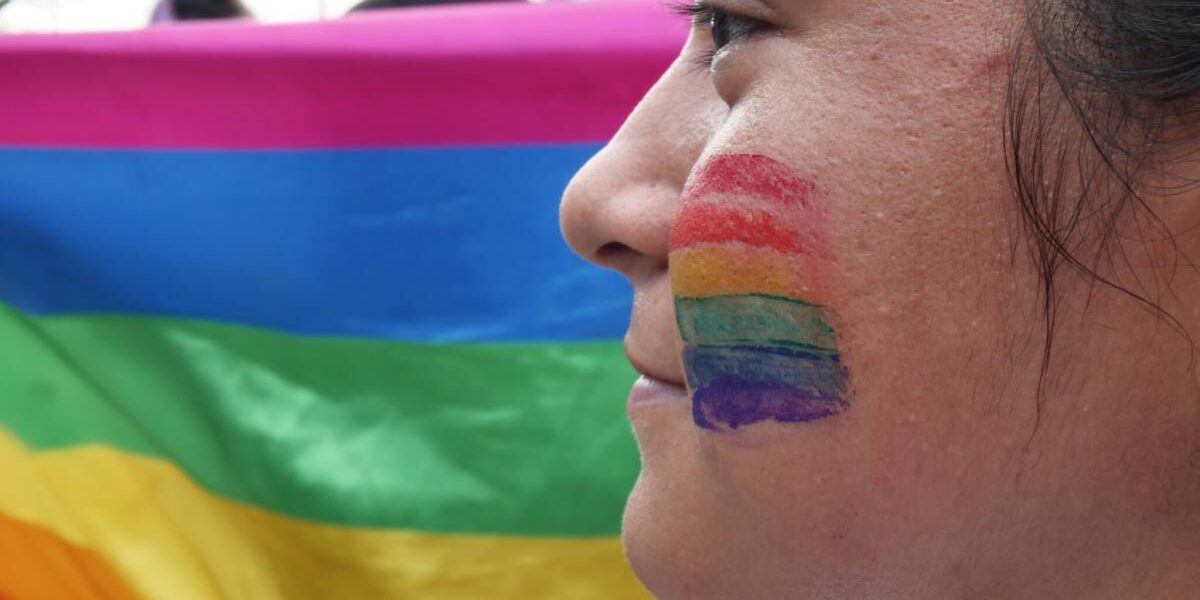

Share

HONDURAS, Tegucigalpa. Honduras experienced a unique and unrepeatable year in 2021. The sentence that condemned the State for the murder of Vicky Hernández marks a milestone in the LGBTI+ history of the country and at the same time unleashed a wave of hatred from the government of the outgoing president, Juan Orlando Hernández.
LGBTIQ+ migrants joined the gigantic caravan of displaced people (more than 300 diverse people ), the National Congress passed the articles that specified the issue of abortion and equal unions .
Furthermore, for the first time in history, voters elected a female president who promises a more inclusive agenda in favor of women and diverse populations.
Xiomara, the first Honduran president
A female president after 12 years of conservative government that did little or nothing about hate attacks and LGBTI+ deaths.
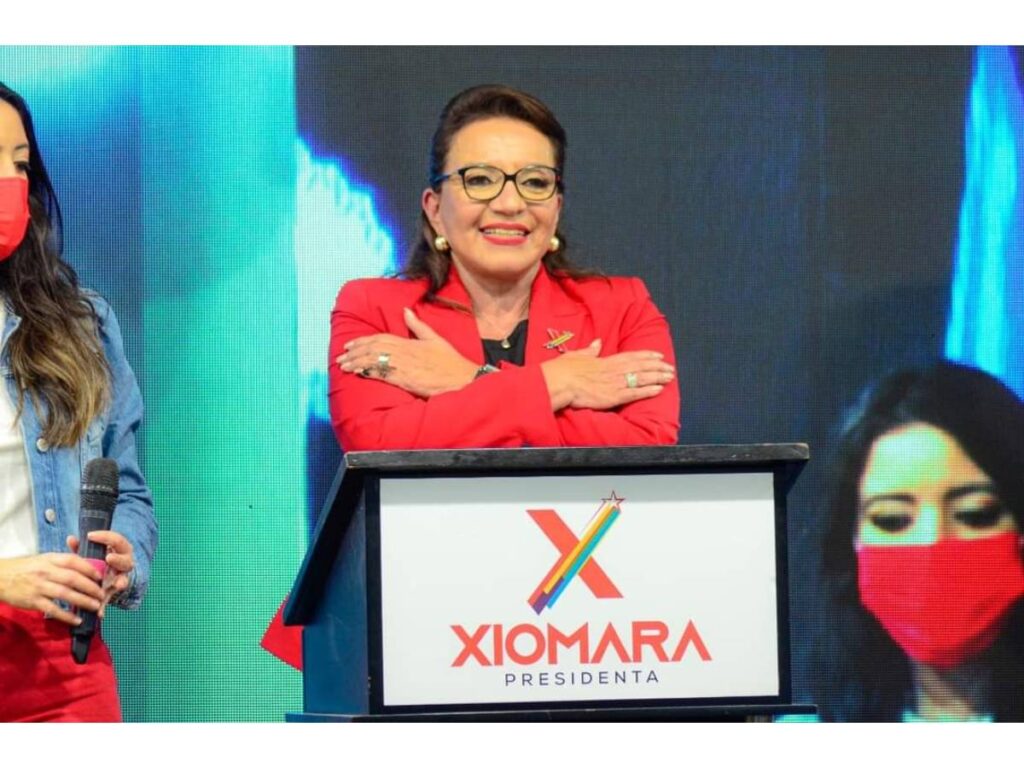
Undoubtedly, the highlight for women and other invisible groups was the election of Xiomara Castro, the candidate of the center-left party Liberty and Refoundation (Libre), as president of Honduras.
Castro comes to power after 12 years of rule by the conservative Nationalist Party, which came to power after a bloody coup in 2009 against Xiomara's husband, Manuel Mel Zelaya.
Xiomara Castro is a beacon of hope for feminist and diverse movements in Honduras. Her party, Libre, has already demonstrated its commitment to inclusivity by appointing renowned lawyer and trans activist Vienna Ávila as Secretary of Diversity.
A diverse list
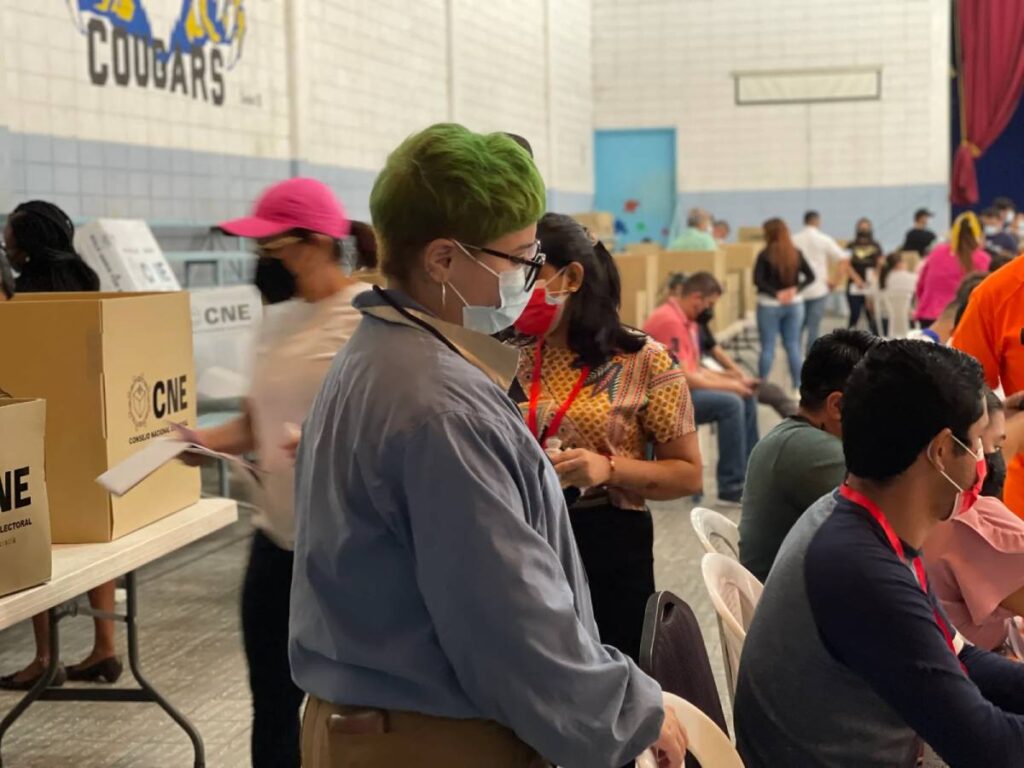
Libre also had a respectable number of LGBTIQ+ candidates in the 2021 elections, such as Víctor Grajeda , who became the first openly gay alternate deputy in the history of the Honduran Congress.
The nationalist government of Juan Orlando Hernández did little to nothing to give visibility to Honduran LGBTQ+ groups. On the contrary, he called them “enemies of independence” in his bicentennial speech, sparking national and international criticism against a government that has been plagued by numerous corruption scandals, including the theft of billions of lempiras from the Social Security system and the overpriced purchase of mobile hospitals that failed to serve their purpose of treating coronavirus patients, according to the National Anti-Corruption Council ( CNA).
At least 20 organizations, including Colectivo Violeta , Asociación Arcoíris , Honduras Diversa , and Cattrachas, denounced President Hernández's "hate speech."
Honduras Diversa went to the Public Prosecutor's Office to formally denounce Hernández's speech, but the prosecutors argued that the president's statements were supported by the Constitution.
Justice that was slow but arrived
The defeat by more than 20 points against Libre was not the first setback for the National Party government in 2021. A few months earlier, in June of this year, it suffered a major setback when the Inter-American Court of Human Rights condemned it for the murder of trans activist Vicky Hernández in 2009, amid the curfew imposed after that year's coup against Manuel Zelaya.
After 12 years of seeking justice, the same amount of time the National Party had been in power, Vicky's family was able to breathe a sigh of relief when the Inter-American Court of Human Rights condemned the State and demanded that it create initiatives in favor of the diverse populations of Honduras.
Gender Identity Law
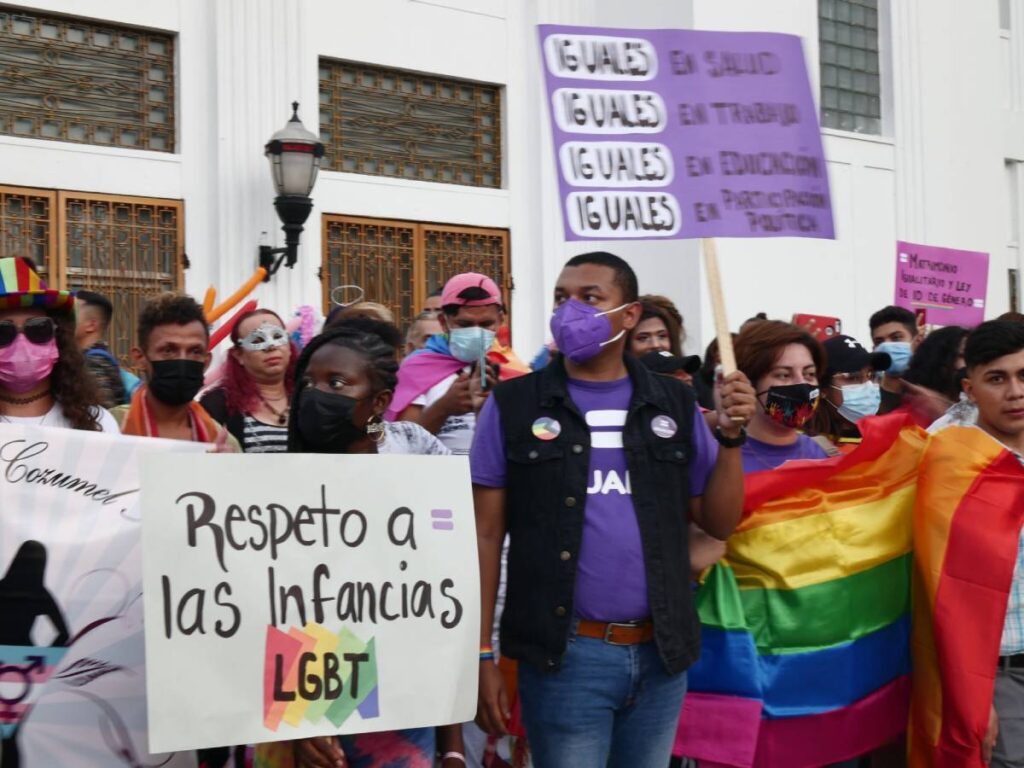
One of the standards that the IACHR ordered to be established is the gender identity law that diverse groups in the country have been demanding.
This law will allow LGBTQ+ people to appear on their identity documents with the name and appearance they have chosen. “This law would be very useful in my daily life,” says transgender teenager Amelian Zerón. “It would resolve many conflicts.”
Years to forget
The 12 years of what many analysts called a “narco-dictatorship” only served to aggravate the already terrible situation of Hondurans in general and LGBTQ+ groups in particular.
Punished by poverty, corruption, hurricane destruction, and the creation of laws such as the protection of the abortion ban and same-sex marriage, at least 300 diverse people decided to flee the country along with the caravan of at least 10,000 people who left Honduras to seek asylum in the United States.
Hate crimes do not stop
The 300 LGBTQ+ people also fled hate crimes. The year 2021 saw 26 violent deaths (18 gay men, four trans men, and four lesbians) according to the Cattrachas Lesbian Network's Violent Deaths Observatory.
One of the violent deaths that hit the sexual diversity groups hard was that of the young trans woman Ericka Tatiana Martínez García.
Tatiana's murder occurred just ten days after President Juan Orlando Hernández delivered what LGBTIQ+ groups called a "hate speech" during the country's bicentennial Independence celebration.
The worst part is that Tatiana was a well-known activist for the National Party, to which the outgoing president belongs.
Despite this, neither Hernández nor any representative of the nationalist movement said anything about the murder of the trans woman that occurred in the city of Santa Rosa de Copán, in western Honduras.
So far, only one person has been arrested in December in connection with this case.
To celebrate
The year ended with good news. The Cattrachas Lesbian Network won the European Human Rights Award in December. First, its coordinator, Indyra Mendoza, and Claudia Spelman were named one of the 100 most influential people in the world in 2021 by TIME magazine in September .
Mendoza deserved that distinction along with trans activist Claudia Spellman, who was an important witness in the trial in which the Honduran state was convicted for the murder of Vicky Hernández.
This is the first time Honduran people have appeared on that exclusive list.
Three months later, Cattrachas once again stood out in its fight for the rights of marginalized populations by receiving the prestigious award presented by the European Union. “It is an honor for the community,” said Mendoza.
The closing of a plenary session of challenges
In summary, 2021 has been a year of tough challenges and gigantic achievements for LGBTIQ+ populations.
“It was a year of personal growth and projects like inclusive healthcare,” said Dr. Dylan Duarte , a renowned trans activist featured in the documentary Dylan. “It was challenging because I haven’t had a stable job for months.”
However, Duarte hopes to find a permanent job in 2022 to support himself and develop his plans in favor of diverse groups, especially Honduran trans men.
Meanwhile, for Layonith Chinchilla, a trans activist with Asociación Kukulcán, 2021 has been a difficult year due to the increase in discriminatory acts against trans women.
“We experience discrimination, stigma, and rejection within our families and in society.” Despite the daily challenges, Layonith stated that she has high hopes for next year.
Through the ruling in the Vicky Hernández case, Layonith hopes that the government will comply, “as a measure of reparation, with the approval of the gender identity law. We will continue to advocate for our rights and demands.”
We are present
We are committed to journalism that delves into the territories and conducts thorough investigations, combined with new technologies and narrative formats. We want the protagonists, their stories, and their struggles to be present.
SUPPORT US

FOLLOW US
Related notes


We are present
This and other stories are not usually on the media agenda. Together we can bring them to light.