

Sara Hebe: “I’m tired of giving my opinion, I don’t want to repeat myself”
A journey through the career of the Argentine artist: from the streets and protest hip hop to the more intimate maturity of a new album to be released in February 2022.


Share

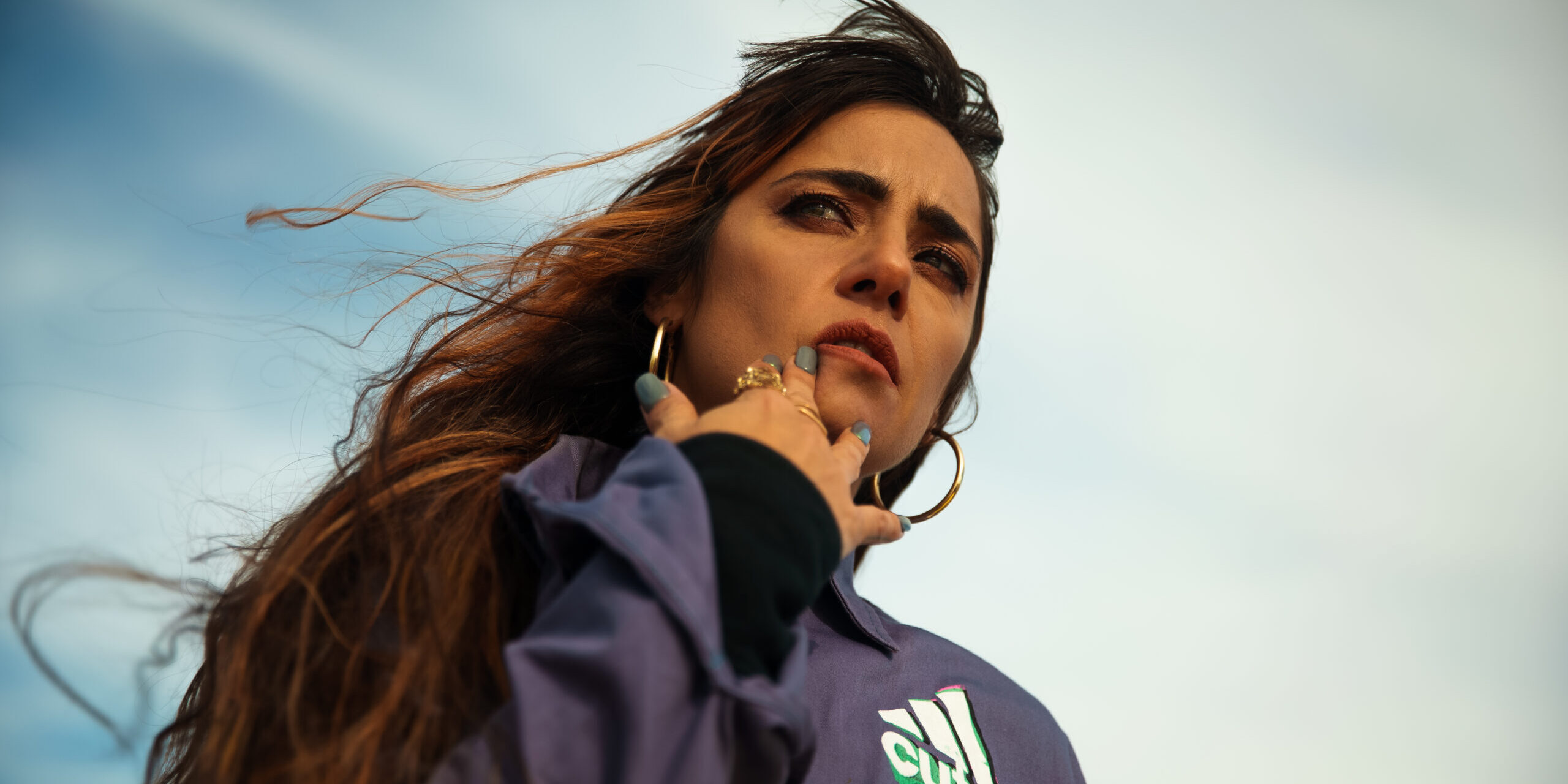
Sara Hebe cleans the house, tidies up as she talks. She's just arrived from Bolivia after several months of lockdown and the closure of theaters, cultural centers, and borders. She was on tour presenting her latest single, "México," in which she talks about the difficulties of traveling between countries due to the measures taken to control the spread of the pandemic. "I was in Cochabamba, Santa Cruz, La Paz, and Sucre. It was great to reconnect with people, but it was also tiring. In Bolivia, women are still fighting for legal abortion and are being harassed. I wasn't at the demonstration, but I was out on the street, and I heard that a group from the church threw gasoline on the protesters. It's hard to get back to work and put so much energy into it after being locked up for so long," she says while preparing some mate. It seems impossible to imagine her still.
Not even the worst months of the pandemic could immobilize her. If she wasn't producing or writing, she was helping the women at Casa Roja, the AMMAR headquarters, with whom she made the video for the song CHIRI . “They were having a really hard time because of police harassment, constantly monitored, unable to work, the hotels closed, so they organized themselves in a wonderful way.” And Sara was there, doing what she knows best: songs and videos. “The pandemic left me speechless, like everyone else. In the scientific field, they didn't know what the hell was going on, in the political field, they didn't know what the hell to do and managed this war as best they could, and that's reflected in my expression. Today, my songs have fewer lyrics; I limit myself to talking about much smaller, vital, and everyday issues, because on a macro level, I was left speechless.”
This is how she puts an end to a discussion started by some of her followers about "the old Sara," a more radical and rebellious Sara, and "the new Sara," a Sara who seems to have softened a bit . "They criticize me; now everything is about being on social media and giving opinions. They think it's unethical to make money, they claim I've sold out, that I wear makeup, that I do reggaeton. I don't give a damn. It would be terrible if I were still the same as I was ten years ago. I'm in a different place now, I'm tired of giving opinions, and I don't want to repeat myself. I changed the aesthetic of my songs, my image, my lyrics, but people see me everywhere. If there's a struggle or a movement I can support, I always try to be there, and my old songs stay alive when I sing them on stage."
“Capitalism is at its best.”
Her trajectory is undeniable. Sara Hebe was born on Independence Day, July 9, 1983, in the city of Trelew (Chubut). A love of poetry was ever-present in her home, inherited from her grandmother and later from her mother. She explored rap, hip hop, reggaeton, cumbia, and now, electronic music. Her lyrics became signs at feminist marches, and her voice gained widespread popularity through the soundtrack of the television series El Marginal. Her story was marked by the events of a rebellious Patagonia. She attended a public school that instilled in her a passion for reading and where she first encountered two figures fundamental to her development: Hebe de Bonafini and Estela de Carlotto. “Listening to them either moves you or it doesn't. It moved me; it changed my perspective, it made me see things from a new standpoint, and from there I began to write, act, and work. Positioned within that place of the productive and ideological system.”
In 2001, amidst crises and protests, she arrived in Buenos Aires to study law. That journey wouldn't last long. “Back then, everything was chaos in the streets, but I was focused on something else, on my own personal crisis. I had just finished high school. Buenos Aires was so big, it scared me, I didn't understand it. My first songs came about unexpectedly and without any pretensions. I let myself be carried away by the turmoil and the intuition of what I saw around me. I wrote what had already been written in the streets, in the demonstrations, in the years of struggle.” But although she insists on emphasizing that she was “always alone and doing her own thing,” facing this new world she was about to discover, in the capital she managed to find her way into spaces that taught her and instilled in her the spirit of social and political struggle.
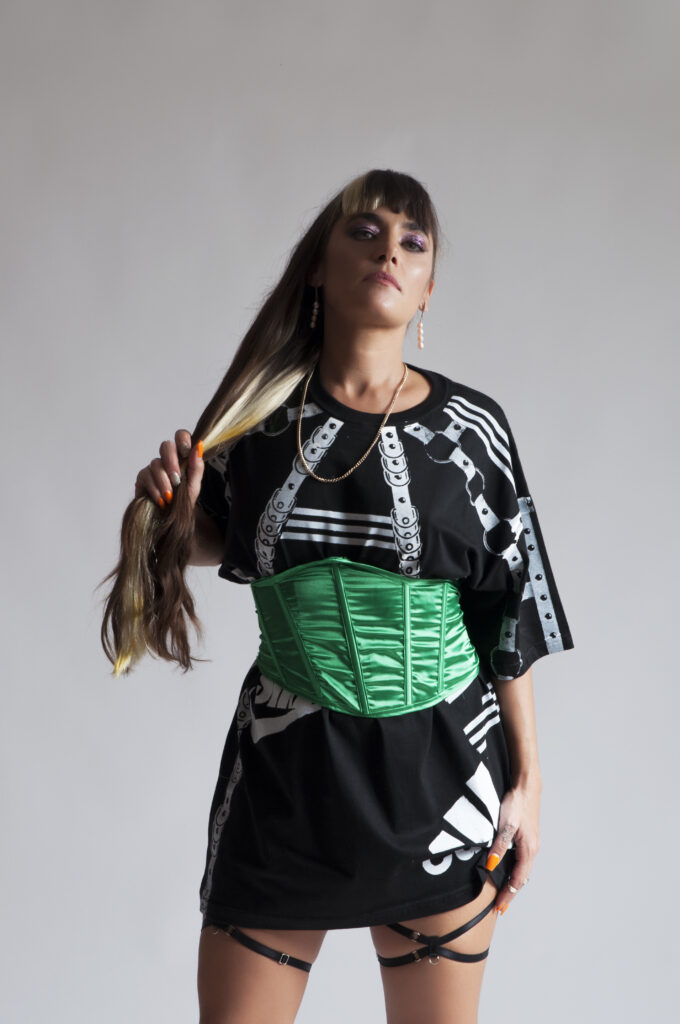
“That was thanks to popular theater, which was the first thing I did when I arrived. Also, because of seeing my mother, a fighter who had to struggle at her job, who went to marches with her friends, and because of my school, which taught us critical thinking. Then came the songs, and later, yes, with these songs I began to accompany with my body and by being present in the territories of struggle and mobilizations where something was happening that needed to be supported.” For Sara, in Argentina and in Latin America in general, it always seems like something is about to explode. “History is one of plunder, of oppression; the situation is one of crisis. Capitalism is always improving itself, and now it’s at its peak.”
“Homophobia and harassment of LGBT+ people still exist.”
When she started writing songs back in 2007, teaching herself to create melodies and lyrics over rhythms she found online, the landscape was very different. The music scene and its behind-the-scenes aspects were almost exclusively the domain of cisgender heterosexual men. “I had to work tirelessly, like an ant, to carve out spaces for myself in those men's world and create new ones. But I didn't start in 1920 when there was no clear path. We have great female role models, like Actitud María Marta, for example.”
The year 2015 arrived with a feminist explosion under the cry of Ni Una Menos (Not One Less). That cry would later resonate in other countries in Latin America, Europe, and Asia. “ With the mobilization called by the Ni Una Menos collective, a process of making feminism explicit and widely communicated began. There was an opening that couldn't be avoided, and it's related to the work of so many years by transvestite and trans women, by all the dissident collectives, and after so many years of struggle, there was no other option but to regulate, for example, quotas. They couldn't keep playing dumb.”
But even though the debate has taken hold, and even though the current landscape is completely different from what it was ten years ago, Sara acknowledges that many issues remain unresolved. “Homophobia still exists, harassment of LGBT+ people continues. On the one hand, we see progress in the laws, festivals full of women, but on the other hand, I don't know, all of that is still happening.”
A new emerging scene
L-Gante, Nathy Peluso, Trueno, Wos. Sara admits she'd love to collaborate with all of them, but they "don't give her the time of day." "They're stars and they have what it takes. In that sense, I think humanity has improved." Sara laughs. She also knows that music is produced today in ways that weren't possible before, with more experience and more resources, and that this is the result of research and the work of admirable producers. "They're so deeply embedded in the market and the branding system that I don't know to what extent they have the independence to move, act, or speak out. But artistically, I admire them; I think what they do is fantastic."
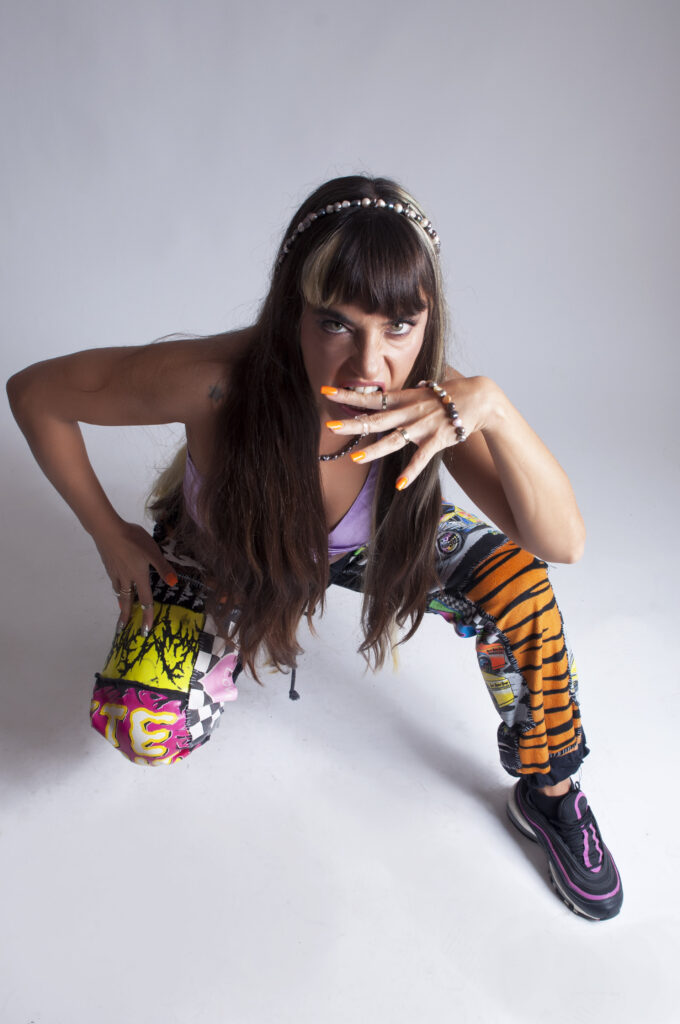
With the promise that her new album will arrive in February, Sara gives us a sneak peek at some of the collaborations. “It’s going to be a very danceable, electronic album with relaxed lyrics. There’s a certain darkness and apocalyptic themes on an ecological level, reflecting everything that’s happening today, which seems like the world is ending, as always. There are collaborations with Sassy Girl, a super cool reggaeton artist, Sassy. And a feature with Ana Tijoux, a great artist I admire a lot. That song is a nod to everything that is mainstream and the industry, about how we experience music since Spotify became a giant and we all have to be on its radar, when we were fighting against labels and now we have to define ourselves to see where Spotify fits us. Capitalism has improved and our existence is marked by the rules of the market more than ever.”
He doesn't reveal the album title, preferring to keep it a secret until it's released.
We are present
We are committed to journalism that delves into the territories and conducts thorough investigations, combined with new technologies and narrative formats. We want the protagonists, their stories, and their struggles to be present.
SUPPORT US

FOLLOW US
Related notes



We are present
This and other stories are not usually on the media agenda. Together we can bring them to light.