

Manos Amigues, the first LGBT community kitchen in Mexico
Those who enjoy the food are LGBT+ people; senior citizens; and people experiencing homelessness. It's a community project that emerged during the pandemic and dreams of becoming a cultural center.


Share

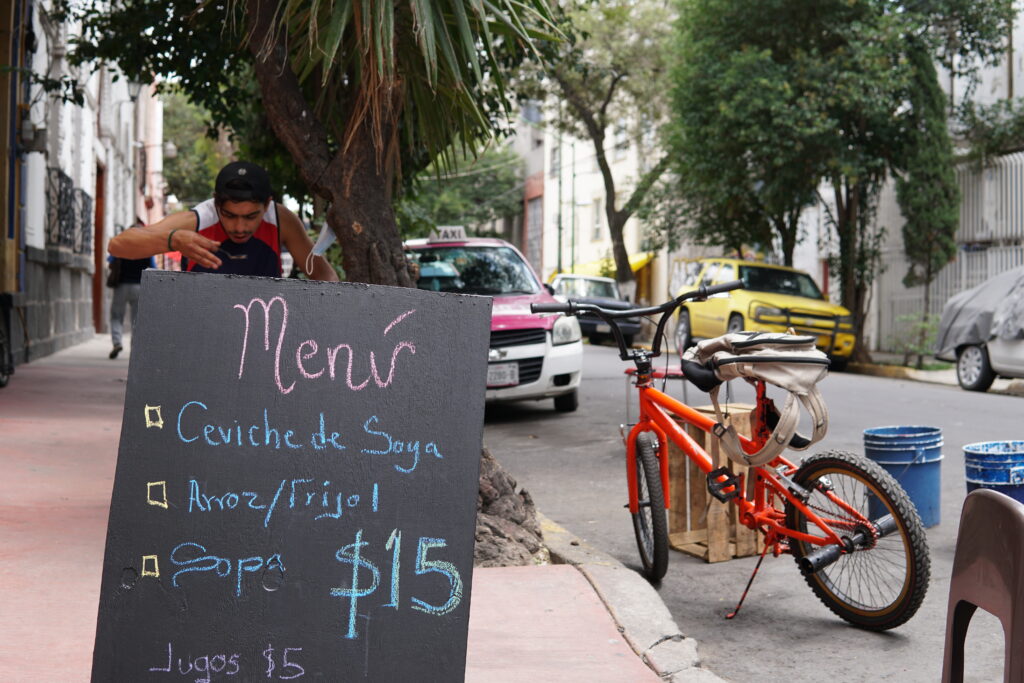
From number 113 on Pedro Moreno Street, located in the Guerrero neighborhood of Mexico City, wafts the aroma of home-cooked food. The colors of the LGBTQ+ flag peek out from the front wall, and at street level, a blackboard announces the menu for a complete meal that costs only eleven pesos: soup, rice, beans, water, and a main dish that changes daily. We are at Manos Amigues, the first LGBTQ+ community kitchen in Mexico, which opened during the third wave of the COVID-19 pandemic in the country.
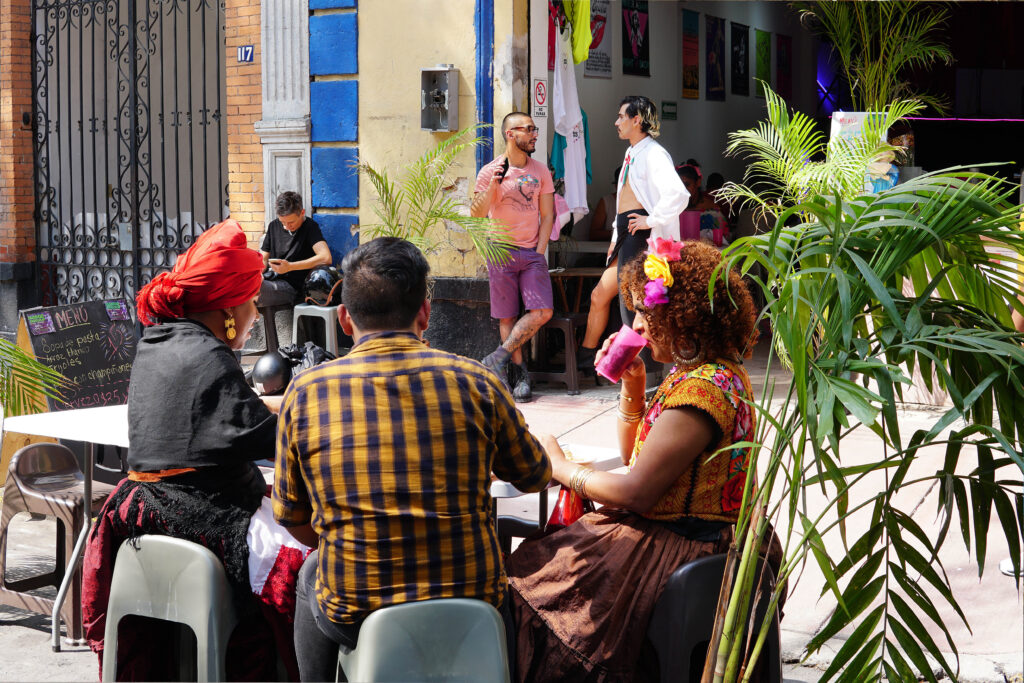
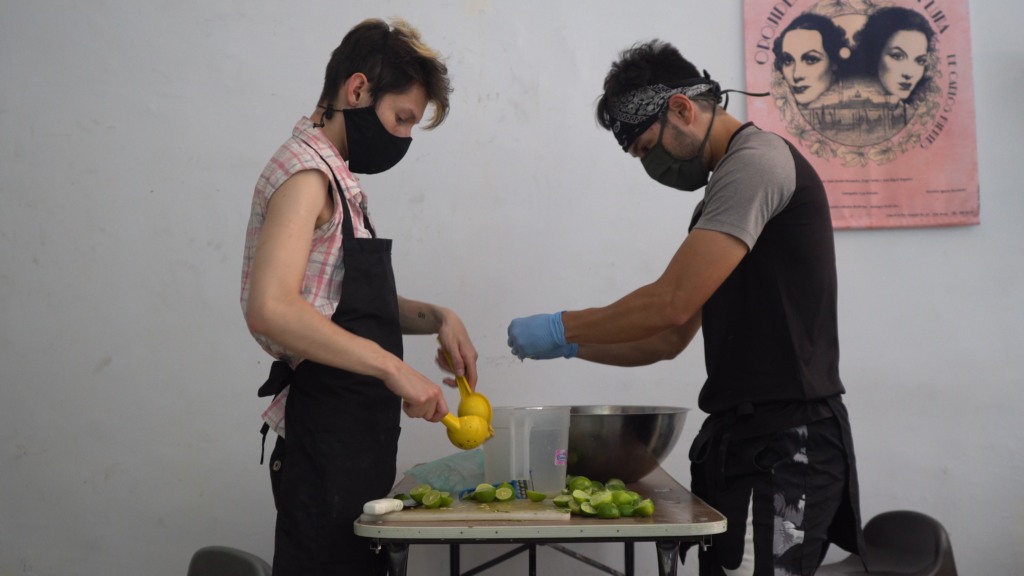
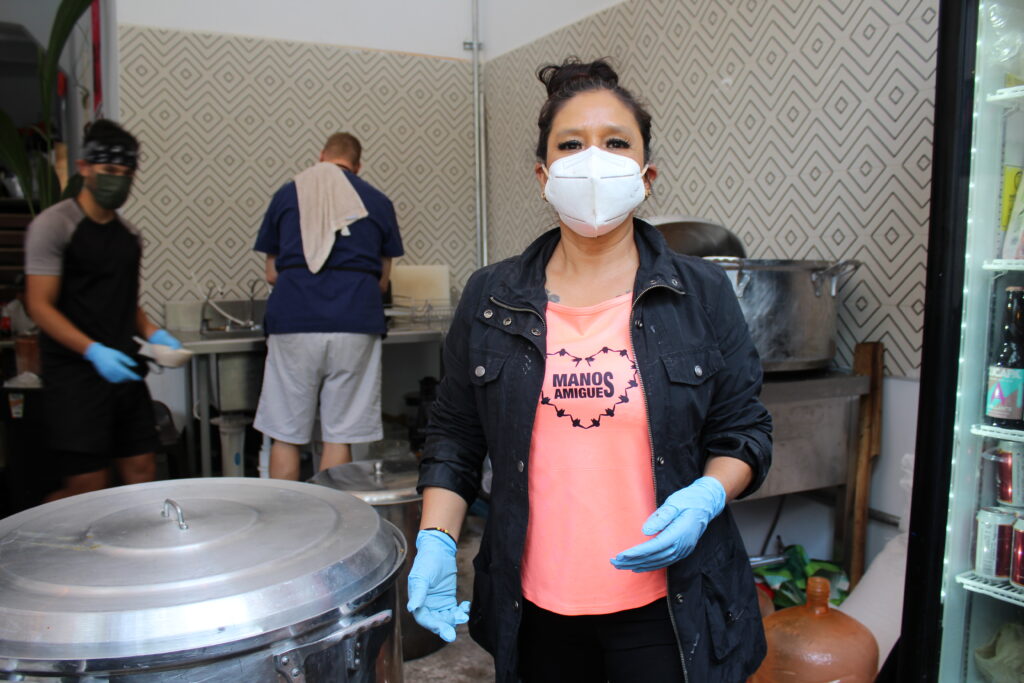
Upon entering, there's a small table for registration and payment of the eleven pesos for the meal. To the right is the kitchen, where Alejandra and Víctor, wearing masks and gloves, serve the food they prepared and poured into large pots before 1:00 p.m. Dissident and LGBT+ individuals who have joined as volunteers at the community kitchen come and go, carrying plates and glasses of water to the tables.
Those who enjoy the food are LGBT+ people; senior citizens; and people experiencing homelessness. Some live or work in the neighborhood, like Analú Vázquez, a 39-year-old trans woman who worked as a sex worker, lived on the streets for ten years, and now works at a beauty salon. Or like Pedro “the Roadrunner” Galicia, a 67-year-old electrician originally from Iztapalapa, who lost his job during the pandemic and now delivers newspapers to kiosks in the city center and east.
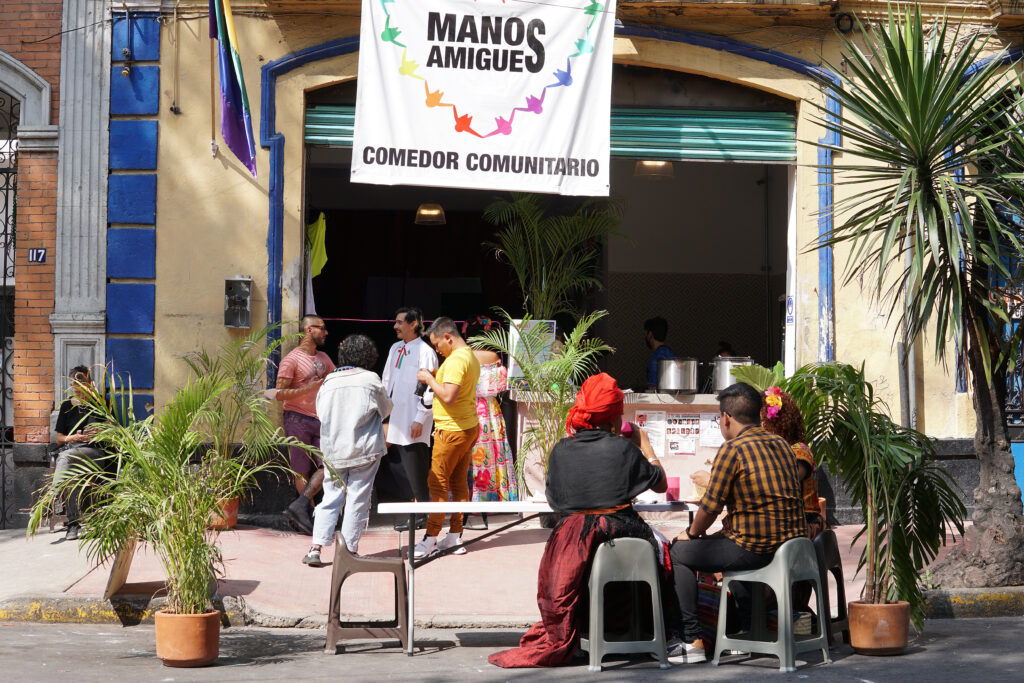
“Everyone is welcome here. Manos Amigues is a living project where food is used as a political act and culture is at the heart of it. It was born out of the need for our LGBTI communities, who face very complex situations, to have access to nutritious, hot, delicious, and dignified food; and a queer where they can express themselves, chat, and appreciate emerging artistic proposals. And while it was created to meet the needs of gender-diverse populations, our main users are sex workers, people experiencing homelessness, artists, single gay men or men living alone, the unemployed, senior citizens, and sometimes children and single mothers,” explains Alex Rodríguez, co-founder of the project and a circus artist.
Various reports and statements from international , regional , and local indicated that the COVID-19 health emergency exposed existing inequalities and discrimination, further impacting the rights of already vulnerable populations. These documents reveal that LGBTI+ people saw their rights to work, a life free from violence, access to justice, housing, food, health, and education, among others, further marginalized. Furthermore, they were excluded from economic recovery efforts implemented by governments, which led to the strengthening of collective and grassroots organizing to resist the pandemic.
Collective organization in the face of state omissions
Manos Amigues began to take shape in April 2020. Brent Alberghini, originally from New York and living in Mexico for 14 years, along with other people, organized a food bank from his apartment, which they called Burritos no bombas , whose objective was to bring food baskets (basic products for a nutritious diet) to vulnerable populations during the pandemic.
Burritos no bombas provided food supplies to projects such as Vida Alegre , a day center for LGBT seniors, sex worker organizations, LGBT migrants such as the Casa la Banda and El Caracol , an association that provides support to children and youth living on the streets.
Alex Rodriguez volunteered for this initiative, which distributed up to 300 food baskets daily. These baskets consisted of two types: one with food that did not require a stove for preparation, intended for homeless populations; and the other, which included products that could be prepared in a kitchen.
The experience of the food bank during the first and second waves of COVID-19 opened the opportunity for Burritos no bombas to transform into Manos Amigues , a project that Brent, Alex and the rest of the team thought was “necessary and urgent” especially to serve LGBT people who were already homeless, those who began to live on the streets due to family exclusion, sex workers who were evicted from hotels due to the contingency measures; elderly people and others who lost their jobs or saw their income limited and as a consequence their access to food.
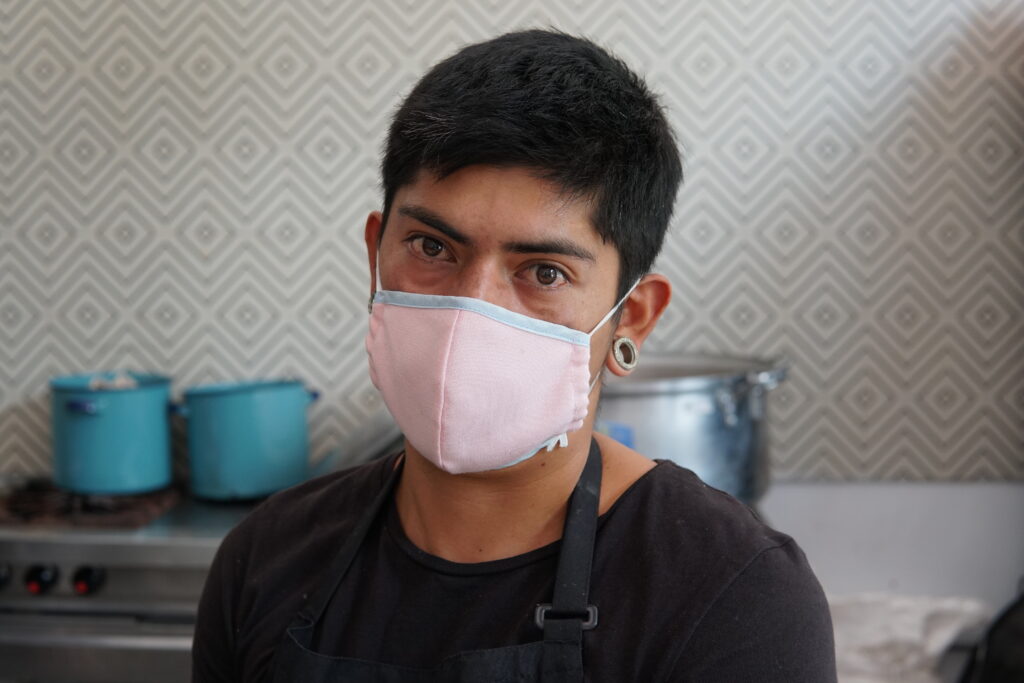
“There are many places in the city like nightclubs and bars, but until now there wasn't a space where you could get something as basic as a hot meal at an affordable price, and also a place where you could feel comfortable expressing yourself, right? Without discrimination. That's why the soup kitchen was the first thing we did to fill that need. We're already working on the rest and we're still dreaming,” says Alex.
Thanks to the financial contributions made through a fundraising campaign, an old mechanic's workshop was transformed on July 23, 2020, into the Manos Amigues community dining hall, located in Guerrero, a popular neighborhood in the center of Mexico City, where currently between 100 and 150 hot meals are served.
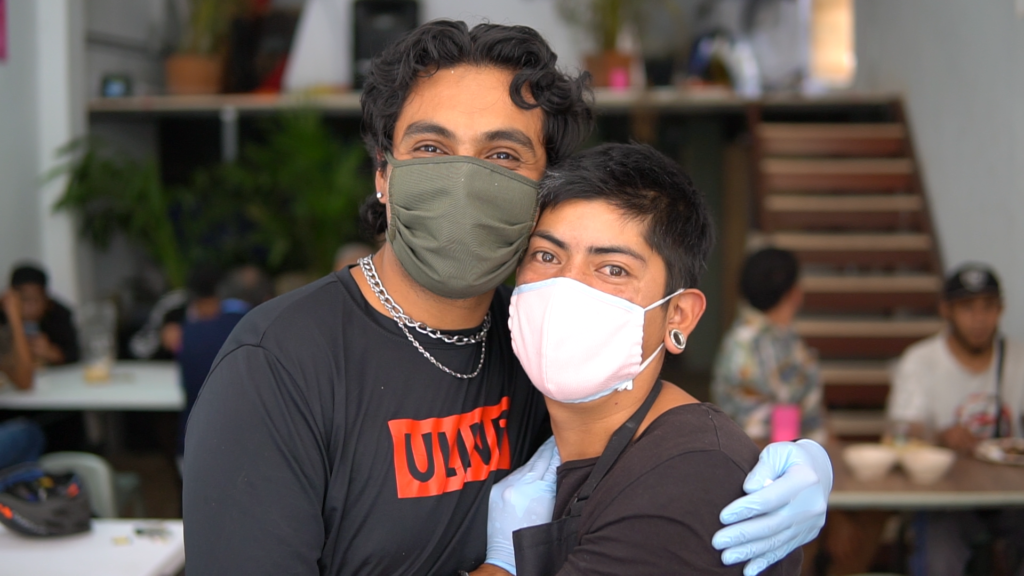
“Food brings people together, sharing a taco doesn't discriminate”
Analú Valdéz is 39 years old, a trans woman originally from Tamaulipas (a state in northern Mexico), and has lived in Mexico City for over twenty years. Analú migrated because she was looking for “another life” because when she was 14, her father kicked her out of the house for being trans, and her mother “just stood there, she didn’t do anything,” she recalls.
Analú is dark-haired, has a streak of gray like Tongolele, and wears bracelets with images of saints she is devoted to on her wrists. Being expelled from her family forced her to live on the streets and find ways to survive, which led her to sex work. Later, she traveled to Mexico City where she continued working until just three years ago. Now she does nails at a salon.
This is the second time Analú has come to Manos Amigues. A friend recommended the place because it's affordable, since there are other places in the neighborhood, known as fondas, where food is also offered, but a dish costs between 45 and 60 pesos.
Because of her life story, she considers this project "an opportunity." She explains, "I know it's brand new, but I would have loved to have something like this, to have warm food on hand, with tortillas and everything, when I was kicked out of my house, when I lived on the streets, when I arrived here with nothing, when I didn't have enough to eat on the days that sex work didn't bring in enough money."
Just like Analú's story, countless others are repeated. The exclusion that trans people face within their families is the first episode in a series of acts of violence that ultimately prevent them from accessing other rights such as housing, education, health, and employment. And during the pandemic, these rights were even more severely impacted for LGBTI+ people.
At the next table, a short, stocky man listens to our conversation and approaches Analú. He is Pedro Galicia, 67 years old, who became unemployed during the pandemic and since June of last year has been nicknamed "the roadrunner" because he now delivers newspapers and magazines to kiosks in the east and center of Mexico City starting at three in the morning.
Pedro approaches and says, “That’s the cool thing about this place, food brings people together, sharing tacos doesn’t discriminate. It’s just that there are people here, right? People with different sexual orientations who often face insults and discrimination, right? I came here because I was told it was delicious and cheap , and well, I realized there are a lot of malicious people who treat those who are different badly, and look (he looks around) there aren’t many differences here, we all came here because we need to eat, that’s why I’m telling you, tacos bring people together and don’t discriminate.”
Incidentally, these meetings where LGBT people come together in the same space with others who are not necessarily part of the dissidence and sexual diversity movement, is one of the objectives that the Manos Amigues project also tries to promote.
“They’ve accepted us very well. I think that because it’s a working-class neighborhood, it might be perceived as a dangerous or close-minded place, but I think we’ve been very well received. In fact, it really strikes me when little kids come up and ask us, ‘Hey, what’s the flag?’ or when there’s a cultural event on Fridays and drag queens show up, they ask us about them because they’re drawn to their dazzling outfits. And we explain it to them, we tell them about the struggle. I think that telling them without prejudice is also a way of making them feel like they belong here,” says Alex.
7 out of 10 LGBT people lost their jobs
One of the first consequences of this emergency was the closure of hotels. This left sex workers in Mexico City without homes and places to work; according to figures from Copred, 42.9% of these workers are transgender women.
According to the Gender and COVID-19 Observatory, launched by GIRE (a feminist organization focused on reproductive rights), at the beginning of the pandemic the Mexico City government pledged to deliver food baskets to sex workers three times, but failed to do so, delivering them only once. Furthermore, they agreed to provide financial support for three months through debit cards with a balance equivalent to 2,600 pesos per month, but those who received these cards only received a single payment of 1,000 pesos.
For other vulnerable LGBT people, or those who experienced situations of vulnerability due to the pandemic, the State did not present concrete action plans, nor are there official figures that allow us to know how the health emergency is affecting people of diverse sexual orientations and gender identities in Mexico City and the rest of the country. On the contrary, it is through activism and community work that surveys, reports, and street actions in defense of the human rights of these populations have been promoted.
According to the Survey: Differentiated Impact of COVID-19 on the LGBT Community in Mexico, conducted by more than thirty civil organizations for the defense of the human rights of LGBTI people, 7 out of 10 people of sexual diversity lost their income totally or partially.
The prevalence of job loss was particularly acute in trans populations: 70% of the 160 trans women who responded and 60% of the 116 trans men who participated lost their jobs, which consequently could cause their access to housing and food to be further compromised.
In addition, the report indicates that 29.89% of LGBT people who responded could not afford the cost of where they lived, and 4.84% were forced to leave their homes due to domestic violence related to their sexual orientation and gender identity.
LGBT Shelter: “a dream we can’t get out of our heads”
In addition to the community kitchen, Manos Amigues is committed to cultural programs. The first one already up and running is the art gallery, where the walls of the building are used to display artwork by LGBTQ+ projects and artists.
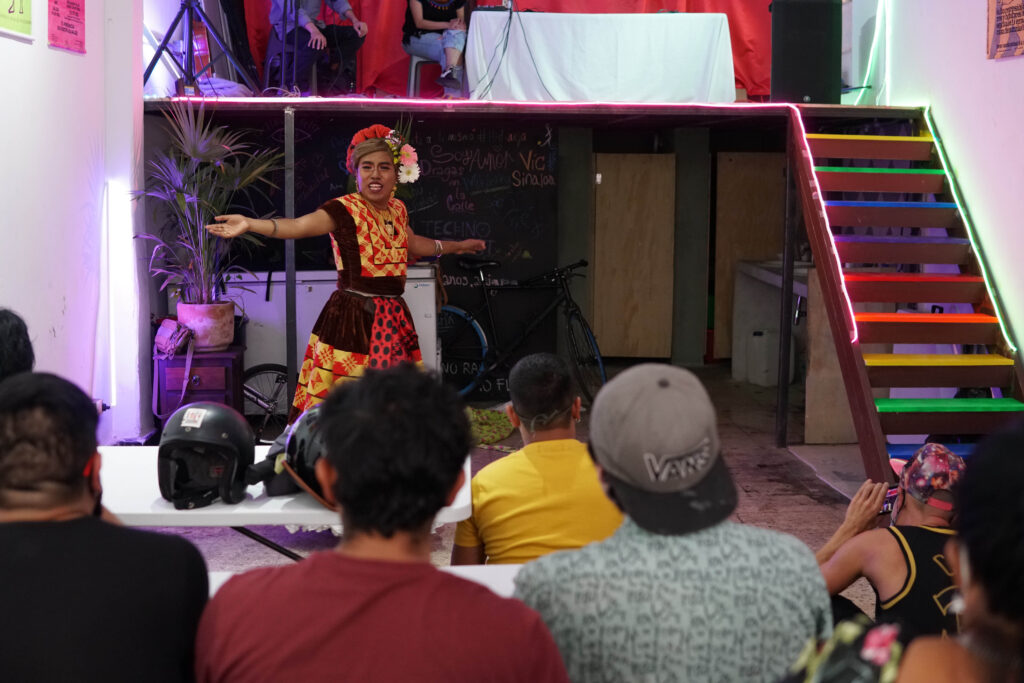
Manos Amigues opened with an exhibition of posters from LGBT marches and actions that are part of the historiographical archive of Colectivo Sol , a gay and transvestite group for the defense of human rights that emerged in 1981. And since its opening, every Friday after four in the afternoon the space opens up to diverse artistic expressions, from rap concerts; folk music and dance to drag shows.
Recently, they've also started showing films and offering voguing classes. When Alex refers to Manos Amigues, he reiterates, "This is more than a soup kitchen; it's a community center."
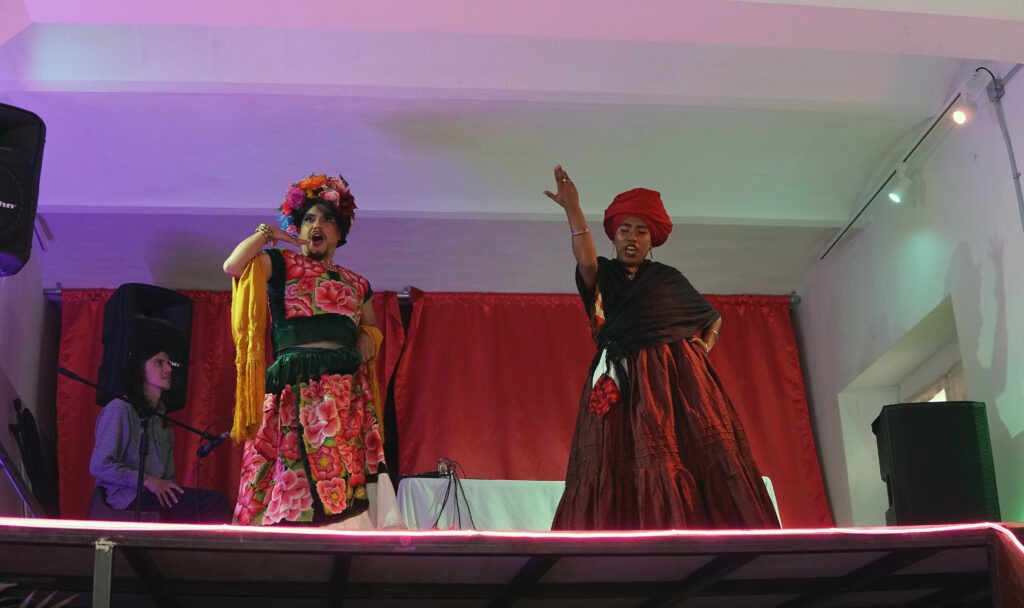
“The dream is that we can continue with the soup kitchen and the space for art and culture, but we also want to open an LGBT shelter. And personally, I would also like to promote a day center where we can provide rehabilitation tools and support through art to people in our community who are struggling with drug addiction, because there are positive effects and results through the arts,” she says.
The shelter they are trying to establish is still in the design phase regarding its operation, but the location already exists. Next to the Manos Amigues community kitchen is La Colonial, a shelter with 250 beds, showers, and a kitchen, open exclusively to homeless men.
“After speaking with the owners of La Colonial, they agreed that a section with 50 beds would be designated exclusively for the LGBT shelter. This way, both the shelter and our soup kitchen would benefit, allowing these individuals to have a daily meal and build community. We're still working on how to manage each request, but it's a dream we can't shake,” Alex concludes.
We are present
We are committed to journalism that delves into the territories and conducts thorough investigations, combined with new technologies and narrative formats. We want the protagonists, their stories, and their struggles to be present.
SUPPORT US

FOLLOW US
Related notes

We are present
This and other stories are not usually on the media agenda. Together we can bring them to light.