

Transphobia: She was attacked with acid, went to a hospital, and was denied medical attention.
In downtown Guadalajara, Jalisco, Zoé, a 26-year-old trans woman, was attacked with acid. This caused first- and second-degree burns to her face and chest. Emergency room staff refused to treat her.


Share

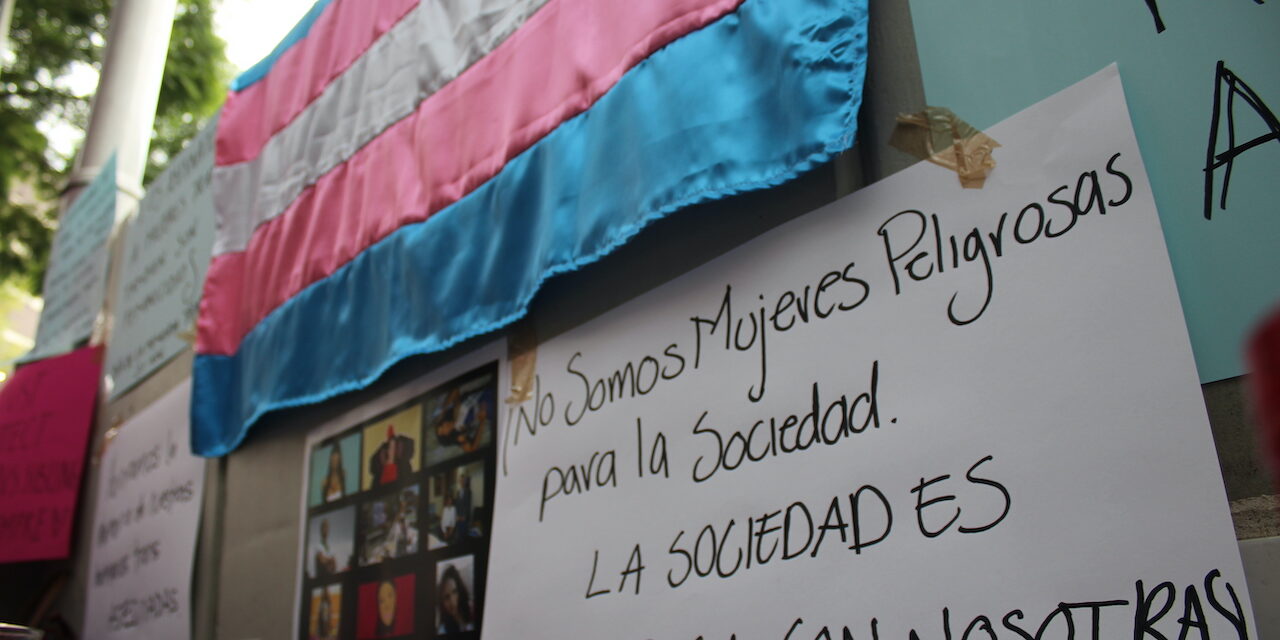
On the night of October 19th in downtown Guadalajara (Jalisco state), Zoé, a 26-year-old trans woman, was attacked by a man who threw acid on her, causing first- and second-degree burns to her face and chest. The organization Unión Diversa de Jalisco (UDJ) described it as “an attempted femicide.” They also denounced that a private hospital, located six minutes from where Zoé was attacked, denied her emergency medical care.
According to the State Attorney General's Office, Zoé was with a friend when "a man approached them and they began a conversation. After a few moments, the man, who was wearing a face mask, walked a few meters away and returned to where the women were, throwing the liquid on various parts of Zoé's body." Local media reported that, according to witnesses, the man who attacked Zoé was an acquaintance of hers.
There were no recorded instances of acid attacks against transgender women in Mexico. The country lacks official statistics on this type of violence against women. However, according to a report by El País , the Carmen Sánchez Foundation has compiled at least 27 attacks, involving 30 victims, from 2001 to the present, using newspaper clippings and testimonies. Only one of these cases has resulted in a conviction. The foundation asserts that the actual number could be higher, as many cases go unreported and unpublicized.
Medical attention denied at private hospital
Fascinación Jiménez, an activist and member of UDJ, explained that the Hospital de la Santísima Trinidad, located less than ten minutes from where the attack occurred, denied Zoé emergency medical attention "because she didn't have identification." Jiménez added that, since it is a religious hospital, that may be why they decided not to provide her with such care.
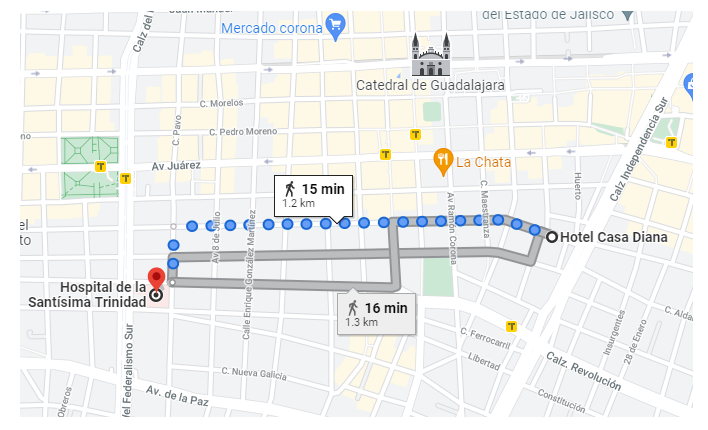
Presentes tried to contact the hospital they indicated, which denied medical attention to Zoé, but had no luck.
After being denied service, Zoé was taken by ambulance to the Cruz Verde Delgadillo Araujo clinic. There, she was treated for first- and second-degree burns to her face and chest. The Prosecutor's Office reported that, according to medical reports, "her life is not at risk" and she has already been discharged.
An investigation will be launched into the denial of assistance.
Regarding the possible denial of medical services, the Internal Control Body of the Jalisco Ministry of Health (SSJ) will initiate an investigation in accordance with the State Law to Promote Equality, Prevent and Eliminate Discrimination (LEPIPED) and the Jalisco State Health Law. Furthermore, a complaint was filed with the National Council to Prevent Discrimination (CONAPRED) so that, if the discrimination and denial of medical services to a transgender woman is confirmed, a sanction will be applied.
The 2018 Survey on Discrimination Based on Sexual Orientation and Gender Identity (ENDOSIG) reveals that a quarter of the trans women who responded faced discrimination in medical settings . These experiences are diverse: from denial of services and humiliation to violent attitudes during care and refusal to establish physical contact for examination.
“This is not an isolated incident”
Andres Treviño, director of the Directorate of Sexual Diversity of the Undersecretariat of Human Rights of the Jalisco government, said that different government agencies are coordinating to respond to this violence against Zoé.
According to Treviño, the Human Rights Prosecutor's Office accompanied the victim and opened an investigation on its own initiative. It is working under specialized protocols for women, transgender women, and people of diverse sexual orientations and gender identities.
Furthermore, she commented that the Secretariat for Substantive Equality between Women and Men (SISEMH) and the agency she heads remain coordinated to provide psychological and legal support to Zoé and the possible victims of the attack.
“We are very concerned that this type of violence is happening in the state, and we want to share that this is not an isolated incident . This is part of a structural context of discrimination and violence against people of diverse sexual orientations and gender identities, specifically transgender people and women. As a society, it is important to establish a zero-tolerance policy for this violence,” Treviño stated.
“Attacks intended to leave a lifelong mark”
Until now, no acid attack against a trans woman had been reported in Mexico. This form of gender-based violence is considered "devastating" by the UN.
CONAPRED explains that these attacks are mainly committed by people who knew the victim and considers them " aggressions with a very high symbolic charge. They intend to leave a lifelong mark, to leave the imprint of their crime, their jealousy, their hatred on the victim's disfigured face and body ."
In Latin America, there is no data on how many trans women or LGBT people have been victims of this type of violence. However, the report published by the IACHR in 2015, Violence against LGBTI People in the Americas, indicates that of the 55 attacks (lethal and non-lethal) recorded between 2013 and 2014 against lesbian women, acid attacks were included.
Globally, these types of attacks against transgender women are most prevalent in Middle Eastern countries. Recently, it was reported that in less than two months, two transgender women were attacked with acid in Karachi, Pakistan; one of them died as a result of the attack.
According to the Carmen Sánchez Foundation, this type of violence against cisgender women has been on the rise. Of the 27 attacks recorded in the first half of 2021, four involved acid attacks: two in Coahuila, one in Veracruz, and one in Puebla. According to Este País , this figure represents an increase of more than 30% compared to the same period in 2020.
In Mexico, acid attacks are not considered a crime in the Federal Penal Code, but there are local laws in at least seven states : Mexico City; State of Mexico, Oaxaca; Aguascalientes; Baja California Sur; Hidalgo and San Luis Potosí, which include punishment for attacks with acid or corrosive substances against women.
In the El País report , activists and survivors point out the need for “standardized penalties across the country if attempted femicide cannot be proven, and for acid attacks to be classified as separate crimes.” This is because, when reported to the Public Prosecutor's Office, acid attacks are categorized as simple assault.
We are present
We are committed to journalism that delves into the territories and conducts thorough investigations, combined with new technologies and narrative formats. We want the protagonists, their stories, and their struggles to be present.
SUPPORT US

FOLLOW US
Related notes

We are present
This and other stories are not usually on the media agenda. Together we can bring them to light.