

She opened the first medical unit staffed by and for trans people
Mexico City now has its first service run by and staffed by transgender, transsexual, intersex, and non-binary people. The service is free and includes a protocol for vulnerable individuals, such as trans people experiencing homelessness, migrants, or those without documentation.


Share

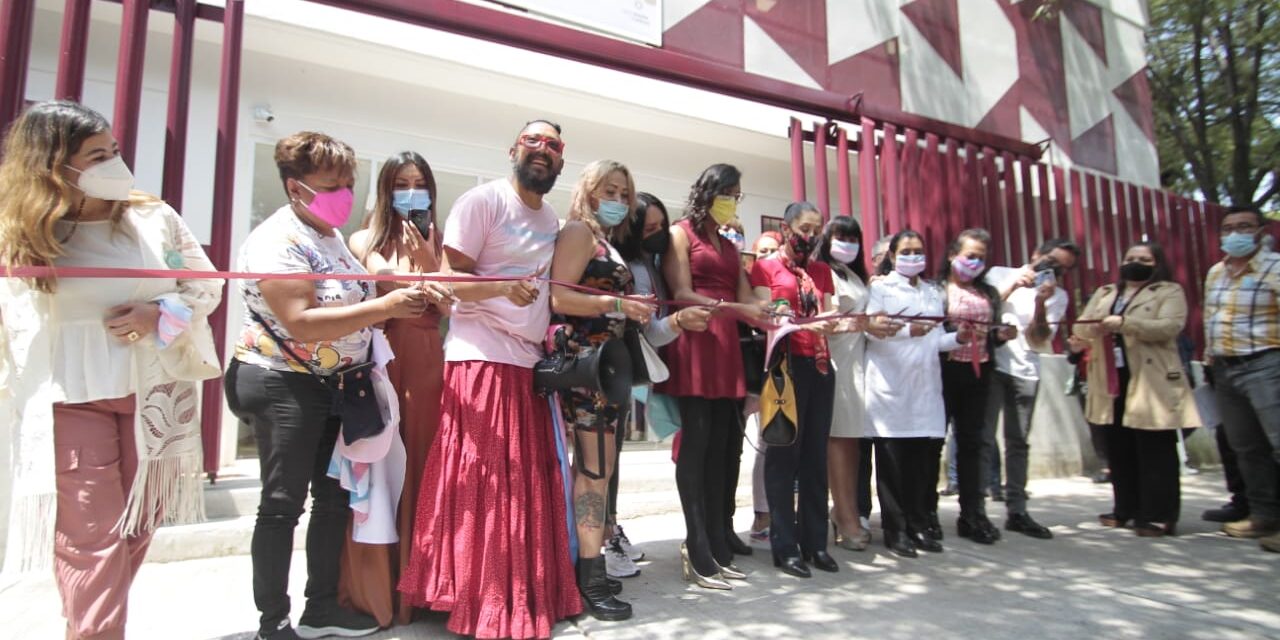
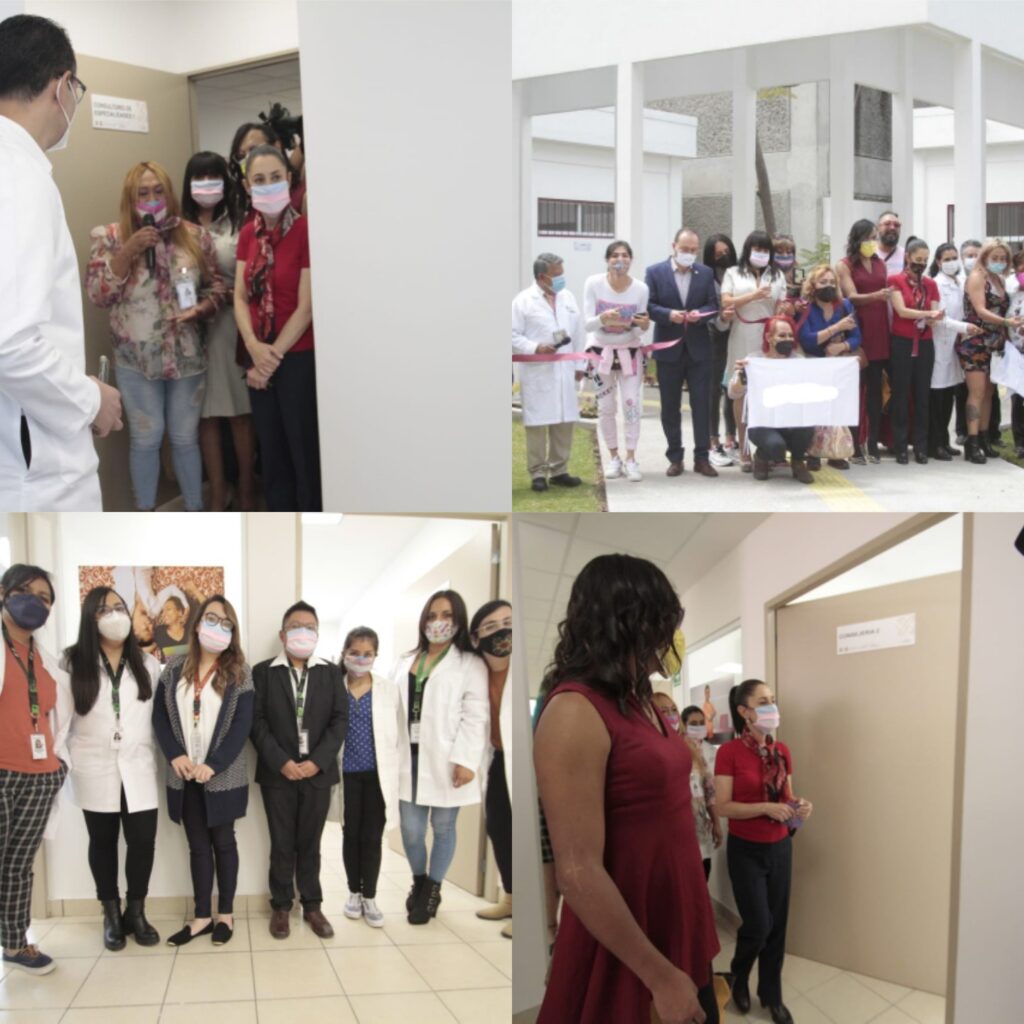
With the promise and hope of no longer suffering discrimination in their right to access health, authorities in Mexico City, together with collectives and activists, celebrated the inauguration of the first medical unit staffed and directed for trans and non-binary populations.
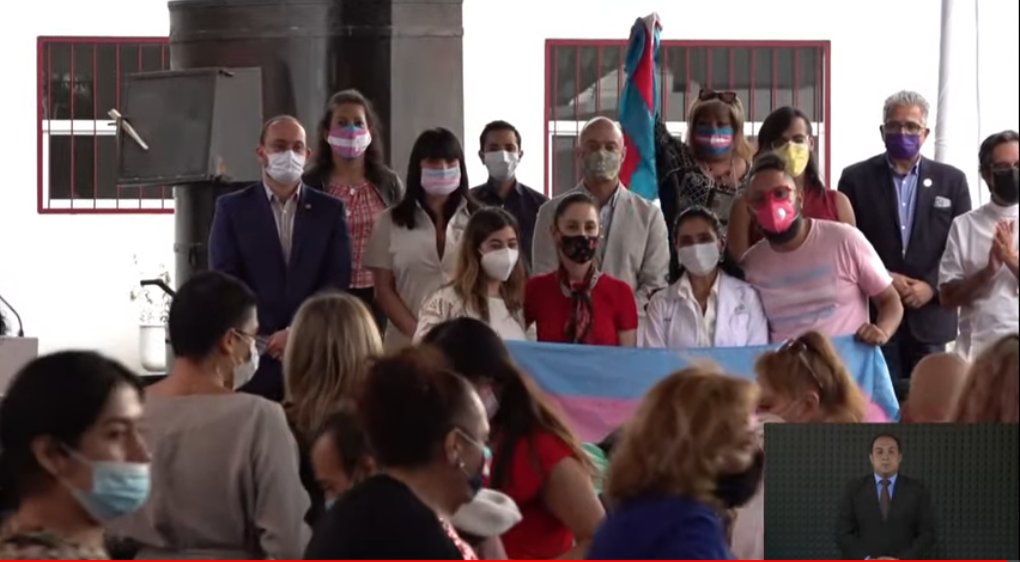
With shouts of " Here it is, the trans resistance" and waving pink, white, and blue trans flags, attendees applauded the fulfillment of what was one of the campaign promises of the Head of Government, Claudia Sheinbaum: to have a center that guarantees they will be treated based on their identity.
The health debt
On opening day, in front of authorities and fellow activists, Rocío Suárez, coordinator of the Center for Support of Trans Identities, expressed her hope that this first center would become a national benchmark and even an example for Latin America. The goal is to guarantee an inclusive space for diverse identities, but above all, to prevent the health of trans people from being addressed solely in terms of hormone therapy, without emotional support.
Located in the Miguel Hidalgo district, the Comprehensive Health Unit for Trans People is the first service aimed at transgender, transsexual, intersex and non-binary people in Mexico City with the purpose of guaranteeing access to the right to health as well as a life free from discrimination .
“There is an ongoing challenge within the community, and that is the one affecting our fellow trans women who suffer the effects of using body-shaping products, which impact their quality of life. We hope that this model can save lives and improve the conditions related to these practices. In the face of violence and death, it is necessary to join forces,” said the coordinator of the Center for Support of Trans Identities at the end of her presentation.
In an interview, Rocío pointed out that while it is not the first health space aimed at the trans population, it is the first space fully specialized in the health care of these populations in Mexico City in which the demand of not associating HIV with the issue of the trans population exclusively was met, even though the issue will be addressed.
What services does it offer?
On October 1st, the Unit for Transgender People and the Specialized Center for Integrative Medicine (CEMI) were inaugurated in Mexico City. According to the Ministry of Public Works and Services (Sobse), the total investment in both projects was 33.5 million pesos.
According to the Mexico City Health Department, the Unit will offer hormone therapy services and will have general practitioners, as well as specialists in internal medicine, endocrinology, urology, dermatology, nutrition, psychiatry, clinical psychology, and sexology. In addition, it will offer counseling, support, and health promotion services, particularly those that contribute to improving self-care and physical well-being.
During the inauguration, the head of the Ministry of Public Works and Services (Sobse), Jesús Antonio Esteva Medina, explained that 18 million pesos were allocated for the construction of the Comprehensive Health Unit, which has two levels and six consultation rooms. Two of these are for General Medicine, one for Gynecology, one for Urology, one for Psychiatry, and one for Endocrinology. It also includes areas for Sample Collection, Ultrasound, a Pharmacy, a Nursing Room, a Treatment Room, two Waiting Rooms, and three Psychology modules.
For the Specialized Center for Integrative Medicine, Esteva Medina explained that the two buildings house 14 consultation rooms: three for Homeopathy, three for Physiotherapy, three for Acupuncture, two for Mesotherapy, one for Nutrition, one for Psychology, and one for Somatometry Nursing. There is also a pharmacy, a multipurpose room, and a waiting room.
Create trans and non-binary healthcare protocols
In an interview for Presentes, Dr. Andrea González Rodríguez, director of the Center for the Prevention and Comprehensive Care of HIV/AIDS in Mexico City and of the Trans Clinic, says that the creation of the Unit seeks to be the gateway to access to health services for the population .
“ This is the first clinic of its kind in the country, aimed at a population with significant gaps in healthcare access . We're talking about a highly discriminated and rejected sector of the population, with very few healthcare options and many opportunities for rejection . That's why this clinic is so important, so that it can reach the trans population, not only through this clinic but also through the broader network of hospitals and health centers in Mexico City. The idea is to create the necessary protocols throughout the capital's healthcare system to provide dignified and comprehensive care to the trans and non-binary population ,” she explained.
The director's words about combating discrimination in healthcare resonate in a country where 76 percent of the LGBTTIAQ population reported feeling uncomfortable with medical staff, while nearly half chose to conceal their sexual orientation or gender identity during consultations. This is according to the 2018 Survey on Discrimination Based on Sexual Orientation and Gender Identity ( ENDOSIG ) conducted by the National Council to Prevent Discrimination (Conapred).
Free from medical violence
Furthermore, the survey mentions that people with a non-normative gender identity are the ones who most frequently report experiencing discrimination during medical care, with trans women ranking first at 24.5 percent, followed by trans men at 24 percent .
One of the strategies to prevent and eliminate discrimination in healthcare at the care unit will be the work of the medical staff: more than half belong to the trans and non-binary community. There will also be the creation and implementation of training protocols for public servants on human rights and sexual diversity.
In the words of Dr. González, the Unit will address specific health needs of the trans and non-binary population, as well as provide support for gender transition that allows for a full life free from medical violence.
“These facilities also aim to address prevention issues such as sexually transmitted infections, HIV, and inappropriate transition practices like excessive hormone use or the use of substances for body modification. But we also offer mental health support for situations sometimes caused by histories of domestic violence, sexual violence, or rejection, where people seek a space for therapeutic listening and support, thus finding a healing mechanism,” she states.
The pending path
Although the creation of the Unit is a way to guarantee the right to health for trans and non-binary populations, there are still changes to be made to eliminate discrimination by medical personnel, says Dr. Ricardo Baruch, researcher and activist on sexual rights and health issues of the LGBTTTIAQ community.
“We can’t deny the reality: trans and intersex people are the ones who most frequently experience discrimination in their right to health . They are given dirty looks, or the doctor addresses them by a name they don’t recognize. This leads many people to not want to return to the hospital. We must stop assuming that patients are cisgender or heterosexual, and advocate for trans people to be able to go anywhere for checkups. However, for specific issues, such as hormone therapy, the ideal is a specialized space with people trained in human rights ,” she explained in an interview.
Dr. Baruch is committed to providing training on human rights and diversity to medical and nursing students, as well as staff already working in health centers.
“It is urgent that the differences between populations be taken into account. Greater interaction between healthcare personnel and the community can be fostered through social service or internships to understand their needs and how to address them, as well as ongoing training for those already working in healthcare. This needs to be taken seriously because the Ministry of Health offers an online course on the topic, but since it's not mandatory, many people overlook it,” she lamented.
For Rocío Suárez, one of the fundamental steps to address the health debt owed by authorities to trans populations is intersectional work. She believes that collaboration with other specialized centers will be essential to the progress of the Health Unit.
The services of the Unit and the Specialized Center operate free of charge and with a special protocol for vulnerable people, such as trans people in homelessness, migrants or those who do not have the necessary documents to start a file such as an official identification, with the aim of being accountable with transparency but without denying services or rejecting them.
The Comprehensive Health Unit for Trans People is located at Plan de San Luis corner of Manuel Carpio, Santo Tomás neighborhood; and the Specialized Center for Integrative Medicine (CEMI) at Manuel Carpio No. 470, Santo Tomás neighborhood; both in the Miguel Hidalgo Borough, Mexico City.
We are present
We are committed to journalism that delves into the territories and conducts thorough investigations, combined with new technologies and narrative formats. We want the protagonists, their stories, and their struggles to be present.
SUPPORT US

FOLLOW US
Related notes


We are present
This and other stories are not usually on the media agenda. Together we can bring them to light.