

A lesbian-feminist library in Lima is a refuge for children and LGBT+ people
Since March 2020, a children's library has been operating in the Historic Center of Lima: an area of sex work, drug micro-trafficking, clandestine bars, a public urinal and a boxing ring.


Share

How do you create a punk library in the middle of chaos? Yes, we have a children's library in the Historic Center of Lima, specifically on Jirón Contumazá, an area known for sex work, drug dealing, clandestine bars, a public urinal, and a boxing ring. When we arrived, everything was unheard of. We had heard dozens of cliché phrases that tried to describe these kinds of places: no man's land, a concrete jungle.
The “nobodies” lived here, like in so many alleyways in Lima, abandoned to their fate. And the children were also left to their own devices, having lost one school year and facing another, experiencing violence for breakfast, lunch, and dinner. It was precisely this violence that convinced us we had to do something. As lesbian feminists, we couldn't stand idly by while the children were lost in the indifference of the Peruvian state, incapable of protecting, caring for, and loving them.
We named the library "Miguelina Acosta" in honor of the lawyer and feminist activist, because feminism is what's often lacking in these neighborhoods, even though there are plenty of strong women. They organize themselves to feed their children every day, to stand up to the men who abuse them and don't give them a penny, to the clients who think that because they pay them a pittance he can treat them like garbage, and to the police, who evict them instead of the pimps, the drunks, the drug dealers, their regular customers, and those who use the streets as toilets.
A resistance amidst helplessness
The neighborhood got so bad that people were even doing drugs right outside our house, until two women decided to fight with sticks. A neighbor filmed them, and it was broadcast nationwide. Suddenly, Jr. Contumazá was famous, although the fight that was seen all over Peru wasn't between two sex workers, as the news reports claimed; it was between a woman who wanted to see her son and the stepmother who didn't want that to happen.
In the end, it doesn't matter why the women fight; the strong arm of the law sought to restore order, as a new mayor attempts to do every five years. This time it was more structured: they evicted all the sex workers, planted five nearly dead saplings on the pedestrian street—saplings that might one day become trees—placed a security booth where nothing seems to exist, and installed security cameras to monitor the neighbors' every move.
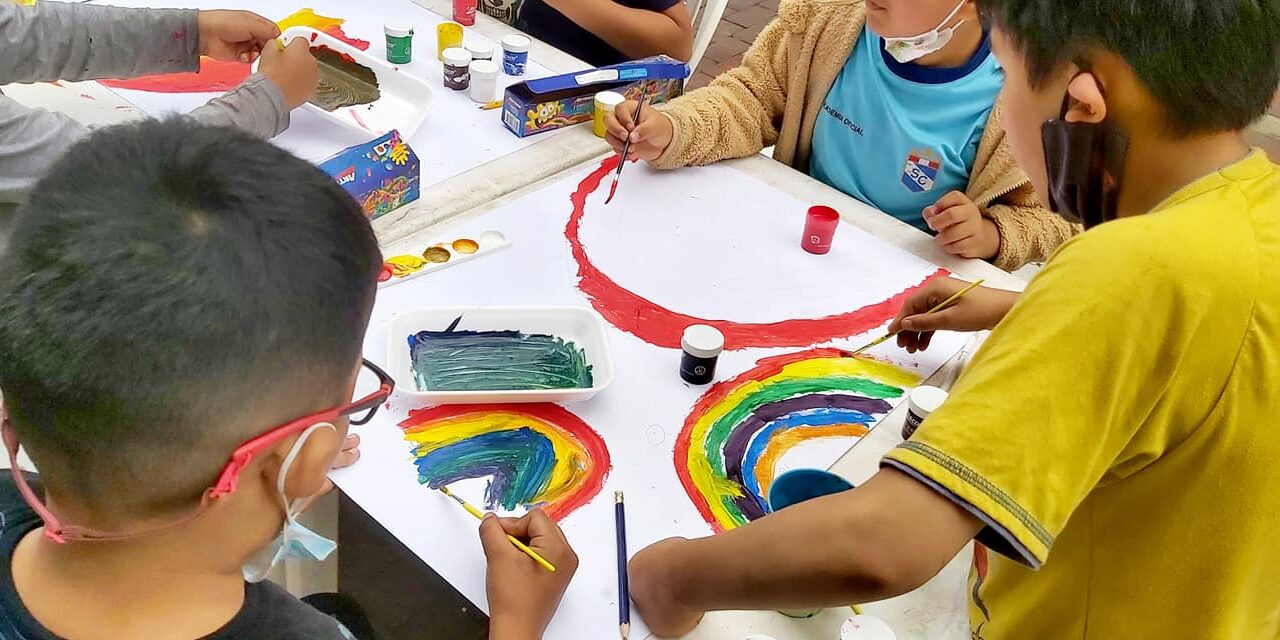
There, amidst the chaos, they discovered a small, colorful library, and they were surprised that something like that existed in such a dangerous neighborhood, as if it were impossible, as if it made no sense. But for us, it made perfect sense. We had spent six months working in the neighborhood, opening the library and filling it with books, only to find out that the children couldn't read, teaching them to read only to find out that they barely ate, preparing breakfasts only to find out that they wouldn't be enrolled in school because they didn't have computers or internet access, turning the library into a small school so they could have their classes, holding art workshops so they could paint and dream of becoming artists, photographers, film directors, writers. Pulling them out of a violent present and an uncertain future.
“Long live the gays!”
And we've heard them speak freely about sexual diversity, recognize themselves as such, acknowledge their mothers as lesbians, their uncles as gay, and their family friends as trans . Once, a guy tried to stop the girls from making speeches in favor of LGBTQ+ rights, and a mother told him not to be homophobic, that her brother was gay, and that he should take his opinions to places where they mattered, because he wasn't welcome in the neighborhood.
Once again, with some trepidation, we commemorated the International Day Against Hate Crimes, following the massacre of trans and gay people in the Peruvian jungle. Just as the police seemed about to clear us from the street, a mother grabbed the microphone from me and shouted: “Officers, why don’t you go arrest criminals and stop bothering us here? Our children are happy, and long live sexual diversity! Long live lesbians! Long live gays!” All we could do was shout “Hooray!” to everything she said.
Childhoods amidst diversity
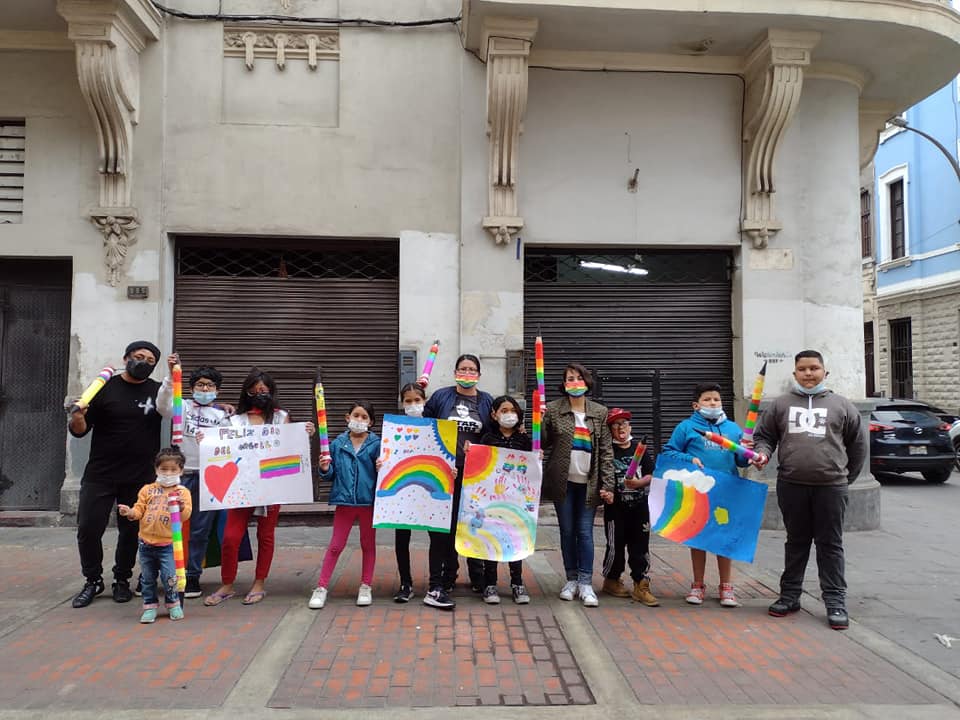
We've seen a boy proudly say he has a lesbian mom "like his teachers." We've heard a girl say that every time someone calls her a "tomboy," she replies, "Yes, with pride." And when they try to insult each other by calling them "faggots," they remember us, feel ashamed, and come running to tell us how they felt..
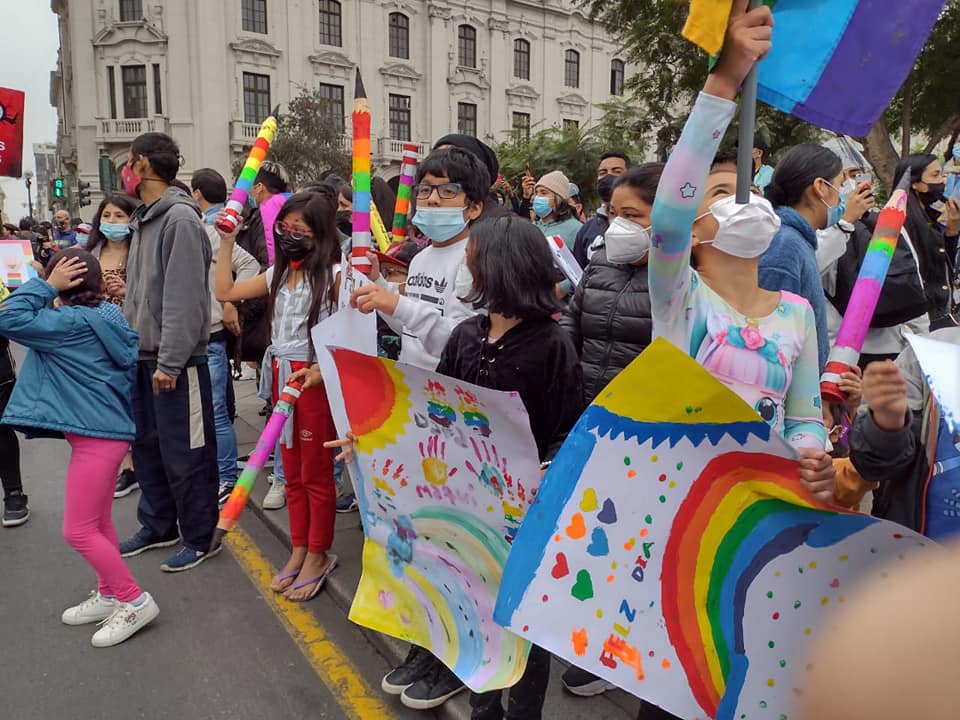
We watched with tenderness as they prepared their banners and their best clothes to go to the Pride March with us, and how their parents decided to accompany them. We happily walked and cheered, even though we were at the back. We shared the sorrow of a teenager who asked her friend to be her girlfriend, and her friend stopped talking to her and changed her schedule, but on the long journey of her journey as a lesbian, she is no longer alone; she has us.
We have also sadly witnessed a father's decision to send his daughter away from the library—a girl in whom I recognized myself as a child, with the same style, the same seriousness, and the same helplessness in her eyes that I once had, knowing who I was but unable to be. She knows we are here, that we are waiting for her.
These women, who witness their mothers suffer and their fathers disappear, teach us every day about love, generosity, and resilience in a world where sexism, inequality, and indifference try to destroy their dreams. “Miss, why don’t you charge? You have to earn something for your time,” they told me, as we put up the sign “Free reading and writing lessons” on the door. “What do you mean we don’t earn anything?” I replied. “We gain a kinder person, a less violent neighborhood, a less easily manipulated society. We all win when a child, teenager, or adult learns to read and write. We win when there are more people teaching others to read and write.”
Education is an act of justice, and that justice becomes a reality every day in a rainbow-colored library in a neighborhood that is no longer so gray in downtown Lima.
We are present
We are committed to journalism that delves into the territories and conducts thorough investigations, combined with new technologies and narrative formats. We want the protagonists, their stories, and their struggles to be present.
SUPPORT US

FOLLOW US
Related notes
We are present
This and other stories are not usually on the media agenda. Together we can bring them to light.