

The Ministry of Health presented a healthcare guide for trans and non-binary children
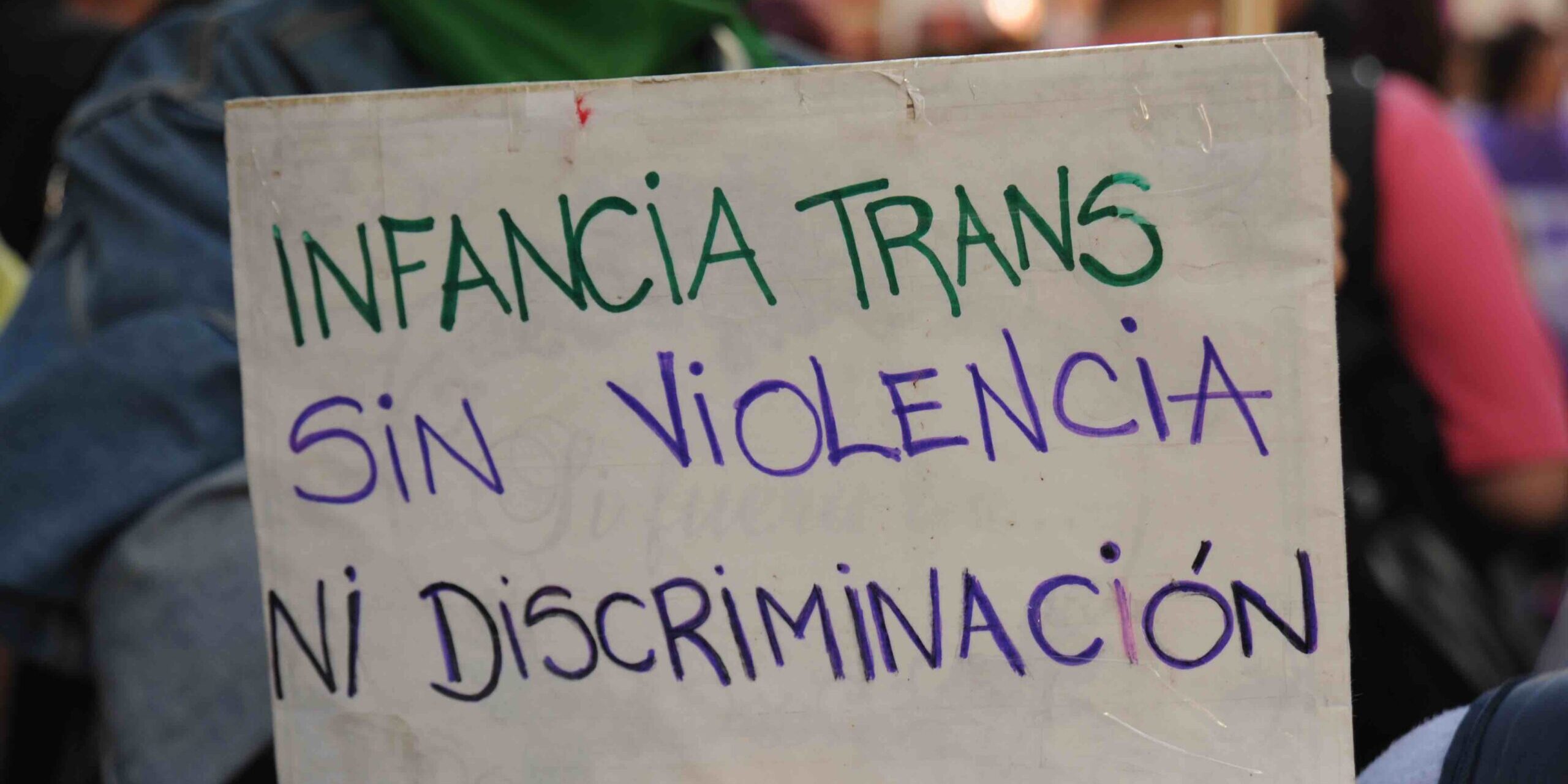
The guide develops a series of guidelines for addressing the health care of trans, transvestite and non-binary children and adolescents from a comprehensive perspective.


Share

This Wednesday, June 30, the Gender and Diversity, Adolescence and Youth and Perinatal and Child Health departments of the Ministry of Health of the Nation presented a guide of Recommendations for the Comprehensive Health Care of Trans, Transvestite and Non-Binary Children and Adolescents .
“This is the first time the national government has issued a recommendation of this kind,” said Health Minister Carla Vizzotti at the start of the presentation. She considered it “a symbol” and “another policy aimed at expanding rights.”
The guide “develops a series of guidelines for addressing the health care of trans, transvestite and non-binary children and adolescents from a comprehensive perspective, recognizing and respecting gender, sexual and bodily diversity, in terms of human rights and in accordance with the current legal framework in Argentina.”
The meeting, moderated by journalist and researcher Luciana Mignoli, also included the participation of the Minister of Women, Gender and Diversity, Elizabeth Gómez Alcorta, who mentioned the Comprehensive Protection of the Rights of Girls, Boys and Adolescents Law (No. 26,061) and the Gender Identity Law (No. 26,743), arguing that “in addition to passing laws in Congress, it is necessary to advocate for them and effectively turn them into public policies that change people's lives.”
The guide has six main points: 1- Trans, transvestite and non-binary children and adolescents, 2- Respect for gender identity in the health system, 3- Guaranteeing care, 4- Care model from a comprehensive perspective, 5- Support for experiences of the body and 6- Specific recommendations in the context of COVID-19.
Romina Pezzelato, a consultant for the Pan American Health Organization and a member of La Casita Trans, who contributed to the content development as a communicator, activist, and the mother of a trans girl, believes the recommendations “pave the way in the health system regarding the respectful listening and support that our children so desperately need and deserve for healthy development based on respect for their gender identity.” She added, “This support is crucial in a society that still presents cisheteronormativity as the only way to experience the world.”
The presentation included Cocó Herrera, a 14-year-old trans teenager: "I think this is really nice and that they invited me to speak," said Cocó, adding: "I think it's important for the generations that come after me."
For her part, Florencia Blasi, from Infancias Libres (Free Childhoods), maintained that this step “ is important because it organizes us as families to think about childhood, not as a focus and object of study, but about what children need from this world and from us . It invites us to consider comprehensive health from the perspective of their needs.” Meanwhile, Verónica Arlausky, from Agrupación MUNAY (MUNAY Group), emphasized the need to continue advancing in deconstructing the healthcare system. “We also urge the Executive Branch to assert its authority to negotiate with professional training institutions so that they include this in their curricula,” she stressed.
The development of the materials was led by the National Ministry of Health's Directorate of Gender and Diversity, Directorate of Adolescence and Youth, and Directorate of Perinatal and Child Health. Also participating in the dialogue and review process were the Argentine Society of Pediatrics, the comprehensive care group for transgender children and adolescents at Elizalde Hospital, the endocrinology service at Fernández Hospital, the transgender children and adolescents care group at Durand Hospital, and the Eva Perón Children's Hospital in Catamarca. Participating organizations included the Civil Association Infancias Libres, the Argentine LGBT Federation, the MUNAY group, Trans Argentinxs, and the Argentine Homosexual Community.
We are present
We are committed to journalism that delves into the territories and conducts thorough investigations, combined with new technologies and narrative formats. We want the protagonists, their stories, and their struggles to be present.
SUPPORT US

FOLLOW US
Related notes
We are present
This and other stories are not usually on the media agenda. Together we can bring them to light.