

Consulate denies repatriation of Kaory, Honduran trans woman who died in Mexico
Kaory had fled Honduras after receiving death threats. Mexican activist Kenya Cuevas claimed her body and requested its repatriation, but the Honduran consulate denied the request.



Share

In the early hours of June 22, Kaory Cantarero, a 27-year-old trans woman originally from Honduras, died of a heart attack at a rehabilitation center in the State of Mexico. Mexican activist Kenya Cuevas claimed her body and requested its repatriation; however, the Honduran consulate denied this service, citing non-compliance with protocol.
“She was already having many seizures in the street due to alcohol consumption. On Friday (June 18), she called me and told me she wanted to go to the group (of Alcoholics Anonymous). They accepted her, gave her care, examined her, and realized that she arrived in very poor condition. On the intake form, they noted bruises and contusions from so many seizures,” Kenya explains in an interview.
During her stay at the rehabilitation center, Kaory experienced seizures and delirium, and in the early hours of Tuesday, June 22, she suffered a fatal heart attack. “Speaking with the medical examiner, he told me that she had already had several pre-infarctions, but this was the one that ended her life,” the activist added.
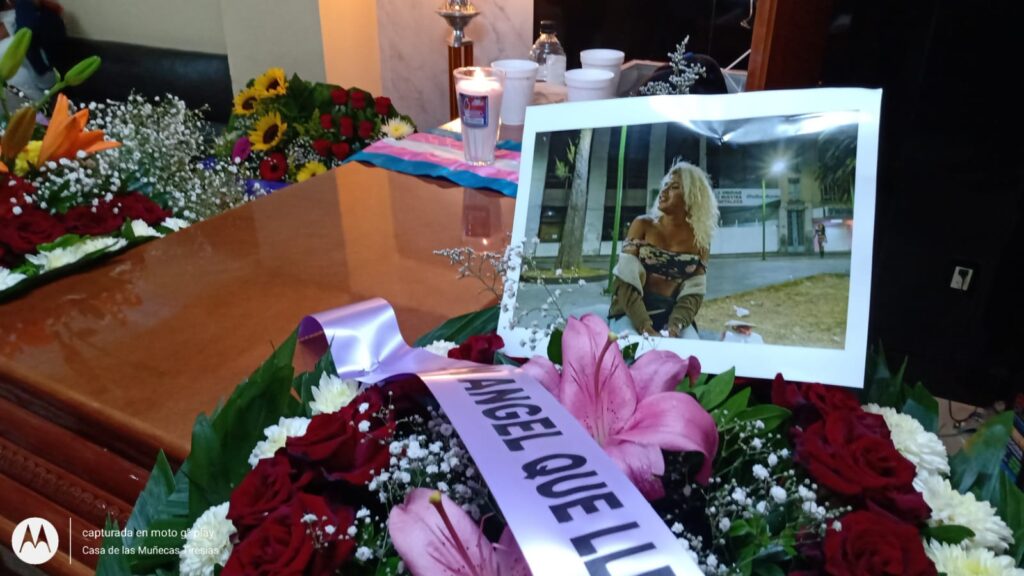
Kaory's death was confirmed by paramedics. Minutes later, Kenya Cuevas was notified and she, in turn, contacted Kaory's mother, who lives in Spain. "When I gave her the news, she became distraught and told me she wanted to see her daughter, so we connected her via video call with the group (rehabilitation center)," Kenya said.
Consulate denies repatriation of Kaory
Kenya had to get the personal number of the Honduran consul in Mexico, Gabriel Rubio, because no one answered when she called the consulate. After multiple failed attempts, the official finally replied: “We will no longer be able to carry out the repatriation because you did not respect the protocol.”
Presentes managed to contact Miriam Ávalos, a consular assistant, who gave us the same response: “Miss Kenya did not follow protocol.” When asked why, she said, “For repatriation to take place, the Consulate must be notified immediately upon the death of a Honduran citizen so that it can identify the body, retrieve it from the morgue, and carry out the necessary procedures. Once the family has retrieved the body or is holding a wake, they cannot come and tell us, ‘We want you to pay to send it to Honduras,’ because that is not the protocol followed by the Ministry of Foreign Affairs.”
The assistant also emphasized: “And only the mother and father are authorized to request the repatriation of the body.” According to this information sheet from the Honduran Ministry of Foreign Affairs, the repatriation request can be made by a first- or second-degree relative.

When requesting the body, Kenya did so as a civil organization with the authority to do so, not as a family member. Furthermore, the Law for the Protection of Honduran Migrants and their Families states that “the resources of the Solidarity Fund with Honduran Migrants (FOSMIH) will be used to repatriate the bodies of Hondurans who have died abroad and whose families lack the resources to do so.”
Kaory's father, from San Pedro Sula, requested repatriation, and official Ávalos confirmed in an interview that he will receive the body in Honduras. However, the payment for the repatriation to the funeral home that still has Kaory's remains will not be covered by the Honduran Consulate in Mexico, but rather through the support of the International Committee of the Red Cross. The funeral home has not yet given a date for the repatriation.
Kaory fled Honduras due to threats
“She was very charismatic, she found humor in everything, she laughed a lot, she was also very supportive,” Kenya Cuevas remembers her, who knew Kaory closely because she was inside the Paola Buenrostro Home , a shelter for trans women, founded by her.
In 2011, Kaory Cantarero had to leave San Pedro Sula, Honduras, after receiving death threats; she was only 17 years old. That year, and until 2015, the city was ranked as the most violent in the world, according to the Citizens' Council for Public Security and Criminal Justice. Another reason for leaving the country is the prejudice-based violence faced by trans women; from 2009 to 2020, the Cattrachas Lesbian Network recorded 119 murders of trans people, mostly women.
“Among the reasons that force a trans woman to leave the country are structural violence and the lack of political will to create and implement laws that benefit this population. Honduras does not have laws that protect LGBTI+ people, and in particular trans people; they are not even recognized,” says Osman Lara, a Honduran LGBT activist pursuing a master’s degree in social sciences and international migration, in an interview.
On her birthday, August 29, Kaory decided to "leave the shelter." Within weeks of leaving, she began living on the streets, drinking alcohol, and engaging in sex work in the Revolución metro area of Mexico City.
“During the days in Revolución, we tried to convince her to return (to the shelter), but there was always resistance. As I've always said, we carry many burdens, things that have happened to us. And Kaory sank into a very deep depression because one of her brothers was murdered. That, plus drugs and alcohol, which are among the first things people in sex work need to cope. All of that traps you in a vicious cycle, and it's very difficult to get out of it and out of a life completely devoid of rights,” Kenya maintains.
“She wasn’t alone”
Kenya Cuevas' activism has led her to recover nearly 40 bodies of trans women from the SEMEFO (Forensic Medical Service) so that they are not buried in mass graves, thanks to the founding charter of her organization, Casa de las Muñecas Tiresias, which allows her to claim; identify; hold a wake and bury, and thus dignify their deaths.
Kaory was no exception. “I requested the body because I know they weren’t going to investigate where she was from. I know the system, and that was going to result in her ending up in a mass grave. During that whole time, I was also calling and calling and calling the Honduran Consulate, and they never answered,” Kenya recounts in an interview.
Kenya says she is disappointed because there was no response to her call for support. “I am outraged with the entire LGBT community and activists. There was no support whatsoever, not on social media, not at the wake, nobody cared, not even the march committee. The only ones who offered support were CAIT, Haciendo Calle, the sex workers themselves, and a young man who brought coffee and stayed until three in the morning.”
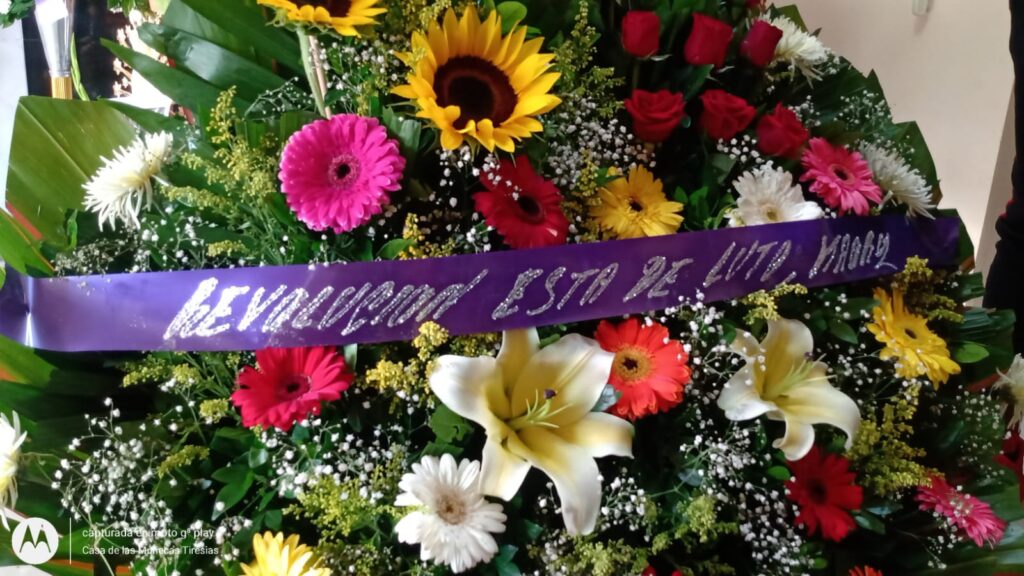
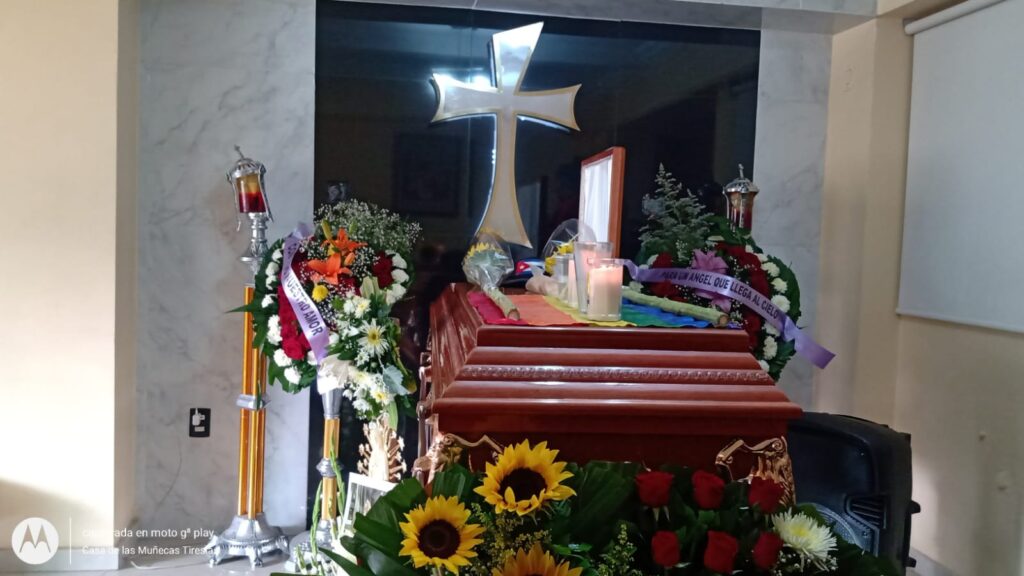
Kenya covered the funeral expenses for Kaory's wake in Mexico City: 5,000 pesos for two days, but it stretched to four nights. When asked why, she said, "It was the only way people who knew her in Revolución could see her. She wasn't alone." Kaory was laid to rest with impersonation shows, music, and flower wreaths.
We are present
We are committed to journalism that delves into the territories and conducts thorough investigations, combined with new technologies and narrative formats. We want the protagonists, their stories, and their struggles to be present.
SUPPORT US

FOLLOW US
Related notes

We are present
This and other stories are not usually on the media agenda. Together we can bring them to light.
1 Comment