

Pinkwashing or the marketing trivialization of sexual diversity
There are many struggles that the market tries to exploit. For some years now, the LGBTI+ community has been fighting against advertising impositions that are devoid of content.


Share

On May 17th of this year, the International Day Against Homophobia, Biphobia, and Transphobia, the footwear brand Puro launched a campaign called “Pride” that used an image of trans activist Diana Sacayán—without her family's consent—in which she is shown with a shadow on her face to suggest a beard. The products in this line were quickly withdrawn due to strong backlash from the LGBT+ community.
The Anti-Discrimination Liberation Movement (MAL), an organization founded by Sacayán and run by family and friends after her murder, declared: “Historically, advertising has played a fundamental role in the mockery and stigma that are part of a social construct fostering hatred towards our trans and travesti population. We don't believe that overnight these will become our allies. Quite the opposite!”
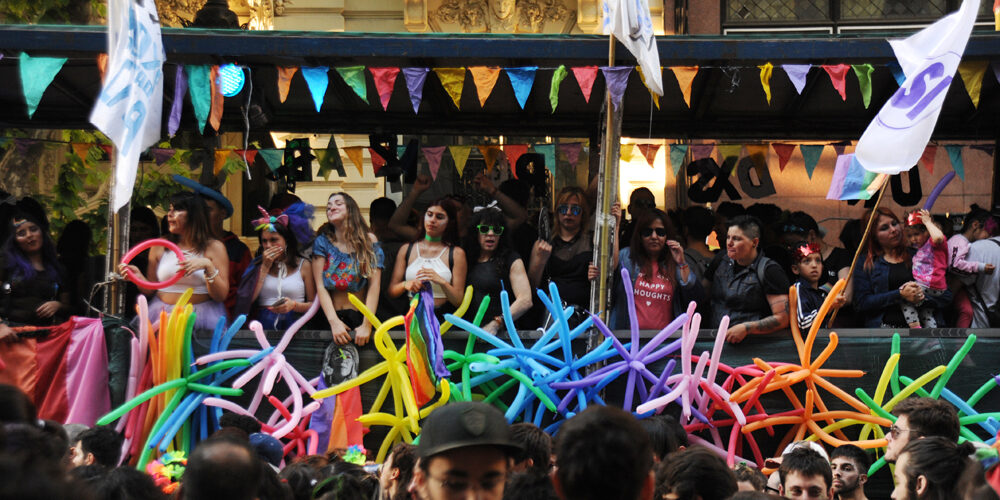
This action falls under the umbrella of what activists call "pinkwashing," referring to the "ride of the wave" by corporations and governments on LGBT+ issues during Pride Month, coupled with the absence of policies supporting sexual diversity the rest of the year. This phenomenon reaches its peak on International LGBT+ Pride Day, celebrated on June 28th.
“Pinkwashing is a marketing strategy. Nothing more, nothing less. If anyone thinks it's more than that, that there's another intention to generate some positive change in our community, they're wrong; but also, if anyone thinks it's something unimportant or without consequences for our group, they're also wrong,” explains Sole Caballero, a non-binary lesbian activist and leader of 100% Diversity and Rights in Neuquén.
Many of the criticisms from activist groups are that brands use diversity for sales purposes but then fail to implement hiring policies for LGBT+ people. “I would ask all those companies that will be out on the streets this March 28th waving pride flags, colors, and glitter, saying, ‘We stand on this side,’ how many trans people they have integrated into their structures,” says Victoria Stéfano, a trans communicator from Santa Fe.
In that sense, the approval of the transvestite and trans labor inclusion law establishes a reparation and sets a path for companies – not just the public administration – to hire transvestite and trans people.
“It also means being overly aware of historical events, that is, very detached from the everyday lives of all these people,” adds Franco Torchia, a journalist with a degree in Literature from the University of La Plata (UNLP).
According to Torchia, when discussing this issue, there's an overemphasis on corporate responsibility and a neglect of the public sector's role. “I don't want to lose sight of what states and some governments are also capable of doing in this regard. Otherwise, we'll always be focused solely on the financial aspects of this issue. We've seen it, and we continue to see it, from the very administrations of countries,” says the host of “You Can't Live on Love,” a daily radio program about sexual diversity on LaOnceDiez, the public radio station of the City of Buenos Aires.
A gateway to inclusion?
What is the problem with pinkwashing? Among the answers to this question, activists consider that a struggle is being used for the purpose of selling something or obtaining votes, in a context characterized by the lack or complete absence of LGBT+ employment inclusion, especially for transvestites and trans people; and that it is a practice used to sell products that are often beyond the reach of this population, given that a large percentage of them do not have access to formal employment, the banking system, or basic quality food.
“These are areas where people in our community continue to suffer acts of discrimination, laws that promote the recognition of our rights continue to be ignored, and these places remain inaccessible to most of us,” says Caballero, who is also Co-Founder of Alto Valle Diverse Espacio Social y Cultural del Colectivo LGBTINB+ de Neuquén y Rio Negro.
Nur Magaquián is non-binary and a communications analyst at Publicis Group. Having arrived in Buenos Aires in 2018, they landed this formal job after several sporadic positions. “Looking back, the fact that my CV landed at an advertising agency was already a reason to celebrate. And the first interview I had was incredible!” they say about their experience at an agency they believe has good practices related to sexual diversity.
“To counteract pinkwashing and ensure that Pride is truly a 'gateway' to inclusion, many multinational agencies work internally year-round,” says Magaquián.
Some measures in this area include respect for self-perceived pronouns and names, active LGBT+ workplace inclusion, education programs for trans children and support for their families, and the promotion of anonymous listening spaces with professionals for inquiries or moments of crisis, among others.
We are present
We are committed to journalism that delves into the territories and conducts thorough investigations, combined with new technologies and narrative formats. We want the protagonists, their stories, and their struggles to be present.
SUPPORT US

FOLLOW US
Related notes



We are present
This and other stories are not usually on the media agenda. Together we can bring them to light.