

Argentina's trans and travesti labor inclusion bill received preliminary approval in the Chamber of Deputies
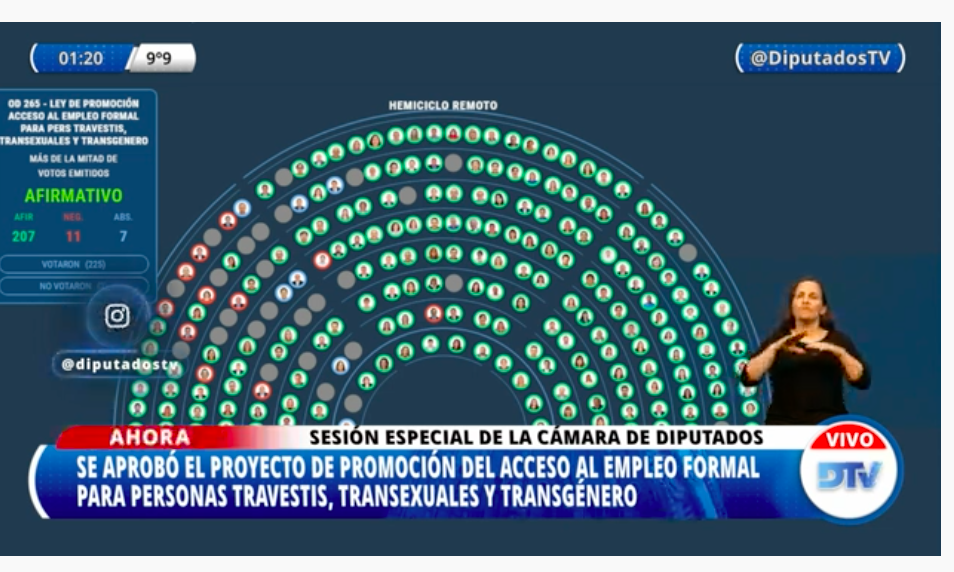
With 207 votes in favor, 11 against and 7 abstentions.


Share

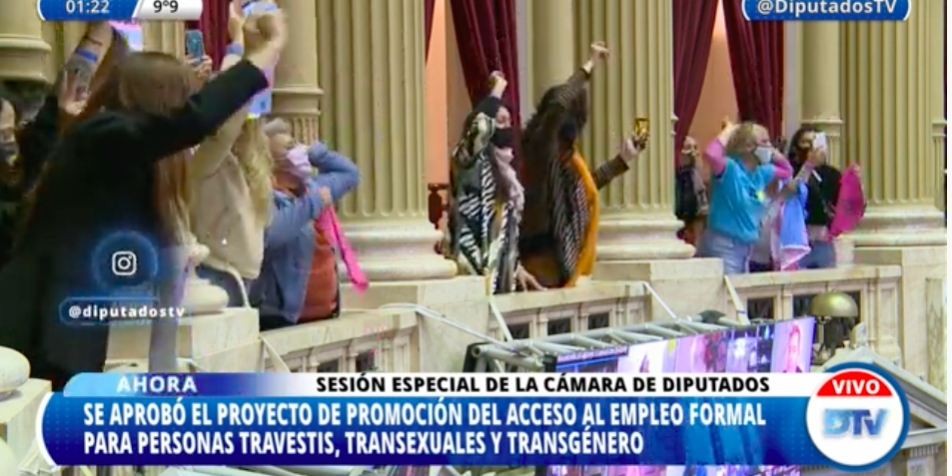
After 1:00 a.m., and following four hours of debate, the Chamber of Deputies approved the Diana Sacayán-Lohana Berkins Law for the Promotion of Access to Formal Employment for Transvestite, Transsexual, and Transgender People, with 207 votes in favor, 11 against, and 7 abstentions. It was a historic night that concluded with chants from activists present in the chamber: "As Diana and Sacayán said, we're never going back to jail." This was the first time Congress had included this issue, which has been a long-standing debt to the transvestite and transgender community, in its ordinary sessions.
The debate was initiated by Mónica Macha, a deputy for the Frente de Todos party and president of the Chamber's Gender and Diversity Commission, one of the main promoters of the initiative, which has been driven by trans and travesti activism for a decade.
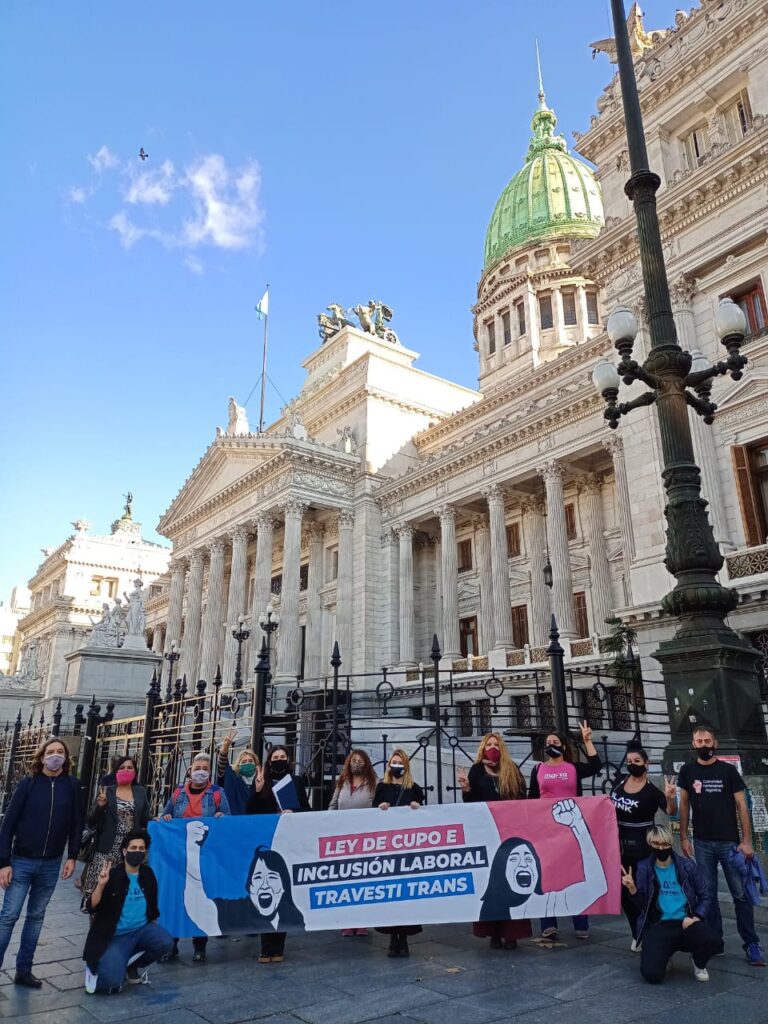
“The National Campaign for Transgender and Travesti Employment Quotas, comprised of more than 250 organizations, celebrates the passage of the Diana Sacayán – Lohana Berkins Law in the Chamber of Deputies. This initiative, which now goes to the Senate, is the result of a unified text promoted by the Pride and Struggle Front, the LGBTIQ+ League of the Provinces, and the Argentine Trans and Travesti Federal Network, in collaboration with National Deputies Mónica Macha, Gabriela Estévez, Vanesa Siley, and Cristina Álvarez Rodríguez. Now, efforts will focus on achieving final approval in the Senate,” the organizations that have been promoting this initiative stated in a press release.
One of the campaign's spokespeople, Marcela Tobaldi, founder of the La Rosa Naranja Civil Association and member of the Pride and Struggle Front, stated: “With this preliminary approval, after decades of exclusion, persecution, stigmatization, and institutional violence against the trans and travesti population, a new cycle begins in terms of the recognition of rights, such as the right to work, from which we were excluded because of our gender identity. This upcoming stage will contribute not only to labor inclusion but also to new social relationships based on respect, recognition, and appreciation of diverse gender identities.”
From the LGBTIQ+ League of the Provinces, Thiago Galván, Secretary of Transvestite, Trans, and Non-Binary Identities, considered it a moment "of great emotion and celebration of a historic event, the fruit of many years of struggle in which many comrades gave their lives. It is a beacon of hope for children, youth, and adult transvestite and trans people who can dream of other possible, livable lives. Today we have a preliminary approval that legitimizes us as subjects of rights."
What does the bill say?
Unlike Alberto Fernández's presidential decree that allocates 1 percent of public sector employment to trans people , the bill is much broader.
And while the decree led to the creation of a registry and the hiring of transvestites and transgender people in government ministries, the number of people included is still small compared to the number of those affected by long-standing, historical, and structural violence. “We need more transvestites and transgender people included. And a national law, because the law grants us legal status as citizens,” Tobaldi points out.
The “Diana Sacayán-Lohana Berkins Law for the Promotion of Access to Formal Employment for Transvestite, Transsexual and Transgender People” seeks to go beyond the presidential decree and establish “positive action measures aimed at achieving the effective labor inclusion of transvestite, transsexual and transgender people, in order to promote real equality of opportunity throughout the territory of the Argentine Republic.”
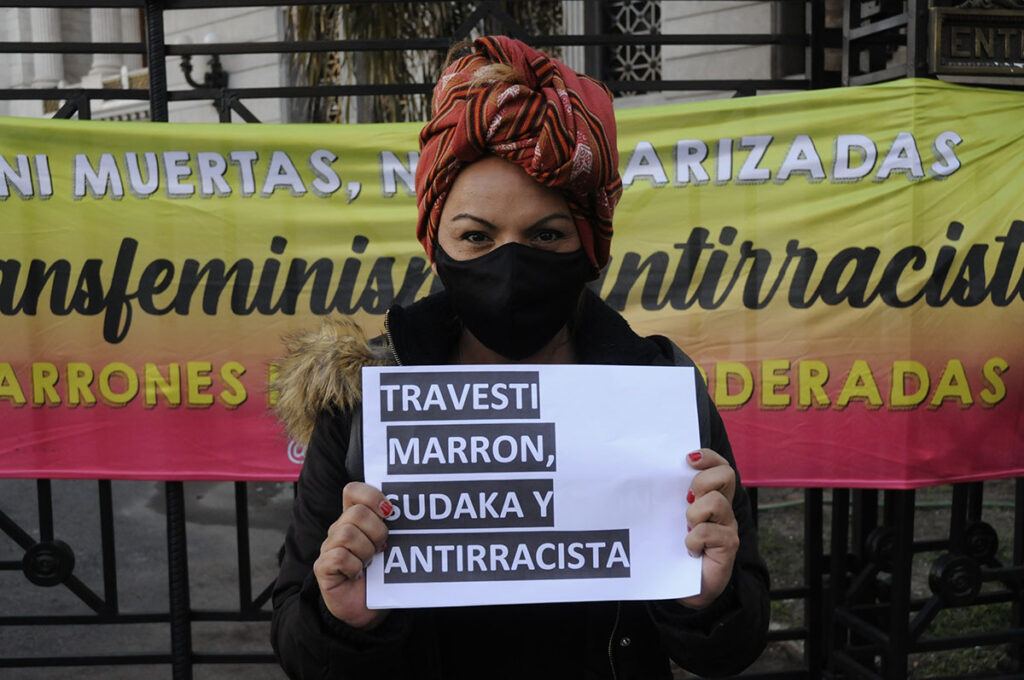
It aims to include transgender, transsexual, and gender-diverse people who are legally entitled to work, regardless of whether they have legally changed their gender marker as provided for in Article 3 of Law 26.743 on Gender Identity. Its articles propose affirmative action measures: labor inclusion in the National Government through a minimum quota of 1% across its three branches, Public Prosecutor's Offices, decentralized or autonomous agencies, non-state public entities, and state-owned companies and corporations, in all forms of employment.
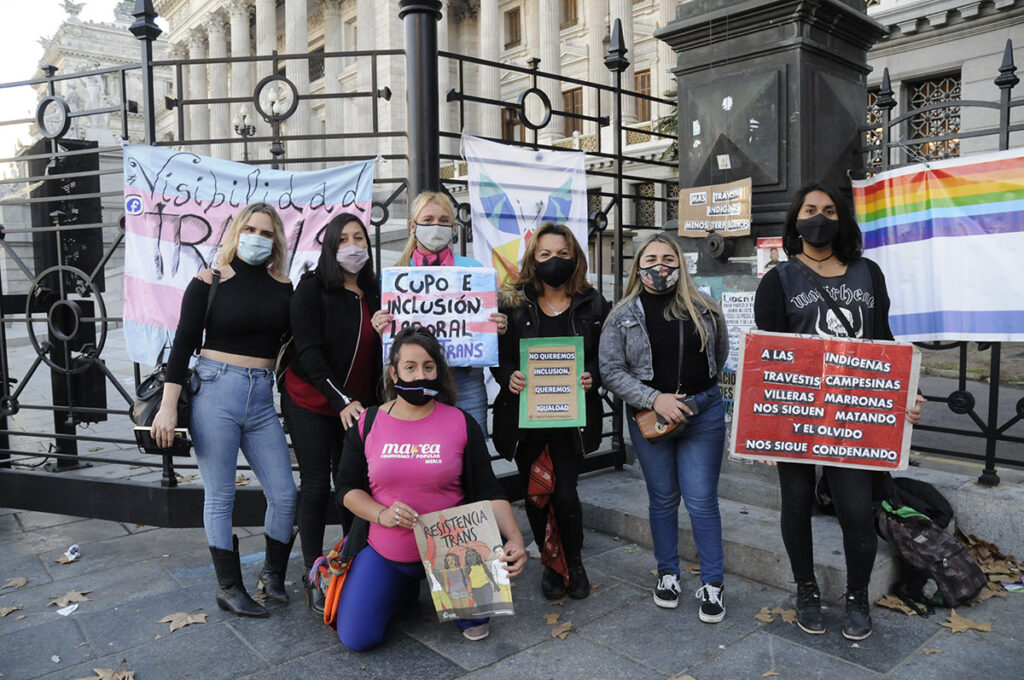
In one of its articles, the bill unequivocally establishes the principle of non-discrimination, stating that all transvestite, transsexual, or transgender people have the right to decent and productive formal employment, equitable and satisfactory working conditions, and protection against unemployment. It further stipulates that, to ensure this right, prior criminal records cannot be considered when guaranteeing employment and continued employment. Therefore, the bill states that the criminal records of applicants "that are irrelevant to accessing the job cannot represent an obstacle to employment and continued employment, considering the particular vulnerability of this group."
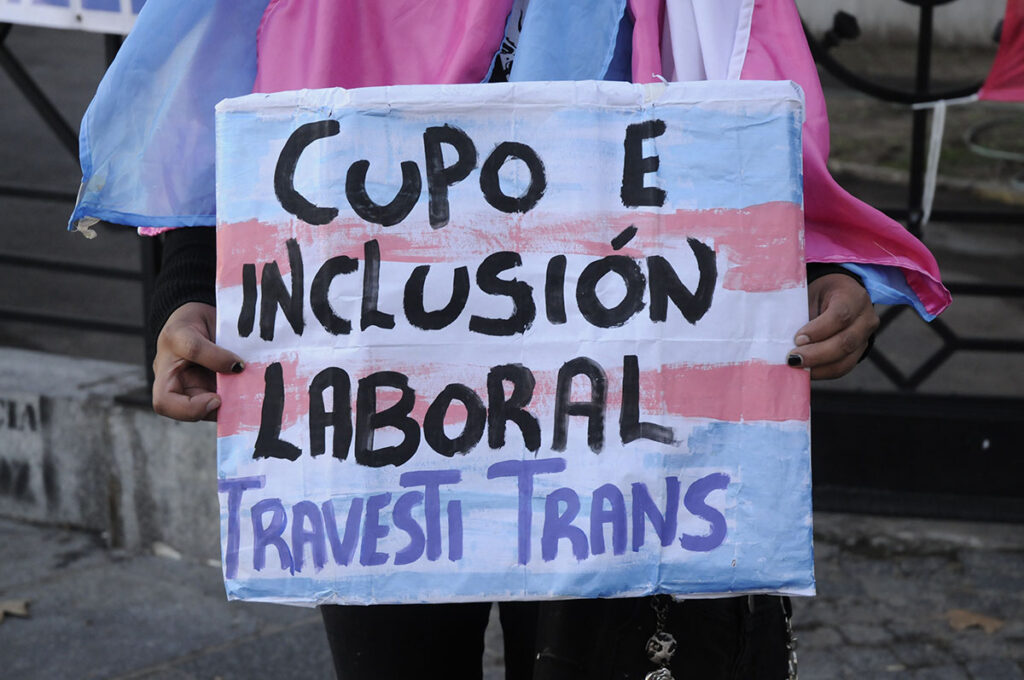
“Nadia (Echazú), Diana (Sacayán), and Lohana Berkins had to fight alone against a patriarchal system,” recalled Claudia Vásquez Haro, president of OTRANS and the Argentine Transvestite and Transgender Federal Coalition, at the February rally in front of Congress, where they made the same demand. She praised the “political maturity of the transvestite and transgender community, which built this unity.” The activist highlighted the social and political organization required to reach this point and urged: “The passage of this law is vital for our community.”
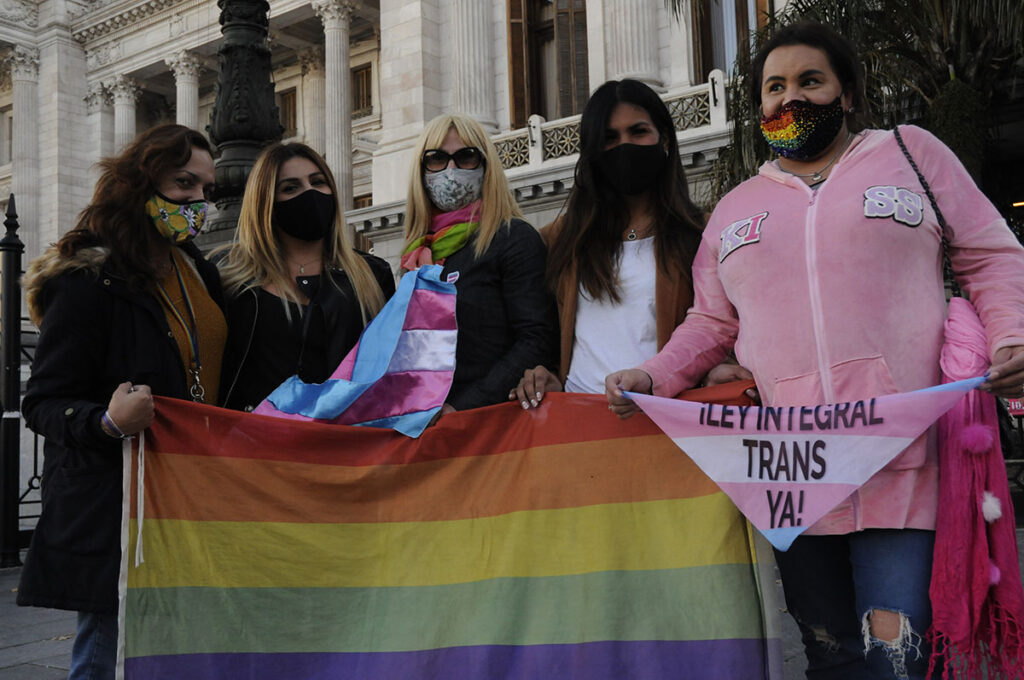
“The law would be the culmination of a public policy that has expanded in recent years. Quotas have already been decreed for the public administration and the Senate. There are also quota and/or labor inclusion laws for transvestite and trans people in the provinces of Buenos Aires, Chubut, Río Negro, Chaco , Santa Fe, Entre Ríos, and La Pampa, as well as ordinances in more than 50 towns and municipalities ,” stated the Pride and Struggle Front, the LGBTIQ League of the provinces, the Argentine Transvestite and Trans Federal Call, Furia Trava, and the Lohana and Diana House, organizations that have been working on this bill, in a press release.
We are present
We are committed to journalism that delves into the territories and conducts thorough investigations, combined with new technologies and narrative formats. We want the protagonists, their stories, and their struggles to be present.
SUPPORT US

FOLLOW US
Related notes



We are present
This and other stories are not usually on the media agenda. Together we can bring them to light.
3 Comments