

Ten years after the hate crime against Prefect Octavio Romero, the justice system has stalled the case.
Octavio Romero was to be the first openly gay prefect in the Armed Forces to enter into a same-sex marriage. Months before the wedding, he disappeared and was found dead in the Río de la Plata with signs of having been beaten. Since then, his partner has been seeking justice.


Share

Friday, June 11, marks ten years since the murder of Octavio Romero, a Petty Officer in the Argentine Naval Prefecture. The investigation into his murder progressed at a meticulous pace, leading to its acceptance by the Inter-American Commission on Human Rights (IACHR) to assess whether Argentina is responsible for human rights violations. To this day, no one has been charged, and the case has stalled for years.
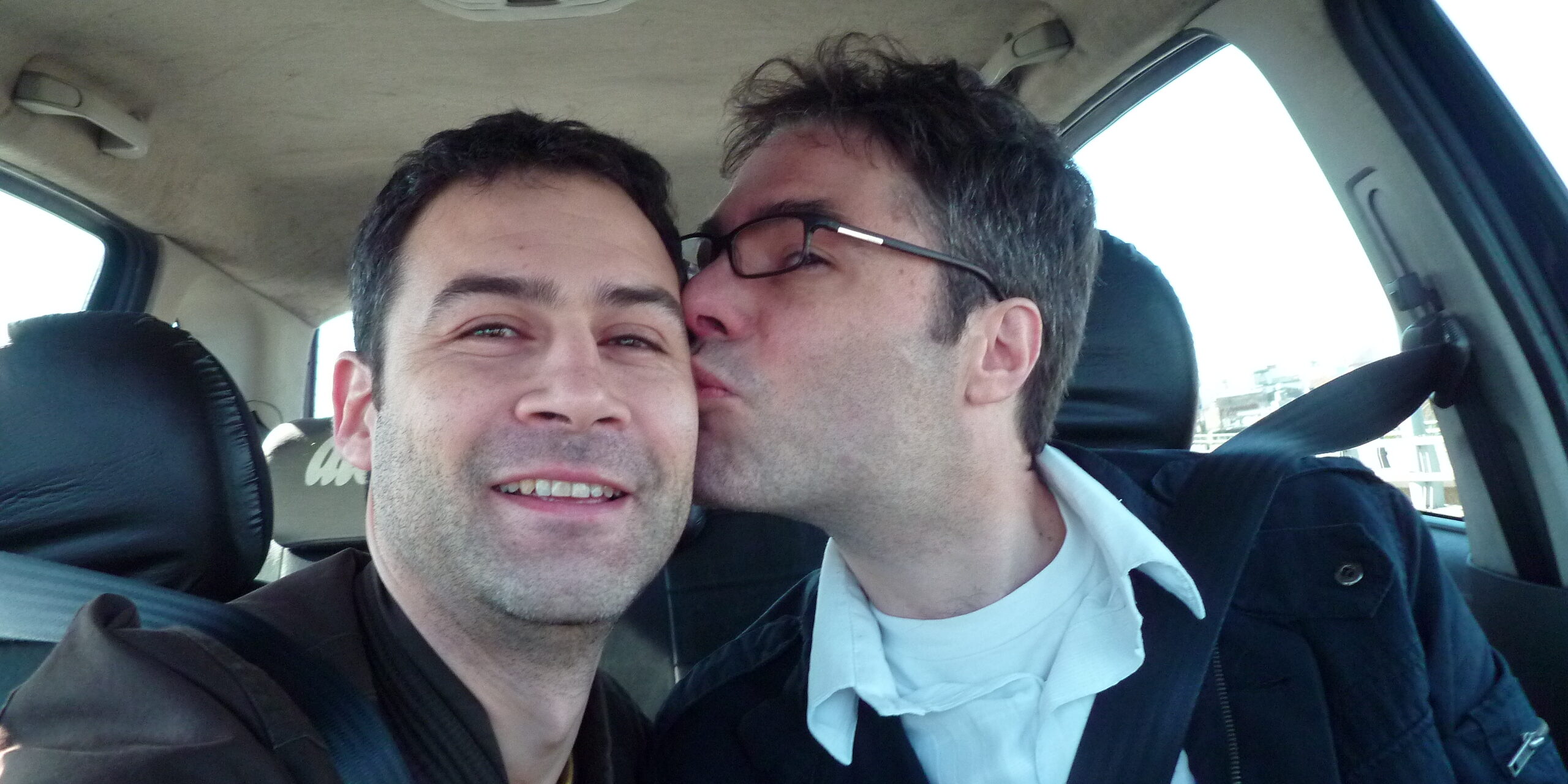
Octavio Romero and Gabriel Gersbach were to be the first same-sex couple in the Armed Forces , after the Equal Marriage Law (No. 26,618) was passed in Argentina on July 15, 2010. However, fate had other plans.
After informing his superiors about his engagement—a mandatory request at the time—Romero began to be harassed at his workplace, and seven months before the wedding, he disappeared under suspicious circumstances. Six days later, on June 17, 2011, a boatman found his naked, beaten body with a blood alcohol level of 2.06 grams per liter on the shore of the Río de la Plata in Vicente López.
The night of the disappearance
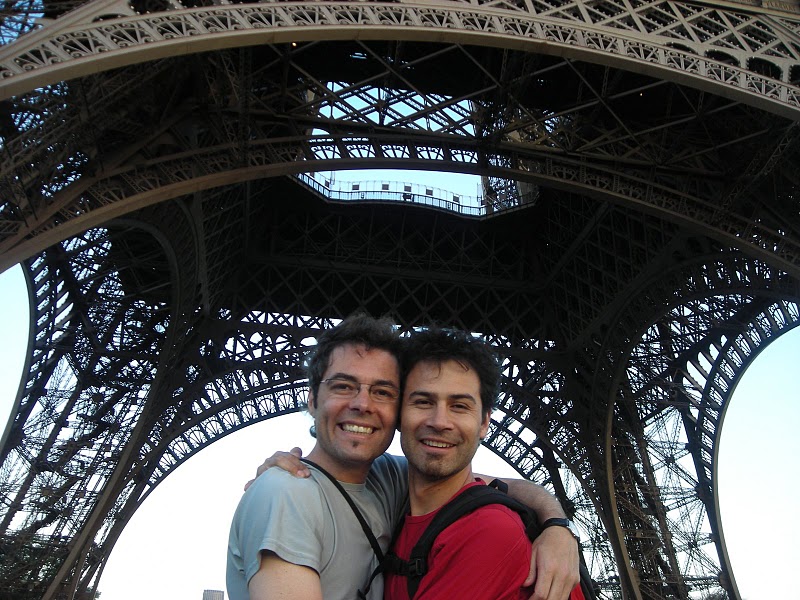
On the day of his disappearance, a cold and cloudy Saturday, Octavio was getting ready to go to a birthday party. Gabriel, a taxi driver, offered him a ride, but his partner declined because he still had things to do. He was wearing a burgundy corduroy jacket and arranging the bottles he was going to take. “He gave me two different kisses on the mouth, looked at me like something was happening. And that was it. They were the last kisses we shared. I left and didn't see anything. When I got home two or three hours later, all the lights were on and there was nobody there,” Gersbach recounted about that moment.
The next day, having heard nothing from his boyfriend, Gabriel went to report him missing. “In twelve years of our relationship, this never happened to me. We were inseparable. We texted all the time, we were very close friends.” He first went to police station number 1, near his home, but they told him they wouldn't take the report there, so they transferred him to police station number 15 without explaining why. Once there, after giving his statement twice, two of Octavio's superiors approached him. One of them offered him his card and said, “I'm available for anything you need.”
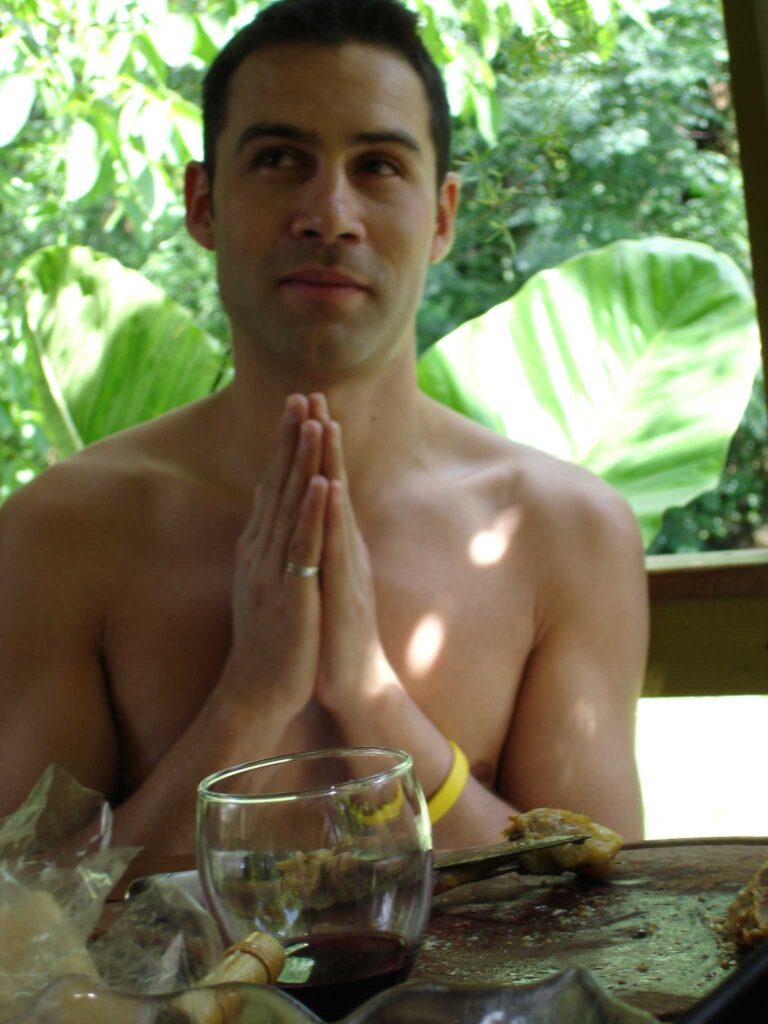
“I didn’t know anything at first, then I found out. Whenever one person disappears in a marriage, the first suspect is the other spouse, as a matter of protocol, and initially they suspected me,” Gabriel told Presentes. Two years after Octavio’s death, Gersbach finally managed to become a plaintiff in the case being investigated by the Criminal Court of Instruction No. 40 of the City of Buenos Aires, headed by Estela Gloria Andrades de Segura.
Upon learning of the case, lawyer and LGBT+ activist Pedro Paradiso Sottile, along with César Cigliutti, approached him through the Argentine Homosexual Community (CHA) to offer support and representation. “I don’t have the income to afford lawyers; I can barely manage. They helped me tremendously,” Gersbach said. Currently, Gabriel is supported and represented by Paradiso Sottile, president of Fundación Igualdad and executive director of ILGA LAC, and lawyer Constanza Argentieri of the Civil Association for Equality and Justice (ACIJ).
The report
A milestone in the development of the investigation occurred in 2015 when a report arrived at the prosecutor's office and to journalist Franco Torchia—who had previously interviewed Gabriel on two occasions—that narrated in detail the sequence of events that led to Octavio's murder on the night of June 11, 2011. Its pages detailed that Prefect Romero had been kidnapped and tortured by a group of members of the National Naval Prefecture to prevent a marriage between members of the force, and that the operation was archived on a hard drive in the Coast Guard Building.
“The report was extremely important because it somewhat confirmed and legitimized the hate crime hypothesis that Gabriel had been maintaining from the beginning and that we as his representatives have also been maintaining,” Constanza Argentieri told Presentes.
Based on the report, both the prosecution and the plaintiff requested a search warrant to locate the hard drive. However, the judge in the case denied the request, deeming the report "unreliable." Two appeals were filed against this decision, both of which were also denied, until November 10, 2015, when the Criminal and Correctional Court of Appeals approved the request, basing its decision on the fact that "the information warrants attention." But due to the delay, the search was carried out two months after the request, the device was not found, and by that time Octavio's superiors had either been removed or had retired.

The justice system doesn't want to investigate.
“The prosecution and the court’s handling of the case has been very deficient, and not due to negligence: I believe it has been deliberately deficient. From day one, the line of investigation, or the hypothesis that we continue to maintain, of a hate crime has been presented as part of the case,” the lawyer stated, adding: “ There are many, many signs and evidence that people from the Naval Prefecture itself were involved in Octavio’s murder, and neither the prosecution nor the court has shown any intention of investigating that hypothesis.”
“In addition, there was initially enormous prejudice against Gabriel, even though he was the prime suspect without any evidence, stemming from a completely biased perspective regarding Octavio's and Gabriel's sexual orientations,” Argentieri continued. The Prosecutor's Office phone numbers are not working, and inquiries made via email have not been answered as of the time of writing.
The intervention of the Inter-American Commission on Human Rights
Due to the lack of progress in the investigation, Gabriel Gersbach, along with CHA and ACIJ, presented the case in 2012 to the Inter-American Commission on Human Rights, one of the two bodies of the Organization of American States (OAS) created for the observance and defense of human rights. “It seemed to us that it made sense because of how emblematic the case is in Argentina, because we weren't finding answers and we had already exhausted all possibilities for it to move forward at the domestic level,” Argentieri explained regarding the decision. In 2018, the case was admitted, and the IACHR issued a report on Romero's murder, indicating that the case meets the requirements for the Commission to evaluate whether Argentina violated specific human rights.
Currently, the defense has resumed talks with the Argentine government within the framework of the international process. “We are very optimistic about the resumption of dialogue and the possibility of finding a solution soon,” said the ACIJ lawyer.
Regarding the case, Argentieri hopes that “it can serve as a catalyst and mark a turning point in the training of judicial officials, in preventing the harm caused by the stigmatization that judicial officials often exhibit in these types of cases.” She asserted, “It is a paradigmatic case concerning the LGBTI population and hate crimes.”
“To this we must add that after ten years of injustice, today we demand the reappearance of Tehuel,” said lawyer Pedro Paradiso Sottile, referring to the urgent need for justice with a perspective of sexual and gender diversity.
For his part, Gabriel, who has been fighting for ten years to clarify the death of his loved one, stated: “I am going to do everything possible to keep Octavio's name high, as high as possible, because he was a person who wanted to go far and they didn't let him.”
We are present
We are committed to journalism that delves into the territories and conducts thorough investigations, combined with new technologies and narrative formats. We want the protagonists, their stories, and their struggles to be present.
SUPPORT US

FOLLOW US
Related notes



We are present
This and other stories are not usually on the media agenda. Together we can bring them to light.