

Elections in Mexico: the trans voting protocol was not respected
On June 6, Mexico held its "most inclusive" elections in history. Part of that inclusion was the implementation of the Trans Protocol. However, during voting on Sunday, transgender people reported that their gender identity and name were not respected.


Share

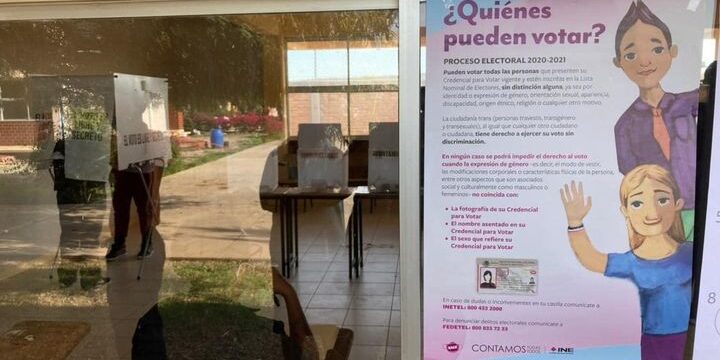
On June 6, Mexico held what were touted as the "most inclusive" elections in its history. Part of this inclusion was the implementation of the Trans Protocol , a mechanism established in 2017 to guarantee that transgender people who choose to vote can do so on equal terms and without discrimination. However, on election day, transgender people reported that their gender identity and name were not respected.
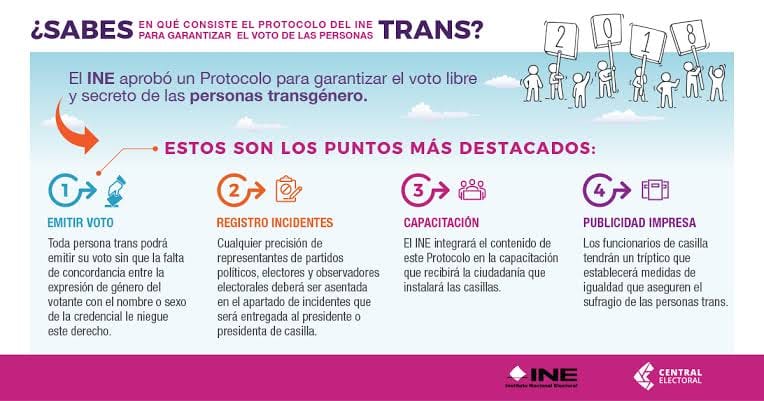
The first guideline of the protocol is clear. It states: “Under no circumstances may a lack of consistency between the voter's gender expression and the photograph on the Voter ID card, or with the name or sex (male or female) recorded therein, be grounds for preventing them from voting.”
Despite the more than one million training sessions held across the country, some transgender people reported that their gender identity and appropriate pronouns were not respected. They also reported being called by their deadname ( the name they were registered with on their birth certificate).
“When I gave them my voter ID, the classic confusion happened: (that person) saw my information and looked me up and down. They said my full name out loud and then looked at my chest. It was an awkward moment. After that, I noticed they tried to ignore her, and I tried to interact as little as possible,” Larissa Garza, a non -binary person from Guadalajara, told Presentes.
A few kilometers away, in Morelia, Aura recounts: “I am a 23-year-old trans woman who is not undergoing a medically supervised transition. When I went to vote, they called out my last names and my deadname. I replied that they should call the voters by their last names. The poll workers mockingly said “ok” and started laughing and whispering. When I left, I felt strange, vulnerable.”
In Torreón, in northern Mexico, a trans man was questioned about his gender expression. They tried to deny him the right to vote, claiming he was using a voter ID that wasn't his, and called him by his deadname.
Mak, who is originally from the State of Mexico and is non-binary, recounted their experience: “At the entrance to the polling station, the young man addressed me using male pronouns, and everything was fine, but when he read my name, the treatment and everything changed. The officials turned to look at me as if I 'didn't fit in.' It was uncomfortable to hear them shouting my legal name. I preferred to avoid correcting them or informing them, not to belittle the town where I live, but I know it's a place further from inclusion, from being able to have visibility.”
The citizens who served as polling station officials where Larissa, Aura, and Mak voted did not respect points 6, 7, and 8 of the protocol. These points, in general terms, state that questioning identity and intimidating acts such as staring and uncomfortable glances should be avoided; equal treatment should be given regardless of whether appearance conforms to binary gender standards; and all people (cisgender and transgender) should be addressed by their surnames, respectively.
“This measure alone does not change reality”
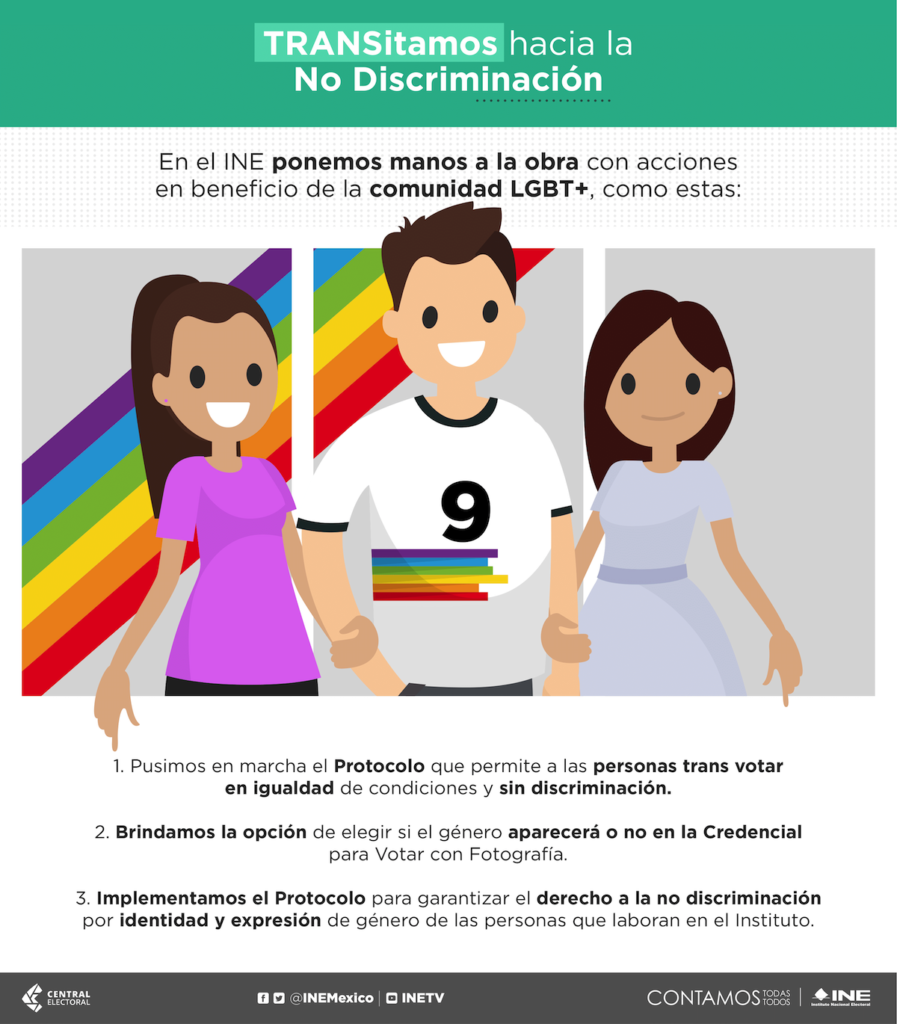
In December 2017, the INE's trans protocol set a precedent. It was the first mechanism in Latin America to adopt measures and strategies to guarantee the vote and promote the civic participation of trans people in Mexico.
In every election or citizen participation mechanism organized by the INE (National Electoral Institute), the trans protocol must be applied. This measure also entails training members of the public who serve as electoral authorities on election day and are called polling station officials.
“In these elections, we had to train almost one and a half million citizens. This creates a virtuous cycle where these people become more aware of the issue and learn about the human rights of this social group. And then they not only retain this knowledge for election day, but they also begin to share it with their families and in their communities. I believe this contributes to creating a much fairer and more equitable society,” commented electoral councilor Dania Ravel in an interview.
For Rebeca Garza, a trans woman and former electoral official, “this measure alone doesn’t change reality.” From her perspective and experience, she believes that “there’s a lack of a strong message that these policies are cross-cutting, because that’s how they were designed.” She adds that it’s also necessary to ensure, through an evaluation process, “whether they are actually being implemented comprehensively. Because one of the biases—both cis-sexist and sexist and classist—is thinking that inclusion measures or affirmative action are like a kind of post-it note you put up so you don’t forget. But inclusion isn’t just adding things; it should mean a reconfiguration of the structure.”

Failures in reporting
Aura, from Morelia, told Presentes that after voting she approached INE observers to report her experience. Receiving nothing more than a curt apology, she decided to file a complaint by phone with INETEL.
In the first call, she was addressed with male pronouns even though she identified as a trans woman and recounted her experience at the polling station. In the second call, the person who assisted her respected her pronouns. However, after she explained that she hadn't been called by her last name, the official on the phone responded, "Polling station officials can call people by their first and last name." Aurora reminded her that point 8 of the protocol states that all voters must be addressed by their last name.
After that disagreement, Aurora says the official on the phone changed the category of the complaint. It went from “suffered discrimination” to “you were in a vulnerable situation because you are a trans woman.”
According to the same protocol, each local and district council must submit a report to the INE's training and civic education department on any incidents that occurred related to the participation of trans people during the election day.
In the first cut , the Electoral Day Information System (SIJE) within the “incidents” does not account for experiences such as those of Aura, Larissa or Mak where the trans protocol was not applied.
"It had flaws, but it wasn't a failure."
“It’s outrageous to realize that this protocol is ineffective. But what did we expect when imposters were allowed to pose as trans people here and in Tlaxcala? They should have just told us that inclusion was just a commercial and left it at that,” Diana Vardi, president of the Agnes Torres Coalition of Puebla, tells Presentes. During the election day, a polling station official called her by her deadname .
For Irene Valdivia, a trans activist who registered as an electoral observer in Morelia, the trans protocol “had flaws but wasn't a failure. It still has areas for improvement; it seems that it doesn't produce results until the issue directly affects them or they don't see it as relevant.” What she does consider a failure is the LGBT quota, an affirmative action measure that the INE (National Electoral Institute) imposed on political parties for the first time .
“I don’t think it’s helpful for her to be trans just because she’s trans, but because she has a track record that supports her and she’s going to fulfill a certain agenda. I don’t think it’s useful to have a trans woman in parties that openly vote against trans rights,” she warns.
Finally, Rebeca Garza, a trans woman and former electoral official, believes that “rather than focusing on trans people, we should look at the contexts in which their difference and diversity don't find safe spaces within the Mexican electoral system, whether working or exercising their right to vote. It's important that trans people are present in those spaces. Only then will there be a change in how institutions operate, and that will be more effective than a thousand hours of training. That's democracy. How can we understand democracy if trans people aren't everywhere?”
We are present
We are committed to journalism that delves into the territories and conducts thorough investigations, combined with new technologies and narrative formats. We want the protagonists, their stories, and their struggles to be present.
SUPPORT US

FOLLOW US
Related notes



We are present
This and other stories are not usually on the media agenda. Together we can bring them to light.