

Indigenous women arrived in Buenos Aires to demand an end to territorial destruction.
After a two-month march, the guardians of Good Living arrived in Buenos Aires to demand “Stop Terricide.” A chronicle by Las Sisas.


Share

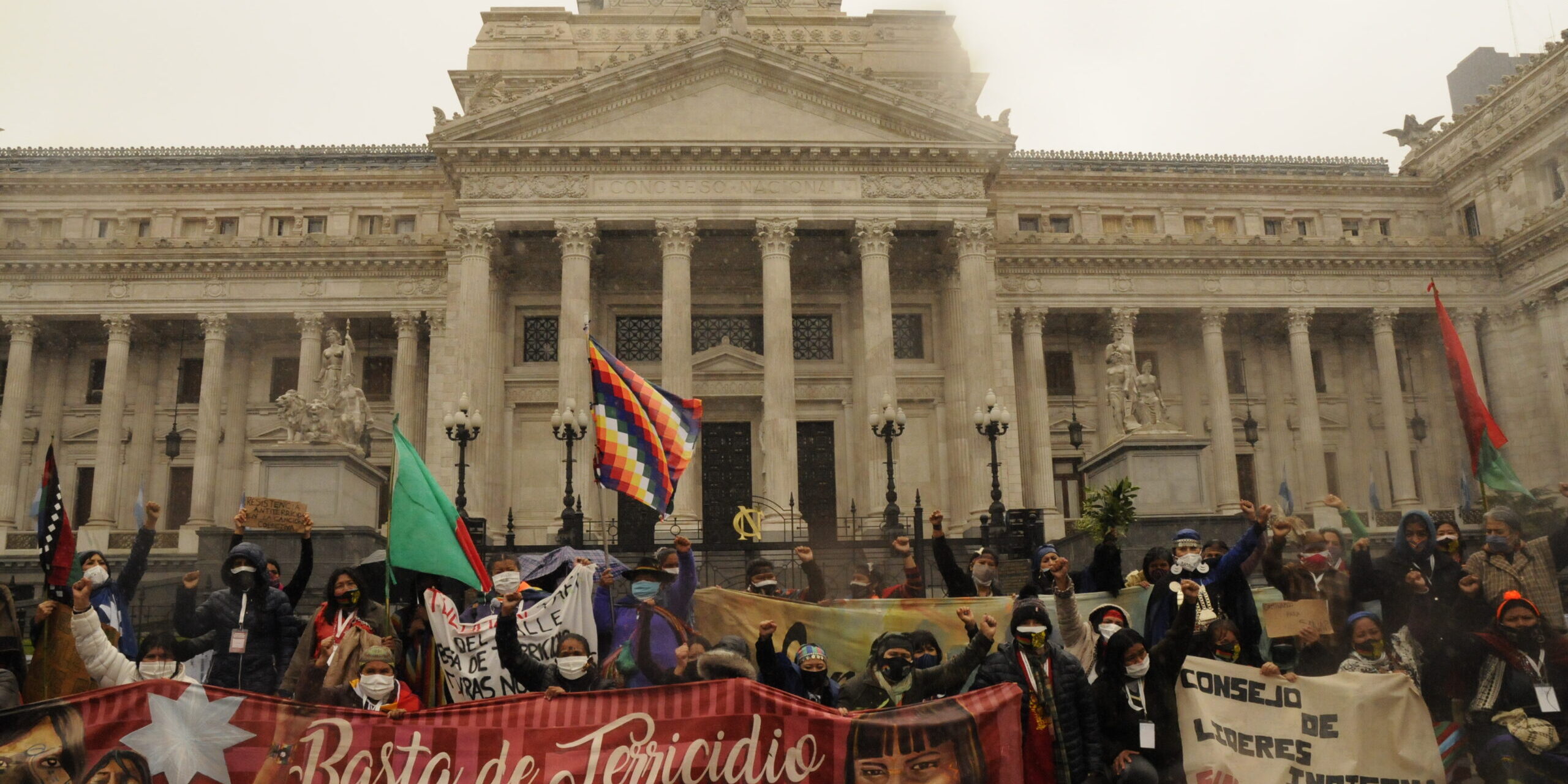
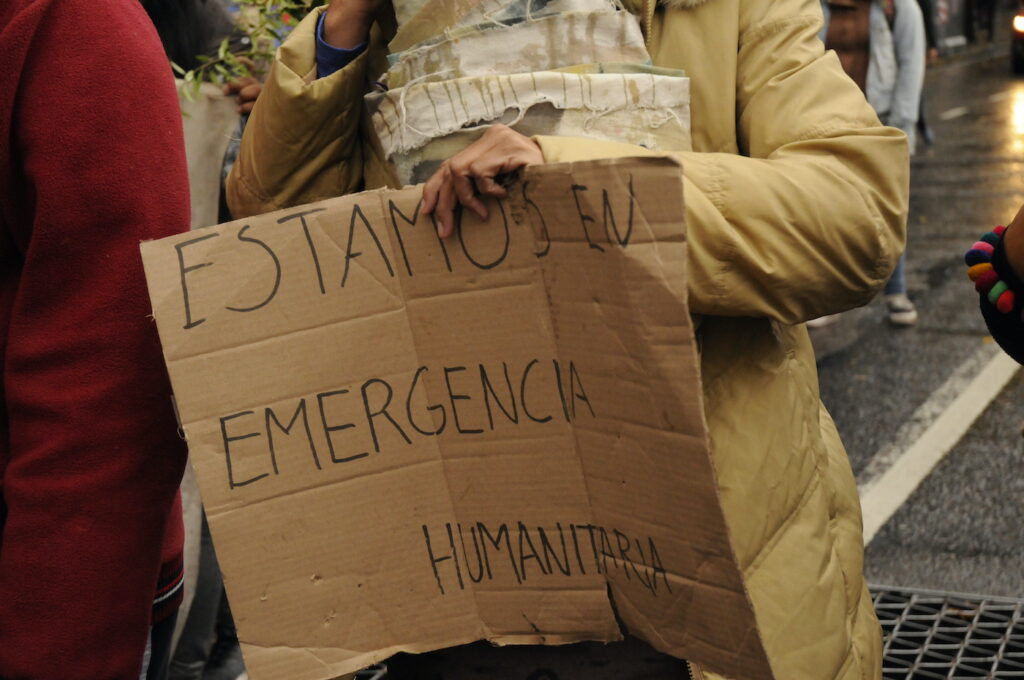
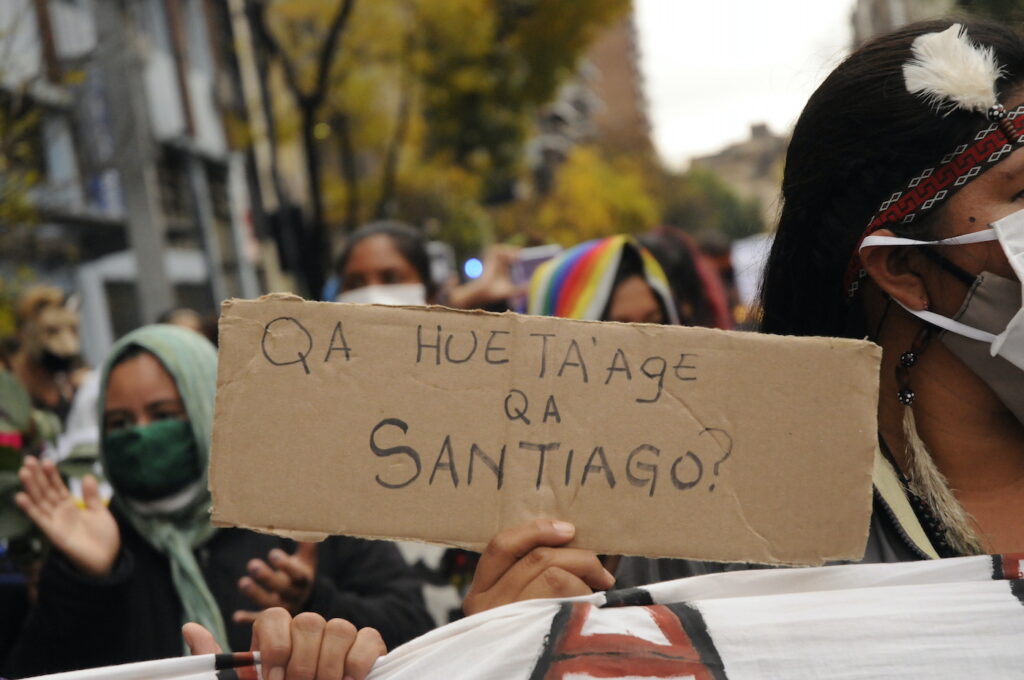
Yesterday, the final leg of the "Enough of Terricide March" organized by the Indigenous Women's Movement for Good Living concluded in Buenos Aires. It began on March 14th from various points across the country as a global call to defend life in their territories and with the goal of having terricide declared a crime against humanity and nature.
The concept of Terricide was coined by the sisters of the Movement to name the systematic extermination of all forms of life within both the tangible and spiritual ecosystems. This category refers to a set of crimes that include genocide, epistemicide, ecocide, femicide, transfemicide, and travesticide. It was created with the aim of serving as a legal tool to prosecute violations of Indigenous rights, women's rights, and the rights of Mother Earth, among others. It is proposed that it be used to prosecute corporations and nation-states that commit Terricide or are complicit in it.
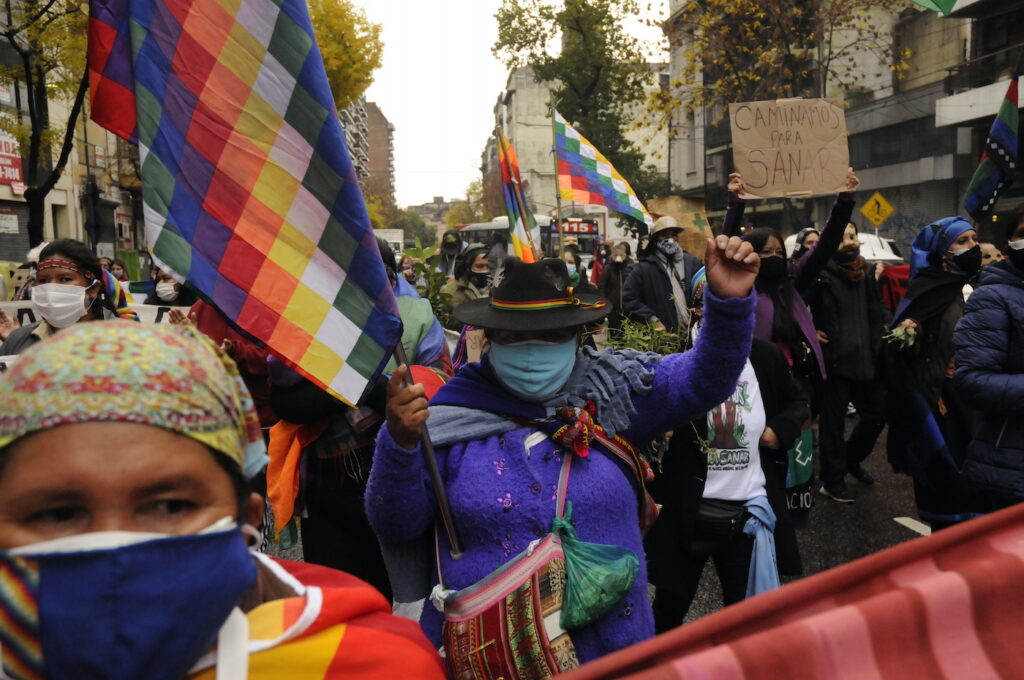
Despite the government-imposed traffic restrictions that forced a replanning of the walk's departure, and despite the cold and heavy rains on Saturday in the city, the indigenous women made their presence felt in the white and Europeanized port city.
Weaving ourselves together among indigenous women
After hours of uncertainty about the march's progress due to the new movement restrictions, we Sisas set out from different points in the Buenos Aires Metropolitan Area (AMBA) to join our sisters' march. We Sisas are a group of Indigenous and racialized women. We form an Indigenous community made up exclusively of women called SIsa Pacha (a Quechua term that can be translated as "The moment when the earth blossoms" or "the space and time" of Bartolina Sisa). We also manage TeleSISA media outlet and audiovisual production , and the magazine Portal TERROINDIES, both with an anti-racist, decolonial, and anti-patriarchal perspective.
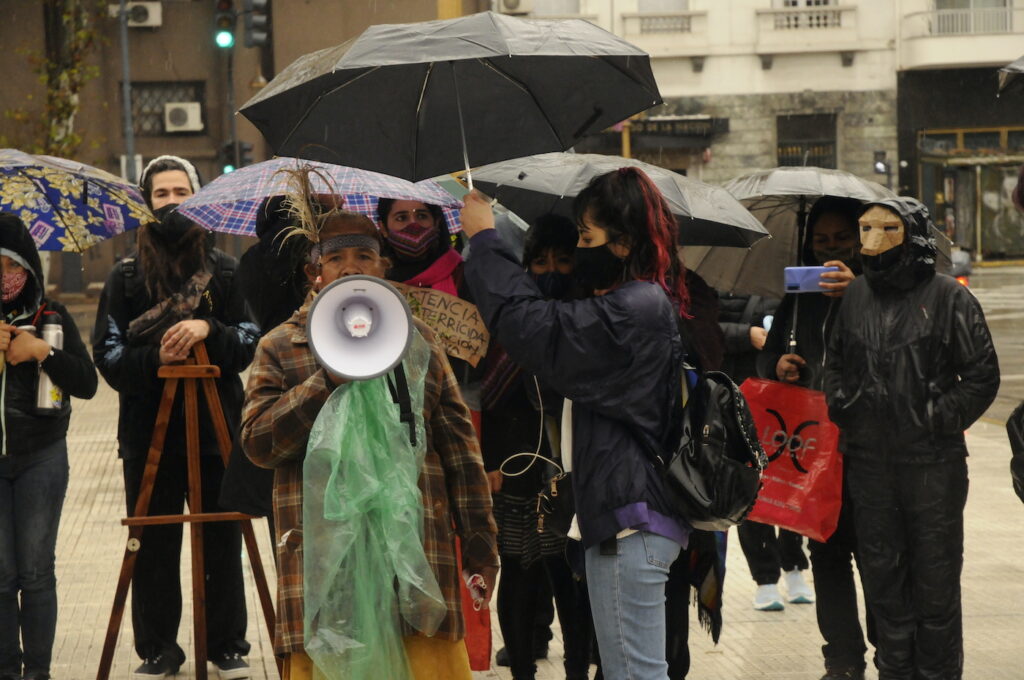
After 11 a.m., we met in Plaza Miserere with comrades, some members of the press, and activists. The morning was very cold, with drizzles that dampened our face masks. Knowing that we were walking among sisters and under the protection of our ancestors encouraged us to be there. We were moved by the desire to accompany, sing, shout, and reconnect with those who months ago left their territories to offer their bodies in service to their communities and all of humanity.
While we waited, five police officers approached and sent a patrol car to the scene. Simultaneously, the sisters arrived at Plaza Miserere, displaying flags, banners, and a show of strength. The march was conceived in the context of declaring May 22nd as a Global Day of Action against the destruction of our land, perpetrated by the capitalist, patriarchal, and extractive system.
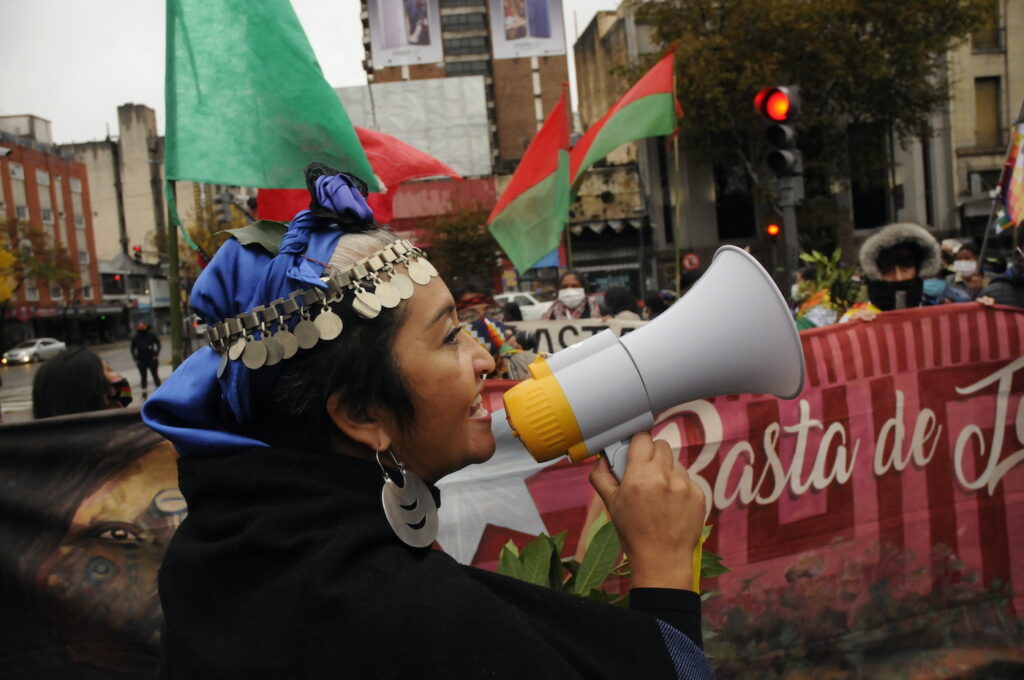
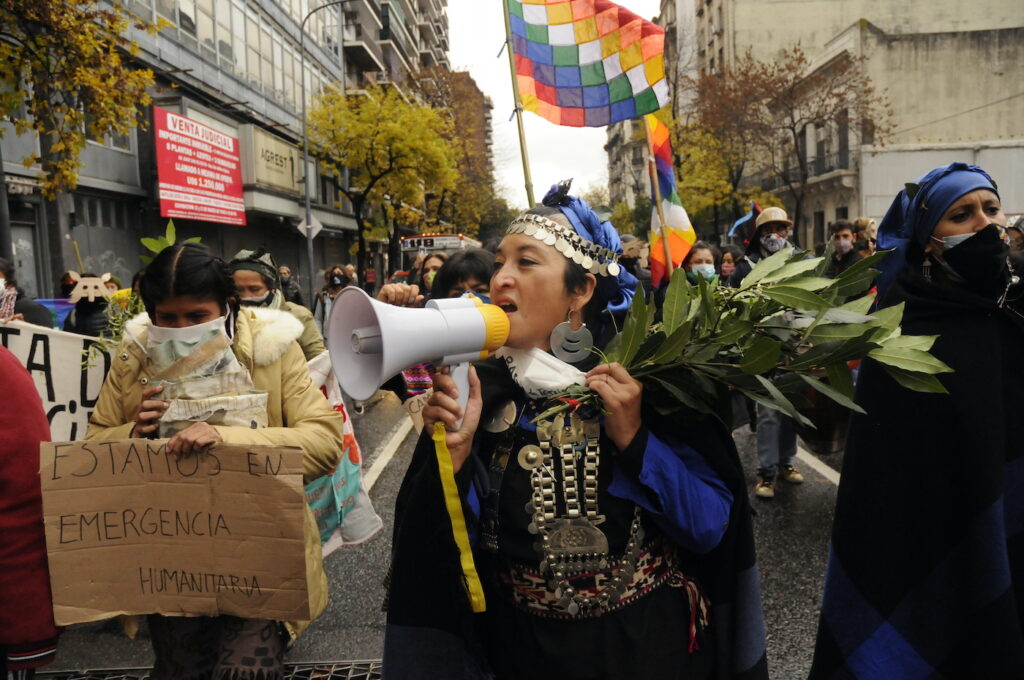
At the start of this march in Buenos Aires, Moira Millán, a Mapuche weychafe (warrior) and leader of the Indigenous Women's Movement for Good Living, stated: “Today they tell us we cannot reach Congress. We have brought our sacred medicine because it is time to heal the places that are reproducing death,” referring to the city of Buenos Aires and other metropolises as partly responsible for the Terricide.
Walking to heal
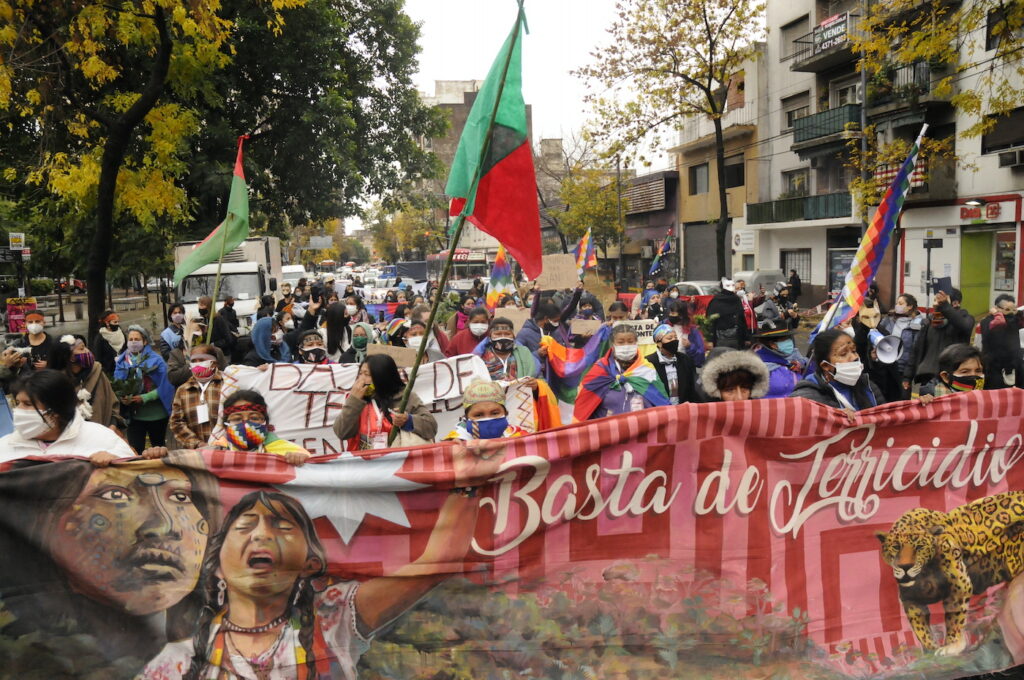
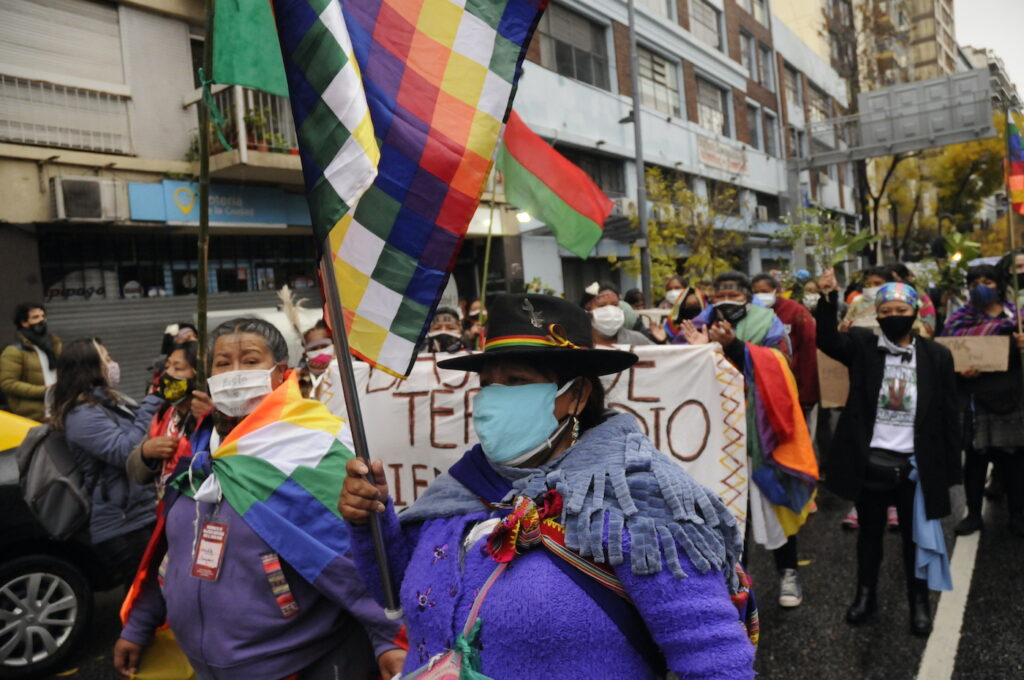
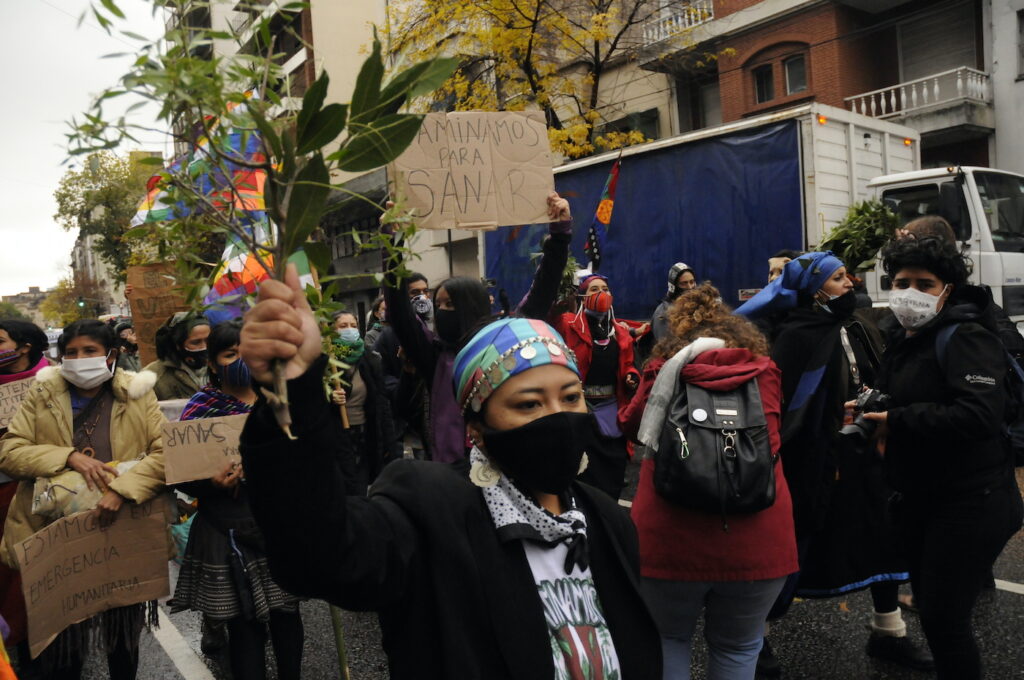
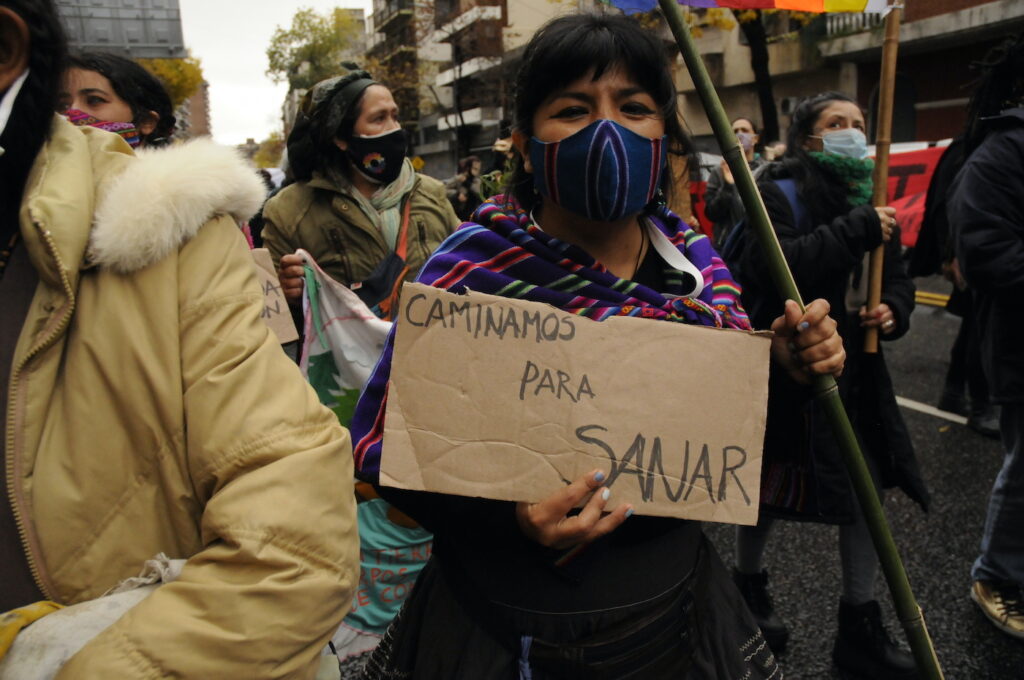
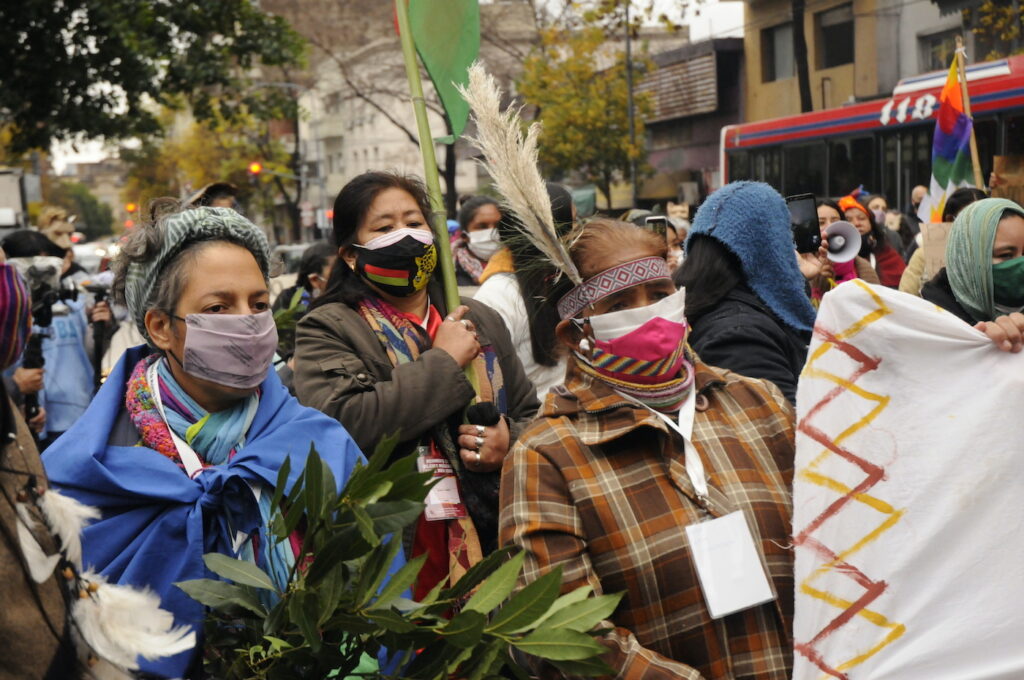
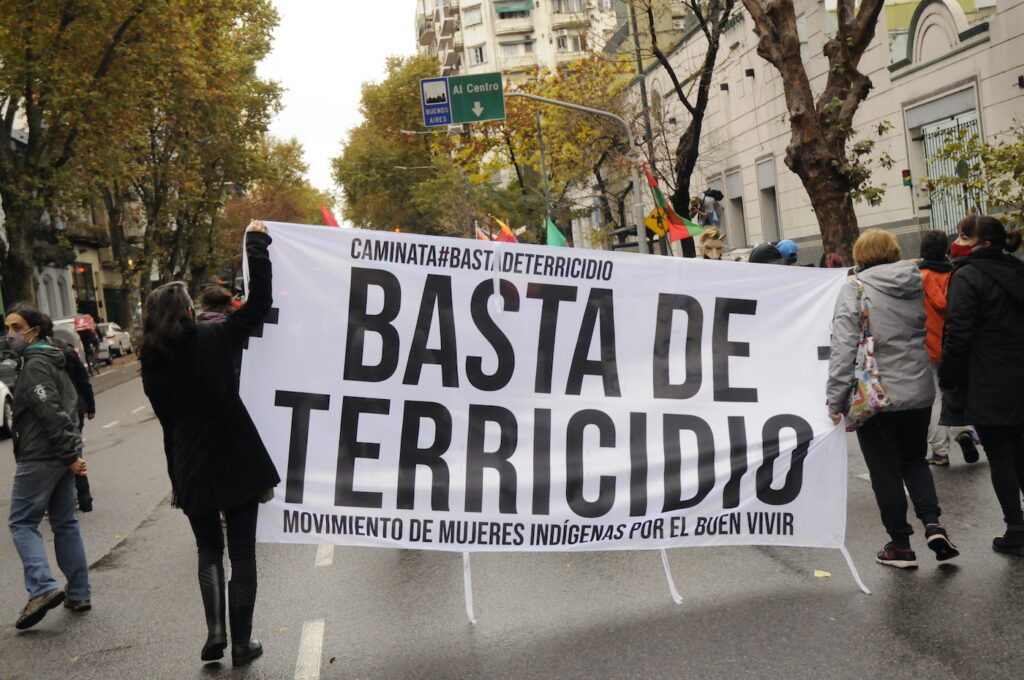
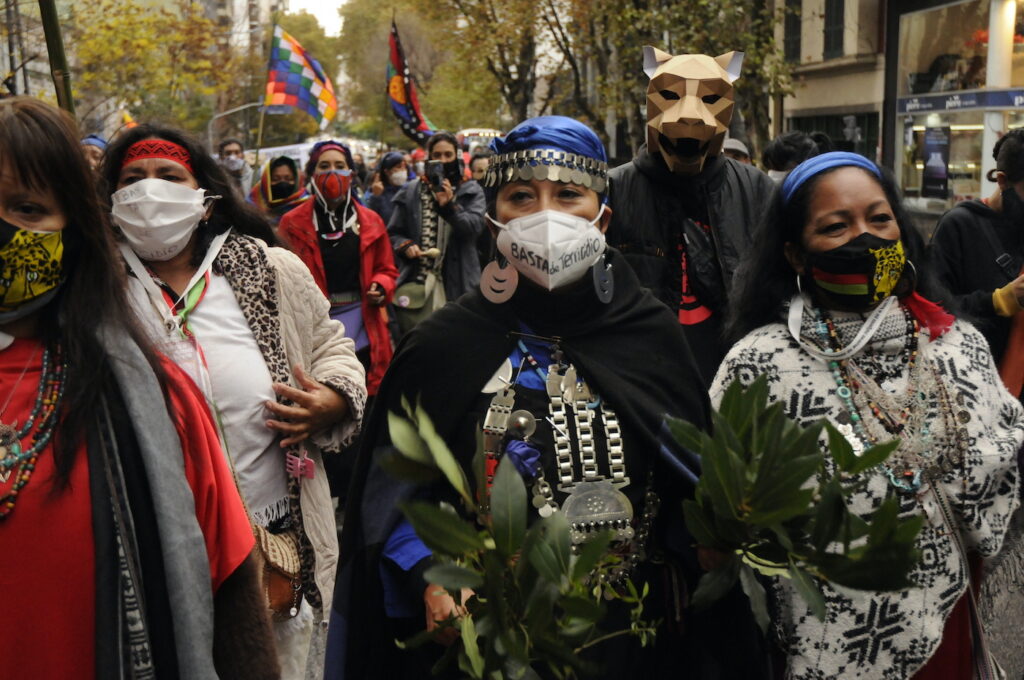
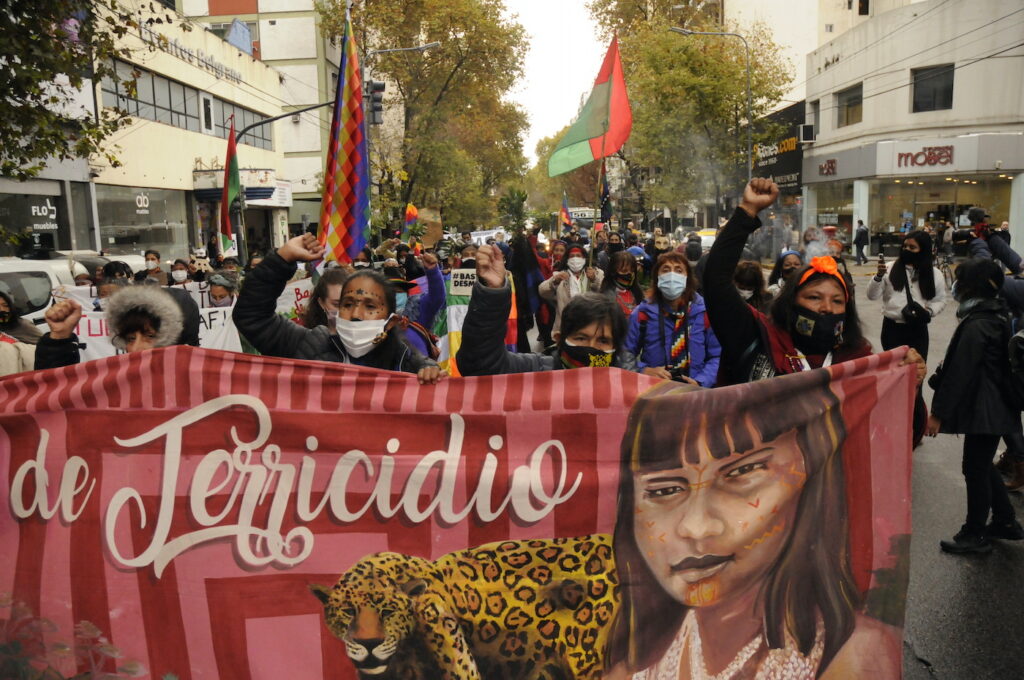
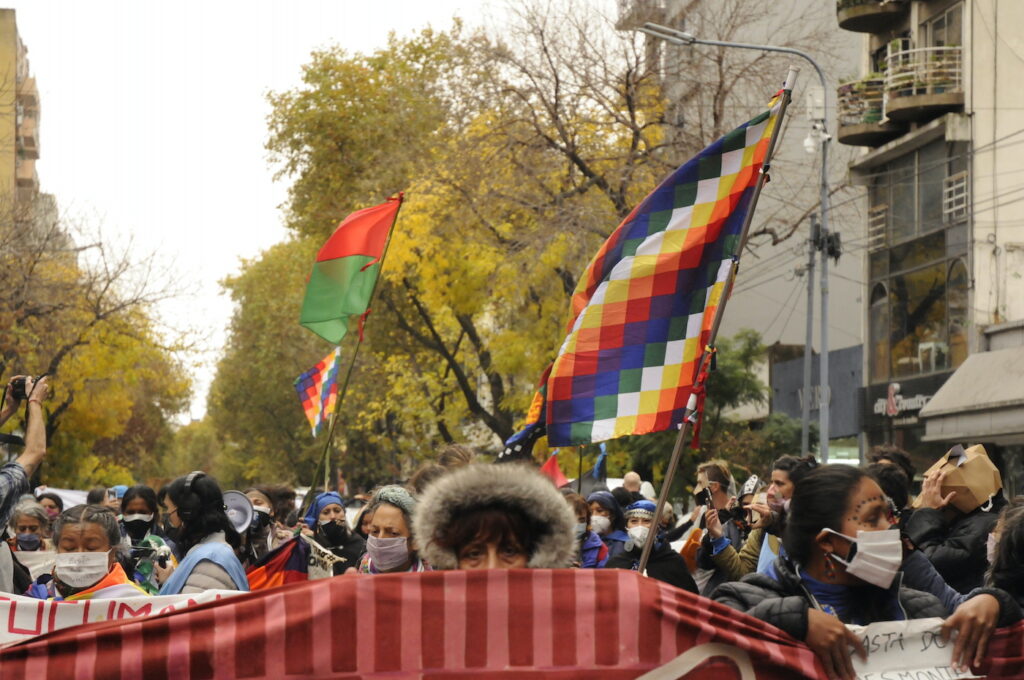
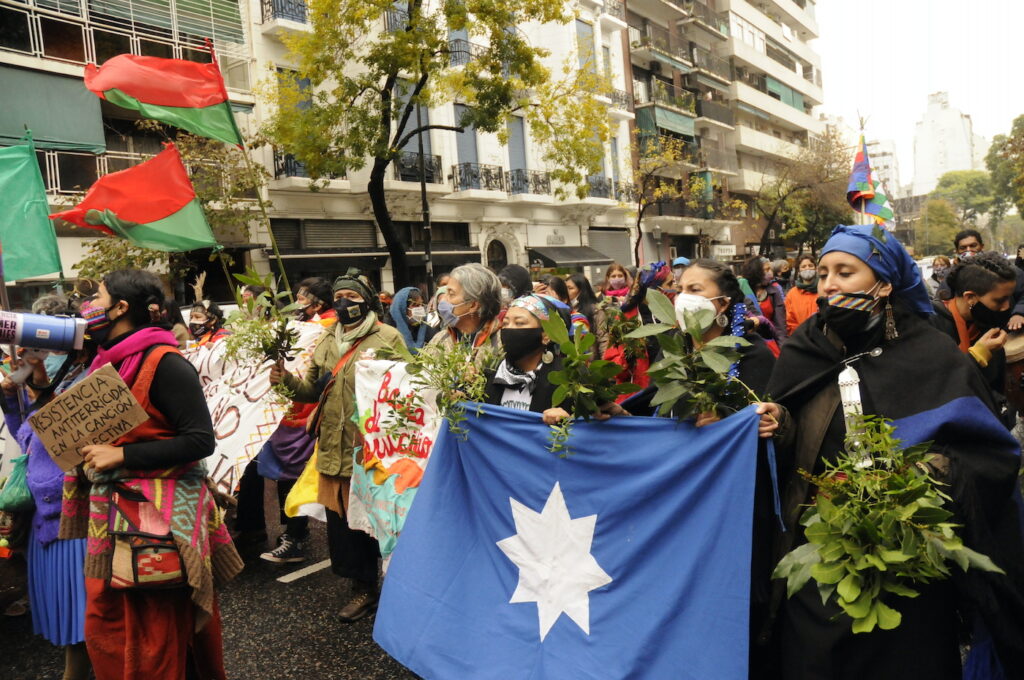
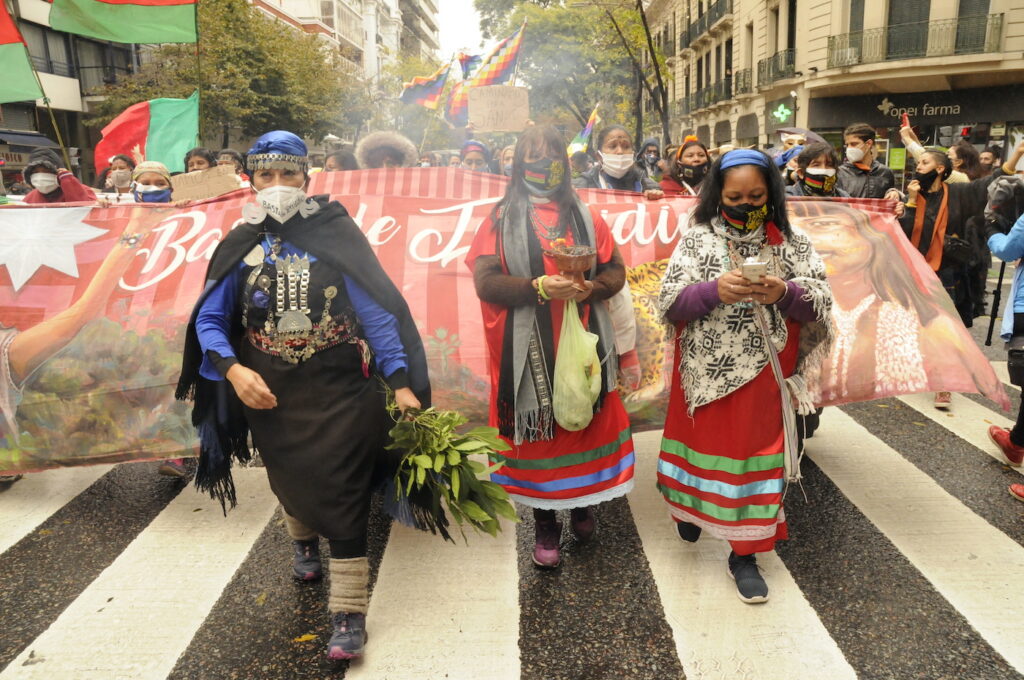
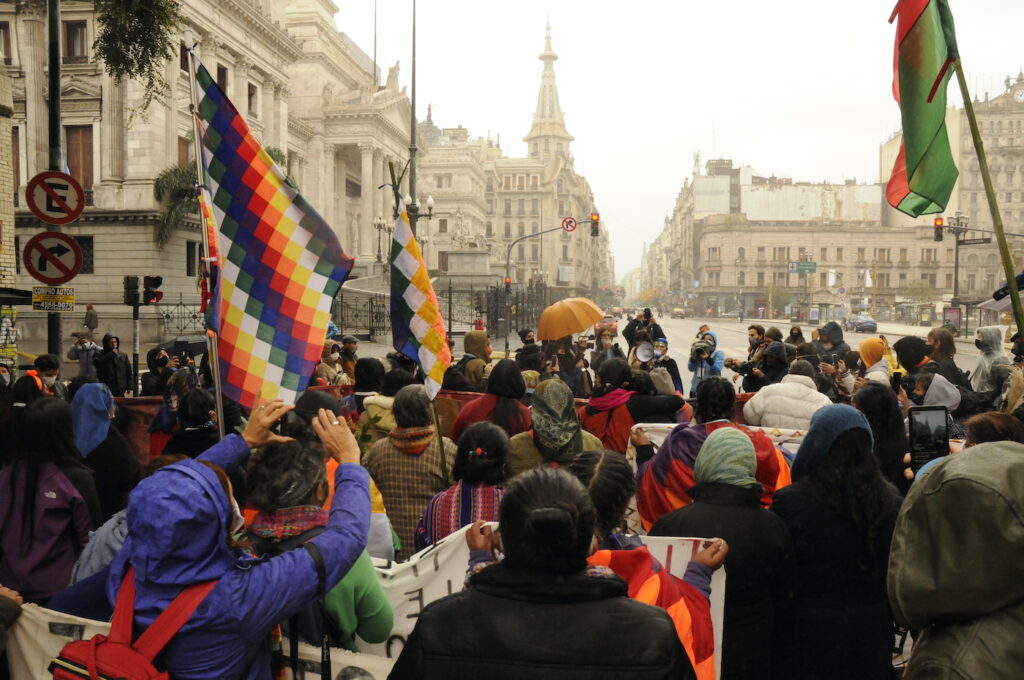
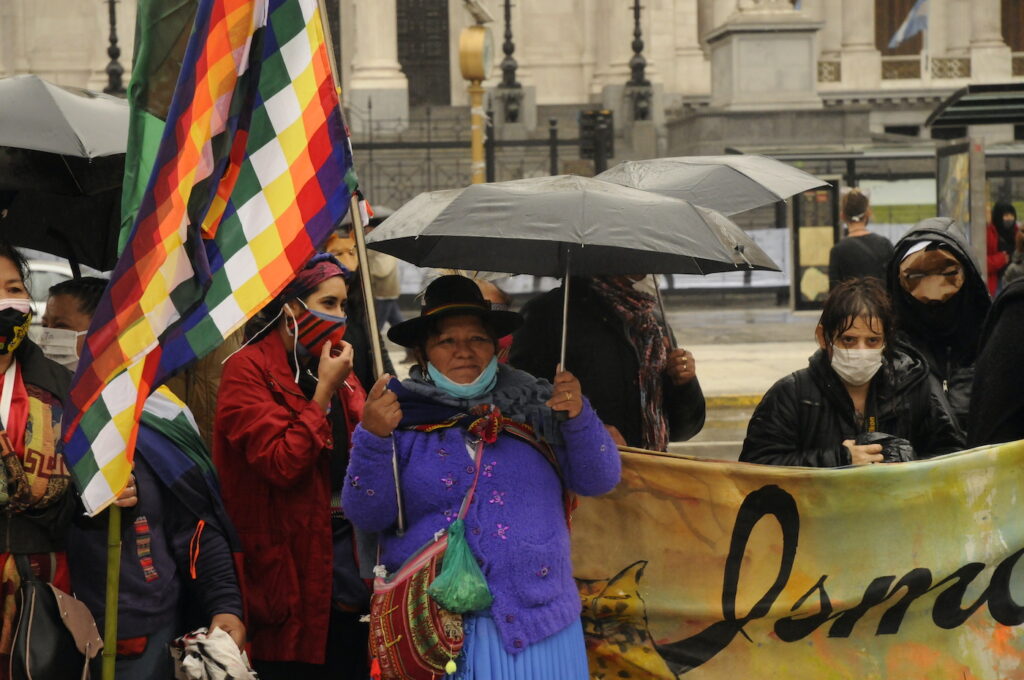
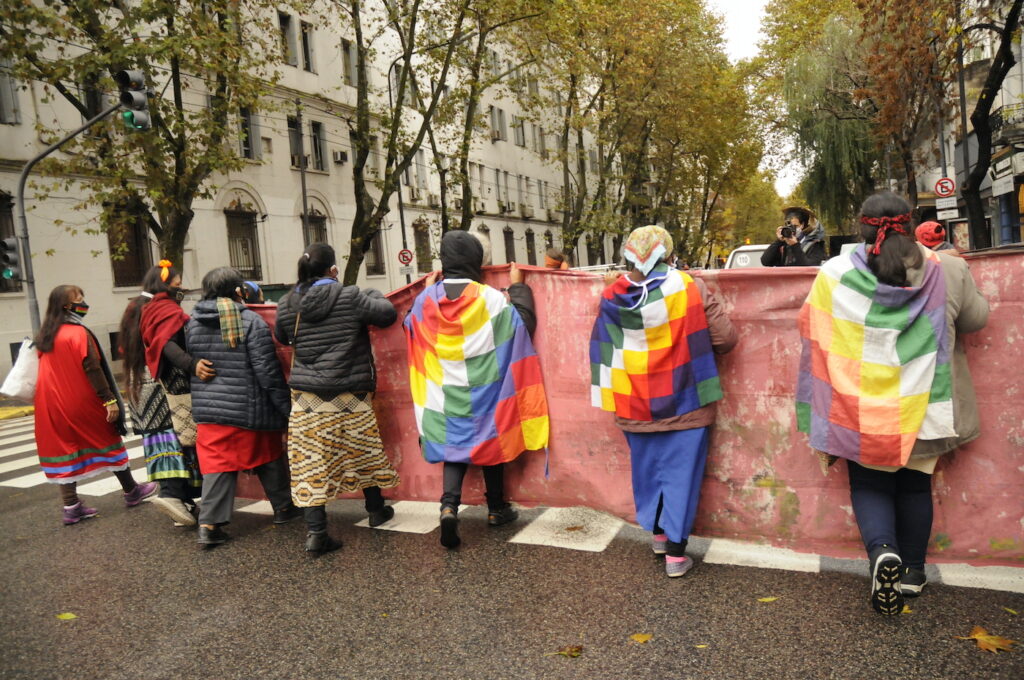
With a light drizzle, the march began around noon. Making their way through the traffic, the honking horns, and at times the racist outbursts of Buenos Aires residents shouted by some passersby, the women of Buen Vivir advanced together, united as sisters, along Jujuy Avenue.
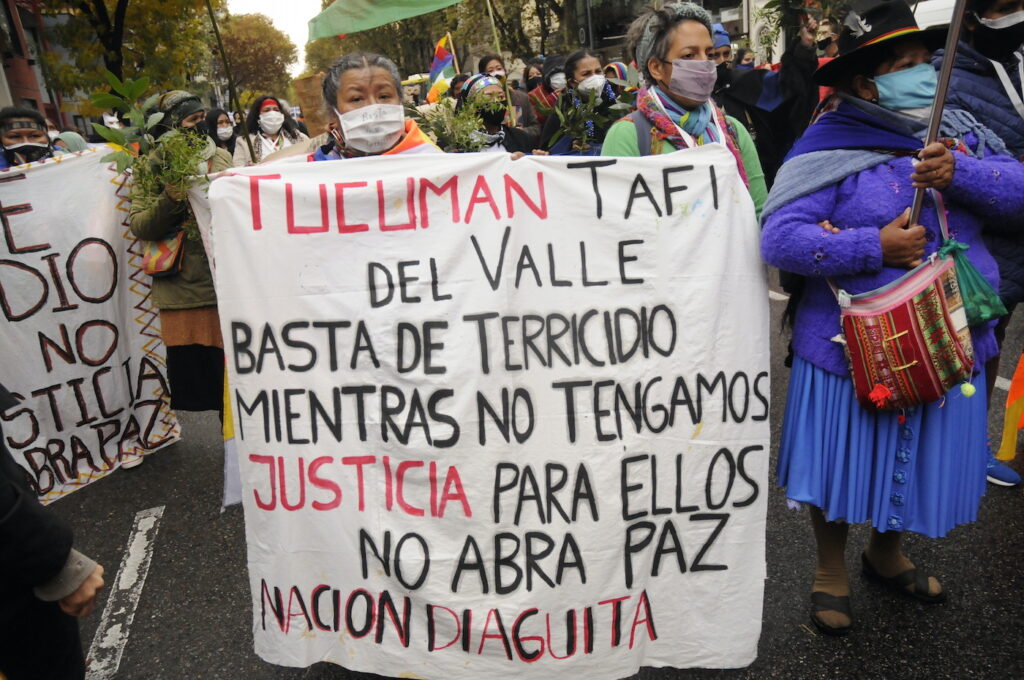
The emotion and uncertainty were palpable: “We didn’t think we would arrive, but with the strength of our great spirit we are arriving, with the strength of our grandmothers and with traditional medicine we are here, showing our support for our people for a good life and for a good life,” said Bartolina Casimiro of the Diaguita Nation.
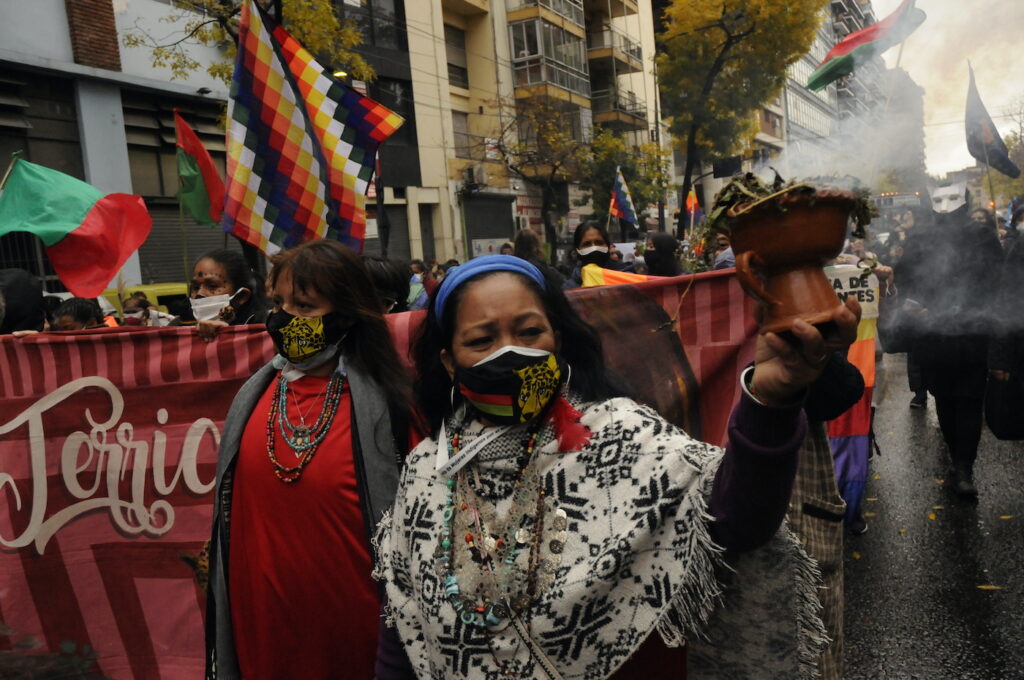
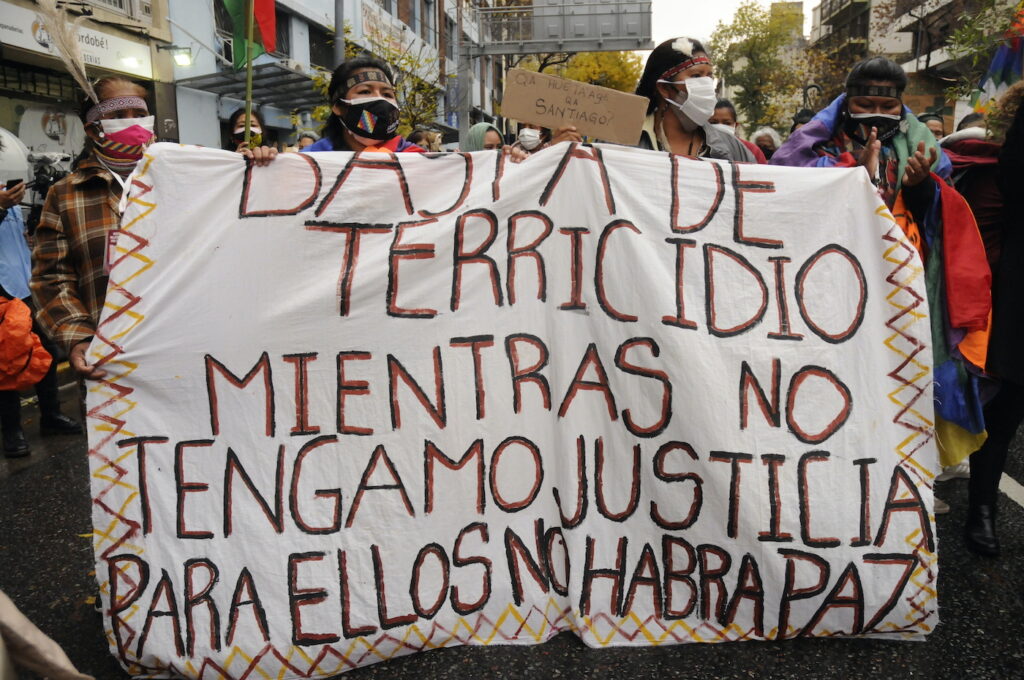
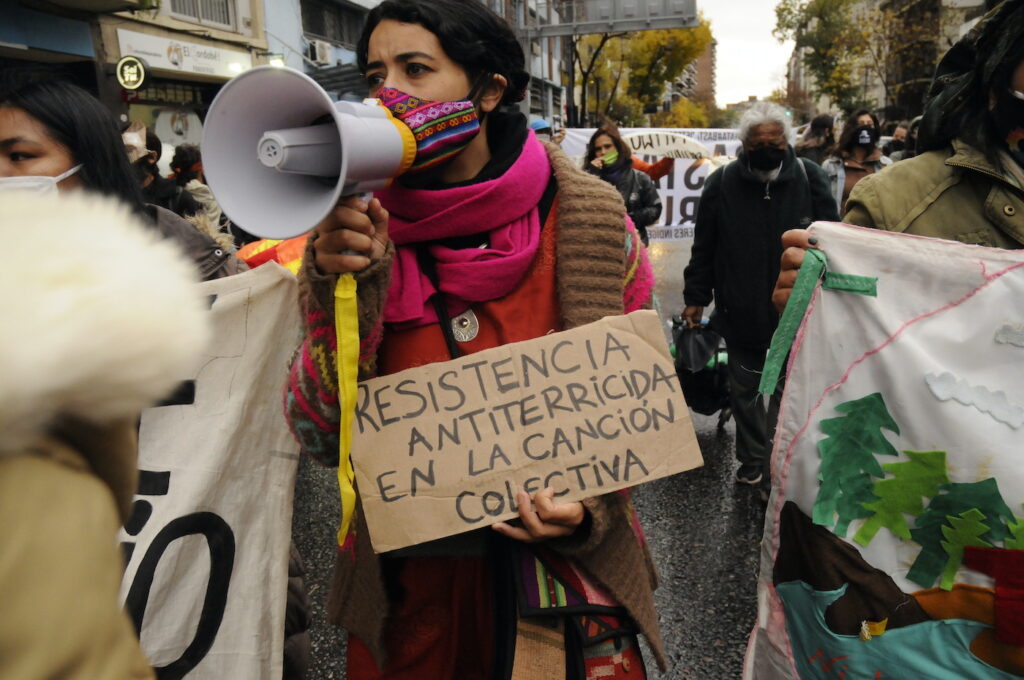
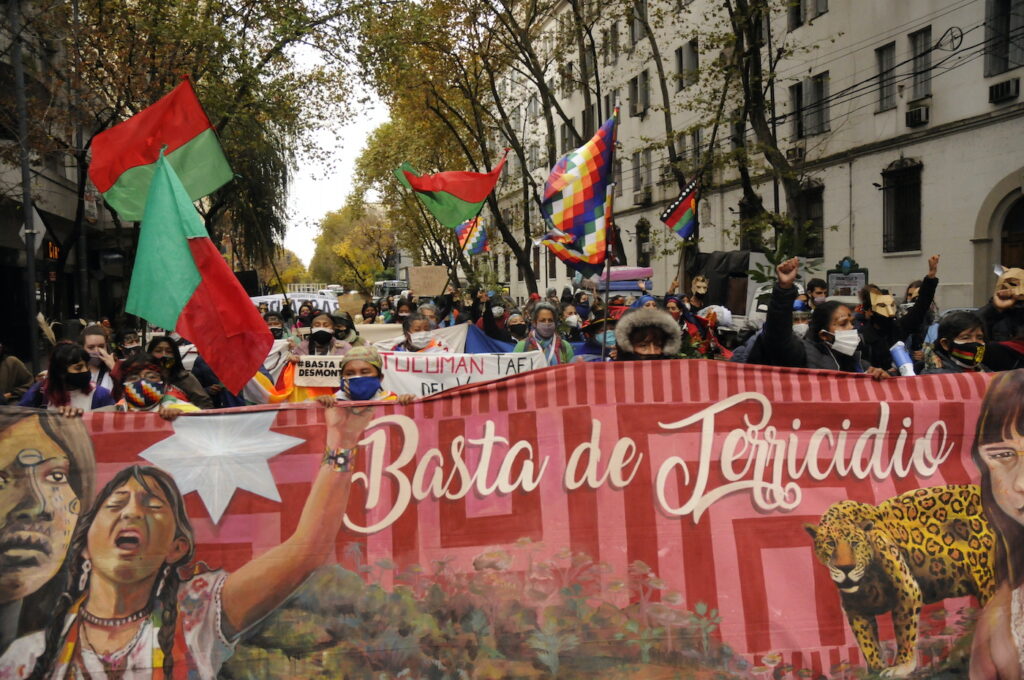
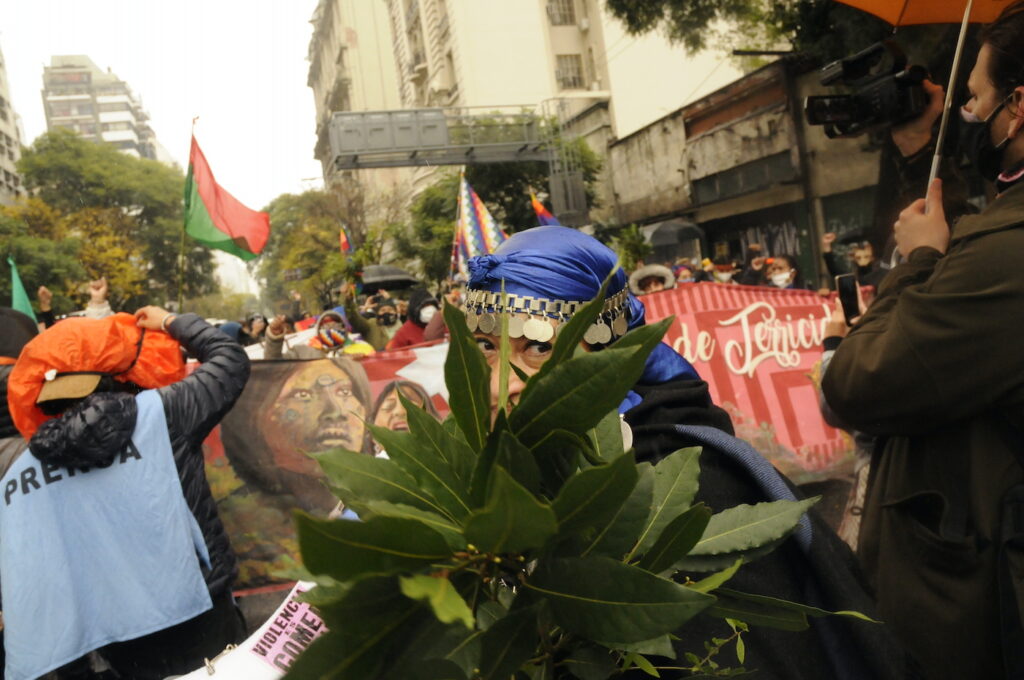
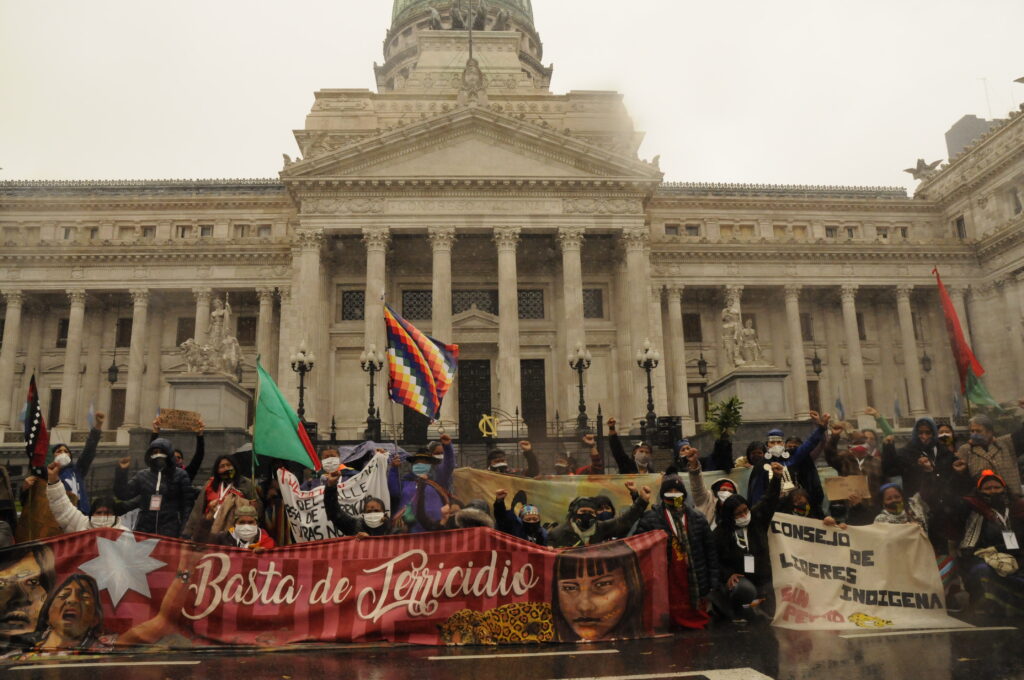
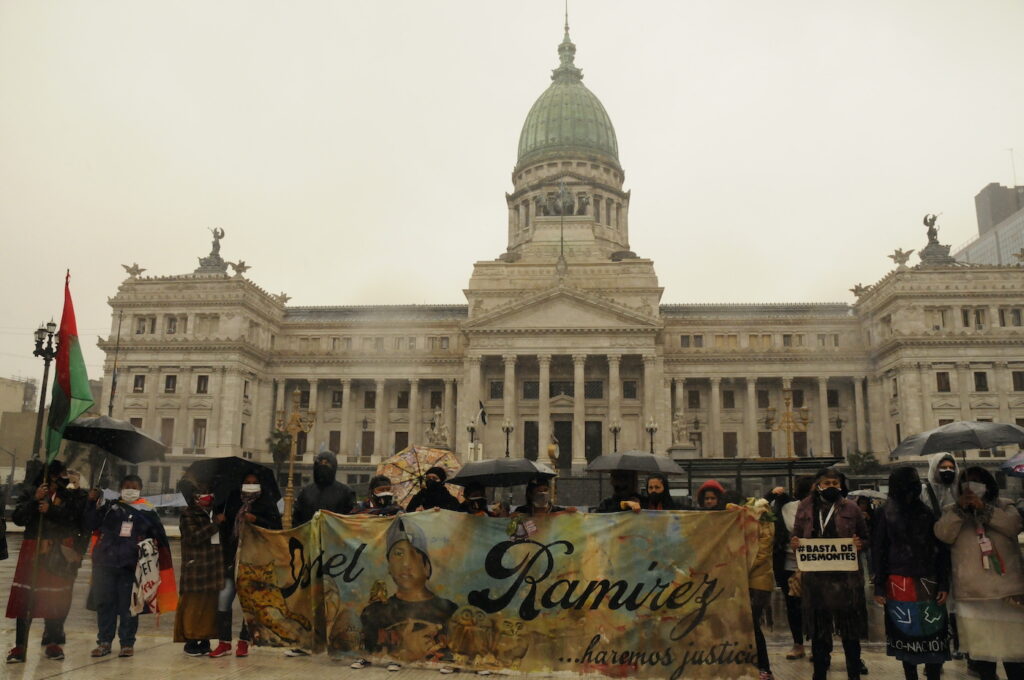
She and other women held a banner with the march's slogan: "Stop Terricide," which included drawings of Indigenous women's faces and elements that make up our world and Indigenous worldview: the earth, the sky, and the animals. It was carried by women representing different Indigenous Nations, such as the Quechua Nation, the Aymara Nation, the Diaguita Nation, the Mapuche Nation, the Avá Guaraní Nation, and the Qom Nation.
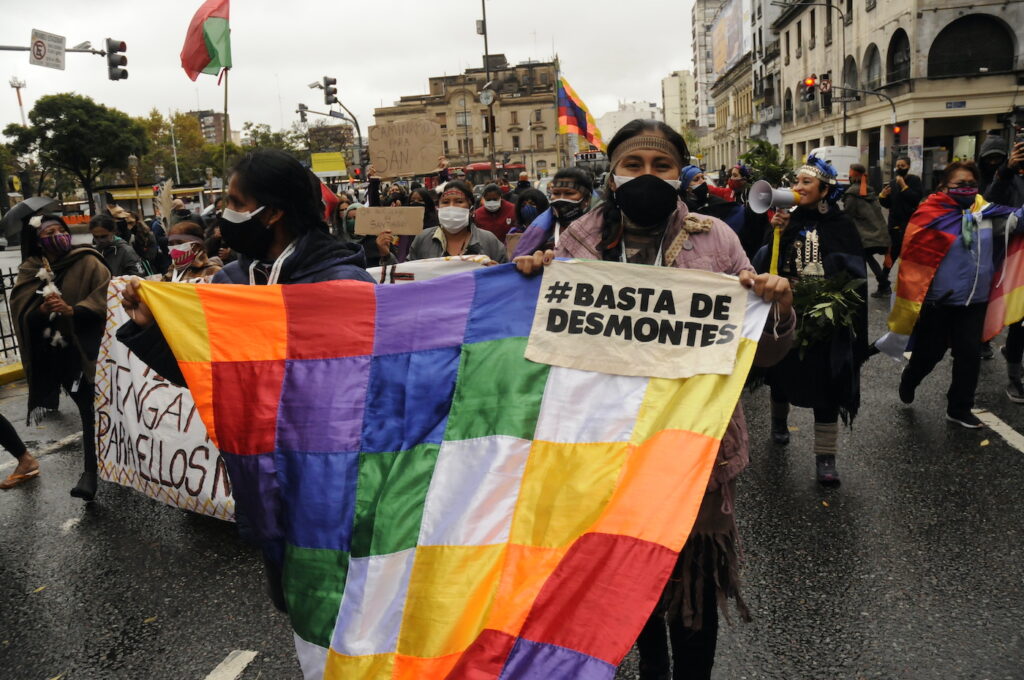
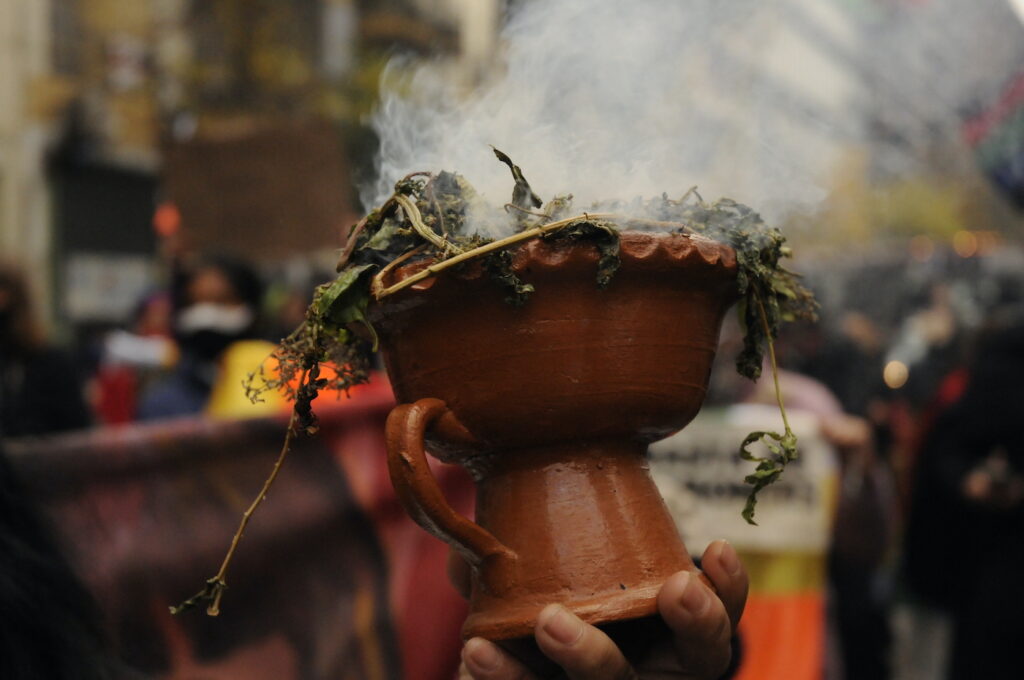
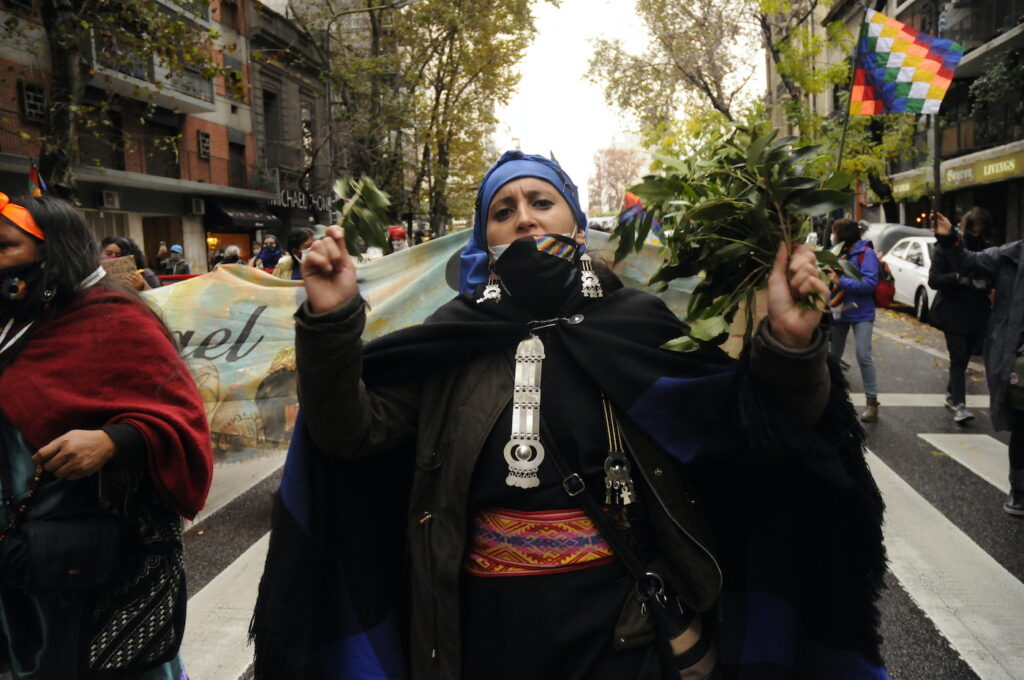
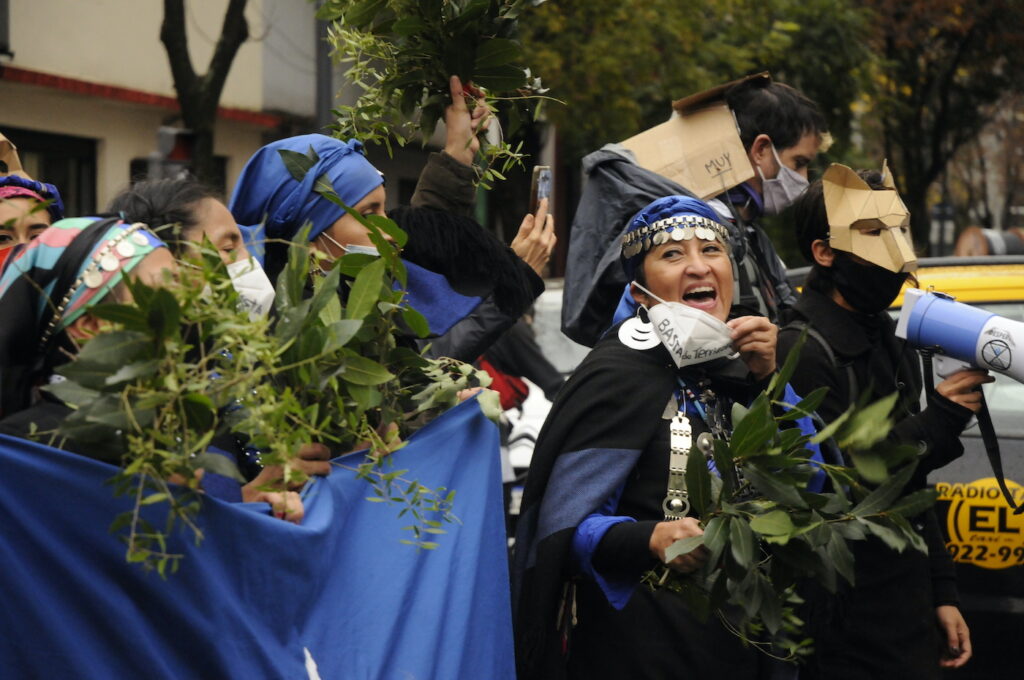
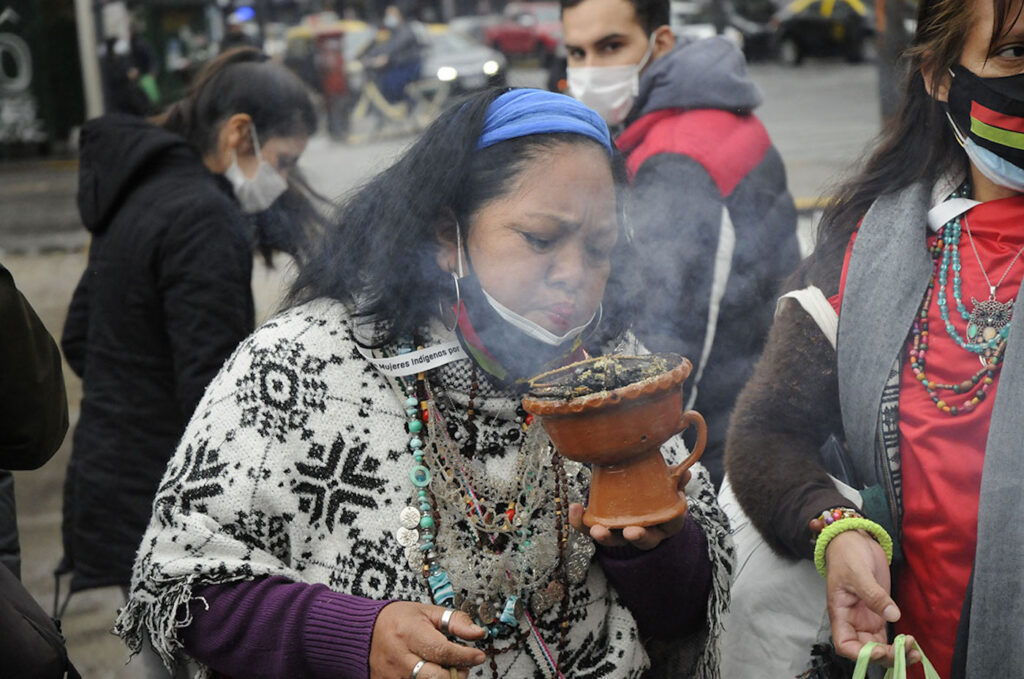
There was also the sacred fire carried by the sisters, purifying the path with incense and bringing the companionship and strength of our ancestors. Other sisters walked with medicinal plants in their hands, which they waved and raised as they celebrated and sang. These plants represent for us a cry of resistance against the Western healthcare system.
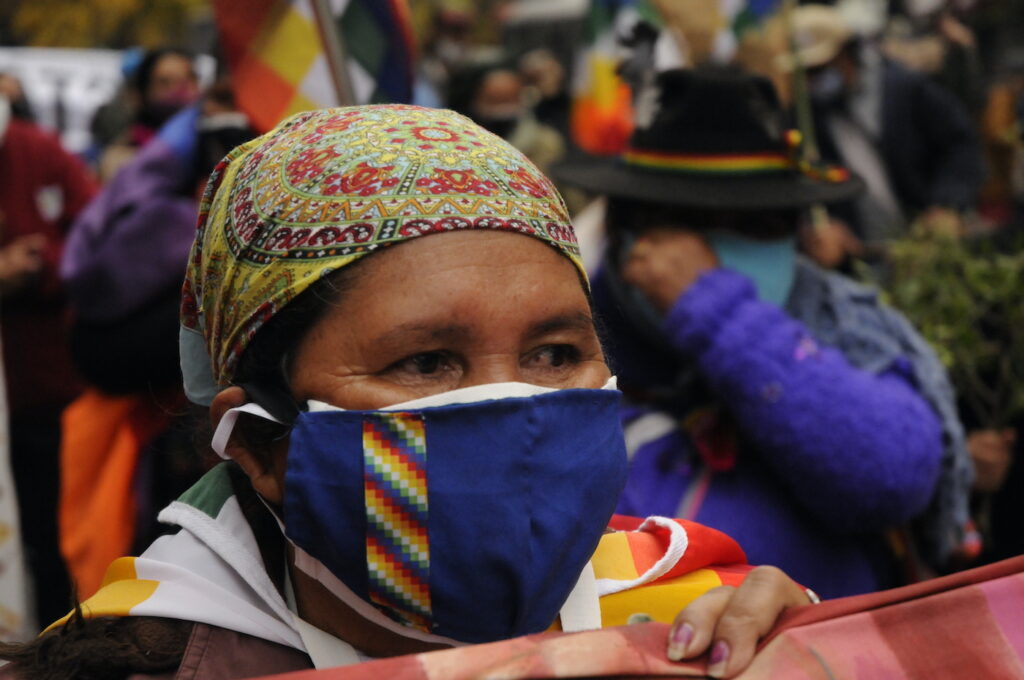
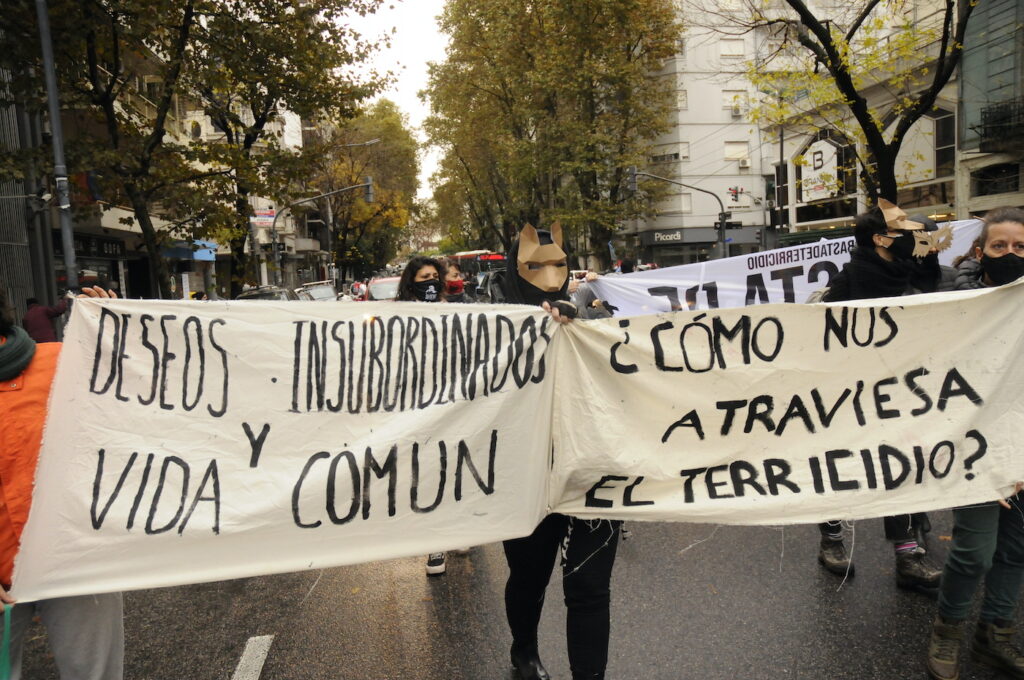
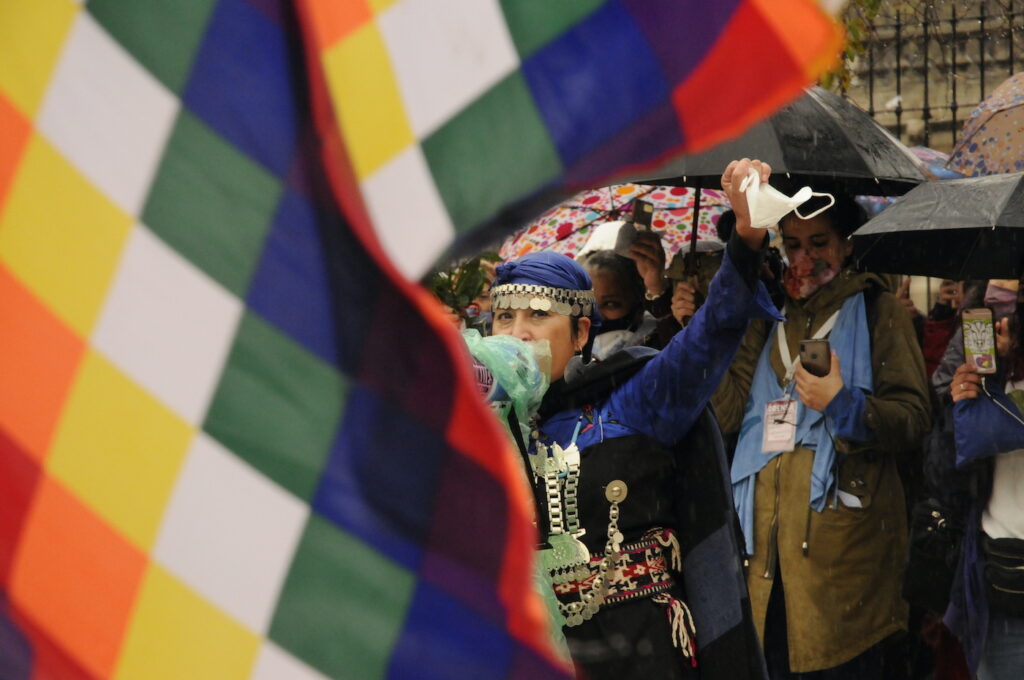
It was a march as vibrant as our Pachamama. The colors of each Indigenous people's flags, their sacred attire, and their banners burst into the concrete jungle. Some carried signs, others wore masks of native animals. And so we walked, alongside the spirits of animals, plants, and our ancestors.
Nor were the songs lacking: “Doing what the waves do, we are and will be the sea. Turbulent energy, walking to heal,” the phrase was a deep and powerful cry on the lips of the guardians of the Territories. Accompanied by that sweet singing that filled our bodies with strength, we embarked on a brisk and heartfelt walk.
Just a few meters from the Congress building, we stopped to listen again to Moira Millán. She warned us about "the historical responsibility to generate a global revolution to stop Terricide." This responsibility is being taken on primarily by Indigenous women who defend their territories with their bodies and lives.
Upon arriving at the National Congress, the sisters extended their arms to the monumental building, where they left flags and signs protesting the genocide. One of the most moving moments was seeing them raise the Wiphala flag on one of the Congress's flagpoles despite the police presence.
As this was happening, the drizzle turned into a heavy downpour. However, for Indigenous Peoples, water has a different meaning: “We feel that the rain is cleansing the Earth. It is cleansing us of everything that has taken root within us as a result of the Terricide. The rain comes to embrace us and reaffirm our path,” explained Moira Millán. It was a rain that would revitalize our struggles.
Ancestral medicine to strengthen our indigenous identities
To conclude, a ceremony was held in which the healers of the Movement presented medicinal plants to various organizations. In a circle, attentive and moved, each recipient of this offering introduced themselves. Our media outlet, TeleSISA, was also able to participate in this recognition. Representing the team, Laura Quispe and Paula Alvarado Mamani received the medicinal plants, highlighting our work as communicators and our commitment to strengthening our Indigenous identity in Buenos Aires. Our work and professions support and serve Indigenous communities.
The ceremony concluded with an ancestral song sung by one of the sisters in her Indigenous language, Qom. As Indigenous people, we know that the song of one sister represents a collective song, the song of all our brothers and sisters. The struggle of one sister is the struggle of us all. These are forms of reconciliation, embrace, and strengthening of our Indigenous identities in urban life.
,
We are present
We are committed to journalism that delves into the territories and conducts thorough investigations, combined with new technologies and narrative formats. We want the protagonists, their stories, and their struggles to be present.
SUPPORT US

FOLLOW US
Related notes

We are present
This and other stories are not usually on the media agenda. Together we can bring them to light.