

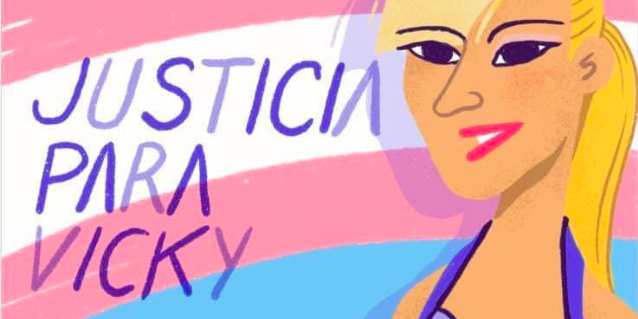
The verdict is approaching for Vicky Hernández, a trans activist murdered in Honduras
Family members and colleagues of Vicky Hernández, activists and organizations await the Inter-American Court of Human Rights' ruling against the State of Honduras for the murder of the trans activist perpetrated between June 28 and 29, 2009.


Share

Family members and colleagues of Vicky Hernández, along with human rights and diversity organizations, are awaiting the Inter-American Court of Human Rights' ruling against the State of Honduras for the murder of the trans activist in June 2009. She was 26 years old when she was killed by state security forces, according to her lawyers, an all-female team.
The pending ruling at the Inter-American Court of Human Rights is the culmination of eleven years of work by a team of lawyers and the family of Vicky Hernández, and of a landmark trial before the Court . The defense's work culminated in two virtual hearings before the Court in November 2020. Honduran experts and witnesses from the rest of Latin America participated, including the Argentine trans activist Marlene Wayar.
“With Vicky’s sentencing, there are a lot of emotions and expectations,” says Indyra Mendoza, coordinator of the Cattrachas Lesbian Network, in an interview with Agencia Presentes. “As an activist and a lesbian with many years of struggle for the recognition of our equal rights, I hope that the State of Honduras will be condemned for extrajudicial execution.”
A ruling in favor of Vicky, who was murdered during the curfew imposed after the coup against Manuel Zelaya Rosales, could become a landmark in raising awareness and improving protections for all trans, lesbian, gay, and bisexual people in Honduras. It could also set a precedent for any LGBTQ+ person in Latin America who has suffered discrimination.
“If the court rules in Vicky’s favor and this crime doesn’t go unpunished, it will be a major victory for the LGBTI community in Honduras. It would mark a turning point in the fight for trans women’s rights,” Sacha Rodríguez, a trans leader and director of the Pro-Union Organization of Ceibeña (Oprouce), told Presentes. “It would be a powerful voice for the other murder victims, and justice could finally be served.”
Eleven years of fighting for Vicky
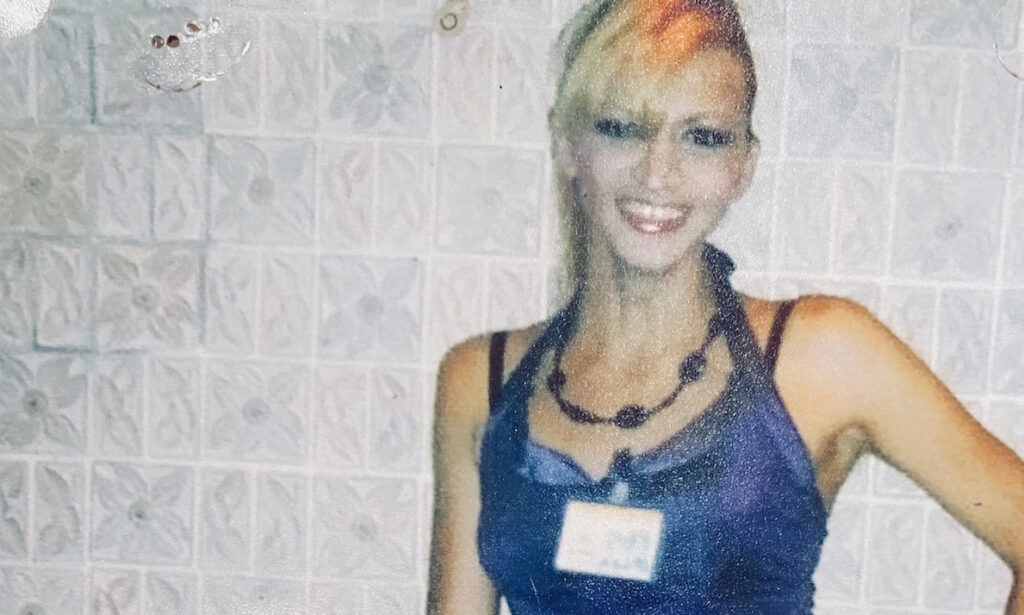
Vicky Hernández's lawyers —Nadia Mejia and Astrid Ramos from Cattrachas and Angelita Baeyens and Kacey Mordecai from Robert F. Kennedy Human Rights—argue that Honduran state security forces are responsible for her death, since during the curfew imposed after the coup, they were the only ones allowed to move freely through the streets of San Pedro Sula. Furthermore, the defense denounced the state for failing to perform an autopsy and concealing the results under the pretext that Vicky was HIV-positive.
“It’s important to get the Court to rule on the extrajudicial execution and investigate the chain of command,” says Indyra Mendoza. “Why? Because this makes us all equal in the Honduran collective consciousness.”
Mendoza believes it's not just about Vicky's death: during the coup, 14 trans women, 16 gay men, and many more were murdered. A ruling against the state means more than just justice in Vicky's case.
“This is an opening for them to see that no struggle is exclusive to any one group of people,” she adds. “If the amnesty granted during the coup were eliminated, it would be a great contribution from the LGBTQ+ community to this country where the human rights of journalists, lawyers, defenders of Indigenous territories, Garifuna people, and farmers are violated.”
Justice for all, demands her mother
“There has to be justice for everyone,” demands Vicky’s mother, Rosa Hernández. “They have to respect their rights as trans people and their rights as lesbians. Because they are human beings. Why discriminate against them? There can be no discrimination.”
Rosa, 65, has spent the last eleven years personally dedicated to the fight to reclaim the memory of the trans woman originally from San Pedro Sula, in northern Honduras. “Vicky was everything to me,” she adds.
A life in the midst of danger
The trans activist dropped out of school to support her family. Like other trans women, Honduran society closed its doors to her. It didn't offer her a job, healthcare, education, or employment as it does to other citizens.
Vicki traveled to Guatemala at the age of 16 to begin her transition. At first, Rosa Hernández struggled to understand her daughter, but she accepted her. “For a mother, a daughter is always a daughter. I don’t know how there are mothers who reject their children who are gay or trans.”
She spent many sleepless nights fearing that Vicky wouldn't survive the street sex work she did to make a living. Like Vicky, trans women who work in the sex trade in Latin America are at greater risk of death.
They killed all the female witnesses.
On June 28th, neither Vicky nor her mother knew there was a curfew. “The next day, I thought it was strange that Vicky hadn’t come home,” Rosa recounts. Her daughter’s dinner had gone cold on the table. “Then, one of the girls told me, ‘Don’t you know the police killed Vicky in the early morning? Vicky’s in the morgue.’ I was speechless.”
The night Vicky was killed, her companions ran to escape death. But the witnesses who managed to flee were also pursued and murdered. “I still told Vicky, ‘Run, run, run,’” one witness told Rosa. “When we turned around, we didn’t see Vicky, we only heard the gunshots.”
“They killed Lisa and the other one,” Rosa recalls. “There were no witnesses left. But I was assured that the police had killed Vicky.”
“When we were at the hearing at the Inter-American Court of Human Rights, I received a call from the DPI,” Rosa recounts, her voice breaking. DPI is the acronym for the Honduran Police Directorate of Investigation. According to Rosa, the call was intended to intimidate her and make her abandon her desire to seek justice at the Inter-American Court of Human Rights hearings.
“I was scared because they kill people and they don’t even know who [does it]. That’s why I’ve been in a state of anxiety. I’m scared because maybe you have a lawsuit against the State and they’ll want to ruin you [kill you] because for them, a person’s life is worthless.”.
This harassment was denounced at the same hearing before the Inter-American Court of Human Rights. With the help of Cattrachas and other supporting organizations, Rosa and her family have found the courage to tell their story and continue their fight for over a decade. “They told me to fight and fight so that Vicky’s death wouldn’t go unpunished,” Rosa says defiantly. And here she is, still waiting for a sentence that will at least partially repair the irreparable damage done to her daughter and to so many trans and travesti women in Latin America who continue to wait for justice.
We are present
We are committed to journalism that delves into the territories and conducts thorough investigations, combined with new technologies and narrative formats. We want the protagonists, their stories, and their struggles to be present.
SUPPORT US

FOLLOW US
Related notes

We are present
This and other stories are not usually on the media agenda. Together we can bring them to light.