

Lesbian Visibility Day: The conflicts of being openly lesbian
Like any commemorative date, this one prompts us to reflect on the place that lesbians and their political struggles have occupied in the public sphere. What purpose does visibility serve in the current context? What dilemmas does it present us with?


Share

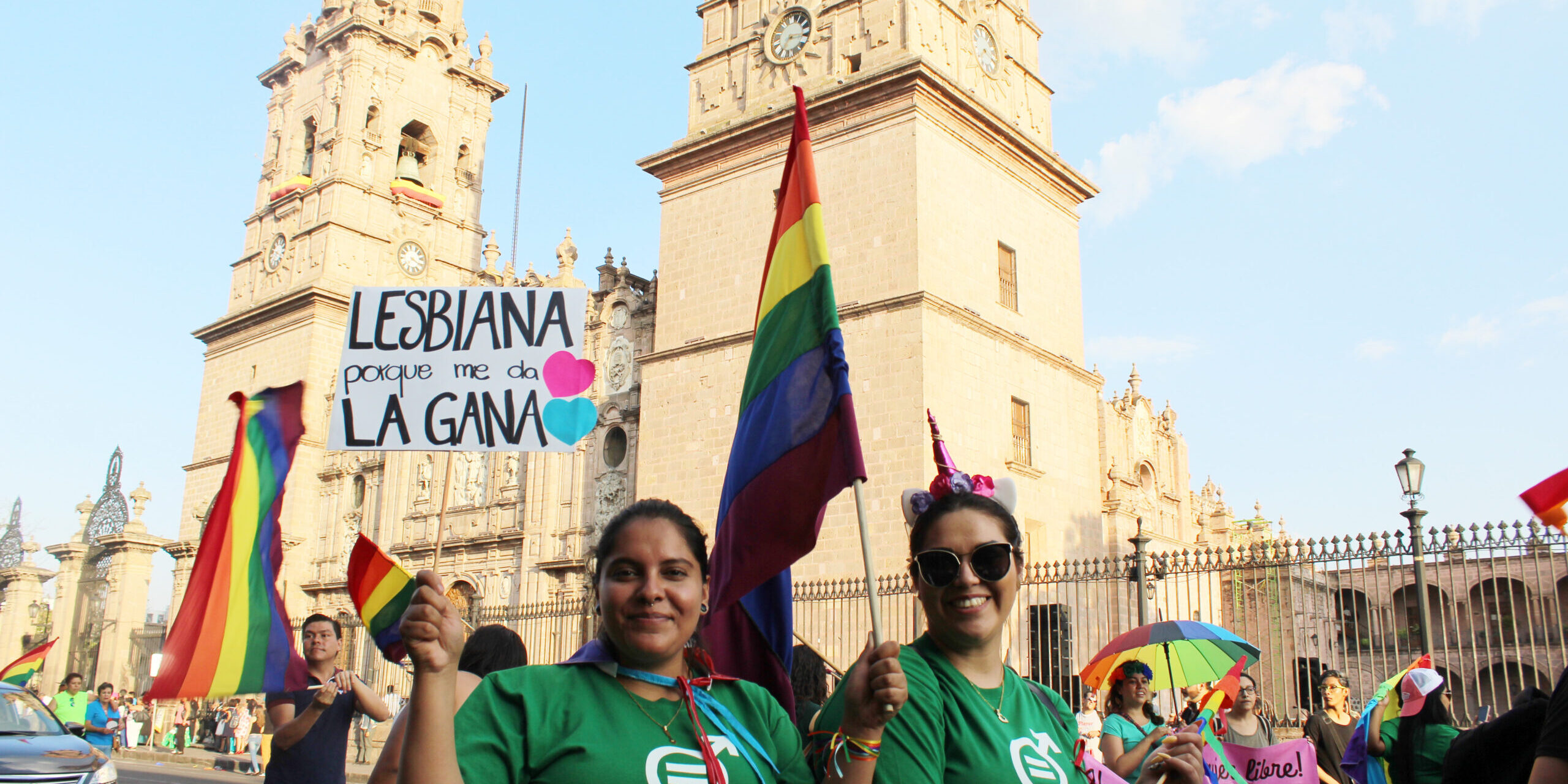
April 26th is International Lesbian Visibility Day. The date originated in Spain in 2008 and has since spread to several Latin American countries. Like any commemorative date, this one prompts us to reflect on the place that lesbians and their political struggles have occupied in the public sphere. What purpose does visibility serve in the current context? What dilemmas does it present us with?
Lesbian childhoods
Lencha, manflora, maseca, tortilla, camiona, hombrecito, machorra, marimacha—sometimes words are more visible than what they intend to name. Playing soccer, riding a bike, fighting with imaginary swords against equally imaginary monsters—this was what it meant to be a tomboy, a butch, something you didn't quite understand but that made you feel ashamed, uncomfortable, that something was wrong or that you weren't doing something right.
Not fitting into normative models of femininity, experiencing childhood in resistance to the gender binary, unleashing moral panics around you, rejection. "Butchura!" The power of the insult that we lesbians know so well.
Words whose meaning you didn't quite grasp, words that did things. Thinking about the childhoods of lesbians evokes a multiplicity of affective biographies usually marked by binary gender correctness or the heterosexualization of desire.
Biographies that can be considered archives, like the collaborative project Chonguitas: Girls' Masculinities , coordinated by Fabi Tron and Valeria Flores, which brings together 44 narratives accompanied by photographs of the childhoods of mostly lesbians, but also of diverse women, heterosexuals, and queer people. This initiative originated in Argentina but expanded throughout Latin America, including Mexico. As they point out in the prologue
We hope that this book - as a cultural reference - will stimulate the imagination and survival of all those girls who do not fit into the normative models of femininity.
These stories about lesbian childhoods reveal the importance of visibility in shaping role models for children. We are at a point where lesbian visibility is present in certain cultural spheres, in political representation—albeit minimal—and in business, but this has not necessarily led to a reduction in rates of violence and discrimination or to greater visibility of gender and sexual justice agendas.
2019 has been the most violent in terms of crimes against lesbians in Mexico, according to Letra S , and 12 states still do not recognize the right to same-sex marriage in Mexico.
Lesbian feminist legacies
Continuing to think about and problematize visibility in lesbian feminist struggles means recognizing two legacies: the struggles for the expansion of rights for the lgbti+ populations, and the vindication of lesbian relationships as resistance against the heterosexual regime.
Julia Antivilo, in conversation with Presentes, recounts her experience as a feminist curator recovering the memory of these lesbian feminist controversies. As a feminist historian, lesbian, and performance artist, Julia recognizes the continued importance of visibility: “Despite the co-optation of the LGBTQ+ movement by pink capital, there are contexts in which being a lesbian continues to be subject to much violence, and reaching those spaces is what we continue to fight for.” As a political statement to Presentes, she points out that “today’s lesbian generations owe a debt to our feminist predecessors in the struggle.”
For some of her projects, Julia has immersed herself in the Historical Archive of the Lesbian Feminist Movement in Mexico , a collection of over 30 volumes and 9,000 documents spanning from 1976 to 2020, belonging to the Mexican lesbian artist Yan María Yaoyólotl Castro. This archive gathers the memories of lesbian feminist struggles: posters, manifestos, calls to action, texts, leaflets, and even the hoods that the first openly lesbian activists wore in marches to avoid the social repercussions that such a public presence could bring.
The activism of lesbian groups in the 80s such as Ácratas, Oikabeth or Lesbos emerged in the heat of the feminist struggle and in open challenge to the Mexican left with slogans such as "Socialism without sexism".
From those early struggles to the present day, lesbians have walked under the umbrellas of feminism and the homosexual movement, contesting the political arena through strategies that ranged from institutional struggle to autonomous struggle.
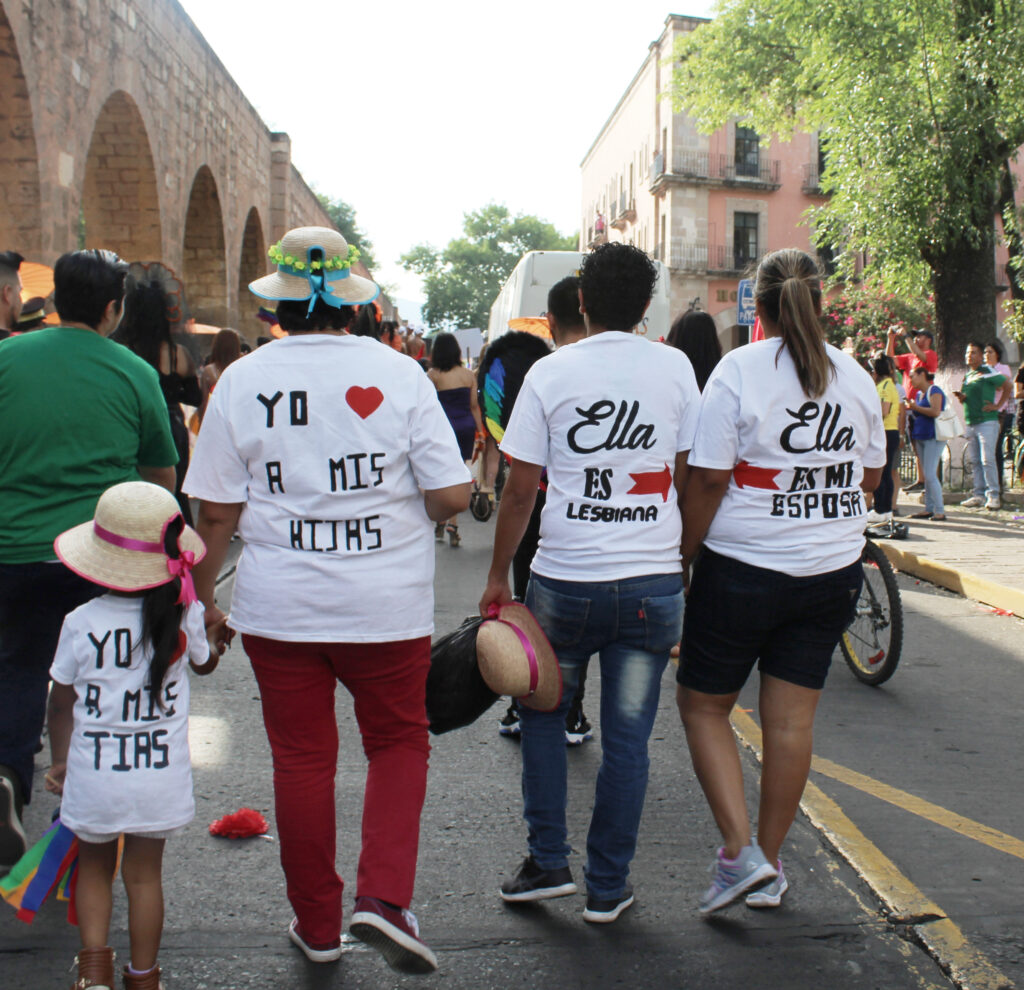
Heated political debates and antagonisms dominated meetings, conferences, fanzines, articles, and marches. The political positions of lesbians challenged and unsettled an LGBTQ+ movement in which gay men were the most visible subjects of the struggles, and the feminist movement, comprised mainly of heterosexual women and their demands.
Lesbian narratives
Lesbian literature has also had less representation in the cultural and political world of sexual dissidence since Luis Zapata published *El vampiro de la colonia Roma* in 1978. It wasn't until almost a decade later that the first lesbian feminist novel appeared, *Amora*, by Rosa María Roffiel, in 1989.
Artemisa Téllez, one of the pioneers of the genre in Mexico, after Sara Levi and her novel Two Women (1990) and Gilda Salinas with The Shadows of the Safari (1998), says that she didn't even know that her book An Encounter and Others (2005) was one of the pioneers of lesbian narrative, and with this she highlights the importance of visibility:
“Lesbian literature contributes to visibility. Visibility contributes to self-knowledge, representation, and self-acceptance because, to tell the truth, only lesbians (and the occasional intellectual queer person) read lesbian literature (and even then, only a minority, because lesbians, like everyone else, are reading less and less). Above all, lesbian literature contributes to national and universal literature by breaking down, questioning, transgressing, and disrupting the masculinist, heterosexist, and European canon through the exposure and problematization of our differences.”
THE CONFLICTS OF VISIBILITY
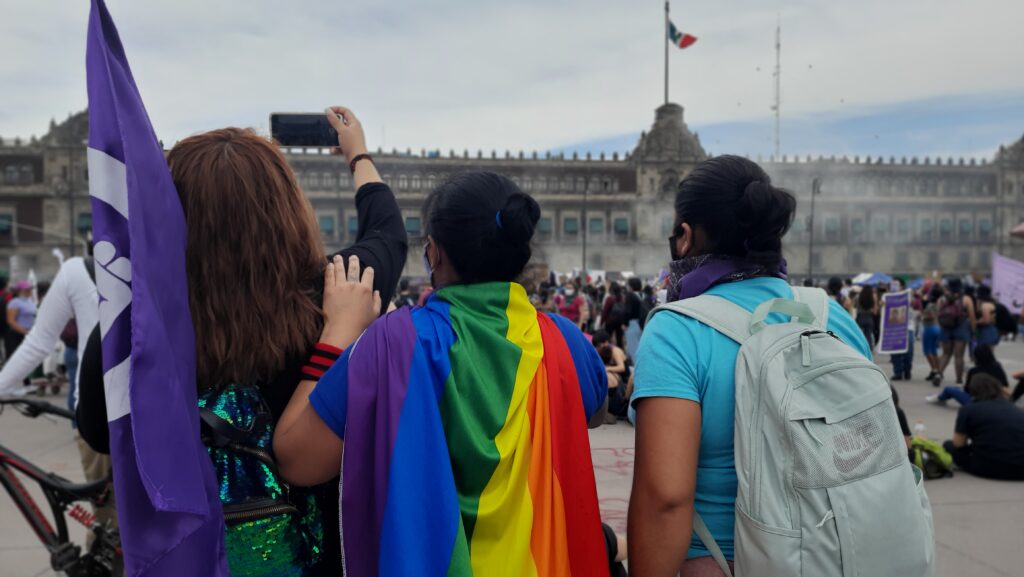
Whether in activism, literature, or the fields of art and performance, the question of why lesbians are invisible remains important. Because despite the legacies that shape lesbian public cultures, these still lack the social, cultural, and political relevance that their presence and production bring into public circulation.
Visibility also entails its contradictions, and these are, on the one hand, that the struggle from within the institutions, which strives for the expansion of rights for the LGBTI+ population, must be accommodated within a political horizon in which sexual citizenship is the goal of the struggles of lesbian feminists.
And, on the other hand, that lesbian radicalism is constructed from an essentialist identity that rejects political alliances with the diversity of feminisms. Both homonormativity and the hate speech that, from within radicalism, disguises itself as the dehumanization of our interlocutors, are the traps that visibility entails for the public cultures that we, as lesbians, generate.
[1] https://proyectoletraese.org/sitio2/wp-content/uploads/2021/02/Muertes-violentas-por-orientacion-sexual-informe-2019.pdf
[2] https://m68.mx/coleccion/36616
We are present
We are committed to journalism that delves into the territories and conducts thorough investigations, combined with new technologies and narrative formats. We want the protagonists, their stories, and their struggles to be present.
SUPPORT US

FOLLOW US
Related notes



We are present
This and other stories are not usually on the media agenda. Together we can bring them to light.