

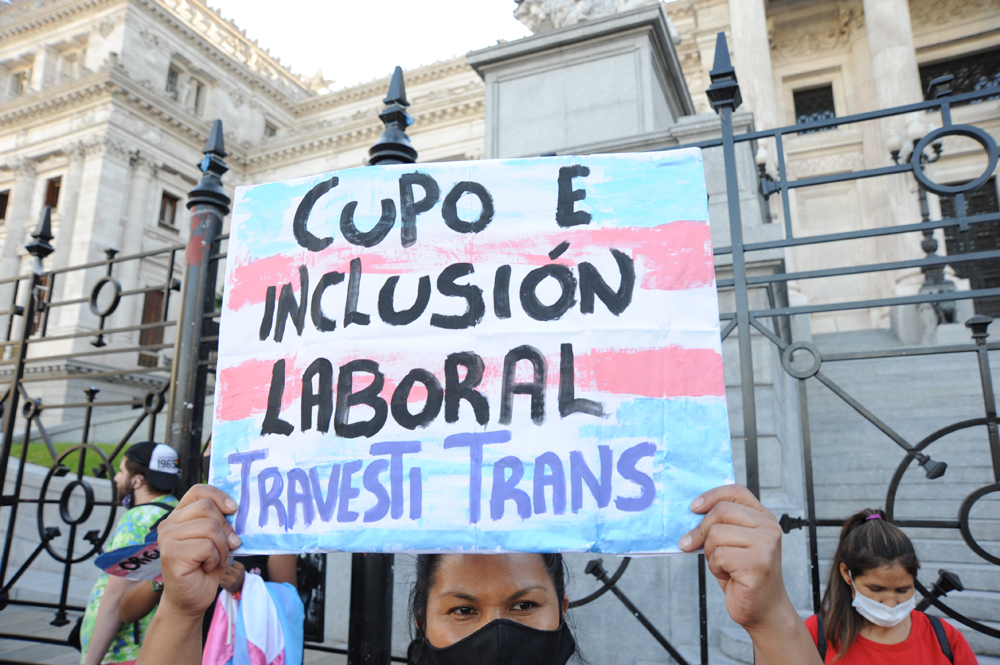
Protests across the country called on Congress to pass a law for transgender labor inclusion.
In front of the National Congress and in various locations across Argentina, demonstrations were held demanding the urgent passage of a National Law on Quotas and Job Placement for transgender people. Why the decree is not enough.


Share

In front of the National Congress and at various locations throughout Argentina, demonstrations were held demanding the urgent passage of a National Law on Quotas and Job Placement for transgender people. Why do organizations believe that the quota decree is insufficient?
By María Eugenia Ludueña
Photos: Ariel Gutraich (CABA) and Campaign for Quotas and Labor Inclusion for Transvestites and Trans People
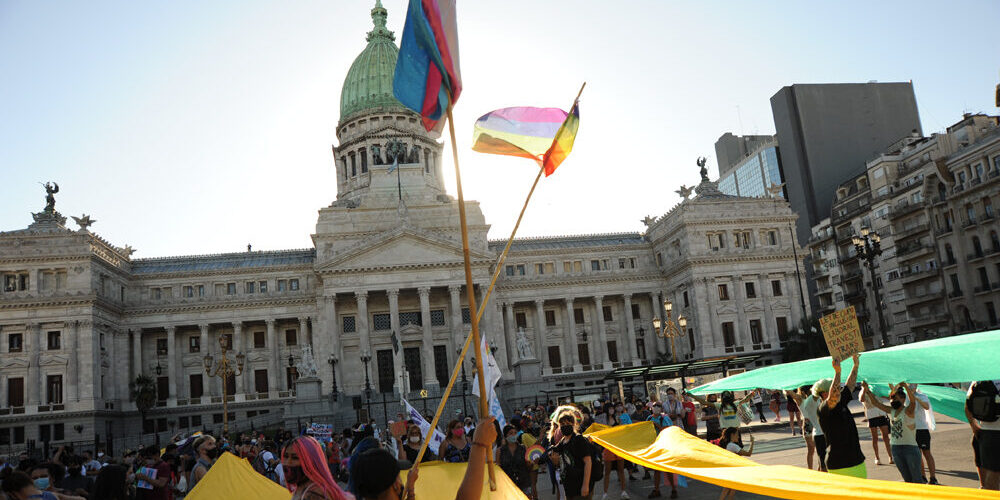
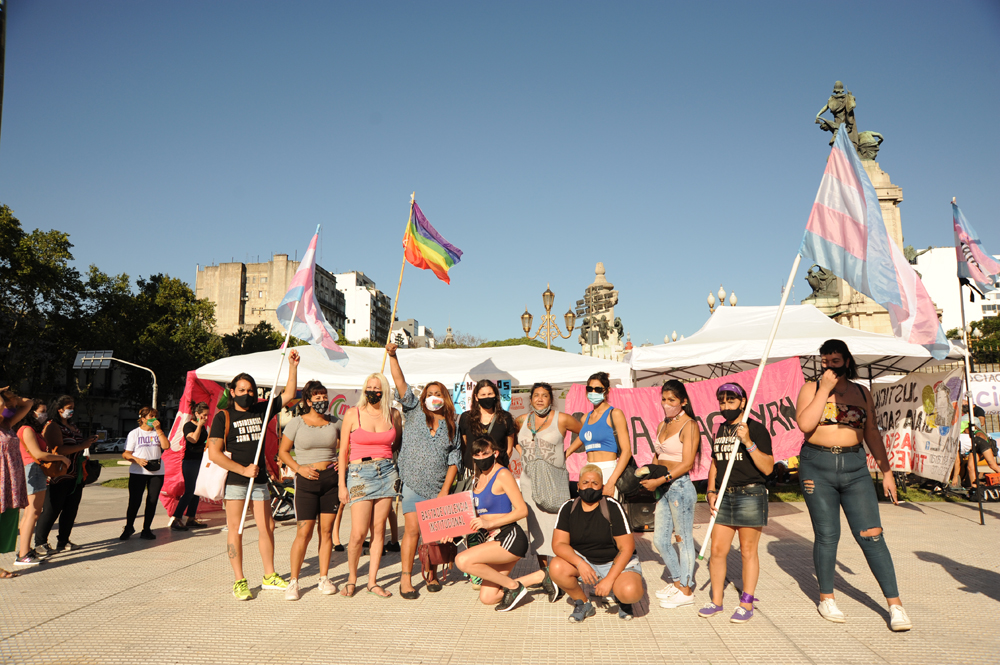
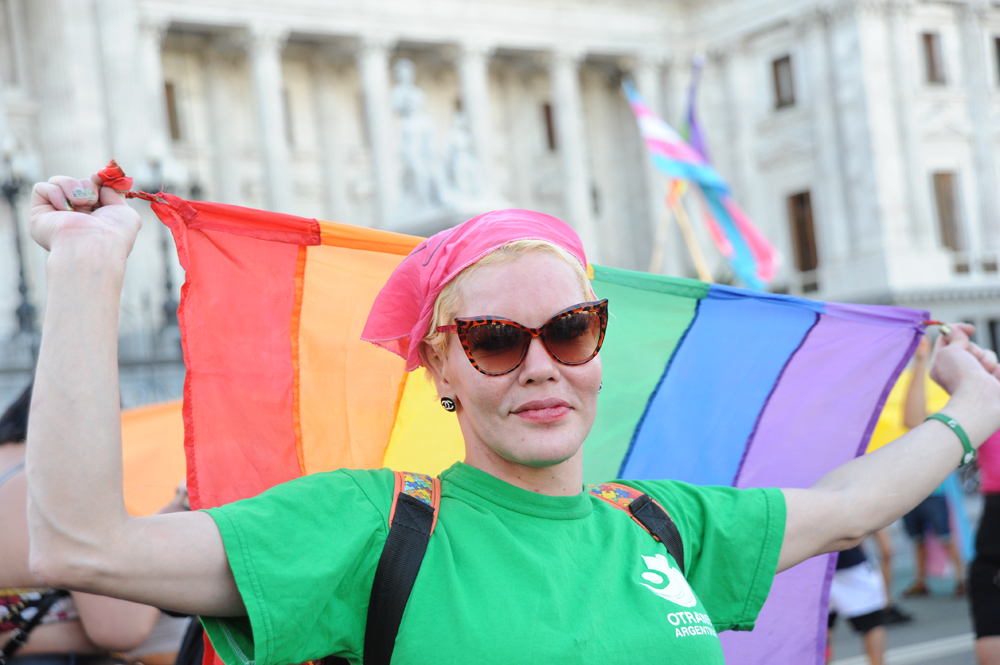
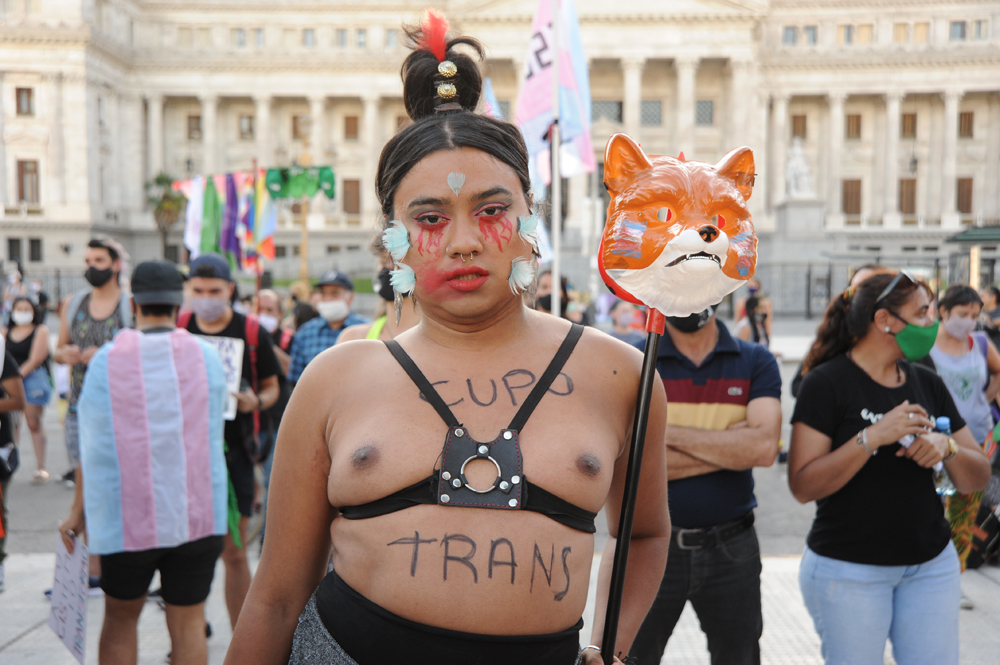
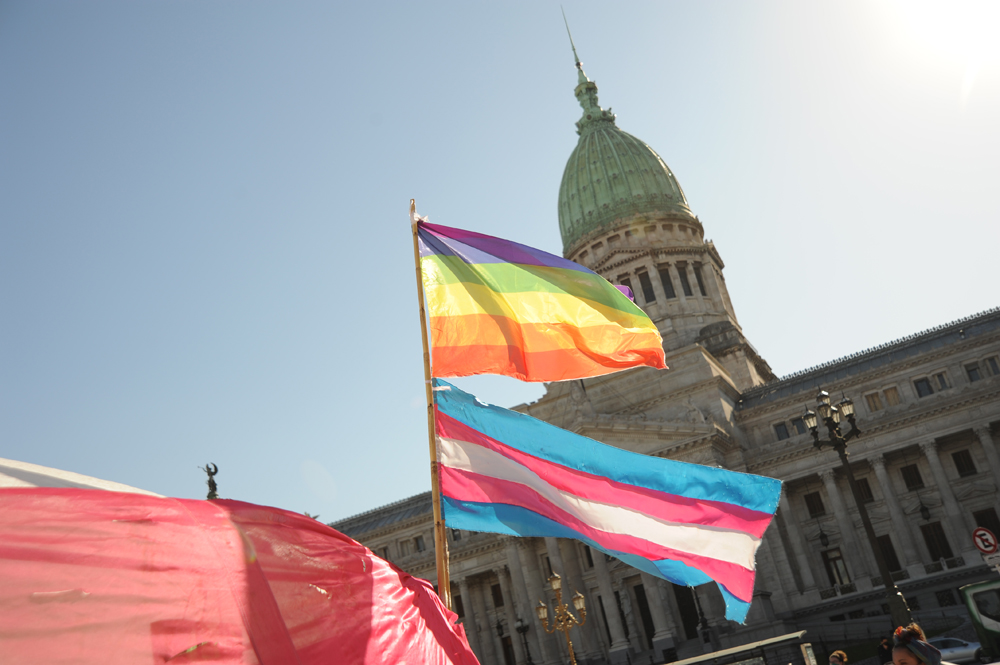
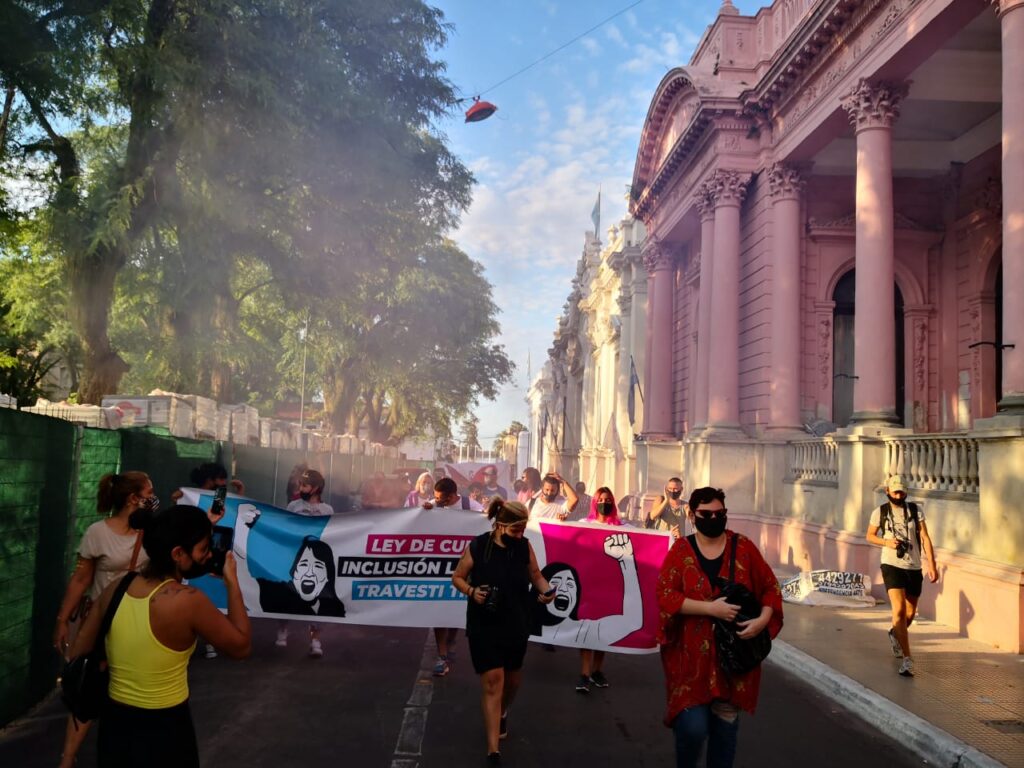
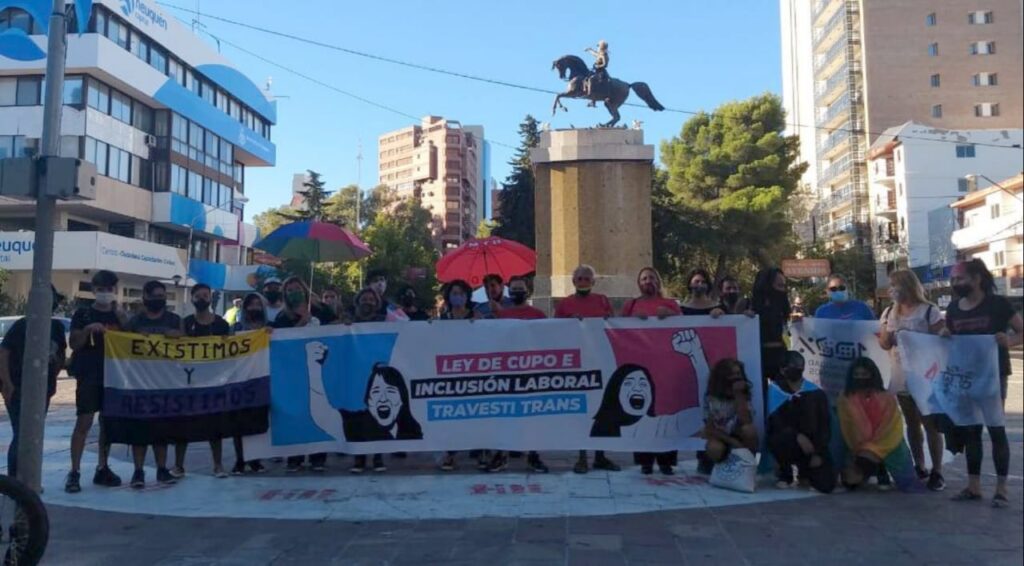
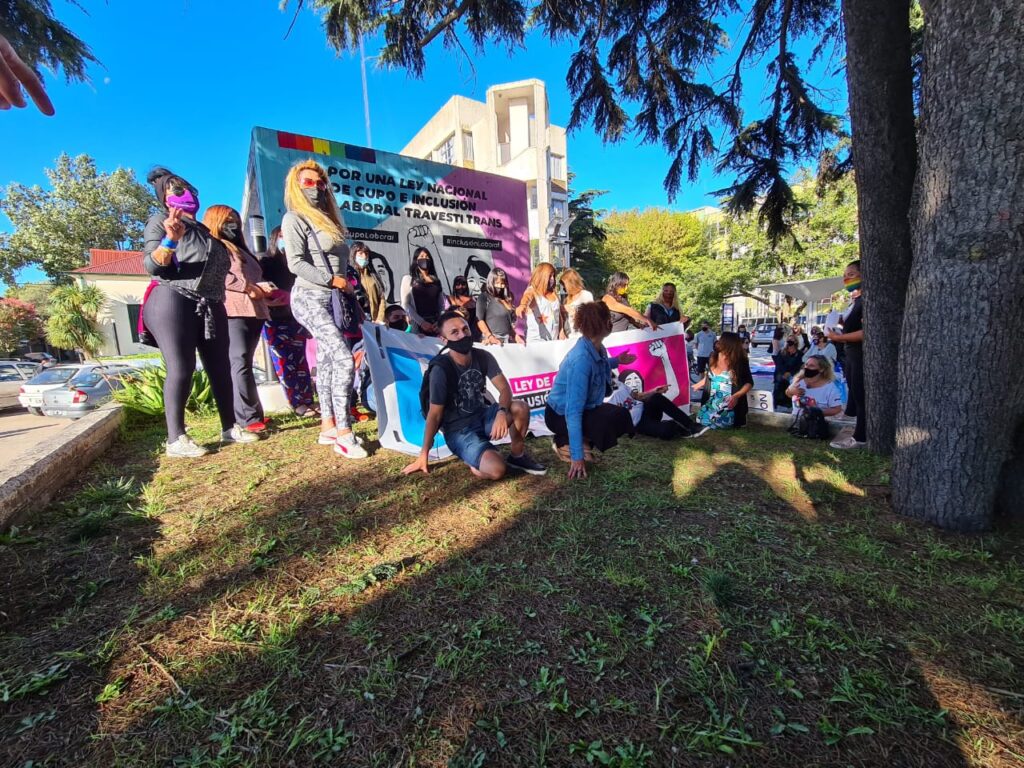
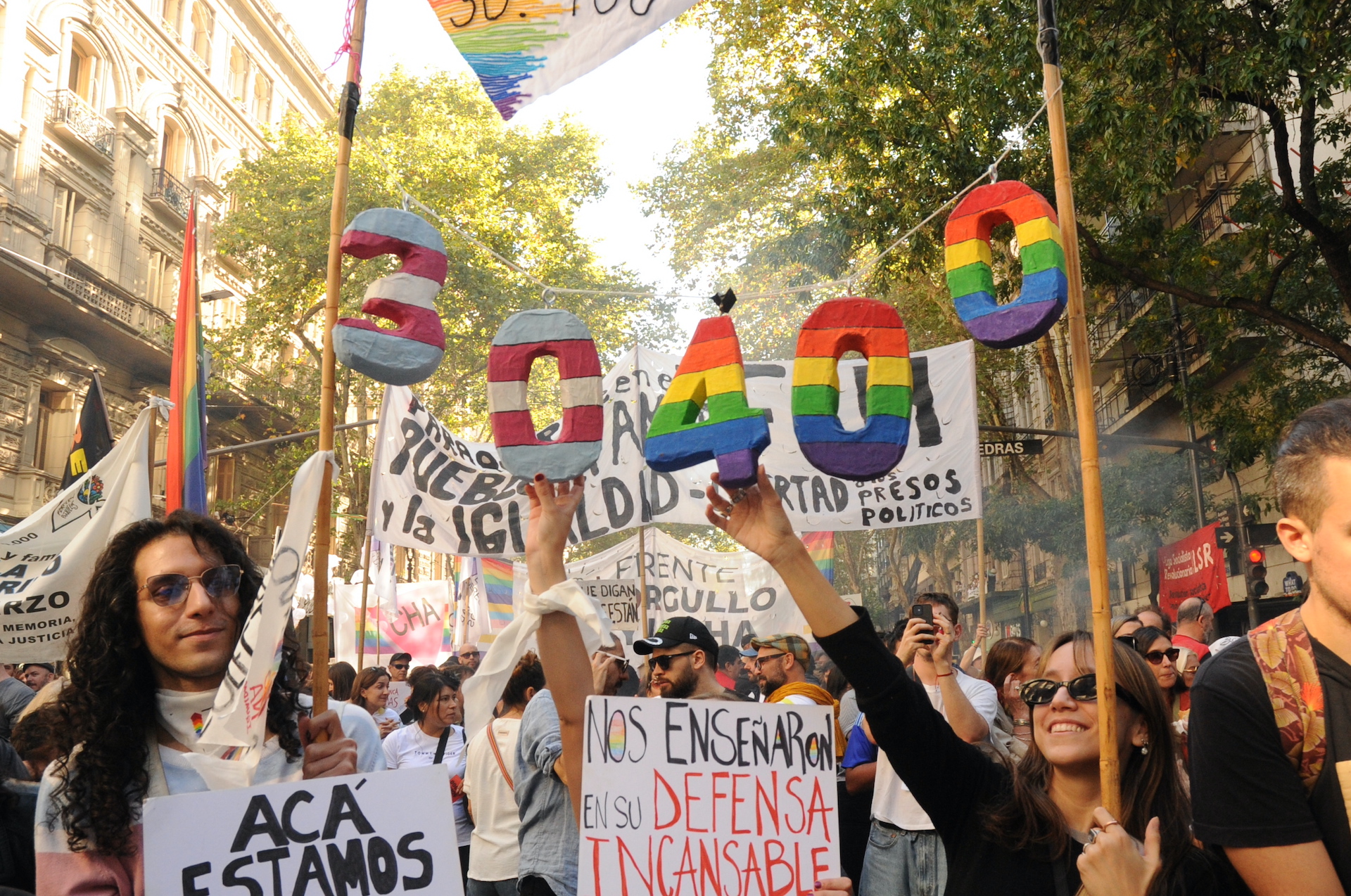
Hundreds of trans and rainbow flags waved Saturday afternoon in the plazas of 18 towns across Argentina with the same demand: to urge the National Congress to expedite and pass a national law guaranteeing job inclusion and quotas for trans and gender-diverse people. The bill has already received approval from three committees of the Chamber of Deputies: Women and Diversity, Labor Legislation, and Budget and Finance.
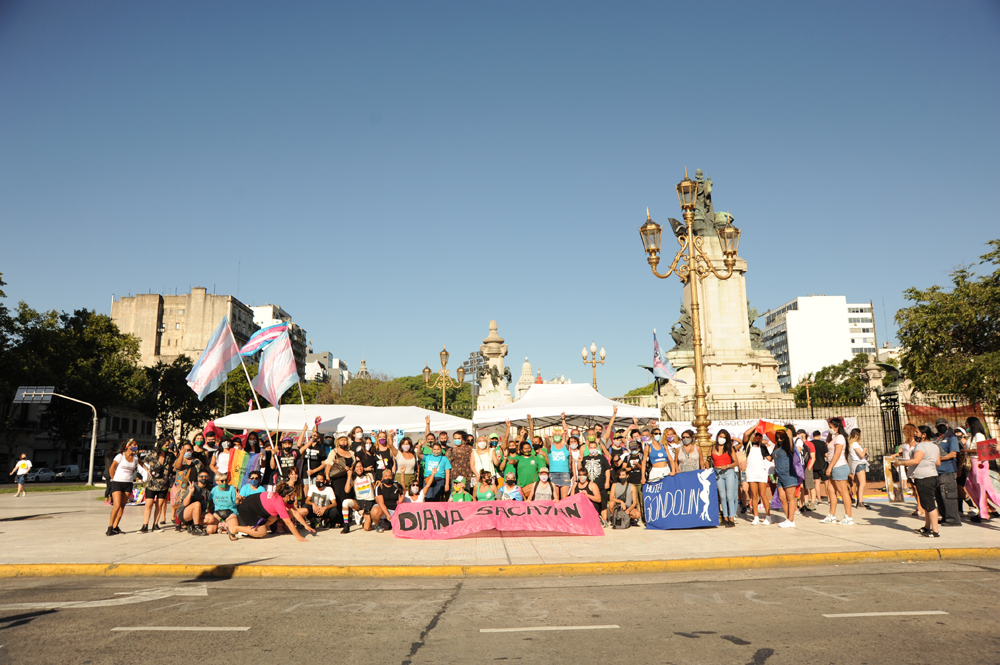
Although it is a long-standing demand of the trans and travesti community in Argentina, the "Diana Sacayán – Lohana Berkins" Bill to Promote Access to Formal Employment for Transvestite, Transsexual, and Transgender People (its official name) was not debated in last year's ordinary sessions. However, it is now ready to be considered because President Alberto Fernández included it, along with other bills, on the agenda for Congress during the extraordinary sessions scheduled until February 28 .
This Federal and Plurinational Flag-Waving Rally was convened by the campaign that has been pushing for the passage of what were previously several separate bills (14 initiatives were presented in Congress in 2020), now unified into the Law for the Promotion of Access to Formal Employment for Transvestite, Transsexual, and Transgender People “Diana Sacayán – Lohana Berkins.” The campaign is comprised of the Pride and Struggle Front (which brings together various sexual diversity organizations), the LGBTIQ+ League of the provinces, and the Argentine Trans and Travesti Federal Network, along with other organizations from across the country.
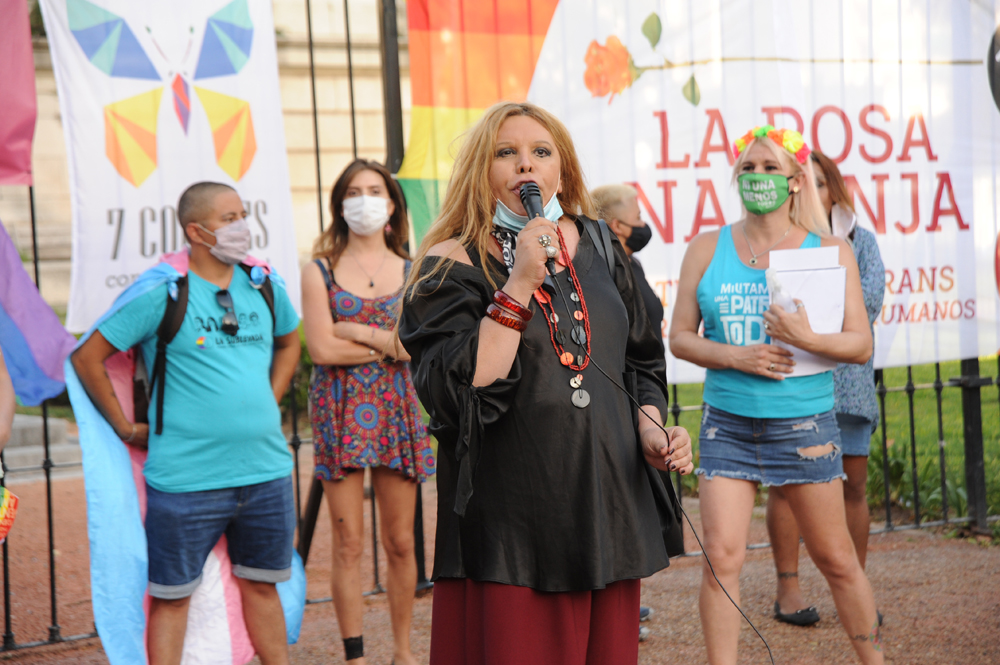
“We need Congress to put transgender employment inclusion on the agenda. It’s crucial that it becomes law. Work is central to people’s lives, a right that has historically been denied to transgender and transvestite people because of our gender identity,” said Marcela Tobaldi of La Rosa Naranja, an organization that is part of the Pride and Struggle Front. “We are urging Congress to debate this bill, which is urgent.”
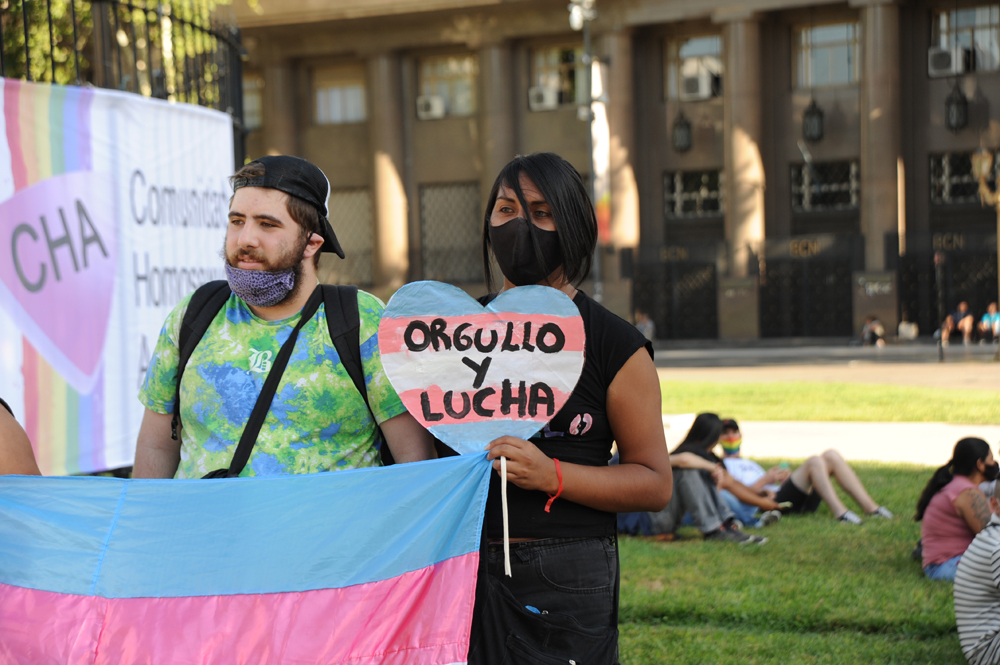
Unlike Alberto Fernández's presidential decree allocating 1 percent of public sector jobs to transgender people (and whose application period opened a few days ago ), the proposed law is much broader. It includes the implementation of more comprehensive public policies for training and inclusion, support for productive projects within the informal economy managed by transgender people, and incentives for the private sector.
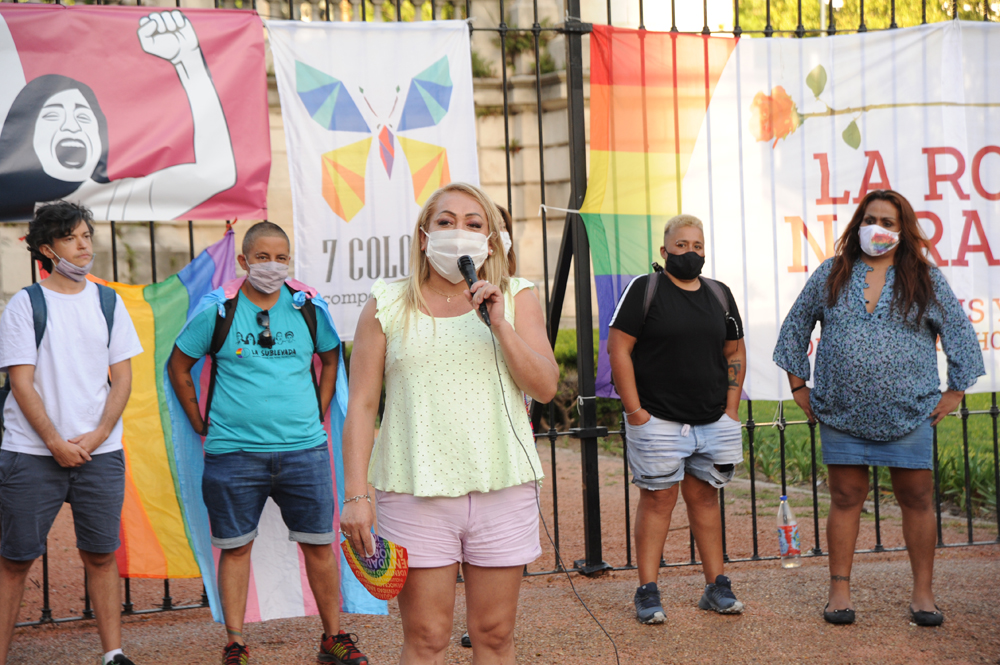
“Nadia (Echazú), Diana (Sacayán), and Lohana Berkins had to fight alone against a patriarchal system,” recalled Claudia Vásquez Haro, president of OTRANS and the Argentine Transvestite and Transgender Federal Coalition. She highlighted the “political maturity of the transvestite and transgender community, which built this unity.” The activist also praised the social and political organization required to reach this point. And she affirmed: “The passage of this law is vital for our community.”
For the present and for the future of trans children
While participating in the preparations to kick off the demonstration, Alma Fernández, a trans activist, recalled the legacy of Lohana Berkins and Diana Sacayán (their names echoed throughout the afternoon in every corner of Plaza de los Dos Congresos). “We are here to strongly demand trans labor inclusion, in a week in which we also had to take to the streets to protest the femicide of Úrsula. Trans Labor Inclusion, Trans Fury!” the activist chanted.
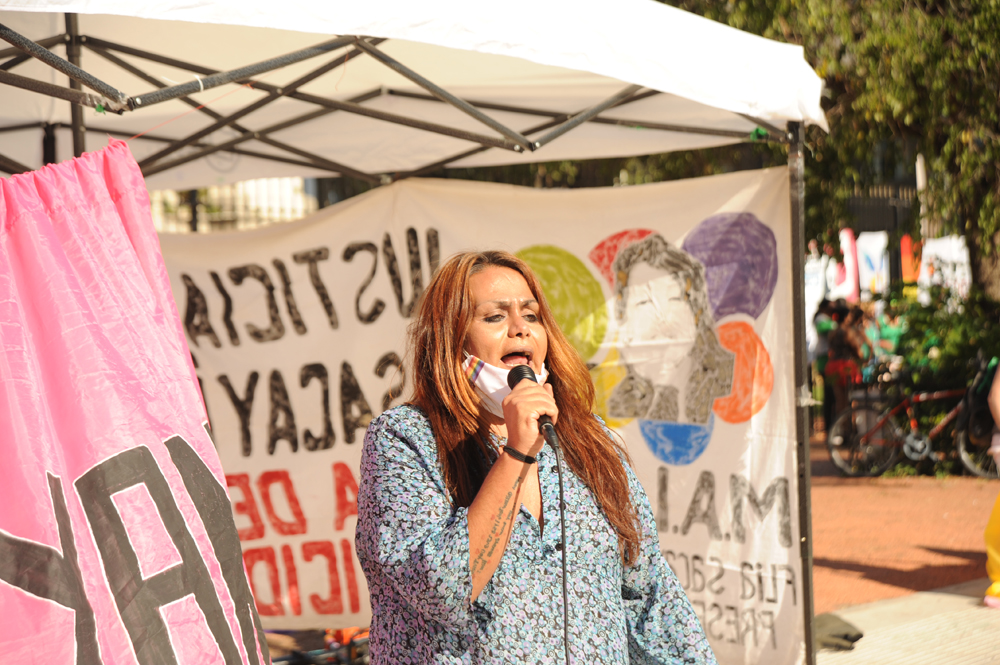
Marisol Brandan, a 36-year-old trans woman, was among the first to arrive at Plaza de los Dos Congresos, wearing a face mask and a t-shirt with the same slogan: “ Free Childhoods .” This is the name of the civil organization headed by Gabriela Mansilla (mother of the first trans girl in Argentina to obtain her national identity document reflecting her self-perceived gender identity), of which Marisol is a member. “My genitalia do not define my gender,” read the back of her t-shirt and those of her fellow members of the organization, parents of trans children.
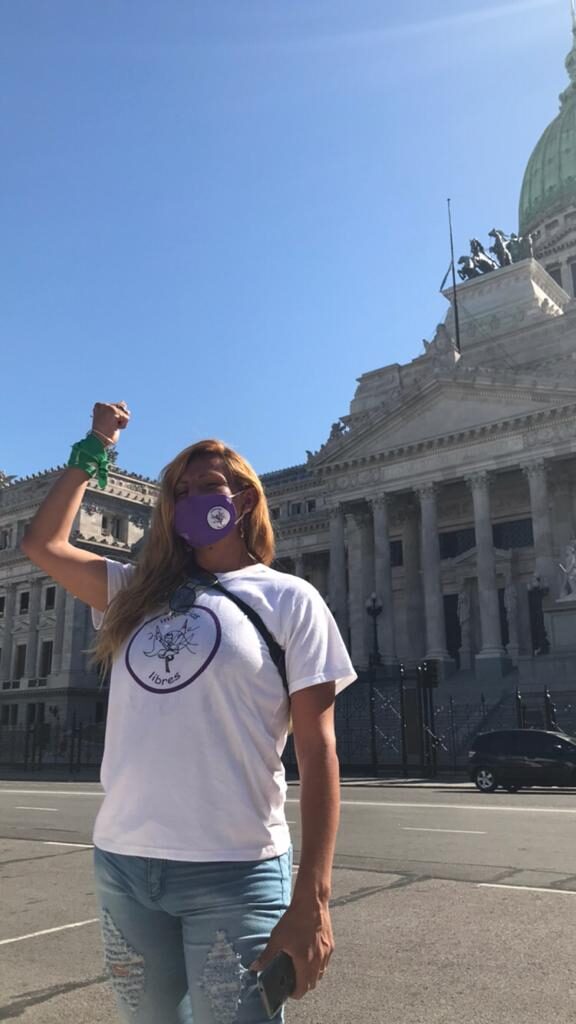
“At 36, I am a survivor. But I am here, and we are here, to demand a guaranteed present for trans and travesti people and a secure future for children. We want them to be able to fully enjoy the results of this historic struggle that was denied to us,” Marisol told Presentes.
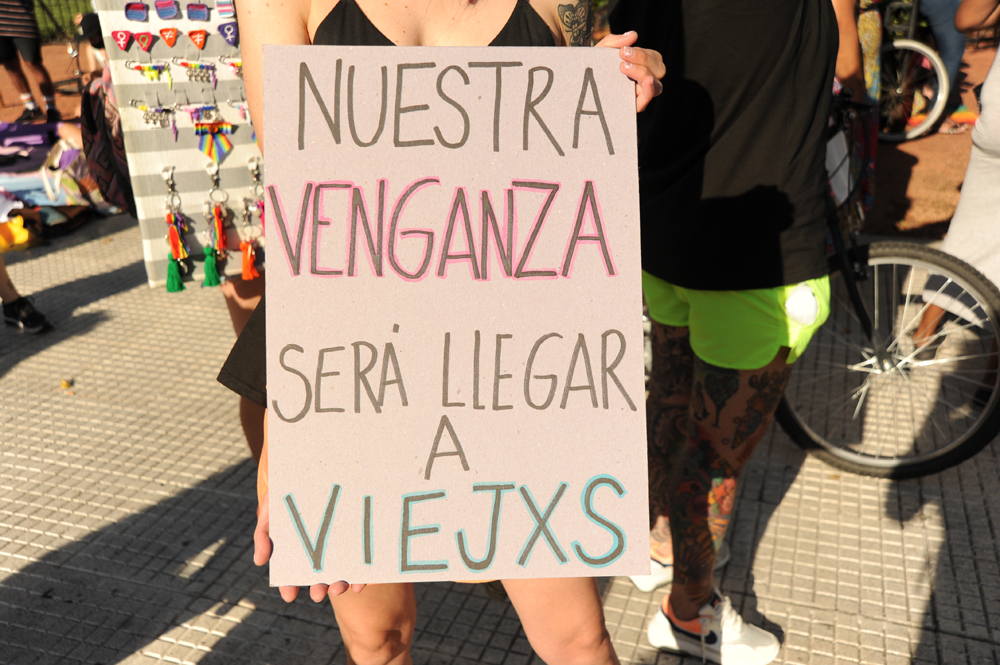
Without delay, transvestite and trans inclusion now
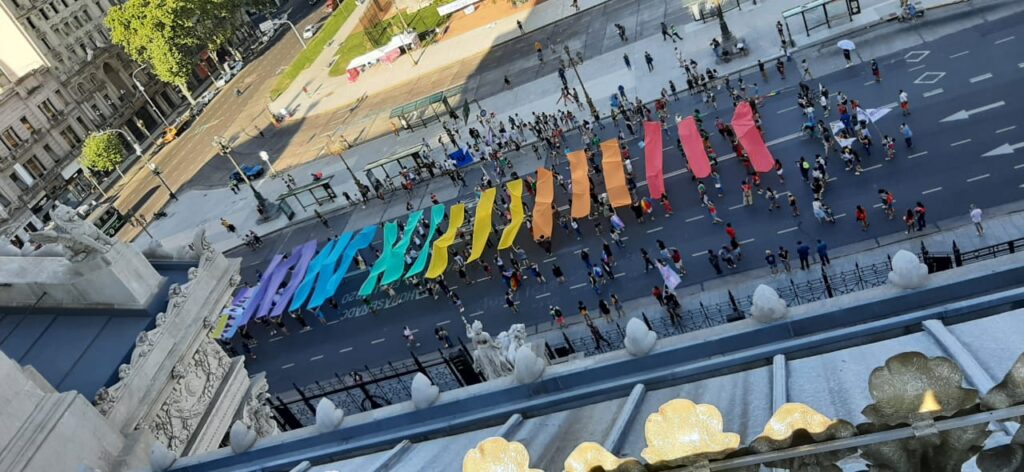
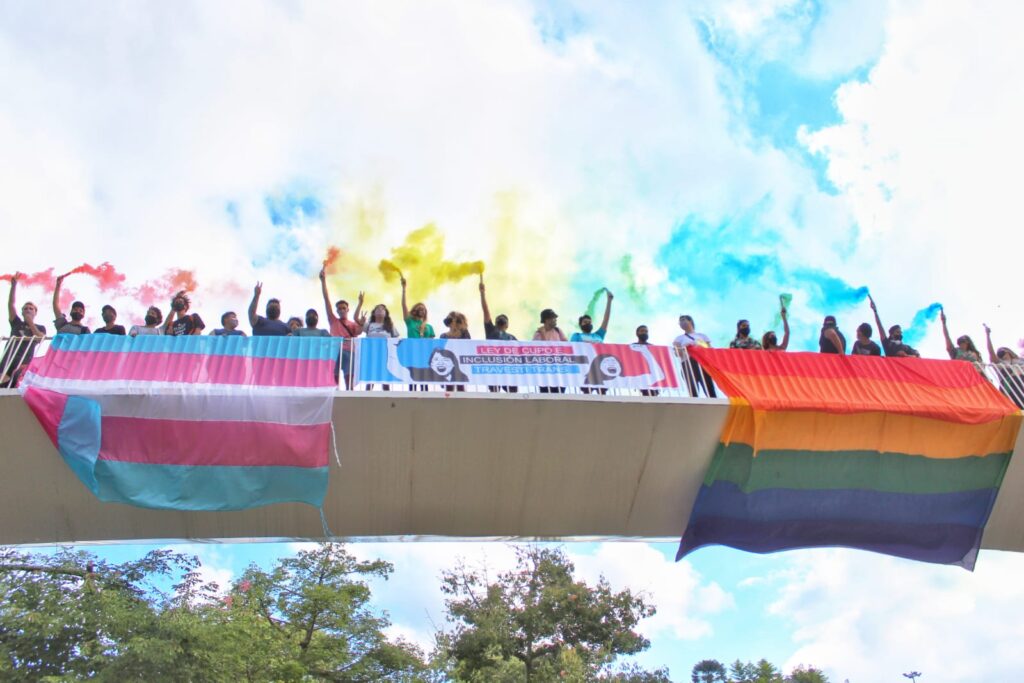
“Here is the trans resistance.” “Lohana said it, Sacayán said it, we’re never going back to jail!” they chanted loudly in Plaza de los Dos Congresos. There, hundreds of people from trans and travesti coalitions, as well as from diverse political and cultural groups, staged a brief and focused action. For a few minutes, they blocked Avenida Entre Ríos to unfurl the panels of an enormous rainbow flag across the street, and surrounded it with a human chain, shouting, “No delay, trans and travesti quota law now!”
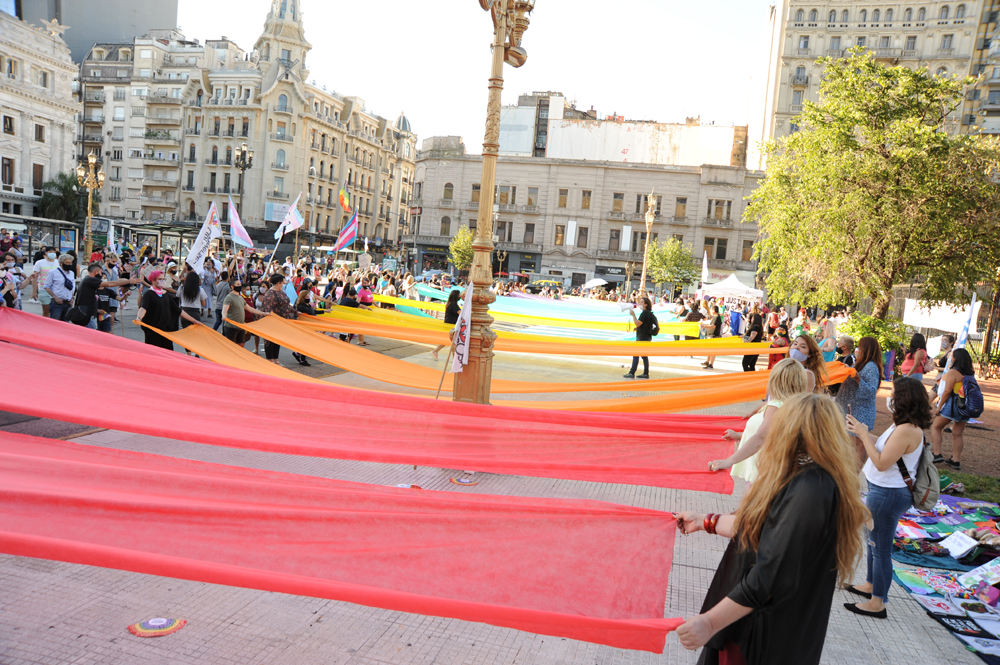
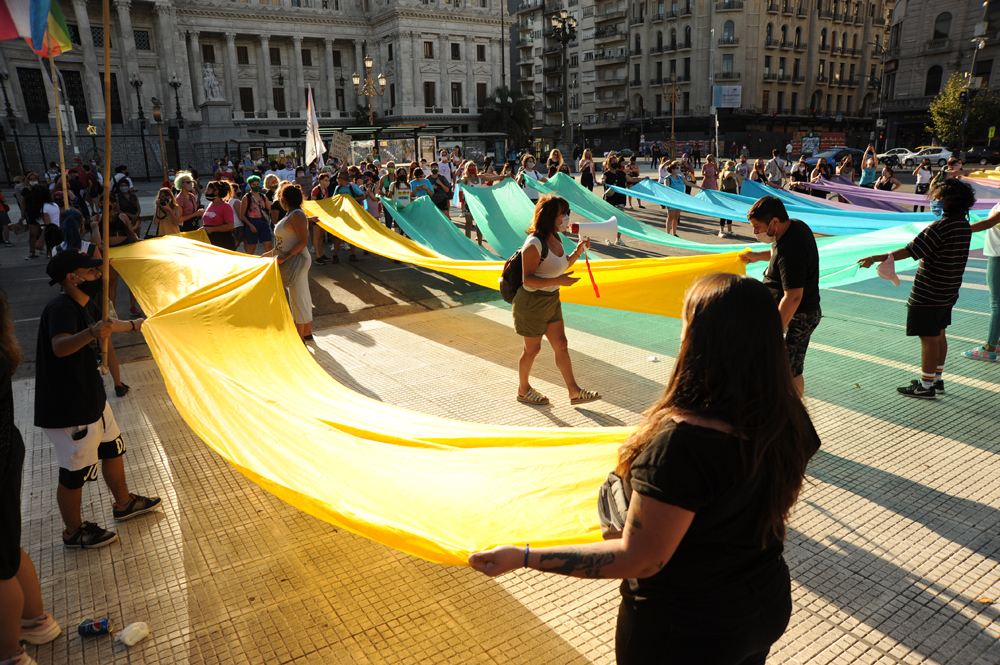
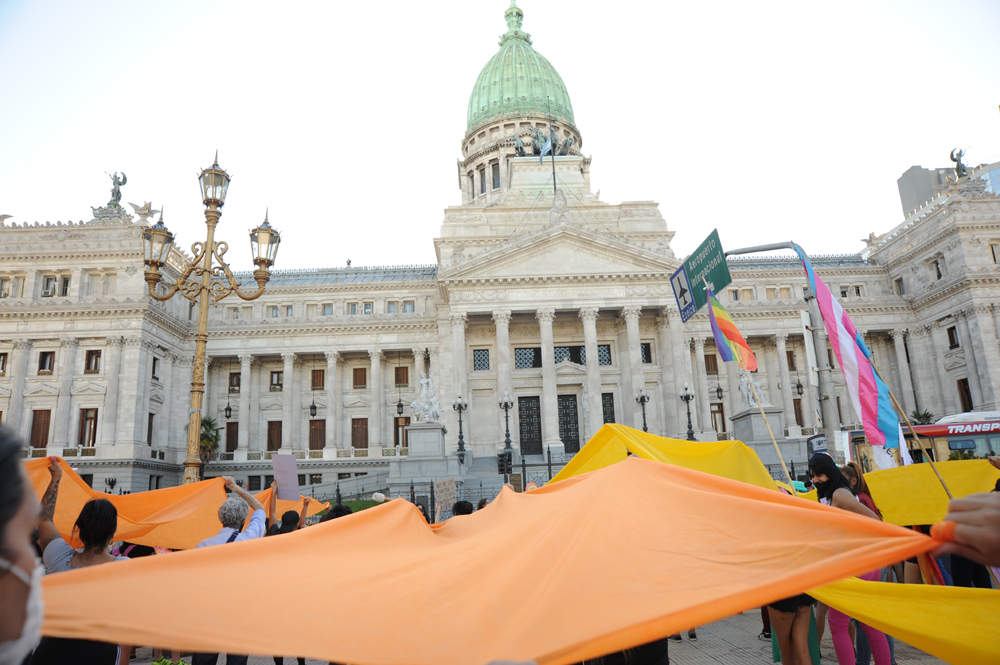
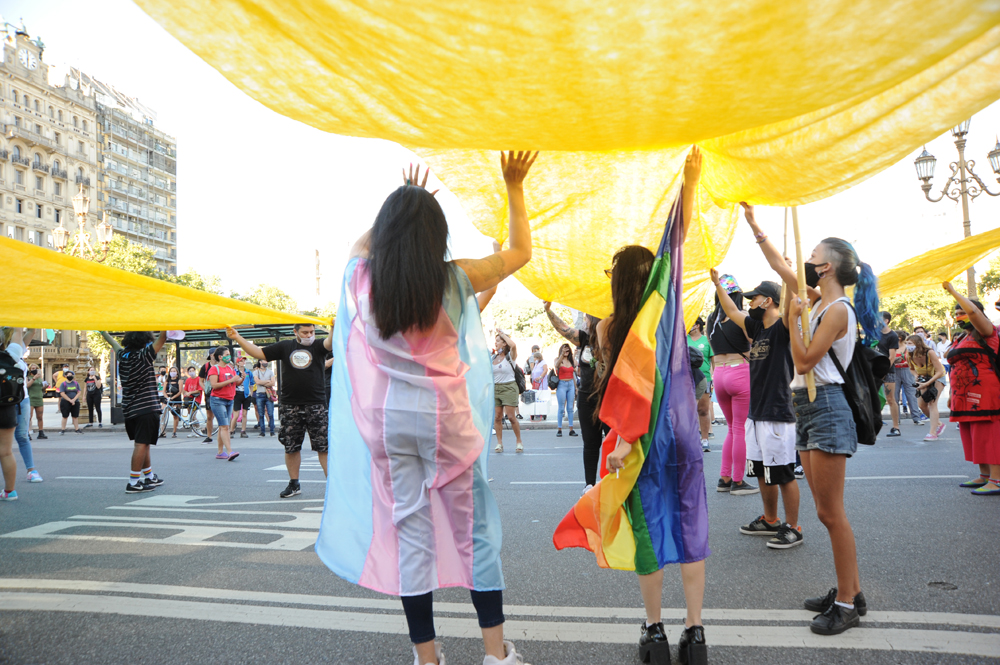
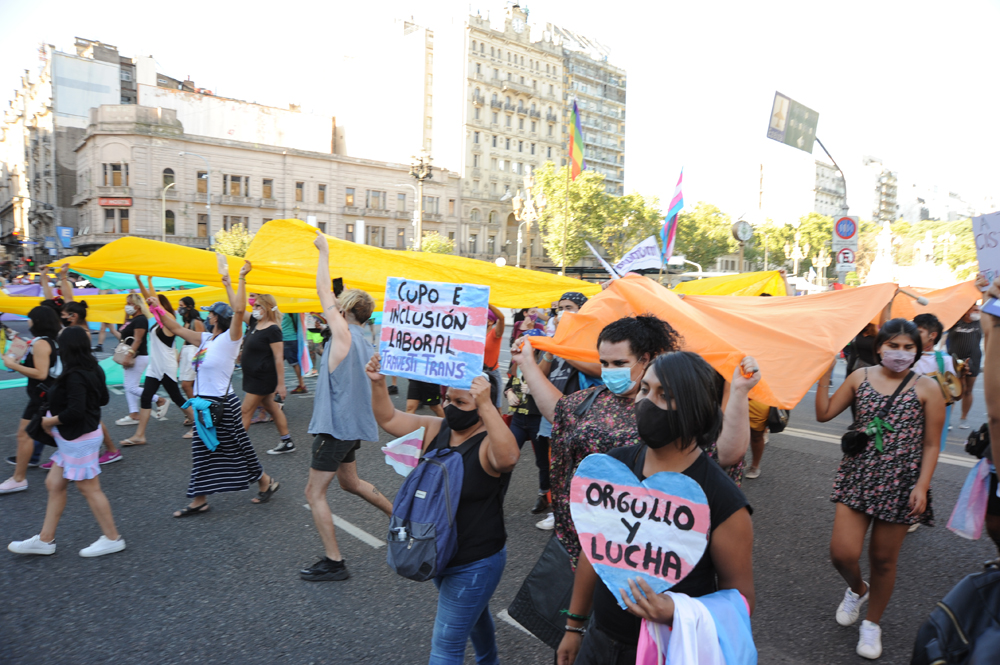
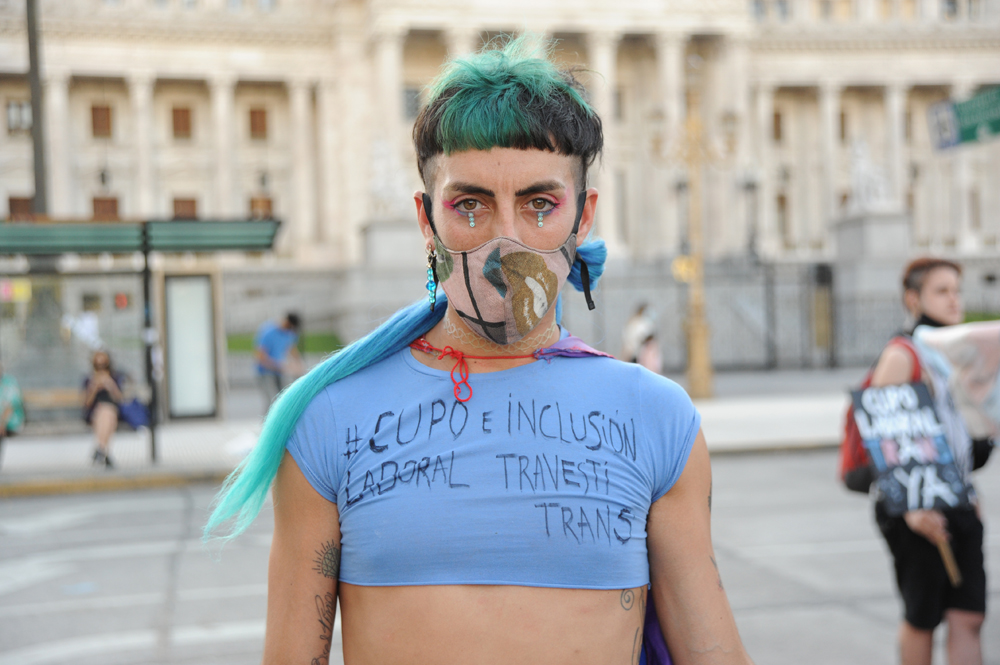
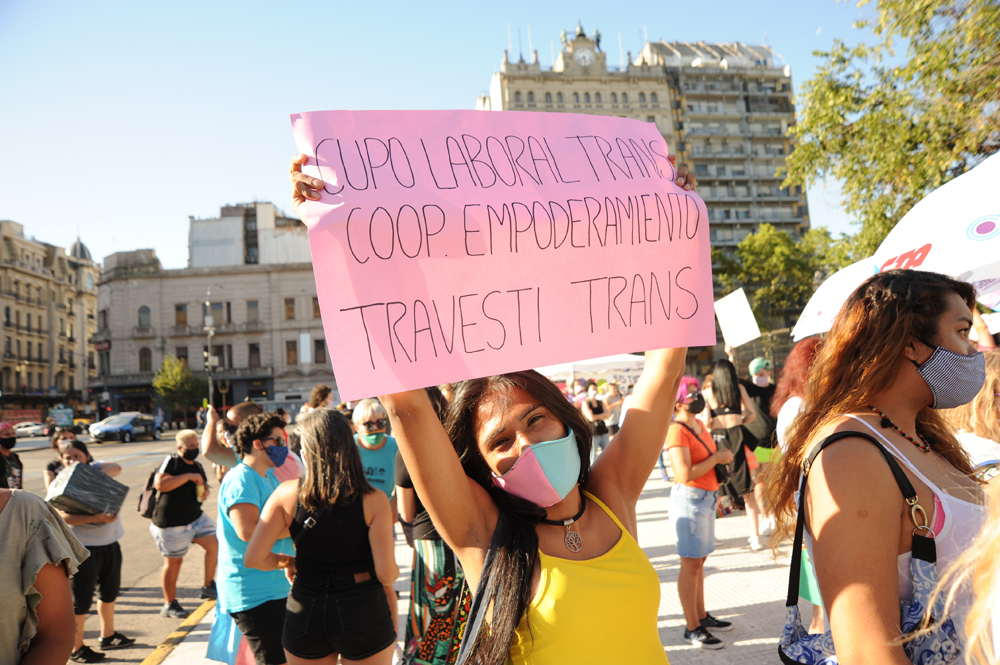
Before and after, the speakers took turns speaking. “To be able to choose, we need to have options, something we've never had because of the system that perpetuates prostitution and condemns most of us. We need public policies. It's time for Congress to send a different message,” said Florencia Guimaraes, director of LGBTQ+ policies in La Matanza. She added another issue that has been demanded for years: historical reparations for trans women over 40. “We need reparations for our older sisters who were arrested, imprisoned, and criminalized for being trans and going out to buy bread. We need more policies, for representatives and those in power to give us back some of what has been taken from us,” the activist from La Matanza said at the event.
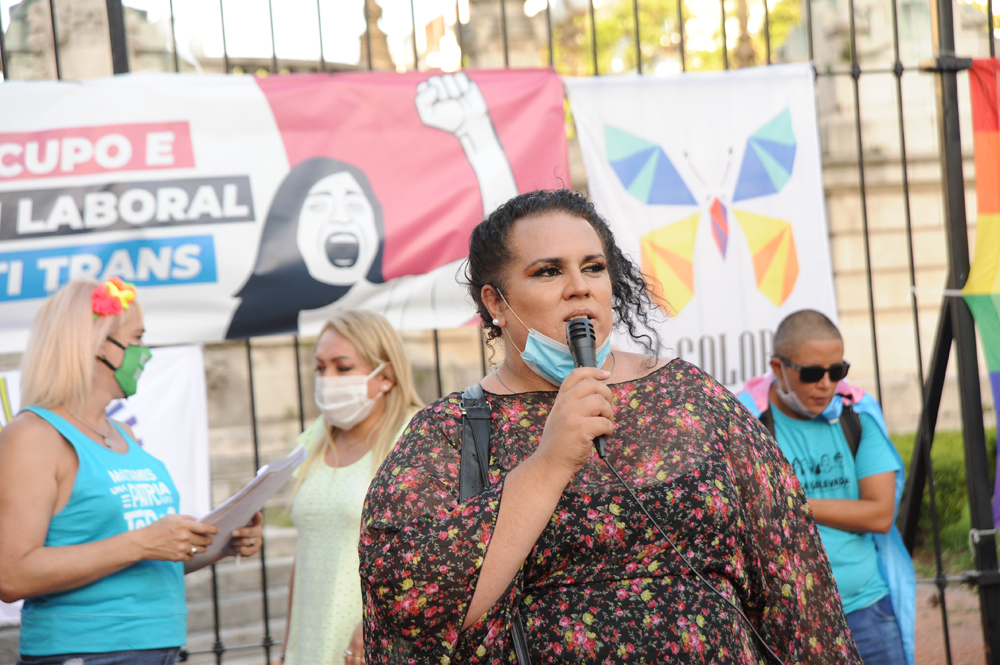
Listening attentively was Congresswoman Mónica Macha (Frente de Todos), president of the Women and Diversity Committee of the lower house, who had come to the Plaza. The final draft of this law was developed within the framework of the committee she chairs, in successive Zoom meetings that allowed the participation of organizations from all over the country. She has also been presenting similar bills for years, which, although they were not approved, were very important in articulating the demands of these organizations at the political level.
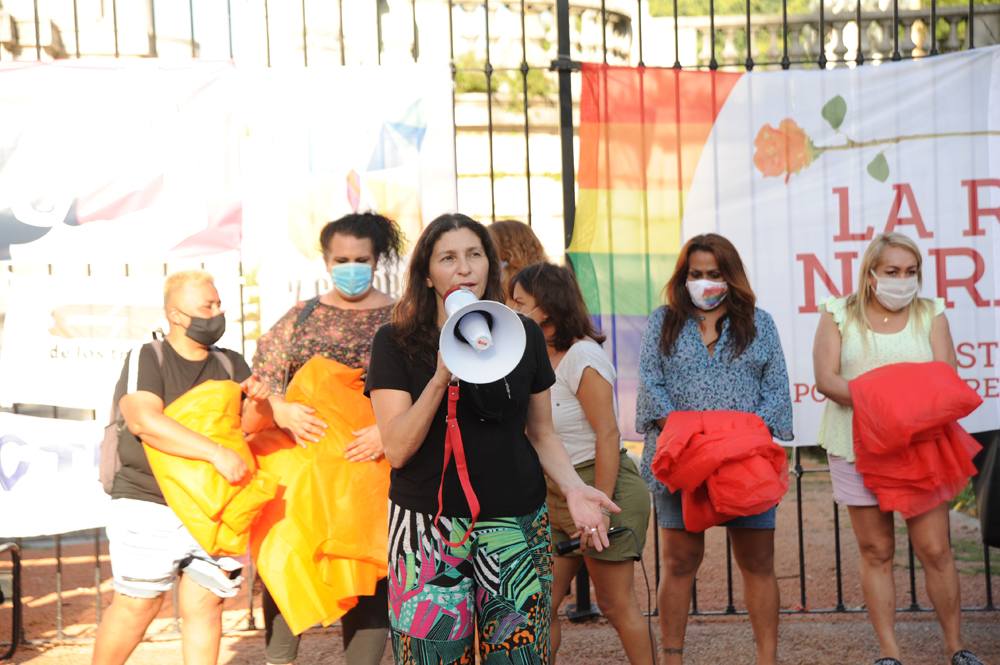
Macha is familiar with the issue and knows that talking about labor inclusion involves considering another complex point: "Many older transvestites and trans people need to think about a pension more than about entering a job, especially those who are now 50 or 60 years old," the congresswoman recently said.
At the event, she stated: “We need the labor inclusion law to give stability to the quota decree, and for more policies. We need the law because it is a very important political achievement for the community that has been fighting for years for jobs for trans and travesti people, a legacy of Diana and Lohana.”
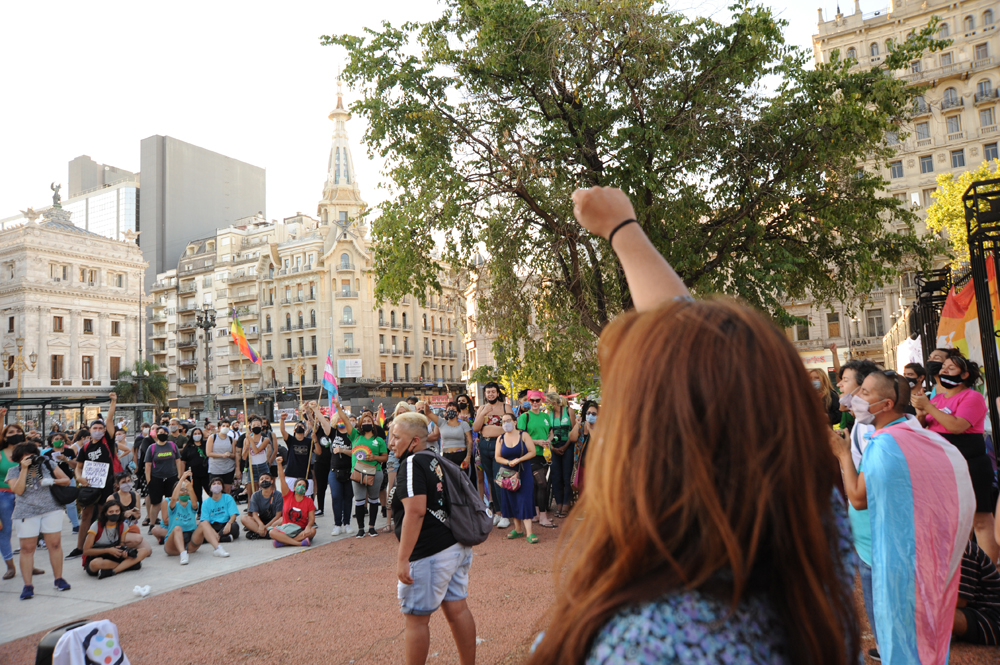
Say Sacayán, Diana's brother and an activist with MAL, recalled how his sister worked tirelessly on every step of the trans employment quota law that the province of Buenos Aires passed in 2015 (and which was regulated in 2019). Actress and playwright Daniela Ruiz, along with Ivana Gutiérrez, Director of Sexual Diversity for the Municipality of Morón and an activist with Conurbanes por la Diversidad (Suburbanites for Diversity), co-hosted the event.
The pandemic exacerbated structural violence
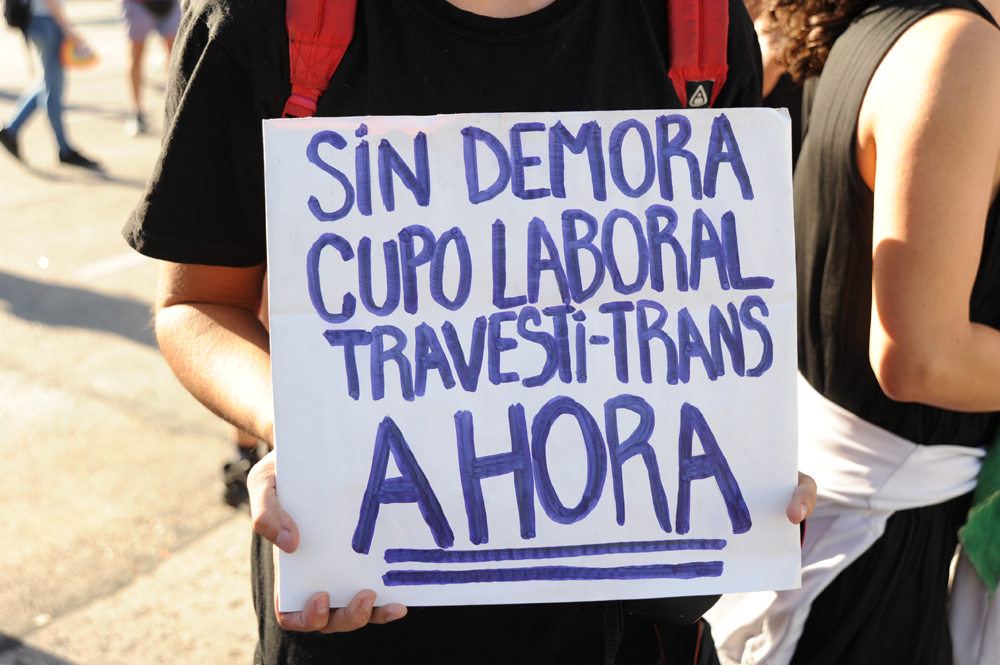
Organizations are strongly advocating, through all possible means, for legislators to understand the urgent need to address the labor inclusion of groups historically marginalized by structural violence and lack of access to rights such as work, but also health, education, and housing. This has already been recognized by various court rulings in recent years (the sentence for the transphobic murder of Diana Sacayán, prosecutorial opinions in cases against transvestites and trans people). And during the Covid-19 pandemic, all these violations were brutally exposed not only in Argentina but throughout Latin America.
That is why the organizations of the campaign for the Transvestite and Trans Labor Quota insist that the sanction of this law becomes even more urgent in this context.
The organizers have already made a formal request to the Speaker of the House, Sergio Massa, and also to the presidents of the main blocs: Máximo Kirchner (Frente de Todos), Mario Negri (UCR) and Cristian Ritondo (PRO), asking for the prompt treatment of this bill.
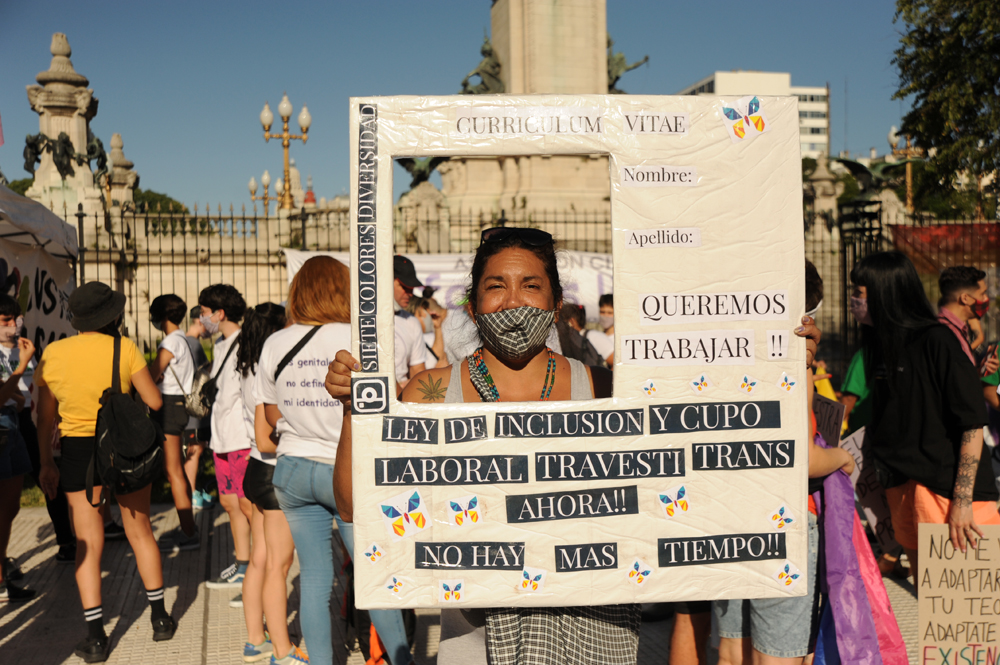
Why the decree is not enough
The organizations that demonstrated in front of Congress agree: “The decree isn’t enough. We celebrate it, but we need a comprehensive labor inclusion law,” said Manu Mirelles, academic secretary of Mocha Celis, the world’s first trans high school, located in Buenos Aires. “ It’s urgent, and this historic demand must be met. We have to take the step so that the law establishes public policies .”
“We need a law passed on three key points,” explained Ese Montenegro, a trans man activist, teacher trainer in Comprehensive Sexuality Education (CSE), illustrator, and advisor to the Women and Diversity Commission of the Chamber of Deputies. “One is that criminal records cannot be used as a barrier to employment. Because while trans people can now work, historically they have been excluded and confined to surviving on the fringes of legality. Another point is the need for credit lines for micro-entrepreneurs, and another fundamental point is that the State should create tax incentives for the private sector that hires trans people.”
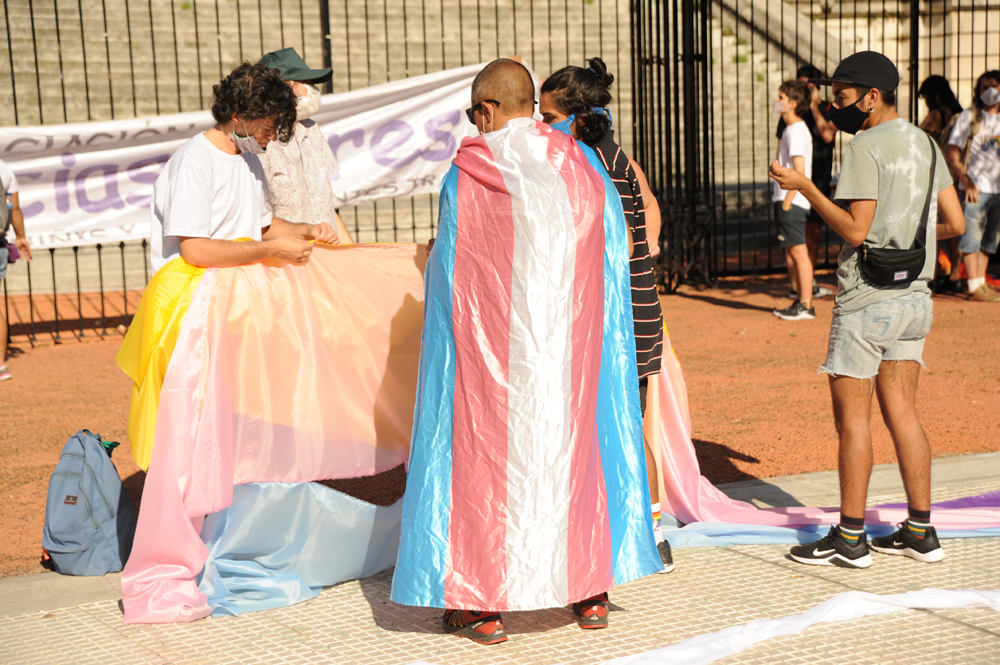
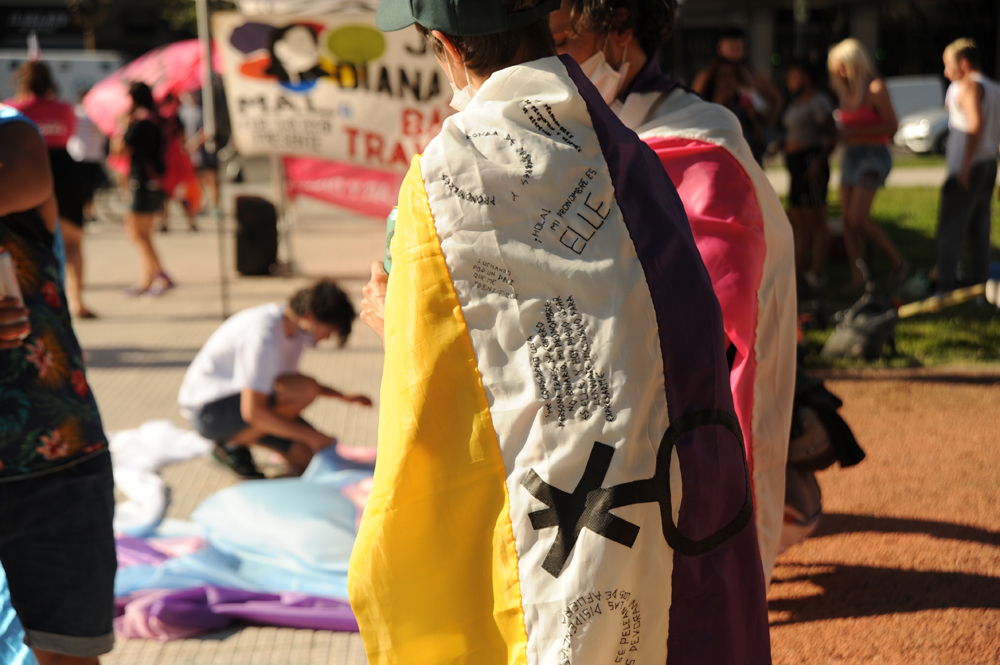
In addition to this flag-waving event in Buenos Aires, there were other similar actions. “Human flags” in rainbow colors were formed in the Plaza 25 de Mayo in Resistencia (Chaco), in Plaza del Papá in Rawson (Chubut), in Parque Las Tejas (Córdoba), in Plaza 25 de Mayo (Corrientes), and in Plaza Independencia in Paso de los Libres. Similar events took place in Plaza San Martín in Victoria (Entre Ríos) and in the plazas of the same name in the capital of Formosa province, in General Pico and Santa Rosa (La Pampa), in Allen (Río Negro), in San Miguel de Tucumán, in Plaza 25 de Mayo in La Rioja, in Mar del Plata, on the esplanade of the Legislature in Mendoza, in Plaza 9 de Julio in Posadas (Misiones), at the Monument to San Martín in Neuquén, in front of the Monument to General Güemes in Salta, and in Plaza Pringles in San Luis.
“The recognition of our identity doesn’t end with our name or our ID card; we want to choose our life paths and enjoy full citizenship. We need a society that stops excluding and marginalizing us; we need a society where we can study, pursue our goals, and become professionals, and for that, we need jobs. It’s time for the State’s recognition to take into account the value of our quality of life,” said Thiago Galvan, Secretary of Transvestite, Trans, Non-Binary, and Intersex Identities of the LGBTIQ+ League of the Provinces.
We are present
We are committed to journalism that delves into the territories and conducts thorough investigations, combined with new technologies and narrative formats. We want the protagonists, their stories, and their struggles to be present.
SUPPORT US

FOLLOW US
Related notes


We are present
This and other stories are not usually on the media agenda. Together we can bring them to light.