

The state of Puebla denies a gender identity law for the fourth time
For the fourth time, the Congress of the Mexican state of Puebla is delaying legislation on a proposed reform to the Civil Code that seeks to guarantee the right to identity for transgender people.

Share

By Georgina González
Photos: Alec Velasco, Tuss Fernández and Jaime Romay
For the fourth time, the Congress of the Mexican state of Puebla has delayed legislation on a proposed reform to the Civil Code that seeks to guarantee the right to identity for transgender people. Furthermore, members of the legislature broke an agreement in which they pledged to discuss the "Agnes Law" before February 15th.
In memory of Agnes Torres, a trans woman and human rights defender murdered in 2012, activists have named the reforms that seek to guarantee the right to identity of trans people in Puebla "Agnes Law".

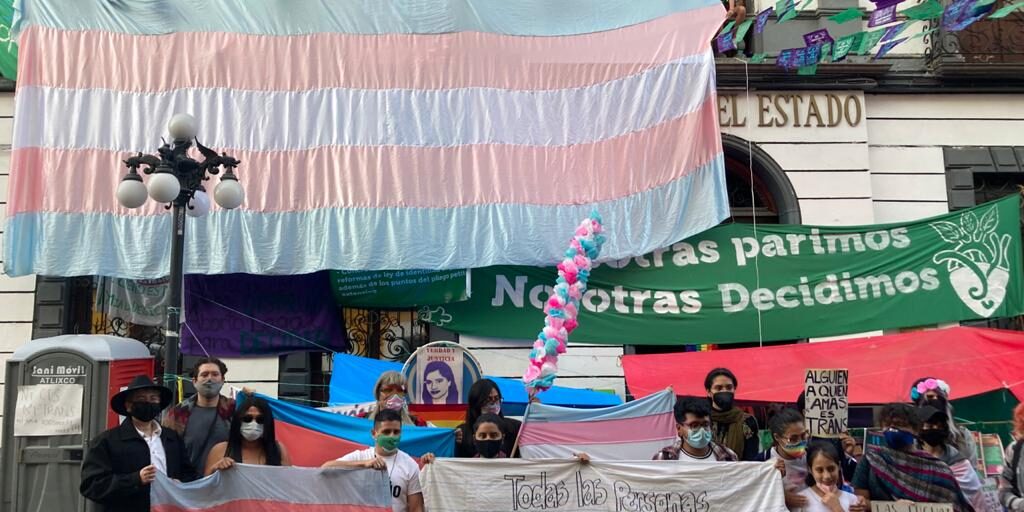
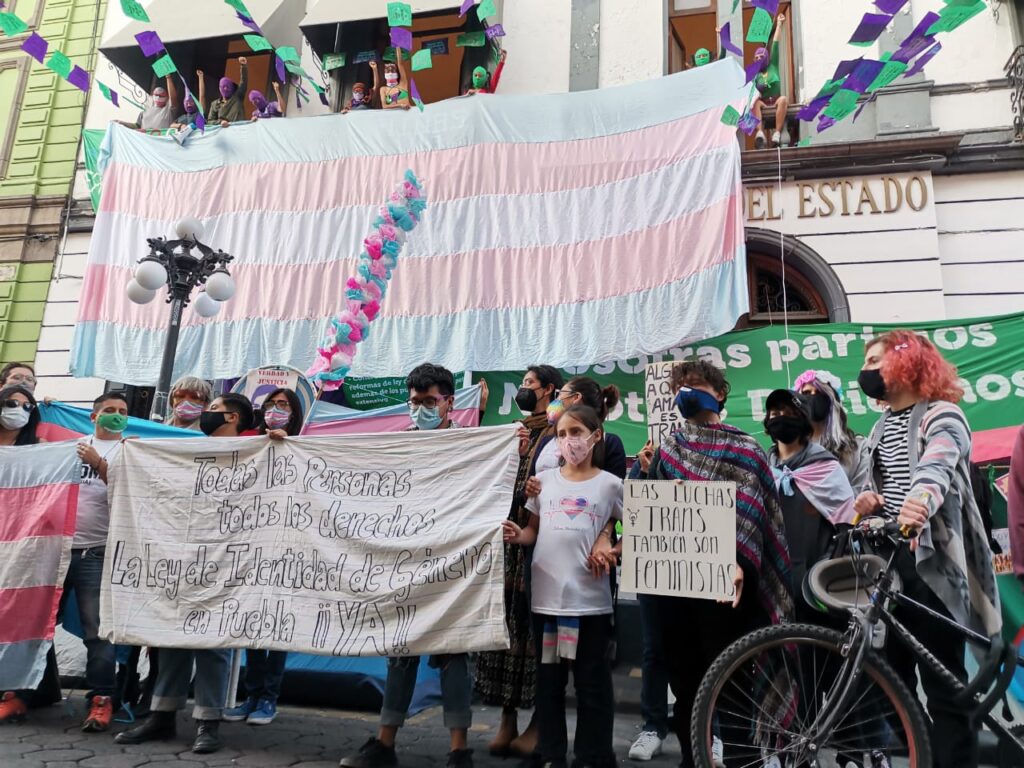
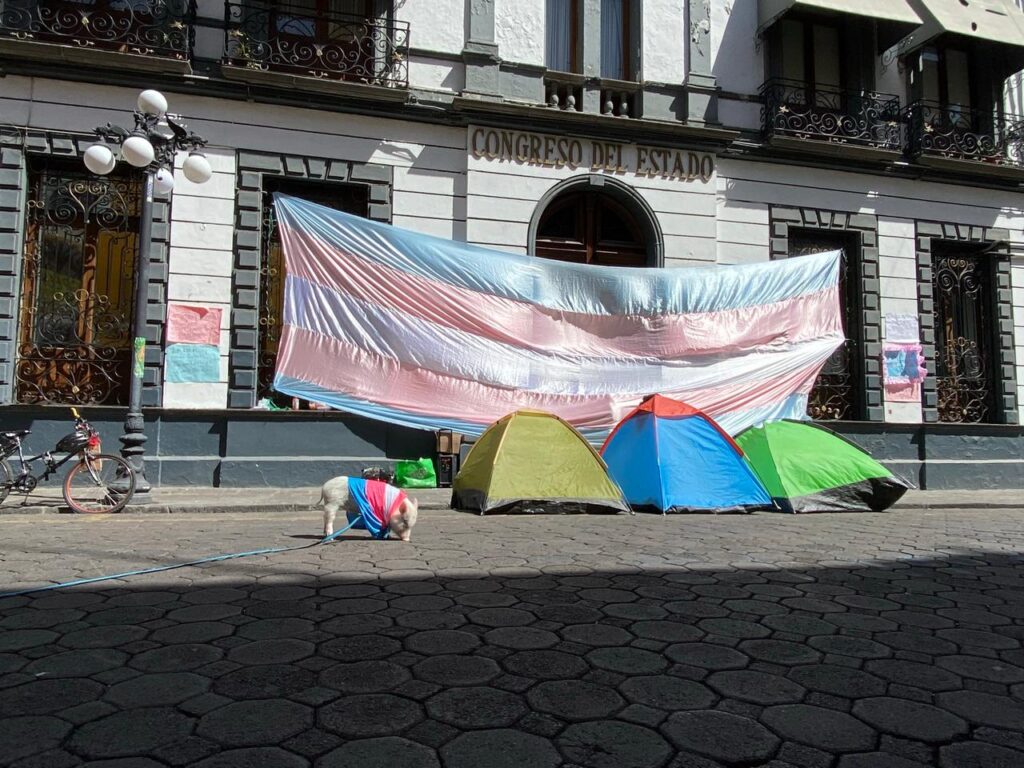
In November 2020, two feminist organizations peacefully occupied the local Congress building and proposed the approval of this reform as one of their main demands.
“For eight years, since the murder of Agnes Torres, three legislatures have managed to ignore our existence and obstruct all initiatives presented to recognize our right to self-perceived identity and other rights. The omission and silence they now use to avoid fulfilling their public commitments represents an affront to the trust of citizens and the use of violence by institutions against trans people,” stated feminist and trans collectives during a press conference on February 3.
Puebla is the state with the highest prevalence of discrimination in Mexico for various reasons, including “sex and sexual orientation,” according to the National Survey on Discrimination ( ENADIS 2017 ). Furthermore, 8 out of 10 transgender people in that state perceive that their rights “are respected little or not at all.”
Agreement breached
On December 16, during a working session between feminist collectives and the Board of Government and Political Coordination of Congress (Jucopo), the representatives pledged to legislate the Agnes Law before February 15. However, since then it has not been included on the legislative agenda, and according to activists, the representatives "do not know" what the reform entails.
In recent weeks, the Transversales Collective , the Puebla Feminist Coordinator , Coatlicue SiempreViva , other organizations and trans people have carried out various activities on social networks and in the streets of the capital of Puebla to raise awareness and inform about the importance and urgency of the Agnes Law in the lives of trans people.
They have also been threatened. “They warn that if we don’t stop fighting, a smear campaign will be unleashed in the media against trans communities,” they stated in a press release.
The importance of the Agnes Law
Since there is still no gender identity law in Puebla, some transgender people move to one of the 13 states where this right is guaranteed. However, upon returning to their place of origin, they may face the Civil Registry offices' failure to rectify and safeguard their original birth certificate.
Failure to safeguard the original rectified birth certificate prevents the validation of other documents such as academic certificates; voter registration card; banking information, and consequently the full exercise of their rights such as health, education, work, housing, etc.
Given this refusal, the only current alternative is to file an appeal, an option that is not accessible to all trans people because of how time-consuming and expensive it is.
Tuss Fernandez, originally from Puebla, was lucky and considers himself privileged in this regard. A law firm took his case pro bono and urgently granted him legal protection because the state's central Civil Registry "alerted institutions alleging the use of a double identity."
In 2014, Mexico City was the only state in the country to guarantee gender identity through an administrative process. On the day the decree was enacted, transgender people from other states came to obtain their corrected birth certificates; Tuss was one of them.
“The process was surprisingly simple. They gave me a form that I filled out in five minutes, I handed in the papers, and my new birth certificate was ready. It was very comforting to have been able to make the change and to have been able to do it so quickly and easily; the problem was when I arrived in Puebla,” Tuss recalls in an interview with Presentes.
Tuss spent almost four years without an identity document and consequently could not access the rest of his rights in the state where he was born.
“It was a three-year trial. The representatives of the institutions didn't respond, the judge asked for arguments, there were none. My lawyer requested that they be fined, and that's when they finally responded (…) It was endless. The court ruled in my favor, but it took 11 months for them to comply with the sentence (…) It was exhausting, humiliating, and frustrating; it was an emotional blow that cost me therapy, a relationship, job opportunities, travel, depression, and sadness.”
The lawyers tried to make the ruling a precedent for other similar cases, but the judge only accepted the sentence in favor of Tuss.
For lawyer Jessica Marjane, the right to identity in Puebla requires that it be implemented “with due diligence.” She adds, “Changes shouldn’t wait until the last minute, until there’s another murder, until more obstacles arise and changes become more complex. Instead, we must accelerate in order to transform, to reduce the inequality gap, to accelerate because we have no other life than this one. (…) Our lives depend on the recognition of our identity because it is a historical debt owed to the women who have been murdered, to future generations, and to those of us who are here. That is why it is so important to have a minimum standard of rights, dignity, and consistency, and above all, to have a State that sees us as subjects of rights and not as objects of violence.”
Four initiatives with no progress
Agnes Torres actively worked to have the right to identity recognized for transgender people in Puebla with a bill that sought to reform articles of the local Civil Code. She lobbied for her proposal, but no member of Congress showed any interest in it, and on March 9, 2012, she was murdered in Atlixco. She was 28 years old.
Following her assassination, civil organizations promoted the “Agnes Torres Reform” in 2013 to continue her work. However, during the last five years, the various legislatures of Puebla have neither discussed nor analyzed at least three initiatives—submitted in 2016, 2019, and 2020—that sought to guarantee the right to identity for transgender people.
On January 15, Representatives Vianey García and Estefanía Rodríguez presented an updated version of the bill to the Committees on Governance and Constitutional Matters, and on the Administration of Justice of the local Congress. This version was developed in collaboration with trans activists and collectives with the aim of "broadening the perspective and guaranteeing rights," as they seek to ensure that this right also extends to trans children and adolescents.
To ascertain the status of the commitment, Presentes attempted, through various channels, to contact Gabriel Biestro, deputy and president of the Jucopo (Political Coordination Board), but received no response. However, on February 15, he commented at a press conference : “I believe it has a chance of passing as long as the report is presented to the committees, studied, discussed, and from there it can go to the plenary session (…) it would be a matter of days; it shouldn't take six months, because, moreover, since we took office, we made sure that these things would be legislated during this legislative session.”
He then added that the initiative was presented by Representative Vianey García and that it was in the possession of the Committee on Governance and Constitutional Matters.
New strategies
In recent weeks, activists have denounced the omissions in the commitment and, amid the 2020-2021 electoral scenario, they warn of a protest vote against four of the nine members of the Jucopo who signed the agreement and who will seek a new popularly elected position in the coming weeks.
“The (political) landscape is complicated because many of my colleagues are currently requesting leaves of absence and are even thinking about the upcoming elections, and no attention is being paid to the agreements that have already been reached, one of which is to address the Agnes Law. It is regrettable that it has not yet been addressed, and there isn't even a statement from those who signed the agreement,” commented Representative Estefanía Rodríguez in an interview with Presentes.
“This lack of political will on the part of the state representatives is also a form of institutional violence, and we are especially concerned that these kinds of behaviors, which violate our rights, render the trans population invisible, and obstruct our full exercise of human rights, are being promoted from within the institutions themselves, specifically from the State Congress,” stated Tuss Fernandez.
The Transversales Collective , the Puebla Transgender Group, Coatlicue SiempreViva , the Puebla Feminist Coordinator , other organizations, and trans individuals will activate new strategies, including taking legal action against the Congress for its non-compliance, and will advance the Agnes Law at the federal level.
We are present
We are committed to journalism that delves into the territories and conducts thorough investigations, combined with new technologies and narrative formats. We want the protagonists, their stories, and their struggles to be present.
SUPPORT US

FOLLOW US
Related notes



We are present
This and other stories are not usually on the media agenda. Together we can bring them to light.