

Lohana Berkins: with struggle and words
We remember the pioneering Lohana Berkins through some of the many valuable words that her historic and pioneering struggle bequeathed to us.



Share

Lohana Berkins was born on June 15, 1965, in Pocitos, Salta Province. In 1994, she founded the Association for the Struggle for Transvestite and Transsexual Identity (ALITT), through which she promoted the visibility of the right to gender identity. She was also one of the main driving forces behind the Gender Identity Law, approved by the National Congress on May 9, 2012.
She was the first trans woman to run for national deputy and worked as an advisor in the Buenos Aires City Legislature for the Communist Party. She was also the first trans person to obtain a government job. She passed away on February 5, 2016, leaving us a legacy that continues to fuel the fight for equal rights.

She played a pivotal role in the recognition of transgender and transvestite rights: she enrolled at Normal School No. 3 to become a teacher. When she was unable to do so under her chosen name, she filed a complaint with the Buenos Aires Ombudsman's Office. Ultimately, the office ordered the authorities to respect her gender identity.
The drive to change the world

“ The engine of change is love. The love that was denied us is our impetus to change the world. All the blows and contempt I suffered do not compare to the infinite love that surrounds me at this moment. Trans Fury Forever ,” wrote the historic leader of the trans collective in her farewell letter, which was made public through her friend, activist Marlene Wayar.
She left a legacy of struggle and commitment to human rights that earned her the recognition of political and social leaders. Her name is a symbol of the LGBTQ+ community and working women.
She was able to say: “ I don’t feel that because I wear makeup and use feminine mannerisms, I am a woman. Nor am I a man because I have certain genitalia. I am myself: I am from Salta, Black, fat, from the outskirts, of Bolivian origin. It is not only cross-dressing that gives me my identity .
The first trans cooperative
In 2008, Lohana led the creation of the “Nadia Echazú” Textile Cooperative (which is still operating), in a space provided by the National Institute of Cooperatives and Social Economy in the Avellaneda district. It was the first cooperative managed and administered by transgender people.
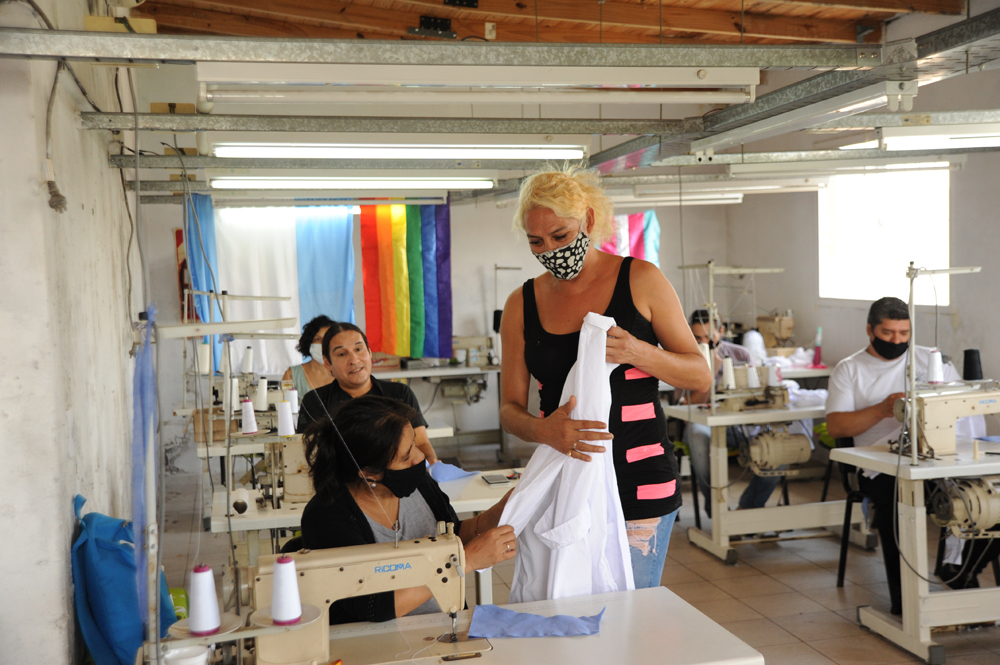
In 2010, she formed the National Front for the Gender Identity Law, which spearheaded the passage of Law 26.743 nationwide in 2012. This was the first law in the world to recognize gender identity in terms of self-perception, guarantee full access to healthcare, and depathologize trans identities. In 2013, she was appointed head of the Gender Identity and Sexual Orientation Office at the Gender Observatory in the Justice System of the City of Buenos Aires. She worked there until her departure.
Lohana is the author of numerous publications, including "The Quest for a Proper Name: A Report on the Situation of the Transvestite Community in Argentina" (2006) and "Cumbia, Drinking, and Tears" (2007). She has participated as a panelist in conferences and seminars, representing Argentina and Latin America at various international meetings on feminism, sexual diversity, and gender identities, and has received several awards.
“Let no one cry at my funeral”
A complicated case of hepatitis C weakened her. Her wish was to return home, but she never made it. She asked that no one cry and that cumbia music be played at her funeral.
“I would urge all people, regardless of their sexual orientation, gender identity, nationality, ethnicity, or race, to dare to live on their own terms; otherwise, what would be the point of life? On my tombstone, I would put: Here lies the happiest transvestite in the world ,” she had said.

We are present
We are committed to journalism that delves into the territories and conducts thorough investigations, combined with new technologies and narrative formats. We want the protagonists, their stories, and their struggles to be present.
SUPPORT US

FOLLOW US
Related notes



We are present
This and other stories are not usually on the media agenda. Together we can bring them to light.