

A 24-year-old trans woman was shot and killed
Natalia Maldonado wanted to finish her studies and leave prostitution. She was murdered in Granadero Baigorria (Santa Fe).


Share

By Soledad Mizerniuk and Victoria Rodríguez from Santa Fe
On Sunday, January 10, in the early morning hours, Natalia Maldonado, a 24-year-old trans woman, was with some friends on the sidewalk at 1300 Montevideo Street in Granadero Baigorria—a town 20 minutes from Rosario. Three people passing by fired at least 20 shots at the group from a moving car, according to the Public Prosecutor's Office of the province of Santa Fe. Natalia died shortly after arriving at Eva Perón Hospital.
One of his companions was also injured, though he is out of danger. Investigators found a car matching the description given by witnesses a few blocks away; it is currently being examined.
As soon as the incident was reported, the on-duty prosecutor of the Homicide Unit, Adrián Spelta, was notified. According to initial information gathered for the investigation, at least three unidentified individuals traveling in a car fired multiple shots at a group of people in the street, seriously wounding Natalia. Initial medical reports indicate that the victim sustained injuries to her chest, abdomen, and upper extremities.
Amidst various rumors about the possible motives, LGBT+ groups demonstrated yesterday at midday to demand a thorough investigation of the case. They also called for the effective implementation of the trans and travesti employment quota throughout the province of Santa Fe.
“She wanted to change her life, she wanted to finish school. Every penny she had went towards improving her house. The insecurity of being on the street is terrible. Today it was Natalia, tomorrow we don't know. There have been shootings in the neighborhood since Wednesday. Last night there were more shots fired,” says Antonella Suárez, a trans activist, from the Colectivx Diversx of Granadero Baigorria.
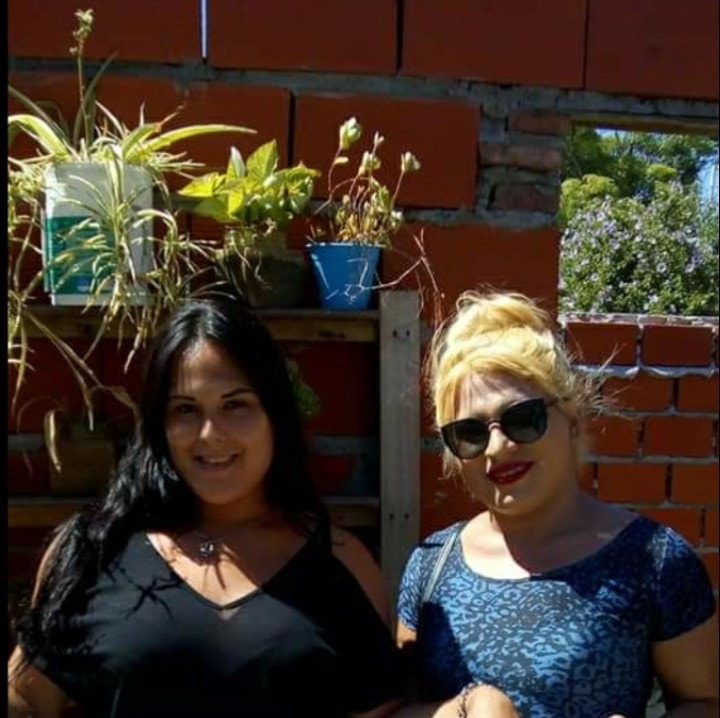
“We in the trans community received the news with sadness, as we do with every trans comrade we lose. Afterwards, we're left with the anger of not having been able to get our trans sisters off the streets,” Pamela Rocchi, a trans activist and militant from Santa Fe, tells Presentes.
“Friendly and sociable,” “a good friend and neighbor” were some of the descriptions family and friends gave of Natalia at her farewell. She was a very active woman who forged connections with many members of the community and with the municipality, hoping for new opportunities that would allow her to leave prostitution. She had legally changed her gender marker on her ID and was personally handling the paperwork to return to her studies.
Granadero Baigorria is a town in Greater Rosario with approximately 70,000 inhabitants. In the official survey conducted by the Baigorria Municipality, 17 transgender people were registered—although authorities mention that there are many more unregistered—of whom at least 70 percent engage in prostitution as their only means of economic survival. According to a 2014 report by ATTTA and Fundación Huésped (the most recent available) , only 18% of transgender and transvestite people have had access to formal employment.
“In Granadero Baigorria, the trans quota was approved by the City Council, but one of the requirements for admission is having completed secondary school. We are currently in the support phase so that they can finish their studies. Natalia was one of the girls who wanted to finish school. We feel great sorrow; she was a woman with personal projects and aspirations,” says Patricia Molina, coordinator of the Gender and Diversity Area of the Municipality of Granadero Baigorria.
“Natalia came to the Municipality frequently, since the pandemic began, to receive food assistance. Last Friday she came to pick up her Christmas food basket and we were talking about hormone therapy and how we could arrange for her to receive treatment at the neighborhood health centers,” Molina explains. “Nati was buying the hormones at the pharmacy, without any oversight, because she said they weren’t arriving from the Health Department.”
Those who knew her say that Natalia built her connections with the community and her neighborhood. It was easier for her to do so than within her own very humble family, where she never achieved full acceptance from her mother. At the funeral, her mother spoke as a man, using her former identity.
The municipality of Baigorria covered the funeral expenses, given the family's and friends' lack of financial resources. “It made us feel incredibly powerless because we are no longer considered worthy of having a coffin to bury us in, a place where our bodies will rest for eternity. Our comrades, like Antonella, have to argue, fight, and go from place to place just for a coffin. It's no longer about a plate of food, a roof over their heads, or a brick; it was about a coffin to bury their comrade . That is a profound sorrow,” says activist Pamela Rocchi.
The transvestite trans job quota saves lives
Dissident groups are demanding justice and a thorough investigation into the crime. They are also calling for the urgent implementation of the trans and travesti employment quota in the province and in all its localities.
“ The trans job quota saves lives. For many, it’s their first job opportunity and their first job interview, because for most trans people, the only employment opportunity has been sex work ,” Rocchi emphasizes. She adds, “ Ninety-five percent of trans people don’t have health insurance because they don’t have formal employment. They also don’t have a payslip that would allow them to rent a decent place to live. Since our bodies have always been linked to sex work, people have taken advantage of us and charged us double or triple because we don’t have payslips and because they exploit us .”
On October 31, 2019, the Santa Fe legislature approved the law establishing a job quota for transgender and transvestite people, and in the lead-up to the change of administration, the law was celebrated by LGBTQ+ organizations. The regulations implementing the law a 1% quota for national public sector positions
was published in the Official Gazette
In Santa Fe, registration for the provincial registry, named after Vanesa Zabala in honor of the trans woman murdered until January 15. However, rumors of changes in the provincial cabinet have put the LGBTQ+ community on alert.
“According to the media, the provincial Minister of Labor is going to change, and that would be a setback because we'll have to sit down with the relevant departments again to explain why the trans job quota is so important, why we need it, and why it's a right won many years ago by the organizations that work in the province. Nobody gave us anything for free, which is why we need it implemented urgently ,” insists Pamela Rocchi. She points out that there is a lot of anticipation for its implementation at the national level. “It will surely bring a lot of relief to the community because it's the only public policy we currently have in Argentina for the trans population.”
Trans quota in 15 towns in Santa Fe
In Santa Fe, in addition to the aforementioned provincial law being in force, there are 14 cities and one town that have ordinances for transvestite and transgender employment quotas in their state spheres.
These are Santa Fe, Rosario, Santo Tomé, Vera, Tostado, Venado Tuerto, San Justo, Reconquista, Rincón, Capitán Bermúdez, Granadero Baigorria, San Lorenzo, Gálvez, Villa Gobernador Gálvez and Chañar Ladeado.
We are present
We are committed to journalism that delves into the territories and conducts thorough investigations, combined with new technologies and narrative formats. We want the protagonists, their stories, and their struggles to be present.
SUPPORT US

FOLLOW US
Related notes
We are present
This and other stories are not usually on the media agenda. Together we can bring them to light.