

Pandemic, hurricanes, and a historic trial: this is what 2020 was like for LGBT+ people in Honduras
Twenty violent LGBTI deaths; hundreds infected and displaced by the coronavirus; two hurricanes in less than 15 days and the hearings for the hate crime of Vicky Hernández.

Share

By Dunia Orellana
Twenty violent deaths of LGBTQ+ people; hundreds infected and displaced by the coronavirus; two hurricanes in less than 15 days; and the hearings for the transphobic murder of Vicky Hernández . This ruling by the Inter-American Court of Human Rights (IACHR) will become a beacon of light and hope for the 371 victims and families of LGBTQ+ people who have died violently in the last 11 years. This is the panorama that 2020 has left for LGBTQ+ communities in Honduras.
Half of all hate crimes, same impunity
According to the Violent Deaths Observatory of the lesbian organization Cattrachas, eight transgender people, eight gay men, and three lesbians were murdered in 2020, totaling 19. In comparison, in 2019, when there were 41 deaths, the number of murders dropped by more than half, but impunity remains among the highest. Meanwhile, the Honduran organization Somos CDC has recorded more than 15 violent deaths so far this year.
Discriminated against by tradition in a sexist country, LGBT+ people face a chaotic situation in the fields of health, law, education and access to employment that has only worsened during the year that is about to end.

Sasha Rodríguez, from the organization Oprouce , told Presentes that progress is being made in the investigations into the murders of her transgender colleagues Luz Clarita, who was stoned to death in May , and Cristhal López (30), who was shot to death in July along with her partner in the city of La Ceiba. López's sister disappeared in the same incident and has not been found to date.
Without health, without food
“2020 has been a complete disaster in every sense—institutionally, legally, in terms of access to healthcare, food, and employment,” adds the trans activist and advocate for people living with HIV/AIDS. Sasha denounced that some hospitals were charging extra for tests for people receiving antiretroviral treatment.

Vicky Hernández closer to obtaining justice
The outlook for sexual diversity in Honduras is not entirely bleak. The hearing in the case of Vicky Hernández, a trans activist from San Pedro Sula, held by the Inter-American Court of Human Rights on November 11 and 12, offers a glimmer of hope to diverse populations that have traditionally faced discrimination and persecution.
“We were able to demonstrate to the Inter-American Court of Human Rights that violence is not only perpetrated against the trans woman who was murdered and for whom there was no justice, but that all these laws and regulations that are already in place discriminate against us; culture and prejudice discriminate against us. It is not just one trans woman who is a victim, but all of us who are victims,” Indyra Mendoza, coordinator of Cattrachas, told Presentes.
Hernández, who was killed in 2009 during the curfew imposed after the coup against President Manuel Zelaya, is an icon of the fight against discrimination based on gender identity.

According to Vicky's defense team, led by Cattrachas and the Robert F. Kennedy organization , the murder committed at night between June 28 and 29 of that year was the responsibility of state security forces, who were the only ones whose movement was not restricted during the state of emergency. The rest of the population had been prohibited from leaving their homes while the curfew was in effect.
Several groups took on the task of ensuring that those responsible in the state were punished for the crime against Vicky. For 11 years, Cattrachas and Robert F. Kennedy Human Rights fought both inside and outside the courts to ensure that the murder of the trans activist from San Pedro Sula did not go unpunished.
The work of more than a decade by the two organizations and Vicky's family received a just reward when in August 2020 the IACHR scheduled two hearings to hear the presentations on the case of the witness, the Honduran transsexual Claudia Spelman, and the psychologist and transvestite, Marlene Wayar, who was the expert in this historic trial.
The Inter-American Court of Human Rights postponed issuing a ruling until 2021. Vicky's family and the country's LGBTI groups hope the ruling will be in their favor and against those allegedly responsible for the crime.
Yes to gender expression, no to identity on documents
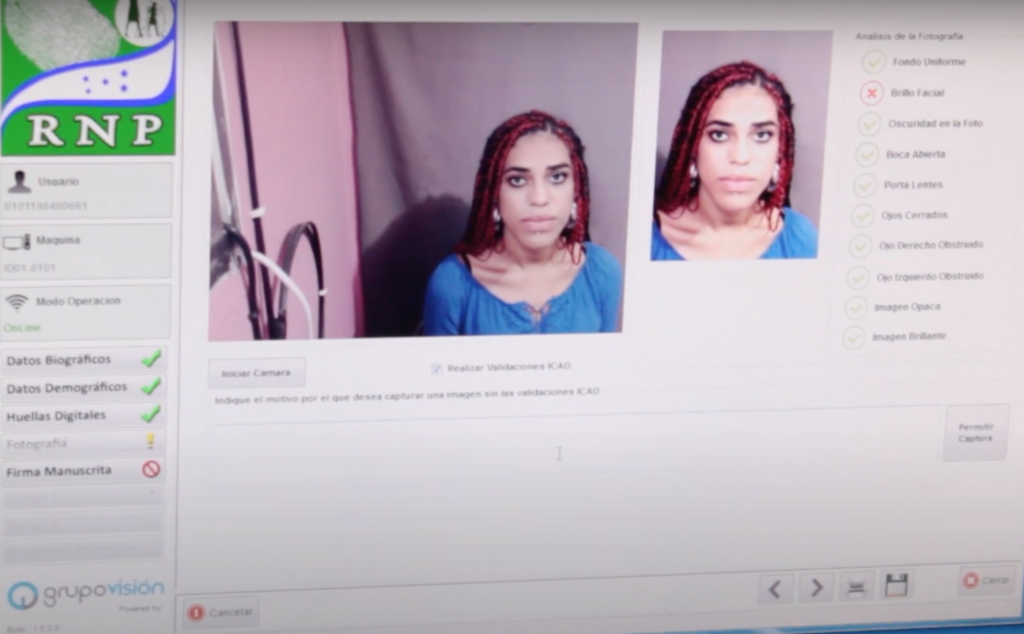
One of the advances in the enrollment process for the new identity card was that LGBTQ+ individuals could have their gender expression appear on their ID, but they could not change their legal name. According to activists, this was a “bittersweet” step forward because the gender identity law, which would offer greater rights, is still not being passed.
The approval of the equal marriage law in Costa Rica also offered rays of hope that very soon in the northern triangle (Guatemala, Honduras and El Salvador) the same rights will be achieved.
Challenges and setbacks in the pandemic
The first challenge, one of the hardest for the population, was the coronavirus pandemic, which has not left Hondurans indifferent to the economic and health effects of COVID-19, but which above all has dealt hard blows to the sexual diversity groups of the country.
According to public reports, Honduras has more than 118,421 people infected with the new virus and some 3,060 deaths from COVID-19. But there are no government figures that provide a breakdown of the data, which LGBTQ+ activists interpret as an attempt to make vulnerable groups invisible.
The pandemic highlighted the discrimination faced by LGBTI people in the public sector, including healthcare, education, employment, and food. It has also forced internal displacement and migration to countries such as Guatemala, Mexico, Costa Rica, the United States, and Spain, either in caravans or individually, due to conditions of physical and food insecurity, as well as violence.
“There has been no progress on gender identity law or marriage equality. What has been created, however, are alliances with decision-makers, with broad participation from the LGBTI community. In 2020 we have been building pathways, and in 2021 we hope to have laws that recognize people of diverse sexual orientations and gender identities,” Alex Sorto, director of Somos CDC, told Presentes.
Human rights violated
The coronavirus pandemic has compounded the problems faced by Honduran LGBTI communities. These populations already experience serious difficulties accessing healthcare, as they are victims of discrimination from the moment they enter a hospital in the country.
Plunged into poverty due to limited access to employment, many trans women turn to prostitution. With the coronavirus pandemic, LGBTQ+ individuals engaged in sex work or prostitution faced hardship due to the difficulty of working during quarantine and the risk of contracting the virus once they were able to return to the streets.
Many sex workers also suffered human rights violations at the hands of the authorities.
Invisible trans men
Meanwhile, trans men have become more invisible than ever. Carlos Cálix, activist and leader of this group, told Presentes that 2020 has been “catastrophic.” We haven't made any progress; we are so invisible that many have lost their jobs due to the pandemic, and others suffered the direct effects of the hurricanes.
Trans men in Honduras are completely destitute and unemployed. “We haven’t received any financial assistance from the Honduran government or any organizations,” Cálix reports.
With the pandemic, many trans men who work independently have lost their jobs. Now they can't sell on the streets because the authorities stop them, as they don't have permits to be out, among other issues.

Hurricanes Eta and Iota
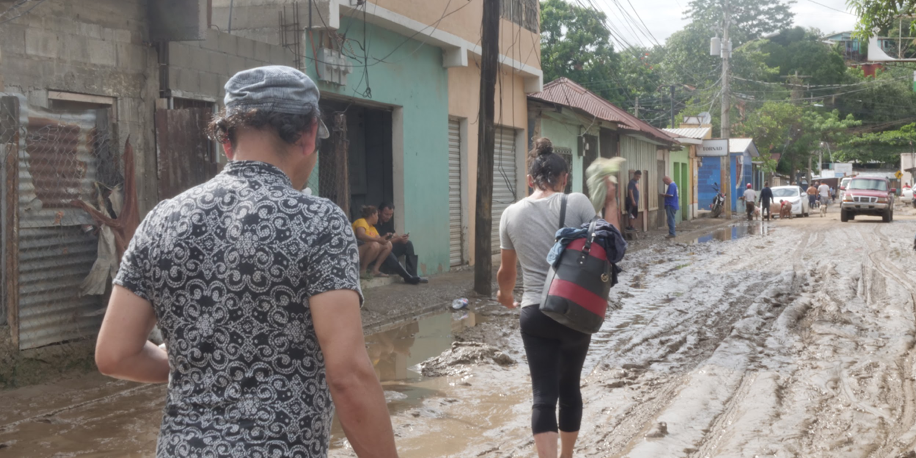
The coronavirus isn't the only monumental challenge facing the country's sexual diversity. With the arrival of hurricane season, Honduras suffered not one, but two hurricanes: Eta and Iota. In early November, Eta made landfall in Nicaragua and weakened to a tropical storm before reaching Honduras.
The fact that Eta was downgraded did not reduce its devastating effect across the country, where floods destroyed entire neighborhoods, wiped out economic activity already hit by the coronavirus, and left towns turned into huge mudflats where it is impossible to live without getting sick.
Residents fled the floodwaters that reached the roofs of their homes and set up makeshift camps of plastic and cardboard on the medians of boulevards and along the sides of highways. Among those affected by the hurricanes were members of ethnic minorities and vulnerable groups such as the LGBTQ+ community. People of diverse sexual orientations and gender identities had to continue experiencing rejection from their neighbors after having lost everything.
Just as Hondurans were shoveling mud from their homes and counting their dead, Iota struck. Less than 15 days had passed when the second hurricane to hit Honduras finished destroying and covering with mud and filth what little Eta had left standing, mainly in northern Honduras.
Hurricanes Eta and Iota will cause more than 200 deaths and the damage they left behind amounts to 45,676 million lempiras (1,879 million dollars), details a report by the Economic Commission for Latin America and the Caribbean (ECLAC) on natural disasters.
With limited access to employment opportunities, the situation for LGBTQ+ individuals in northern and western Honduras worsened as they faced the destruction of their property due to flooding. Many have had to flee or are experiencing domestic hardship because they have no other options for survival.
According to figures released by the Honduran government, some 4.5 million people , half of the Honduran population, have been affected by the hurricanes and their aftermath; more than 92,000 people are in shelters, and more than 85,200 homes were damaged and 62,000 destroyed.
Thousands of people sleep each night in flimsy shacks made of wood and plastic sheeting, on sidewalks, or under bridges. LGBTI people have been forced to flee individually or collectively, traveling in caravans to Guatemala, Mexico, or the United States.
We are present
We are committed to journalism that delves into the territories and conducts thorough investigations, combined with new technologies and narrative formats. We want the protagonists, their stories, and their struggles to be present.
SUPPORT US

FOLLOW US
Related notes
We are present
This and other stories are not usually on the media agenda. Together we can bring them to light.