

Young people in Mexico raise their voices and protest 5 LGBT murders in two weeks
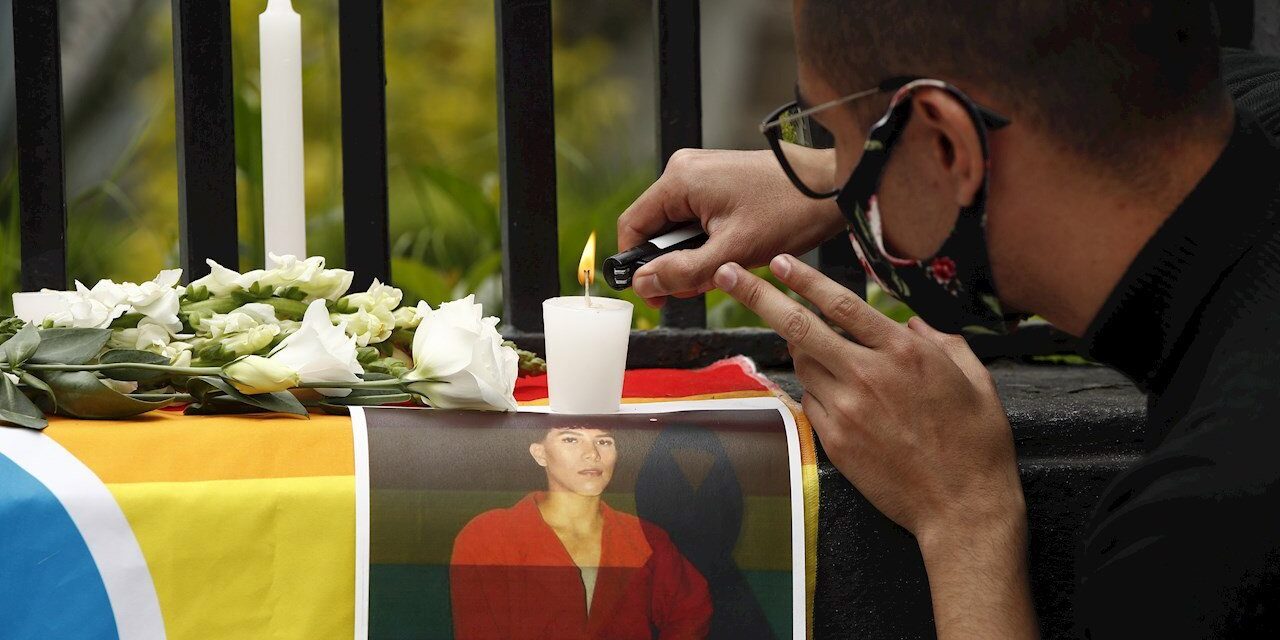
Javier Eduardo Pérez and Jonathan Santos were murdered in Morelos and Jalisco, respectively.

Share

By Georgina González, from Mexico City
In the last two weeks of August, Javier Eduardo Pérez (34), Jonathan Santos (18), Julie Torres (a trans woman), Sam Rosales (23), also trans, and Brandy «N· were murdered in Morelos, Jalisco, Puebla, and Veracruz, respectively. In Morelos and Jalisco, there is a lack of protocols with a gender and sexual diversity perspective for investigating crimes against LGBT people, and hate crimes based on sexual orientation, gender identity, and gender expression are not specifically defined in their Penal Codes.
Likewise, only in 13 entities of the country, including Puebla and Veracruz, is hate crime based on sexual orientation and gender identity classified in their Penal Codes.
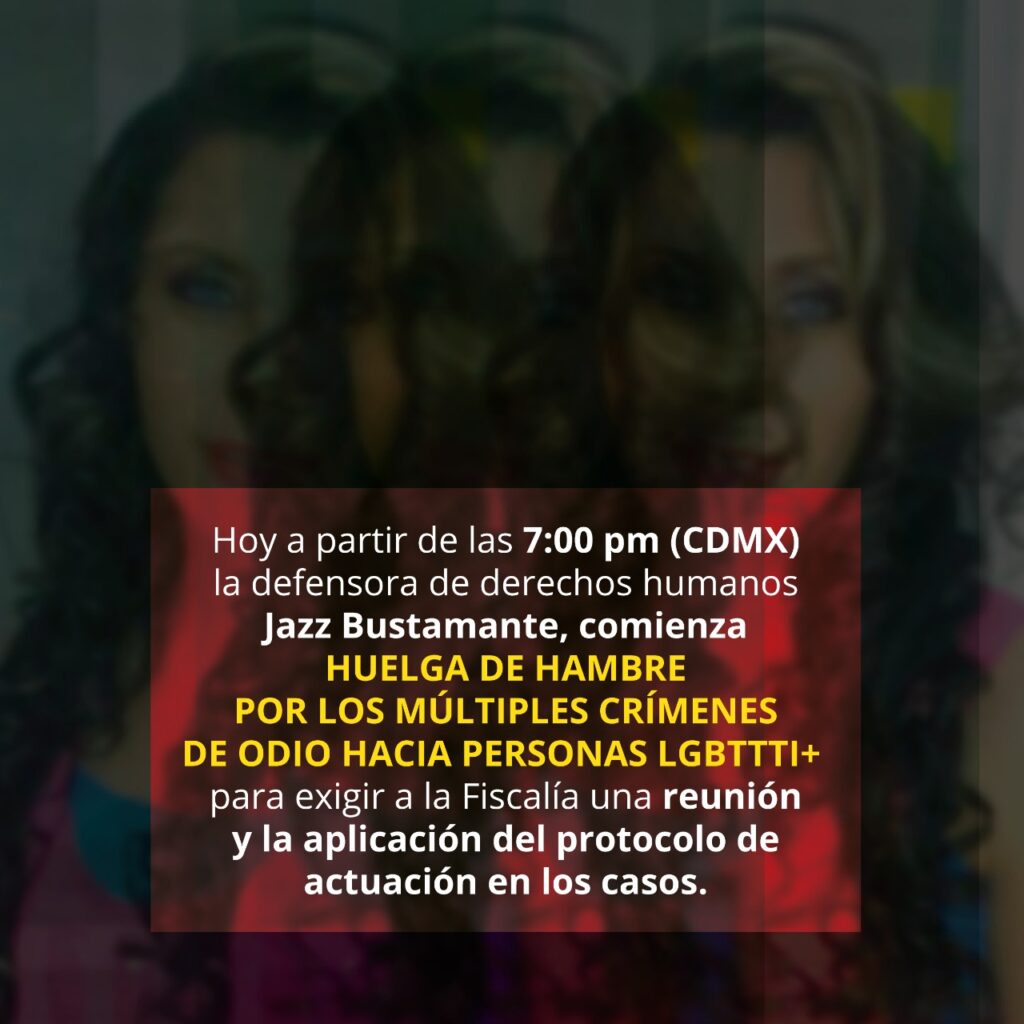
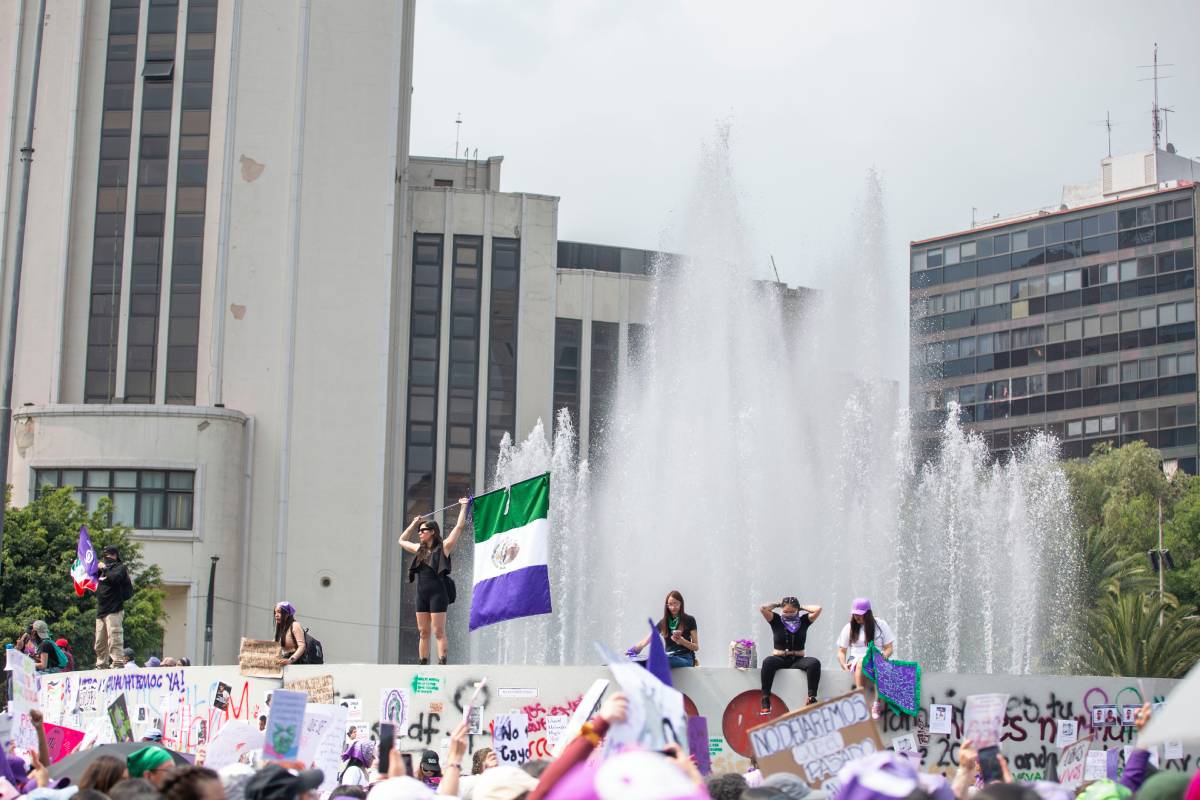
For these reasons, young activists have taken to the streets in recent weeks to demand justice. Activist Jazz Bustamante , founder of the civil association "Soy Humano" (I Am Human), announced that she will begin a hunger strike to demand the implementation of the national protocol for responding to hate crimes.
Three trans femicides in one week
On the afternoon of August 26, Brandy Huerta, a 34-year-old transgender woman, and her mother, María Luisa Huerta, were murdered in Puente Nacional, Veracruz. The Veracruz State Attorney General's Office has not yet issued a statement regarding the case.
According to Jazz Bustamante, Brandy was very quiet and dedicated to taking care of her mother, she sold products through catalogs and helped her mother run a basic goods store.
The activist emphasized on her Twitter account that " it is essential not to remain silent about this brutal murder of both women; the people of Veracruz and Mexico must demand immediate results in this and all cases that remain unpunished .
According to the National Observatory of Hate Crimes against LGBT people , 12 people have been murdered in Veracruz so far this year. Furthermore, according to data from the organization Letra S, Veracruz is the state with the highest number of murders against the LGBT population in the last five years.
On August 19, Julie Torres was murdered in her home in Guadalajara, Jalisco. Fascinación Jiménez, president of Unión Diversa de Jalisco, told Presentes that “the authorities haven’t mentioned this case. As if the deaths of trans women don’t matter.” The organization also demands that the case be investigated under the femicide protocol.
The following day, August 20, 23-year-old Sam Rosales was struck by a vehicle in Atlixco, Puebla. According to Jazz Bustamante, Sam was known in the region for winning beauty pageants.
"In Brandy's case, the cruelty, treachery, advantage, and ridicule of her body after she was murdered were notorious," Bustamante told the e-Veracruz website.
The activist indicated that with Brandy's case, there have been 19 hate crimes against members of the LGBTTTI community in the state of Veracruz during 2020, which has been ranked first nationally since May, according to the Hate Crimes Observatory.
Brandy was a 32-year-old trans woman who earned a living through catalog sales and stylist work in the municipality located 55 kilometers from the port of Veracruz.
Last week, Julie Torres, a trans woman, was murdered in her home in Guadalajara. The Jalisco-based organization Unión Diversa demanded that state authorities investigate the case under the femicide protocol. According to activists, her body showed signs of torture.
Sam Rosales, 23, was run over in Atlixco, Puebla, on August 20. According to security camera footage, the killers knocked her off her motorcycle and ran her over again once she was on the ground.
Javier, wrapped in a flag with hate messages
Javier Pérez left his home in Mexico City on August 19 at 8:00 a.m. in his car, a maroon Aveo with license plates from Morelos. His family lost contact with him that day and filed a missing person report. That same day, the Morelos Attorney General's Office reported the discovery of a deceased person in Cuernavaca, but it wasn't until Tuesday, August 25, that his family was able to identify him.
Javier's body showed signs of violence, and the State Prosecutor's Office reported that it was "partially wrapped in a partially burned white cloth and on one side a message written on a piece of cardboard."
“The message left next to the body, claiming he committed child abuse, perpetuates the idea that homosexual people are often accused of being the main child abusers, when the reality is quite different. The context and the violence of the homicide are worrying,” Isidro Añorve, an activist and member of the Equity and Citizen Participation association, told Presentes.
On social media, activists and organizations are calling Javier's murder a hate crime. Meanwhile, the Morelos Attorney General's Office announced that "all lines of investigation are being pursued to establish the sequence of events."
“It is very difficult to obtain figures on these events, and to make matters worse, sometimes it is the family itself that does not want the sexual orientation or gender identity of their relative to be revealed in the lines of investigation ,” Añorve emphasized.
In Morelos, there is a Directorate of Sexual Diversity within the Secretariat of Government, and part of its responsibilities is to propose actions to various state agencies to promote the rights of LGBT people. Currently, one of the pending issues is the approval of the gender identity law.
“So far , Violeta Sánchez Luna, director of the Directorate of Sexual Diversity, has done nothing to help the LGBTQ+ community. The current government shows no interest; it's all just pretense and disdain ,” Añorve commented.
“LGBTTI people suffer violence and discrimination, without this government doing anything to prevent and eliminate these structural forms of discrimination and violence. So much so that just a few weeks ago I was threatened by a public official of the State government simply for denouncing the inaction regarding the hate speech of the Bishop of Cuernavaca, Morelos, Monsignor Ramón Castro Castro, whom the state government protects and allows to use the pulpit to spread hate speech against LGBTTTI people and feminist colleagues ,” he added.
Jonathan Santos murder investigation shows no progress
Jonathan Santos was an 18-year-old student and LGBT activist. On the night of August 11, he was murdered a few blocks from his home in Zapopan, Jalisco. Jonathan was at a party, and that was the last time he was seen alive, before leaving the venue.
In a press conference, the Jalisco State Prosecutor's Office confirmed that the cause of death was a gunshot wound and that they are pursuing three lines of investigation: hate crime, "crime of passion," and that they do not rule out the possibility that it was a robbery.
Furthermore, the state prosecutor commented that Jonathan's murder would be investigated using the femicide protocol. This statement drew criticism from organizations and activists, prompting Andrés Treviño, head of the Sexual Diversity Directorate of the Jalisco State Government's Human Rights Undersecretariat, to clarify that, according to UN Women, "the Latin American protocol for addressing femicides can also guide investigations into other homicides involving victims with diverse sexual orientations and gender identities."
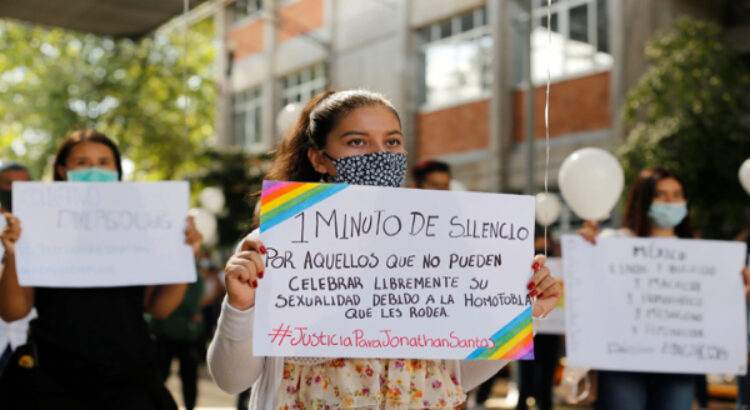
However, two weeks after Jonathan's murder, there has been no progress in the investigations.
The Jalisco State Prosecutor's Office lacks a specialized protocol to guarantee access to justice for LGBT individuals. Fascinación Jiménez, president of the Unión Diversa de Jalisco , told Presentes, “Access to justice in Jalisco is an ordeal; there is no reparation for damages, and we haven't heard of a single successful case where someone has been imprisoned for murdering a member of the LGBT community and served a sentence for a hate crime .
Furthermore, in December 2019, the local Congress approved an amendment to Article 219 of the State Penal Code to include hate crimes based on sexual orientation, gender identity, and gender expression as an aggravating circumstance in homicide cases. However, the Code itself has not been amended; the amendment was only published in the State Official Gazette .
In this regard, Fascinación Jiménez warns, "if the case of Jonathan Santos were resolved today, this aggravating circumstance could not be applied since it does not yet appear in the Penal Code."
They do not apply the national protocol for these crimes.
Despite the lack of local protocols in Morelos and Jalisco, a national protocol for law enforcement personnel has been in place since 2017, outlining procedures for cases involving sexual orientation, gender identity, and gender expression. Jiménez points out that in Jalisco, “the authorities refuse to read or implement it .
According to the organization Letra S , 117 hate crimes were committed in Mexico in 2019. That is, 3 LGBT people were murdered every day that year, making it the most violent year in the last five years.
We are present
We are committed to journalism that delves into the territories and conducts thorough investigations, combined with new technologies and narrative formats. We want the protagonists, their stories, and their struggles to be present.
SUPPORT US

FOLLOW US
Related notes

We are present
This and other stories are not usually on the media agenda. Together we can bring them to light.