

Interview with Paula Maffia and Lucy Patané: “Rock is not dead and plurality will save it”
These two Argentine rockers have known each other since they were 20 and have shared bands as well as solo projects.

Share

By Ivana Romero
Photos: Roy Molina
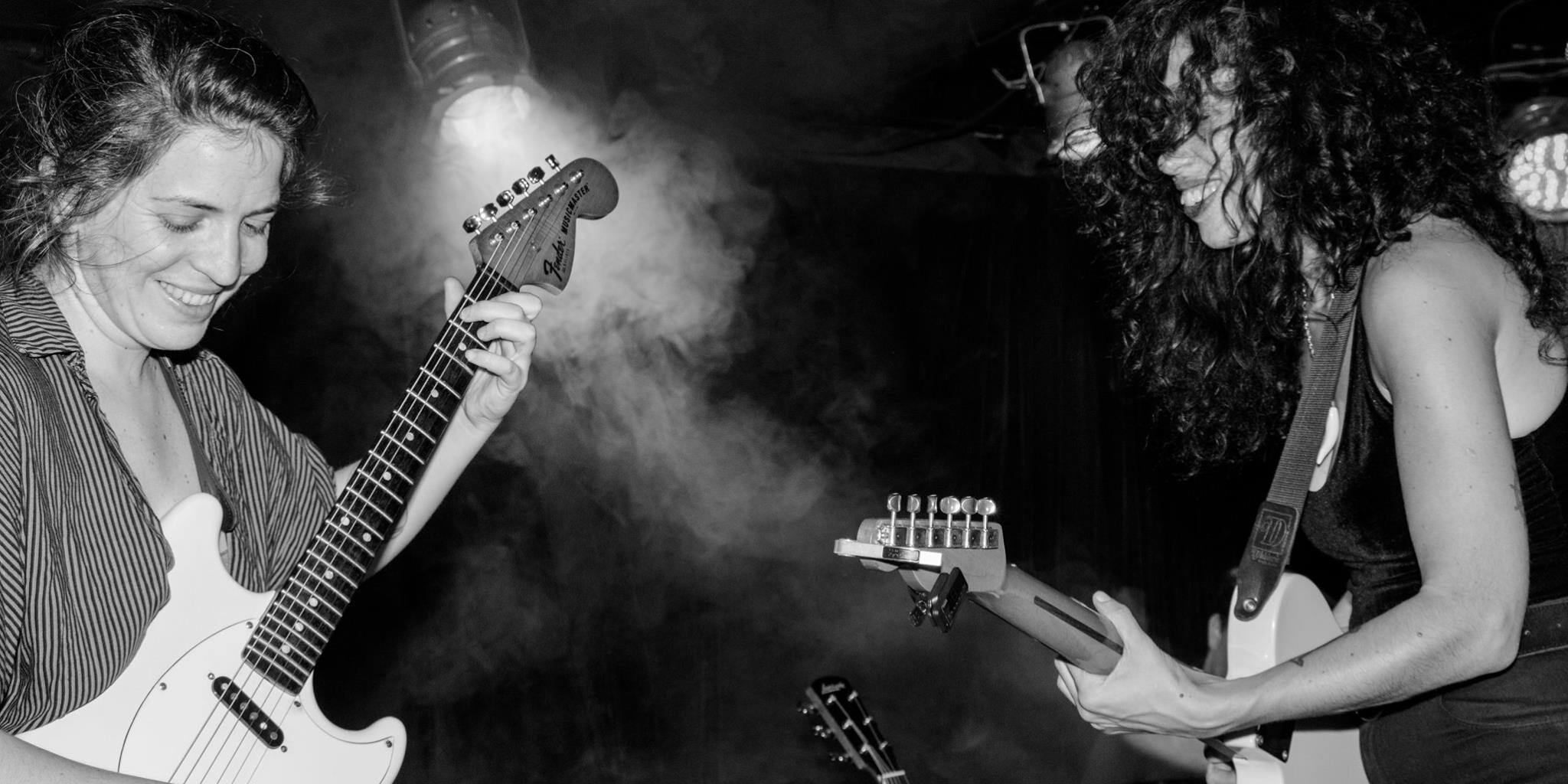
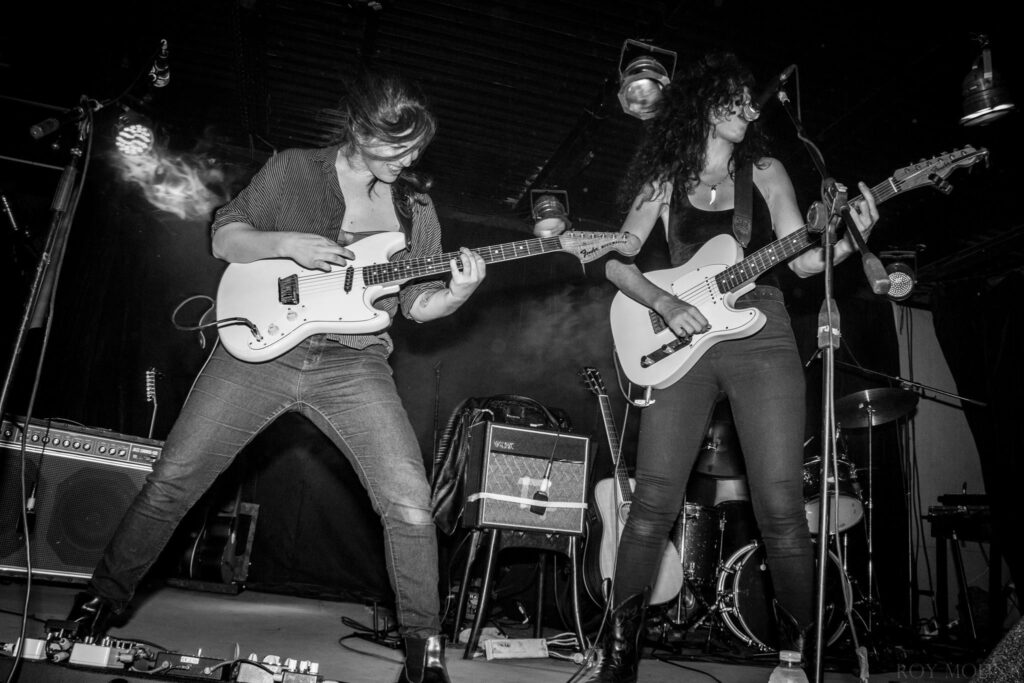
“This girl is Joan Jett,” Paula Maffia thought when she saw Lucy Patané on stage. It was 2003, but Lucy already had that style—fiery, punk, haughty—of playing guitar with a concentrated expression, as if she were listening to something that was happening both here and somewhere else at the same time. Her presence and sound were similar to those of the guitarist from The Runaways, that queen of noise —as one of their songs proclaims—formed in the seventies, made up entirely of women. Lucy says now that she was quite surprised by the comparison: she had adored The Runaways since her teenage years in Bernal (Quilmes), in the province of Buenos Aires.
From then until now, Paula and Lucy have formed a creative power duo in life and art, resulting in bands they founded together like La Cosa Mostra and Las Taradas, as well as solo projects and collaborations with other musicians, as is the case with Lucy and Marina Fages. “Since we were twenty, we’ve been like wives,” Paula laughs as her friend appears on Zoom for this interview. They lived together in La Boca, organized cultural events that had to go underground after the Cromañón tragedy, and for years have been part of an independent and proudly rock-oriented music scene, which is growing thanks to an ever-increasing audience (yes, there was life before the pandemic). Last year, they both released new albums. Polvo is Maffia’s second solo album. Lucy released her self-titled debut album, Lucy Patané. Both albums are nominated for the Gardel Awards for Best Alternative Rock Album. Furthermore, Paula's "Corazón licántropo" is nominated for best song and best music video. Lucy is nominated in the "record of the year" and "producer" categories (as stated on the award website), since she produced her own album. So many celebrations, encounters, and joyfully dissenting careers—in aesthetic and even political terms—provided the perfect excuse for this conversation.
–In this new edition of the Gardel Awards, there are nominations that include many independent and dissident productions. I'm thinking of you and also, for example, of Traviarca, the album by Susy Shock and La Bandada de Colibríes. Can this be interpreted as a gesture of change or is it mere political correctness?
Paula: To understand what the nominations mean, you have to understand how the awards work. Every person who records an album during the year has the opportunity to be nominated. And you choose which categories to submit your work to. Then, a large jury from CAPIF (the chamber that represents producers and record labels), made up of people from all walks of life (something that was implemented last year), votes and decides that the album has all the characteristics to be nominated. In this new wave, there are many women and gender-diverse people. “Gender-diverse” isn't my favorite word. I'd prefer to say queer people, lesbians, non-binary people, etc., but well, “gender-diverse” encompasses all the collectives.
–One indication of what you're saying is the award given to Marilina Bertoldi, who received the Gardel de Oro at the last ceremony and who emphasized that, after almost two decades, the award was finally won by a woman. And a lesbian woman.
Lucy: Recognizing a young woman from the independent music scene, connected to rock—and I'm talking about hard rock—and openly lesbian, seems to me to be honoring one person who represents many. The merit belongs to one, yes, but it's the story of many. Another important aspect is that the Gardel Award has become more inclusive, and people other than the usual crowd started voting. Also, some of this year's nominations include innovative artistic proposals. So, there are always those who question, "Why are they doing this? Are they doing it so we have to listen to new things?" Yes, you should listen to new things. Or, in any case, it's not a bad thing that new proposals are emerging and that the Gardel Awards, or any awards ceremony, serve to bring visibility to a lot of music that's out there. In other words, the votes are not only artistic but also political.
–In what sense?
Lucy: Regarding visibility, both the things we've gained and the things we still need to achieve. I'm happy about Susy's nomination, the nominations of other independent musicians, and even Paula's and mine. However, a quote from Agnès Varda comes to mind (I've been watching a lot of films during quarantine). At one point, she started receiving many awards, and she said, "What good are they if I don't have the money to make my next film?" That quote really resonates with independent music. The visibility that awards give us is fantastic, but the gaps remain. In other words, it's essential that independent music connects more seamlessly with other initiatives.
–What types of actions?
Paula: It's complicated because we'd have to explain how various institutional and commercial circuits work. But we can give you an example. I've had meetings with producers who tell me, "I like your music, but I can't include you in the lineup of such-and-such festival because they don't play you on the radio." That's why festivals are still filled with bands like Don Osvaldo, La 25, or La Berisso, or teenagers straight out of the satanic bowels of Cris Morena. A little while ago you asked how we deal with the roles assigned to us. And the truth is, I don't deal with the roles assigned to me. I deal with the roles I want to reach because otherwise it's a matter of "girl, just settle for whatever you can." That's not how things work.
Lucy: The word “industry” also came up while we were talking. For me, in the independent scene today, it’s a controversial word. Big labels are one thing: we don’t work with them because it’s not a world that aligns with our artistic decisions. Independent music is a vast universe and could be a huge industry, but it isn’t quite there yet. On the one hand, because the word “industry” makes many people uncomfortable, and on the other, because many of the tools for what music should be, for whom, and so on, are still imposed by the major record labels, who, in any case, when they can, take certain aspects of independent music and incorporate them into their own businesses. These nominations, however, opened a door for musicians like us who don’t belong to that industry. Of course, for me, it also has to do, as Paula says, with the fact that since last year, fifty percent of the jury has been female and dissident.
–Last year, the law establishing a quota for women was also passed. It guarantees a 30 percent quota for women in event lineups with a minimum of three artists or bands. You played a very active role in that fight. What can you tell us about all of that?
Lucy: In every interview with female musicians, questions about the law are recurring. It would be great if the question also started to shift towards other sectors. What do producers think? What do male musicians think? I'm not just referring to the law, but to their position and the privileges they've had. We've said what we think, but it's not clear to us what they think. And when they're interviewed, they're not asked these questions.
Paula: The law is a formal instrument. It's clear that no one wants to occupy a stage because of a quota. But what this is about is making visible all the spaces we don't occupy. So the law was and is a tool that generated a very large movement. For example, that men have to start sharing their spaces. Many people who were against it said that women are Nazis. Reaching a consensus on a proposal, presenting a bill, getting signatures from colleagues, passing it through two chambers, and getting it approved—can all that really be considered a Nazi phenomenon? We believe, rather, that this law is a tribute to democracy.
–Listening to them now, but also on their albums or seeing them live, you can see how they reflect each other in their sounds and in their way of perceiving the music scene.
Lucy: What brought Paula and me together was a way of listening and approaching aesthetics. Paula mentioned The Runaways, which I listened to on my own, and the connection from that initial scene continues to resonate with other things. That happens with Paula, and also with Marina Fages—a very natural way of respecting each other's desires and approaching music from that perspective. I hear things from Paula on my album, and I think there are things of mine on hers. In the end, a song is a collection of decisions. And in those decisions, you generate a production, an aesthetic, so I think there are many things we agree on, and that's why we continue to be linked aesthetically.
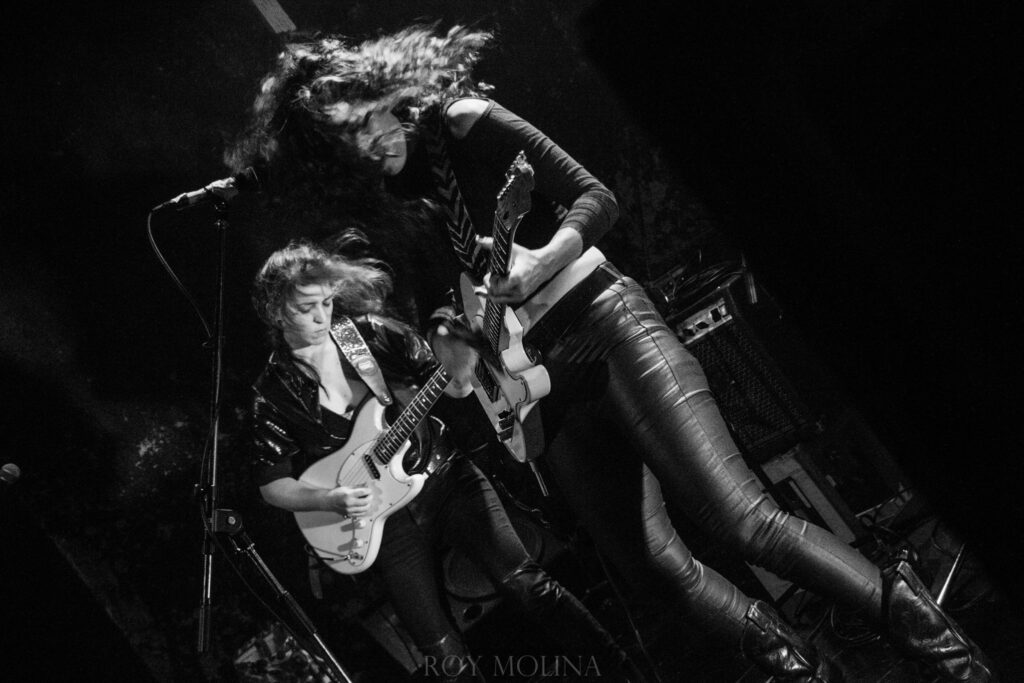
–Together and apart, seeing them on stage with dissident musicians on and off stage, generates a very beautiful and particular intensity.
Paula: Yes, that's part of the decisions Lucy is talking about. I think it will be a breakthrough when we stop being many women and gender-diverse people on stage and become just a bunch of people. It will give us a lot of freedom not to have to be something in relation to something else. Women are something in comparison to another identity. I love identifying as a woman and embracing my lesbian identity; I don't think those are two mutually exclusive categories. But that's my personal experience. In any case, I feel more connected to diverse identities than to hegemonic ones.
–Do they identify as rock stars?
Lucy: Yes, we always say the same thing. Rock isn't dead because there are tons of rockers out there. Even rockers who don't make music but have a certain way of life, a certain attitude.
Paula: Rock will be saved by rock. A new rock made up of diverse voices, with a new sound.
We are present
We are committed to journalism that delves into the territories and conducts thorough investigations, combined with new technologies and narrative formats. We want the protagonists, their stories, and their struggles to be present.
SUPPORT US

FOLLOW US
Related notes

We are present
This and other stories are not usually on the media agenda. Together we can bring them to light.